Apple Sues OpenAI for Trade Secret Theft: IPO Risks and Legal Battles Fully Analyzed

Apple sues OpenAI for trade secret theft, while Bending Spoons IPOs and Santander acquires Webster Financial.
Apple has filed a major trade secret lawsuit against OpenAI, alleging systematic IP theft via poached employees — including its current Chief Hardware Officer. Combined with the NYT copyright case, OpenAI's IPO faces mounting legal risks. Meanwhile, Italian tech roll-up Bending Spoons debuted with a 40% first-day surge, and Santander won regulatory approval to acquire Webster Financial as part of its U.S. expansion.
Apple Files Trade Secret Lawsuit Against OpenAI
On a recent episode of CNBC's Mad Money, host Jim Cramer spotlighted a high-stakes lawsuit Apple has filed against OpenAI. According to reports, Apple alleges that OpenAI systematically stole its trade secrets and intellectual property by poaching former Apple employees to develop its own consumer hardware product line.
Specifically, Apple accuses former Apple engineer Chang Liu of secretly downloading dozens of confidential hardware documents — including engineering demos, technical specifications, and proprietary project data related to unreleased products — using unauthorized network access after being recruited by OpenAI. More seriously, Apple claims Liu also coached another former Apple colleague on how to steal proprietary information. As the investigation deepened, Apple discovered similar conduct among additional former employees, including a senior executive who had served as VP of Product Design for iPhone and Apple Watch and now serves as OpenAI's Chief Hardware Officer.
The lawsuit relies on the Defend Trade Secrets Act (DTSA) — a federal law enacted in 2016 that created a federal civil cause of action for trade secret misappropriation for the first time, allowing victims to seek emergency injunctions to prevent further disclosure. Key DTSA provisions require plaintiffs to prove that the information has independent economic value, that the company took reasonable steps to protect it, and that the defendant obtained it through improper means. Talent wars in the tech industry have long been fertile ground for such litigation — from Google's 2017 suit against Uber over Anthony Levandowski's theft of autonomous vehicle documents, to the protracted IP battles between Qualcomm and Apple — all underscoring the legal risks that accompany the movement of top AI and hardware talent.
Apple's legal team used pointed language in the complaint: "From engineers to its Chief Hardware Officer, OpenAI has been stealing Apple's trade secrets and confidential information. As a result, OpenAI's nascent hardware business is built on the weakest of foundations — rotten at its core."
A Divided Industry Reaction
Interestingly, industry observers are split on the lawsuit. Prominent tech analyst Ben Thompson interpreted it as "sour grapes" from Apple, arguing that Apple "just really doesn't like AI" and is using Liu's conduct as a retaliatory weapon. The Wall Street Journal also published a piece suggesting the suit "repeats a familiar pattern" — betting that litigation can slow down a competitor threatening to disrupt the iPhone era.
Cramer, however, disagreed. He stressed that Apple is not the kind of company that routinely files frivolous lawsuits to stifle competition — "that's not their style." Apple only pursues this type of action when it has clear evidence of illegal conduct, and the detailed, specific list of allegations in this case "packs a real punch."
OpenAI's Legal Troubles Run Much Deeper
Cramer noted that Apple's lawsuit is merely the latest in a long string of legal headaches for OpenAI. While OpenAI prevailed against Elon Musk's lawsuit, that victory rested on procedural grounds — the jury found that Musk's challenge to OpenAI's transition from nonprofit to for-profit was time-barred, not that OpenAI was substantively exonerated.
More consequential is the copyright lawsuit led by The New York Times. This case strikes at the most fundamental legal question to emerge from the generative AI boom: does training AI models on copyrighted content constitute fair use? Section 107 of the U.S. Copyright Act requires courts to weigh four factors: the purpose and character of the use (whether it is transformative), the nature of the copyrighted work, the amount used, and the effect on the market for the original. One of OpenAI's core defenses is that the training process is "transformative" because models don't simply copy text — they extract statistical patterns. However, The New York Times weakened this argument by demonstrating through "prompt injection" experiments that ChatGPT can reproduce large sections of its articles verbatim.
As the first major U.S. media company to sue OpenAI over copyright, The New York Times alleges that OpenAI and Microsoft infringed its copyrights by using millions of articles to train AI models. Dozens of similar lawsuits have since followed, with numerous companies and artists accusing leading AI labs of copyright infringement — a wave of litigation expected to reshape AI training data licensing practices and business models over the next three to five years. Just last Thursday, The New York Times and 16 other publishers alleged in court filings that OpenAI withheld evidence that could prove critical in such cases, and requested monetary sanctions and other penalties.
Cramer summed it up: these legal issues are "a major distraction at best, and potentially severe monetary penalties at worst" — bad news for a company that burns cash aggressively and has taken on substantial debt to build out data centers. Equally important, the Apple lawsuit could slow OpenAI's entry into new markets like consumer electronics, especially if Apple succeeds in obtaining an injunction.
He issued a warning: "If OpenAI is truly running a sophisticated trade secret theft operation targeting Apple, how likely is it that Apple is the only target?" This could be the first in a series of trade secret lawsuits — and it undeniably casts a shadow over OpenAI's much-anticipated IPO prospects.
Bending Spoons: The Italian Dark Horse That Surged 40% on Debut
Recently, an Italian tech company called Bending Spoons made a splashy market debut. Priced at $29 per share, the stock soared nearly 40% on its first day of trading, closing at $40.50 — though it had since pulled back to just above $31 by the time of the broadcast. Cramer suggested that with the initial gains almost entirely erased, a buying opportunity may have emerged.
CEO Luca Ferrari describes Bending Spoons as "primarily a tech company, partly a private equity firm." The company acquires mature digital businesses — typically well-known but underperforming brands — and attempts to revitalize them using a unified operational playbook, proprietary technology, and shared data infrastructure. Its portfolio includes AOL, Evernote, Vimeo, WeTransfer, Meetup, Brightcove, and products like Remini, StreamYard, and Harvest. As of the latest figures, its assets serve more than 500 million monthly active users and over 9 million paying customers.
A Unique "New Economy Corporate Raider" Model
This strategy emerged from a stroke of serendipity. Ferrari and two co-founders had developed an AI journaling app, raised $1 million, and ultimately failed. After winding down the company, they were left with roughly $40,000 — and a new strategy took shape: rather than predicting the next great product, they would acquire market-validated products and focus on becoming the best possible operators. They studied the success of acquisition-driven businesses like Teledyne, Capital Cities, Broadcom, and Danaher.
Bending Spoons' business logic aligns closely with the roll-up strategy — a well-established private equity playbook — but its application to the digital software space carries a distinctive innovative twist. Take Danaher as an example: its rigorous "Danaher Business System" (DBS) served as a unified operational manual, enabling hundreds of acquisitions over 40 years that built a diversified empire spanning healthcare, environmental, and industrial sectors, with a market cap exceeding $200 billion. Bending Spoons' core differentiator is being "digitally native" — it integrates not factories and supply chains, but user data, algorithmic models, and subscription revenue streams with very low marginal expansion costs, theoretically allowing the same technology infrastructure and data flywheel to serve a vast product portfolio. That said, products like Evernote — once seen as a high-potential acquisition — have generated mixed reviews post-acquisition, offering a real-world cautionary note about the limits of this model.
Since 2013, Bending Spoons has completed more than 50 acquisitions at a total enterprise value of approximately $2.01 billion. Cramer described it as "an old-school corporate raider operating in the new economy." The company receives roughly 800,000 job applications per year, hiring just 286 people — making it one of the most selective employers in the world — and relies heavily on AI to maximize output per employee.
Strong Financials, but Debt Is the Biggest Risk
Financially, Bending Spoons has seen revenue jump from $187 million to $1.31 billion, with single-quarter revenue growth of 132%. Operating income has climbed steadily, with the latest quarter showing GAAP net income of $27 million — a sign of emerging profitability.
However, Cramer emphasized that this growth is primarily acquisition-driven — organic growth accounts for only about 13%. A bigger concern is the balance sheet: debt has climbed to approximately $4.36 billion. Additionally, founders control nearly 83% of voting rights through super-voting shares, leaving ordinary shareholders with very limited say.
Cramer's conclusion: Bending Spoons is one of the most interesting IPOs in recent years. Investors might consider establishing a small initial position, but should hold back capital to add at lower prices, since the current valuation "isn't cheap" and the software business faces meaningful uncertainty from the AI disruption wave.
Santander: Acquisition of Webster Financial Gets Regulatory Green Light
The program also focused on Spanish financial giant Banco Santander, whose shares have risen an impressive 200% year-to-date. The bank announced its acquisition of Connecticut-based Webster Financial and just received key regulatory approval, set to strengthen its foothold in the U.S. market.
Cramer interviewed Santander Executive Chairman Ana Botín. Botín attributed the bank's sustained appreciation to three factors: the efficiency, growth, and resilience that come with scale — 180 million customers; consistently delivering on (and exceeding) financial commitments; and an ongoing journey of "self-help" transformation toward a global platform. She revealed that Santander added 8 million new customers in a single year, with revenue up 4%, costs down 3%, and earnings per share up 17%.
A Differentiated AI Strategy
Notably, Botín outlined an AI philosophy that diverges sharply from that of U.S. banks. While American banks tend to think about AI first in terms of cost reduction, Santander's primary focus is on "personalized customer interaction." This reflects a deep strategic divide in how global banks are approaching AI: U.S. giants like JPMorgan Chase lean toward deploying AI in risk management, compliance review, and back-office automation — an essentially defensive, cost-cutting posture. Santander's approach is closer to "revenue-side AI" — using its vast customer behavioral data to train personalized recommendation models, identify the precise moment customers need financial products, and thereby increase cross-selling rates and customer lifetime value (LTV). This approach carries particular advantages in emerging markets: Santander serves tens of millions of underbanked customers in Brazil, Mexico, and across Latin America, where AI-powered lightweight digital services can reach populations that traditional branches cannot — at low marginal cost.
Botín believes that with 180 million customers and massive data assets, the bank is for the first time able to access that data quickly and at low cost — enabling it to approach new markets "on offense." On the Webster acquisition, Botín described it as a highly complementary merger — Webster brings commercial banking, Santander US brings consumer banking, and together they will create a bank with over $300 billion in assets. Return on Tangible Equity (ROTE) is a core metric of bank profitability efficiency; Santander has committed to achieving a ROTE of more than 18% by 2028 — a top-tier target in the current interest rate environment, which helps explain the fundamental logic behind the stock's 200% year-to-date gain. She also emphasized that Santander will deploy $12 billion of capital into the U.S. to build a more competitive domestic bank.
Conclusion
This episode painted a complex picture at the intersection of tech and finance. OpenAI faces a two-front legal assault — Apple's trade secret lawsuit and ongoing copyright litigation — casting significant uncertainty over its IPO prospects. Bending Spoons has captured market attention with its distinctive acquisition-and-operate model, though high debt and low organic growth warrant caution. Santander, meanwhile, is demonstrating the transformative vitality a traditional financial institution can achieve through a differentiated AI strategy and cross-border M&A. For investors, all three storylines are worth watching closely.
Key Takeaways
Related articles
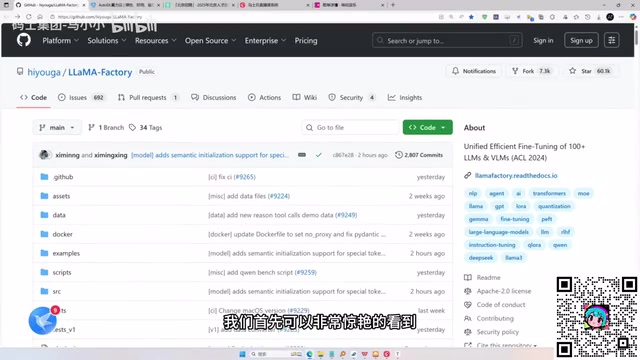
LLaMA-Factory in Practice: A Complete No-Code Guide to Fine-Tuning Large Models
An introduction to LLaMA-Factory, the open-source fine-tuning tool: its 60.1K-star background, supported models and algorithms, local vs. cloud deployment, and CUDA setup steps.

Zeng Ming's Deep Retrospective: Why OpenAI May Not Be the Ultimate Winner — and Why the Corporate System Will Disappear
Zeng Ming's deep retrospective on the AI endgame: model companies are just infrastructure, OpenAI and Anthropic won't be the final winners; the next battle is the Agent entry point standard; the corporate system will disappear as AI restructures collaboration, and only mission-driven companies can survive the cycle.

OpenHands v1.28.0: OpenCode and PI Added as Built-in Agents, API Keys Requestable In-Conversation
OpenHands ships 5 releases in 21 days: v1.27.0 adds OpenCode and PI as built-in agents, v1.28.0 enables in-chat key requests. ACP integration, credential reuse, model list changes, and upgrade advice.