Apple Sues OpenAI Over Trade Secrets: A Deep Dive into the AI Giants' Legal Battle

Apple allegedly sues OpenAI over trade secrets, spotlighting AI talent mobility and IP disputes.
Reports suggest Apple has filed a lawsuit against OpenAI for stealing trade secrets. This article examines how the two companies shifted from partners to rivals, the IP controversies driven by talent mobility, and the potential impact on the AI industry landscape—while urging caution over unverified information.
Overview of the Incident
According to reports circulating within the Reddit community, Apple has allegedly filed a lawsuit against OpenAI, accusing the latter of stealing the company's trade secrets. As soon as this news surfaced, it sparked widespread attention within the tech community.
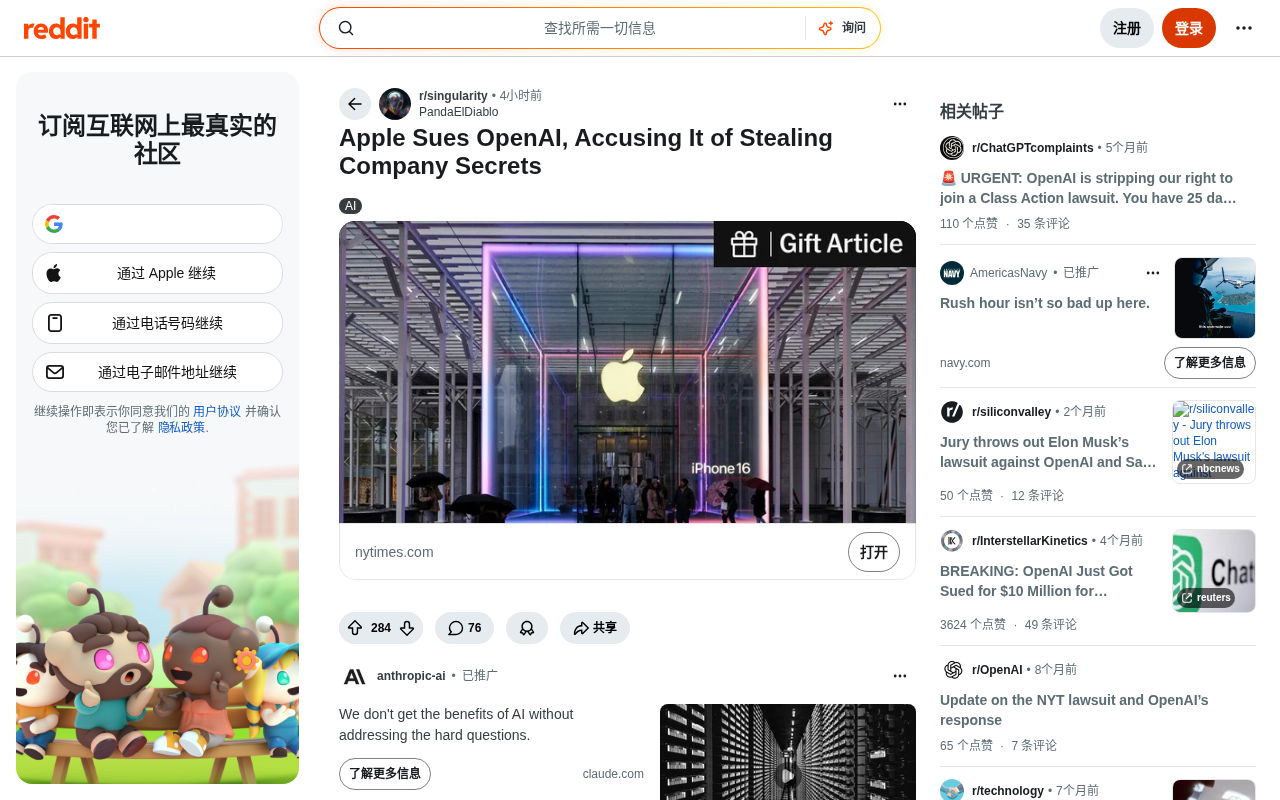
One important caveat: this news currently originates primarily from social media platforms, with no official confirmation from either party. Before diving into analysis, it's essential to remain cautious about the authenticity of the information. If the lawsuit proves to be true, it would become one of the most iconic intellectual property legal disputes in the AI industry to date.
Why Apple and OpenAI Are Heading Toward Conflict
From Strategic Allies to Potential Competitors
The relationship between Apple and OpenAI has always been delicate. The two companies once integrated ChatGPT into Apple's operating system's intelligent assistant ecosystem, and were at one point regarded as important partners in the AI era. However, as Apple continues to double down on developing its own large models and AI infrastructure, the overlap between the two companies in talent recruitment, technology roadmaps, and product positioning has become increasingly pronounced.
This pattern of being "both partners and competitors" is precisely where trade secret disputes tend to arise most frequently. When two companies are deeply intertwined in the same technical domain while simultaneously encroaching on each other's core businesses, the ownership of intellectual property and the boundaries of technology often become difficult to delineate.
Talent Mobility: The Core Point of Contention in Trade Secret Leaks
The war for talent in the AI field continues to intensify, with top engineers and researchers frequently moving between leading companies. These individuals often possess intimate knowledge of their former employers' core technical details. How to determine whether the knowledge they carry constitutes "personal experience" or "trade secrets" has always been a challenge for the legal community.
Similar cases are not uncommon in Silicon Valley. The earlier trade secret lawsuit between Google's Waymo and Uber over autonomous driving technology was a classic dispute triggered by an employee's job change, ultimately settled with a hefty payout. This dispute between Apple and OpenAI may follow a similar line of contention.
Potential Impact: From Industry Landscape to Market Confidence
Reshaping Collaboration Models Among AI Giants
If the lawsuit holds up, its impact would extend far beyond the two companies themselves. On one hand, it could prompt AI giants to comprehensively tighten technology sharing and talent recruitment, accelerating the industry's trend of "building walls." On the other hand, legal disputes are often accompanied by the public disclosure of technical details, which could bring unexpected pressure toward transparency in large model development—an area known for its "black box" nature.
Ripple Effects on Investors and Partners
Apple is one of the world's most valuable tech companies, and its every move affects the entire industry. OpenAI, as a central leader of the generative AI wave, carries legal risks that likewise influence the expectations of numerous investors and partners. If such a high-profile dispute continues to escalate, it could very likely trigger a chain reaction affecting both companies' valuations and ecosystem partnerships.
A Rational Perspective: How to Interpret Unverified Information
It must be emphasized that news of this lawsuit is currently still circulating only at the social media level, lacking corroboration from mainstream authoritative media outlets and official statements. In today's environment, where AI-related information spreads extremely fast and truth is difficult to distinguish from falsehood, readers should maintain independent judgment and rely on verification from official, credible sources.
Regardless of whether this lawsuit is ultimately confirmed, it reflects a deeper reality within the AI industry: as technological competition heats up, the protection of trade secrets, the delineation of intellectual property boundaries, and the regulation of talent mobility are becoming key variables that determine the industry's landscape. How these matters are handled will profoundly influence the future direction of AI technology.
Conclusion
This rumor between Apple and OpenAI, regardless of how it ultimately unfolds, offers a unique window into observing the competitive ecosystem of the AI industry. Within the complex relationship where collaboration and competition are deeply intertwined, law and rules are increasingly becoming the new battlefield in the maneuvering among tech giants. We will continue to track developments in this matter and will treat official, authoritative information as the ultimate basis for judgment.
Related articles

Cursor Can Now Control Your Computer: AI Agents Can Drive Desktop Apps for Testing
Cursor adds desktop control: AI agents can drive desktop apps like the iOS Simulator to test their own features. We analyze the impact on dev workflows, possible technical approaches, and reliability concerns.

Vibecoding a Custom Inference Engine: High Hopes, Harsh Reality
A Reddit developer shares the real experience of vibecoding a custom inference engine: running GGUF Q4 models in the browser with WebGL2 and GLSL, only to fall into tokenizer debugging hell. This article analyzes the engineering challenges of browser-side LLM inference and why cloning llama.cpp is the more rational choice.

How High Are Anthropic's Early Investor Paper Returns Ahead of IPO?
Anthropic's early investor paper returns draw attention ahead of IPO. This article analyzes sources of book gains, capital structure, pre-IPO games and risks, and implications for the AI startup ecosystem.