Ara: An Open-Source Computer Use Tool as a Multi-Agent Automation Alternative to OpenClaw

Ara is an open-source multi-agent Computer Use tool positioned as an open-source alternative to OpenClaw.
Ara is a newly launched open-source Computer Use tool that employs a multi-agent architecture enabling AI to autonomously manipulate computer interfaces for task automation. As an open-source alternative to OpenClaw, it offers transparency, customizability, and cost advantages, making it especially suitable for enterprises with strict data privacy requirements. The project earned a perfect 5.0 rating on Product Hunt, reflecting strong community demand for open-source computer use tools.
What Is Ara?
Ara is a newly launched open-source Computer Use tool, positioned as an open-source alternative to OpenClaw. It allows users to use Codex like an open-source computer, achieving task automation through multiple autonomously working AI agents.
Codex Background: Codex is OpenAI's code-specialized AI model series—a programming-optimized version of the GPT series and the underlying engine powering GitHub Copilot. In 2025, OpenAI revived the Codex brand and launched a cloud-based agent product for autonomous programming tasks, capable of independently executing code tasks in sandboxed environments. Ara's integration with Codex means AI agents can not only manipulate interfaces but also directly generate and run code to complete tasks, significantly expanding the boundaries of automation.
OpenClaw Background: OpenClaw is the commercial Computer Use product that Ara explicitly benchmarks against. It focuses on AI-driven desktop automation capabilities, offering GUI manipulation, task recording and playback, and other features targeting enterprise automation scenarios. While its closed-source, subscription-based business model lowers the barrier to entry, it also introduces limitations in data privacy, deployment flexibility, and cost control. Ara's emergence provides an independently controllable alternative path for developers and enterprises unsatisfied with the constraints of closed-source solutions.
The project has earned a perfect 5.0 rating on Product Hunt and attracted 773 followers, demonstrating strong demand from the developer community for open-source computer use tools.
Ara's Core Features and Technical Positioning
Comprehensive Automation Capabilities
Ara's core philosophy is "Automate everything." It provides a multi-agent collaborative architecture that enables multiple AI agents to autonomously complete various computer operation tasks for users. Users can delegate repetitive, time-consuming computer operations to AI agents, dramatically freeing up productivity.
Core Advantages of Being Open Source
As an open-source Computer Use tool, Ara offers several clear advantages over closed-source commercial solutions:
- Transparency: Users can audit the code and understand exactly how the tool works
- Customizability: Developers can modify and extend functionality based on their specific needs
- Community-driven: Leverages the power of the open-source community for continuous improvement and iteration
- Cost advantage: Avoids the hefty subscription fees of commercial tools
In the wave of AI tool commercialization, the emergence of open-source alternatives carries significant ecosystem value. Closed-source commercial Computer Use tools typically present pain points such as privacy risks from data being uploaded to third-party servers, uncontrollable costs from per-call billing, and inability to deploy in enterprise intranets or private environments. Open-source solutions allow enterprises to deploy completely on-premises or in private clouds, meeting the strict data compliance requirements of industries like finance, healthcare, and government, while also providing researchers with a reproducible and auditable experimental foundation.
Notably, this tension between open source and commercialization is not a new phenomenon in the AI tools space. From early days of TensorFlow competing against commercial ML platforms to the LLaMA model series disrupting the closed-source large model ecosystem, open-source forces have repeatedly demonstrated their unique value in lowering technical barriers and accelerating innovation diffusion. The Computer Use track where Ara operates is similarly experiencing this historic divergence—commercial solutions attract enterprise customers with ease of use and stability, while open-source solutions win over the technical community with controllability and customization space. Together, they push the capability boundaries of the entire track forward.
Multi-Agent Architecture Design
Ara employs a Multi-Agent architecture design, which represents a cutting-edge direction in current AI application development. A multi-agent system is an architectural pattern that decomposes complex tasks across multiple specialized AI agents working collaboratively—each agent possesses its own independent context window, tool-calling permissions, and execution environment, coordinating through message passing or shared state. Compared to single agents, multi-agent architectures can break through single-context length limitations, enable parallel processing, and reduce single-point failure risks. The rise of frameworks like AutoGen, LangGraph, and CrewAI has made multi-agent orchestration a mainstream paradigm in 2024 AI application development.
In Ara's implementation, multiple specialized agents can work collaboratively, handling different types of tasks—browsing the web, manipulating files, executing code, and more—to achieve more complex automated workflows. Each agent focuses on its area of expertise, accomplishing complex tasks through collaboration that a single agent would struggle to handle alone. This architectural design also gives Ara good horizontal scalability: as task complexity increases, the system can respond by adding specialized agents rather than restructuring the entire system, reducing engineering maintenance costs.
The Competitive Landscape of the Computer Use Track
"Computer Use" has been one of the hottest directions in AI since 2024. The core of Computer Use technology is enabling AI systems to directly manipulate computer graphical interfaces just like humans—including moving the mouse, clicking buttons, typing text, taking screenshots for recognition, and other operations. It relies on multimodal vision models' real-time understanding of screen content, as well as action planning modules that decompose high-level instructions into specific GUI operation sequences.
From a technical implementation perspective, Computer Use systems typically contain three core modules: the perception layer (parsing the current interface state through screenshots or accessibility trees), the planning layer (where large language models or multimodal models translate natural language instructions into operation step sequences), and the execution layer (calling system-level APIs or simulating input devices to perform actual operations). The challenge of this architecture lies in the fact that the interface state space of real desktop environments is extremely vast, erroneous operations are difficult to roll back, and the model must possess extremely strong contextual understanding and exception handling capabilities. In October 2024, Anthropic officially released the Computer Use API for Claude 3.5 Sonnet, marking the first time this capability was made commercially available via API, triggering widespread industry attention and inspiring more teams to explore the possibility of AI directly controlling computer interfaces.
The major players in this track currently include:
- Anthropic Claude Computer Use: The commercial solution that first attracted widespread attention, providing screen understanding and manipulation capabilities via API, leveraging Claude 3.5 Sonnet's powerful multimodal understanding for outstanding performance in complex interface recognition
- OpenAI Operator: OpenAI's web automation agent product launched in 2025, focusing on task execution within browsers, forming a complementary automation product matrix with Codex
- OpenClaw: The target product Ara explicitly aims to replace, focusing on desktop-level automation scenarios
- Various open-source solutions: Community-driven projects including Ara, as well as hybrid approaches combining traditional automation frameworks like Playwright and Selenium with LLMs
Ara enters this market with an open-source approach, targeting user groups that have data privacy requirements, want self-hosted deployment, or need deep customization.
Use Cases for Ara
Based on Ara's functional positioning, the following scenarios can fully leverage its advantages:
- Automated testing: Automatically execute UI tests and regression tests, reducing manual testing workload. Compared to traditional automation testing frameworks based on coordinates or element selectors, AI-driven Computer Use tools can understand interface semantics and demonstrate stronger robustness to UI changes
- Data collection and processing: Automated web data extraction and organization, especially suitable for data sources without public APIs that require simulated manual operations
- Repetitive office tasks: Batch file processing, form filling, report generation, and more—freeing human effort from high-frequency, low-value operations
- Development assistance: Combined with Codex for code generation and execution, accelerating development workflows and achieving end-to-end automation from requirement descriptions to running code
- Private deployment scenarios: Industries with strict data compliance requirements such as finance and healthcare can run the tool completely in local environments, ensuring sensitive data never leaves controlled boundaries
- Cross-system integration: For legacy systems lacking standard API interfaces, Computer Use tools can serve as a "universal adapter," enabling data flow between systems through interface operations
Summary and Outlook
Ara represents an important trend toward open-sourcing AI tools. As Computer Use capabilities—the ability for AI to directly understand and manipulate graphical interfaces—become a standard feature of AI agents, alternative solutions from the open-source community will provide more developers and enterprises with flexible choices. Although the project is still in its early stages, its perfect 5.0 rating and rapidly growing follower count indicate that the community holds high expectations.
From a broader perspective, the rise of open-source Computer Use tools that Ara represents signals an acceleration in the democratization of AI automation capabilities. When such tools become sufficiently mature and stable, enterprises will be able to build complete intelligent automation pipelines without depending on specific cloud service providers, profoundly changing the way RPA (Robotic Process Automation), enterprise IT operations, and even knowledge workers approach their work.
For developers interested in AI automation and open-source tools, Ara is a project worth tracking continuously. As multi-agent architecture technology matures, code execution capabilities like Codex strengthen, and the Computer Use track develops overall, the practical value of such open-source tools will continue to increase, with the potential to occupy a significant position in the enterprise private deployment market.
Key Takeaways
- Ara is an open-source Computer Use tool positioned as an alternative to OpenClaw
- It employs a multi-agent architecture, supporting multiple AI agents collaborating autonomously to complete tasks
- The project earned a perfect 5.0 rating with 773 followers
- Open-source characteristics provide transparency, customizability, and cost advantages, especially suitable for industries with strict data compliance requirements
- It targets the hot Computer Use track in AI, aimed at users who need self-hosted deployment and deep customization
- Combined with Codex, it can achieve dual automation capabilities of both interface manipulation and code generation/execution
- Computer Use technology integrates multimodal visual understanding, action planning, and GUI execution in a three-layer architecture, representing a key direction for expanding AI agent capability boundaries
Related articles
 Product Reviews
The Programmer's Desk Setup Guide: Building a Workspace That Feels Like Home
Discover how programmers build productive, comfortable workspaces. From multi-monitor setups to ergonomic design, explore the desk philosophy that drives focus and flow.
 Product Reviews
Qoder vs Cursor Real-World Comparison: Which $20/Month AI IDE Is Better?
Hands-on comparison of Qoder vs Cursor AI IDEs: Agent autonomy, human interaction count, and architecture decisions. Qoder needed only 2 interactions vs Cursor's 8.
 Product Reviews
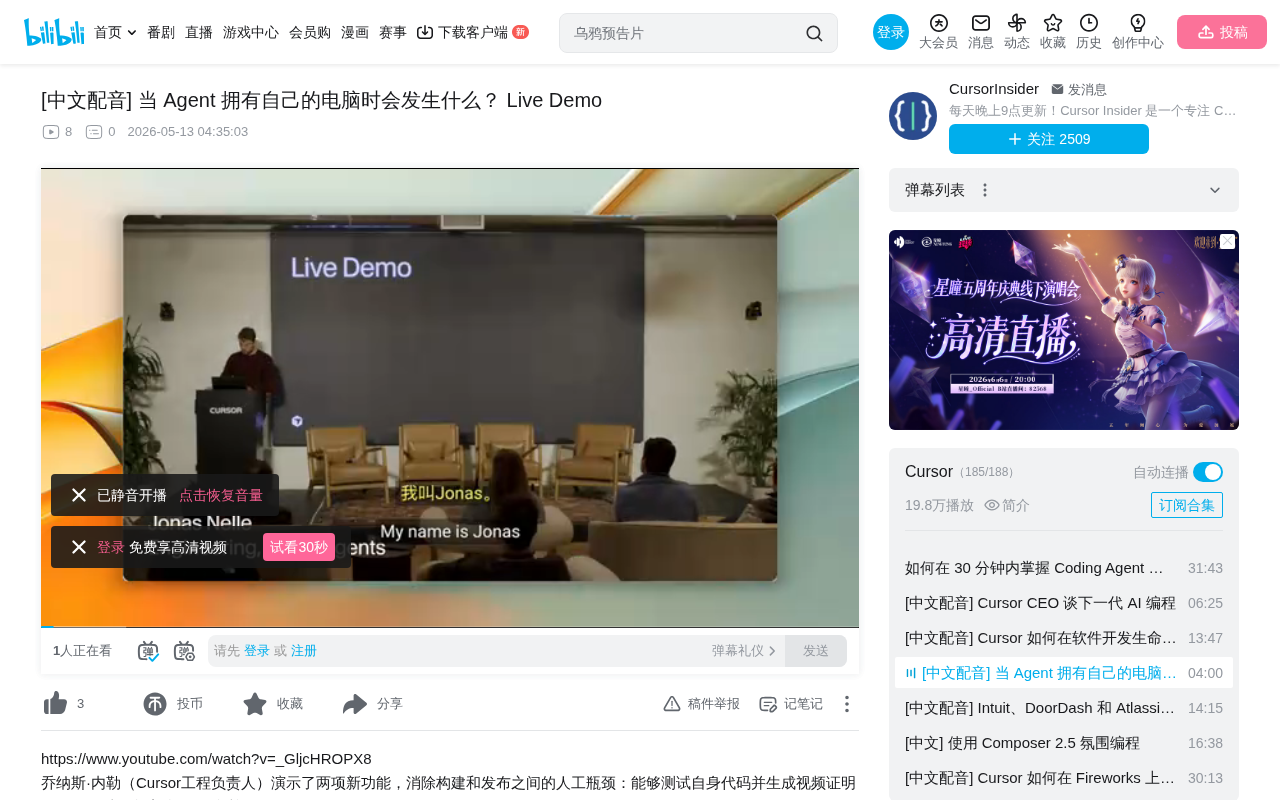
Cursor Cloud Agent Demo: Eliminating Bottlenecks Across the Entire Software Development Lifecycle
Deep analysis of Cursor's Cloud Agent demo showing how cloud VMs, automated test artifacts, and a full-chain control plane systematically eliminate human bottlenecks across the software development lifecycle.