ArcReel: An Open-Source AI Agent-Powered Video Generation Workbench
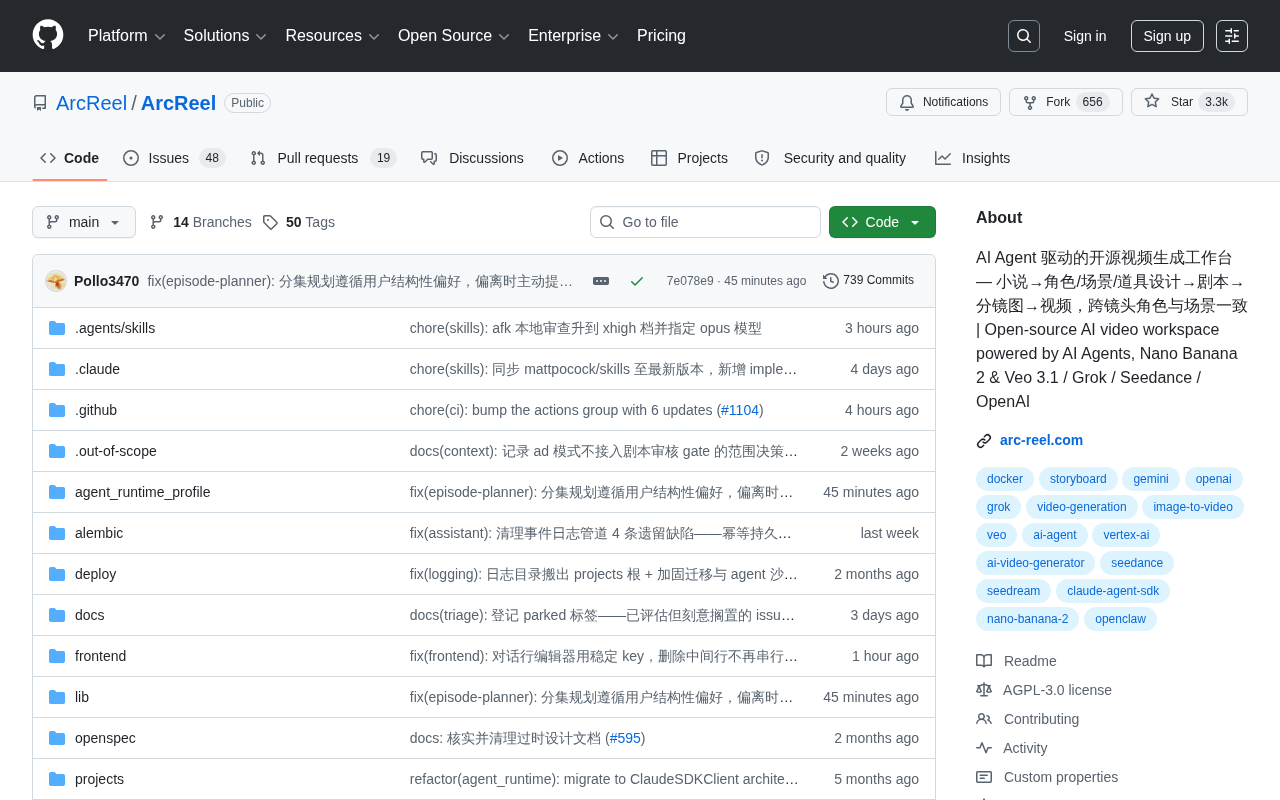
ArcReel is an open-source AI video workbench that turns novels into consistent films via a five-stage Agent pipeline.
ArcReel is an open-source, AI Agent-driven video generation workbench designed to solve the persistent cross-shot character and scene consistency problem in AI video creation. It breaks the creative process into five interventiable stages — text input, character/scene/prop design, scriptwriting, storyboarding, and video generation — using a "fix visual assets first, then generate" strategy borrowed from film pre-production. The project integrates Veo 3.1, Grok, Seedance, OpenAI, and other models through a multi-model routing approach. With 2,111 GitHub Stars, it targets independent creators and web novel adaptation teams, representing a concrete application of Agent orchestration and multi-model collaboration in video production.
A End-to-End Workflow from Novel to Finished Film
In the AI video generation space, producing a few seconds of footage with a single model is no longer remarkable. The real challenge lies in breaking a complete story down into a controlled, coherent sequence of shots. That's precisely the problem ArcReel aims to solve — it's an open-source video generation workbench powered by AI Agents, decomposing the creative process into a clear pipeline: starting from a prose narrative, progressing through character/scene/prop design, scriptwriting, and storyboard generation, and ultimately producing a finished video.
The project has accumulated 2,111 Stars and 447 Forks on GitHub, with Python as its primary language — numbers that reflect a meaningful level of community interest. Rather than simply wrapping a single video model, ArcReel brings the entire production pipeline from narrative to finished film into a local workbench.
Core Value Proposition: Cross-Shot Character and Scene Consistency
ArcReel's most notable design goal is tackling one of the most persistent pain points in AI video generation — cross-shot character and scene consistency. With conventional text-to-video tools, when generating multiple shots, a character's appearance, clothing, and scene layout tend to drift with each generation, making the final cut feel like a patchwork of different people and places.
ArcReel's approach is to lock in character designs, scene designs, and prop designs at the front of the pipeline, establishing a reusable set of visual assets that are then referenced during storyboarding and video generation. This "design first, generate second" methodology essentially brings the concept of pre-production art direction from filmmaking into the AI generation workflow — and from an engineering standpoint, it's a sensible approach to the consistency problem.
Multi-Model Integration: A Deliberate Technical Choice
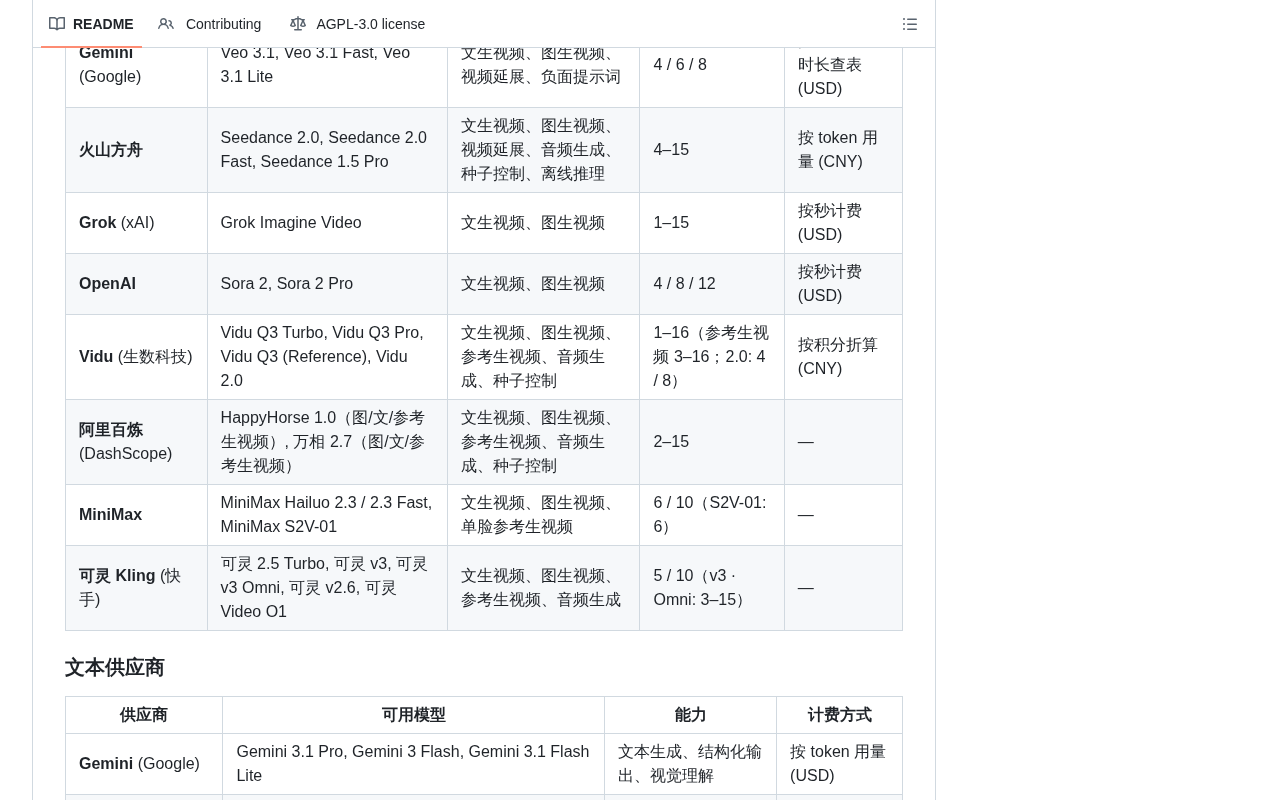
ArcReel doesn't lock in to a single model. Instead, it integrates several leading generative capabilities, including Nano Banana 2, Veo 3.1, Grok, Seedance, and OpenAI-related models. This multi-model strategy carries several practical advantages:
- Division of labor between image and video generation: Different stages call on models best suited for each task — character design illustrations and storyboards lean on image generation models, while the final output draws on video models.
- Reduced single-vendor risk: By aggregating multiple APIs within an open-source workbench, users can switch flexibly based on cost and availability.
- Elasticity as models evolve: As underlying models improve, the workbench layer can continuously integrate newer, more capable options.
Workflow Breakdown: Five Key Stages
ArcReel's production pipeline can be understood as five distinct stages:
1. Novel / Text Input
The creative process begins with a narrative text, which lowers the barrier to entry — users don't need to know anything about storyboarding or video production; they just need to supply a story.
2. Character / Scene / Prop Design
The Agent automatically extracts the characters, settings, and props that need to appear based on the text, then generates corresponding design visuals. This step is the foundation for all subsequent consistency.
3. Scriptwriting
The narrative text is transformed into a structured script that clearly defines the content and shot requirements for each scene.
4. Storyboard Generation
Based on the script and the already-fixed visual assets, individual storyboard frames are generated to serve as direct references for video generation.
5. Video Generation
Video models are invoked to transform the storyboard frames into dynamic shots, which are then assembled into the final cut.
The value of this pipeline lies in turning the vague black box of "text to video" into a transparent process where every step can be intervened in and corrected. Users can step in and make adjustments at any stage, rather than passively accepting whatever a one-shot generation produces.
Positioning and Target Users
ArcReel sits somewhere between a fully automated tool and a creative workbench. It's best understood as a productivity tool for independent creators and short-video/web novel adaptation teams — compressing a workflow that once required collaboration between artists, storyboard artists, and editors into a single Agent-coordinated workbench.
As an open-source project, it offers another layer of value: transparency and control. Users can inspect the pipeline logic, swap out models, and build on top of it — a meaningful advantage for teams that need a customized video production pipeline. Compared to closed-source, all-in-one video generation services, ArcReel puts control back in the hands of the user.
Questions Worth Watching
Based on available information, ArcReel presents a clear product vision, but several things remain to be verified: first, how well cross-shot consistency actually holds up in practice — this kind of promise is extremely difficult to deliver on at the engineering level; second, multi-model integration means users need to supply their own API keys for multiple services and absorb the corresponding usage costs; third, how well the fully automated pipeline from novel to finished film performs in terms of narrative comprehension and cinematic expressiveness still needs real-world testing.
For developers and creators following the AI video generation space, ArcReel offers an open-source reference worth tracking — it represents a concrete attempt to apply the "Agent orchestration + multi-model collaboration" technical approach to the domain of video creation.
Related articles
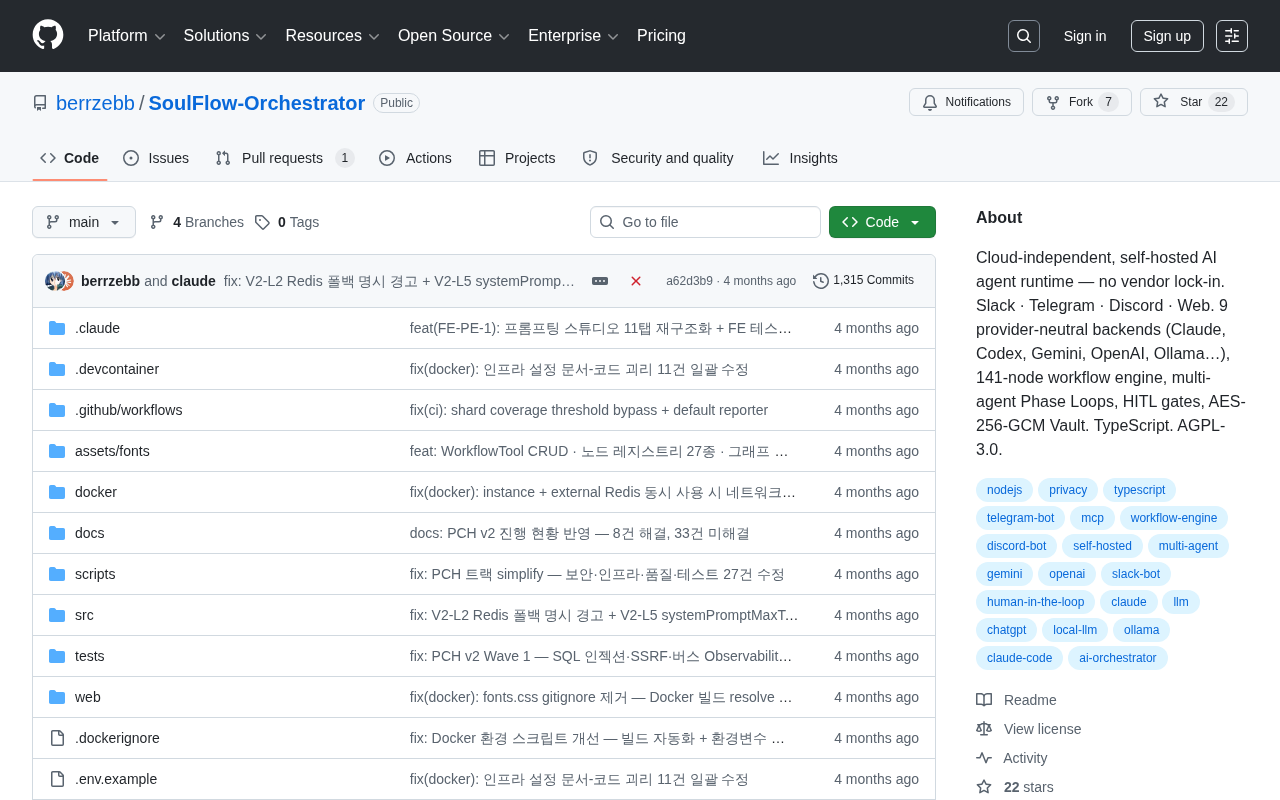
SoulFlow-Orchestrator: A Self-Hosted, Vendor-Lock-In-Free AI Agent Runtime
SoulFlow-Orchestrator is an open-source, self-hosted AI agent runtime with no vendor lock-in. Supports 9 neutral backends (Claude, OpenAI, Ollama), 141-node workflow engine, multi-agent loops, and HITL gates.
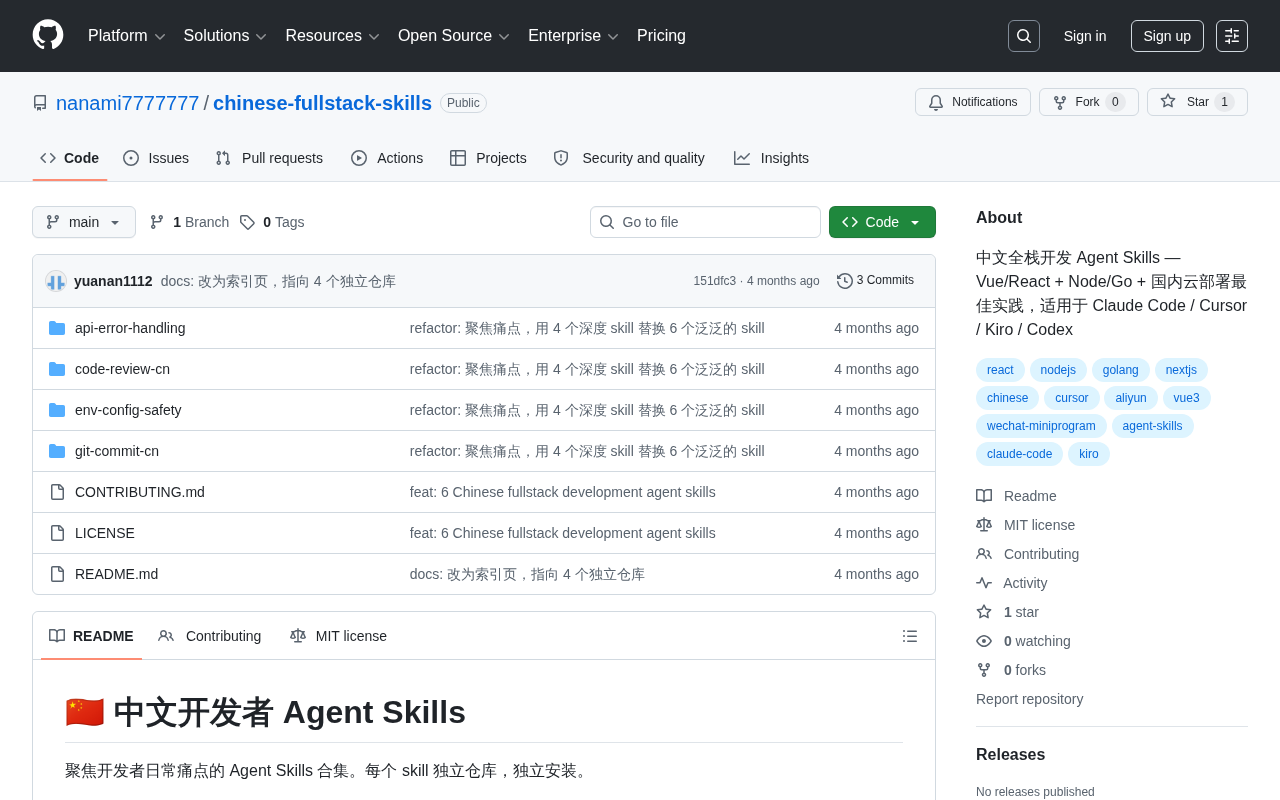
Chinese Full-Stack Agent Skills: A Skill Library Tailored for Domestic AI-Assisted Development
chinese-fullstack-skills is an Agent Skills library for Chinese full-stack development, covering Vue/React, Node/Go, and domestic cloud deployment best practices. Compatible with Claude Code, Cursor, Kiro, and Codex.
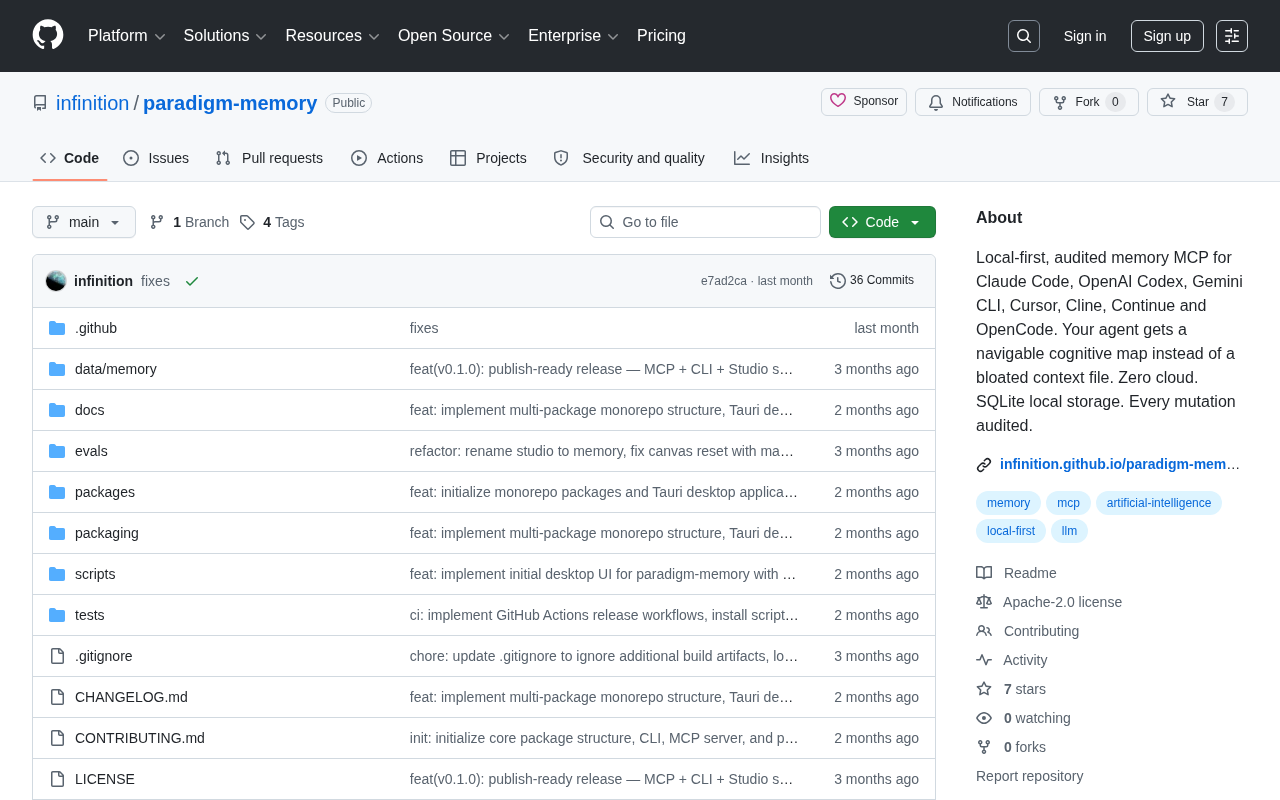
Paradigm Memory: A Local-First Memory System for AI Coding Assistants
paradigm-memory is a local MCP memory tool for Claude Code, Cursor, and Cline. It uses SQLite local storage, zero cloud, full audit trails, and a navigable cognitive map instead of bloated context files.