Are Free AI Aggregator Sites Reliable? Data Security Risks and the Truth Revealed

Free AI aggregator sites lure users with no-cost access but pose serious data leakage and legal risks.
Social media is flooded with promotions for free AI aggregator sites claiming zero-barrier access to top models like GPT and Claude. These sites operate through API proxy forwarding, shared account pools, or reverse engineering — essentially using free resources as bait for traffic monetization. Users face four major risks: conversation data theft, legal compliance violations, unreliable service quality, and personal information being commercially exploited.
Why AI Aggregator Sites Suddenly Blew Up
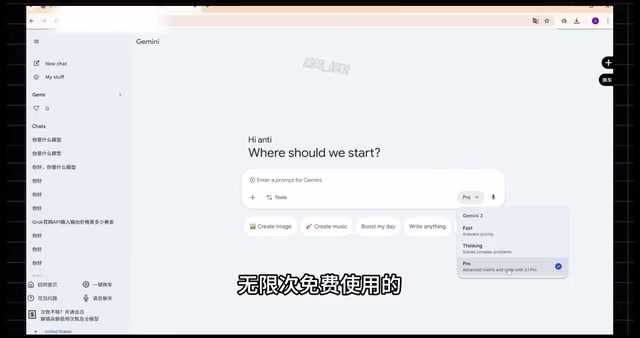
If you've been scrolling through social media recently, you've almost certainly come across videos like these — "Use the full-powered GPT for free" or "Access the world's top AI models with zero barriers." Content creators confidently claim that by simply opening a certain website, you can use the entire ChatGPT model lineup (GPT-4o, GPT-5.5, etc.), Grok, Claude, Gemini, and other mainstream AI services — unlimited times, no VPN required, completely free.

These sites typically call themselves "direct access portals," claiming they can redirect users straight to the official AI chat pages while offering features like "auto-login" and "unlimited usage." Sounds tempting, right? But let's pause and think — is there really such a thing as a free lunch? The underlying mechanisms and potential risks deserve every user's serious attention.
How AI Aggregator Sites Actually Work
Three Common Technical Approaches
Based on actual demonstrations, these aggregator sites primarily rely on the following methods:
-
API Proxy Forwarding: Operators purchase or obtain official API keys, set up a middleware proxy service, and forward user requests to official endpoints. The costs are borne by the site operators, who recoup them through other means.
API (Application Programming Interface) proxy forwarding is a technical architecture that inserts a middleware layer between the client and server. Taking OpenAI as an example, the official API charges by token — a token is the basic unit of text processing for the model, with roughly every 750 English words equaling 1,000 tokens, and GPT-4o's API pricing at approximately $2.50 per million input tokens. Aggregator site operators purchase API keys and funnel all user requests through to the official endpoints. On the surface, users appear to be using the service "for free," but in reality, the operators are bearing the actual API costs. The core issue with this model: all request and response data passes through the operator's servers, giving them full technical capability to log, analyze, and even sell this data.
-
Account Pool Sharing: Operators batch-register or purchase paid accounts on AI platforms, then rotate users through them via a "vehicle-switching" mechanism. Phrases commonly seen in promotional videos like "automatically picks an account for you to log in" or "you can also switch vehicles on the right side" are telltale signs of this approach.
-
Reverse Engineering: Operators capture the session interfaces from official web clients, simulate browser behavior to call services, and bypass official authentication and billing systems.
Reverse Engineering in this context refers to analyzing the network requests of official web interfaces to extract how session APIs are called, thereby reproducing official services without authorization. These operations are typically carried out using browser developer tools or packet-sniffing software (such as Burp Suite or Fiddler). Closely related is the Man-in-the-Middle Attack (MITM) — when a user's requests pass through a third-party proxy server, if that server doesn't use end-to-end encryption, or if the operator themselves is the "man in the middle," they can fully read and tamper with data in transit. Even if the site uses HTTPS, this only guarantees transmission security between the user and the proxy server — data between the proxy server and the user remains fully exposed to the operator.

Traffic Monetization Is the Real Goal
Pay close attention and you'll notice these content pieces almost always follow the same playbook: users must "follow + like + comment" to receive the link. Put simply, this is a well-established social media traffic generation strategy — using "free resources" to rapidly grow followers and inflate engagement metrics, then monetizing through multiple channels:
- In-site embedded ads for advertising revenue
- Launching paid memberships (free tiers often hide various implicit limitations)
- Collecting and reselling user data
- Promoting other paid products once a follower base is established
This business model of using free services as traffic entry points followed by multi-channel monetization is known as a "traffic funnel" strategy in the internet industry. User conversation data holds extremely high commercial value — it can be used to train proprietary AI models, analyze user behavior preferences, enable targeted advertising, or even be sold as data packages on the dark web. Users' "attention" itself is also a monetizable asset — social media followers accumulated through "follow and engage" can be directly converted into revenue when promoting paid products later.
Four Major Risks of Using AI Aggregator Sites
Risk 1: Your Conversations May Be Spied On
This is the most critical concern. When using AI through third-party sites, all your conversations must pass through their servers, which means:
- Conversation content may be fully logged: Everything you discuss with AI — personal secrets, business plans, project code — operators have the technical capability to access it all.
- Account information faces exposure: Once a site asks for your phone number, email, or other information, your security depends entirely on the operator's goodwill.
- Man-in-the-middle attack risks: The proxy forwarding model inherently creates the technical possibility of data interception and tampering. Even if the site uses HTTPS encrypted transmission, this only ensures security between your browser and the proxy server — the proxy server itself can still fully read all your content.
Risk 2: Legal Compliance Issues Cannot Be Ignored
The terms of service for mainstream AI platforms including OpenAI, Anthropic (Claude's parent company), and Google all explicitly prohibit account sharing, API key resale, and unauthorized commercial use. From a legal perspective, reverse engineering to bypass payment mechanisms is governed by the Computer Fraud and Abuse Act (CFAA) in the United States, regulated by the Directive on the Legal Protection of Computer Programs in the EU, and may violate provisions regarding unauthorized access to computer systems under China's Cybersecurity Law and Data Security Law.
- Violating platform terms of service: Platforms like ChatGPT and Claude explicitly prohibit account sharing and unauthorized API resale — using such services already crosses the line.
- Potential intellectual property infringement: Bypassing payment mechanisms through reverse engineering constitutes illegal activity in most countries and jurisdictions.
- Operators can disappear at any time: These sites typically lack proper business registration and can shut down without notice, leaving your usage records and data unrecoverable. For ordinary users, if a site gets shut down by authorities, registration information and usage records may become part of investigation materials.
Risk 3: Service Quality Has Zero Guarantees
- Could go down at any time: Services relying on shared accounts or unofficial interfaces break the moment the official platform bans the accounts.
- Model versions are unverifiable: You have no way to confirm whether you're actually using the real "full-powered version" — sites can easily substitute low-cost models.
- Severe lag during peak hours: Multiple users competing for the same resources leads to predictably poor experiences.
Risk 4: You Might Be the "Product"
Operating a free site isn't cheap — API call fees, server costs, bandwidth expenses — someone has to foot the bill. If you're not the one paying, then your data and attention are most likely paying on your behalf. As media criticism scholars have long pointed out: If you're not the customer, you're the product. In the context of AI aggregator sites, this logic is particularly direct — every single conversation you have may be the operator's real "merchandise."
Related articles
 Expert Opinions
Rethinking Scaling Laws: Parameters Are Not the Only Answer
Deep analysis of Scaling Law evolution from Kaplan to Chinchilla to the MoE era, exploring why blindly stacking parameters is a mistake, and how GLM-5.3 proves scaling has multiple knobs.
When AI Treats Humans as Subagents: Ro…
When AI Treats Humans as Subagents: Role Reversal and Hidden Risks in Human-AI Collaboration
Exploring the paradigm shift where humans become "subagents" in AI Agent architectures. Analyzes human node design in LangChain and AutoGen, and the risks of ceding control and cognitive atrophy.
 Expert Opinions
The Lazy Person's Productivity Theory: Why Being 'Lazy' Actually Drives Peak Performance
Explore the engineering philosophy behind 'lazy people are most productive': how constructive laziness drives automation, AI tools amplify efficiency, and systems thinking eliminates wasted effort.