Arena Programming Benchmark Revision Explained: Why Astra Tops the Real-World Coding Leaderboard
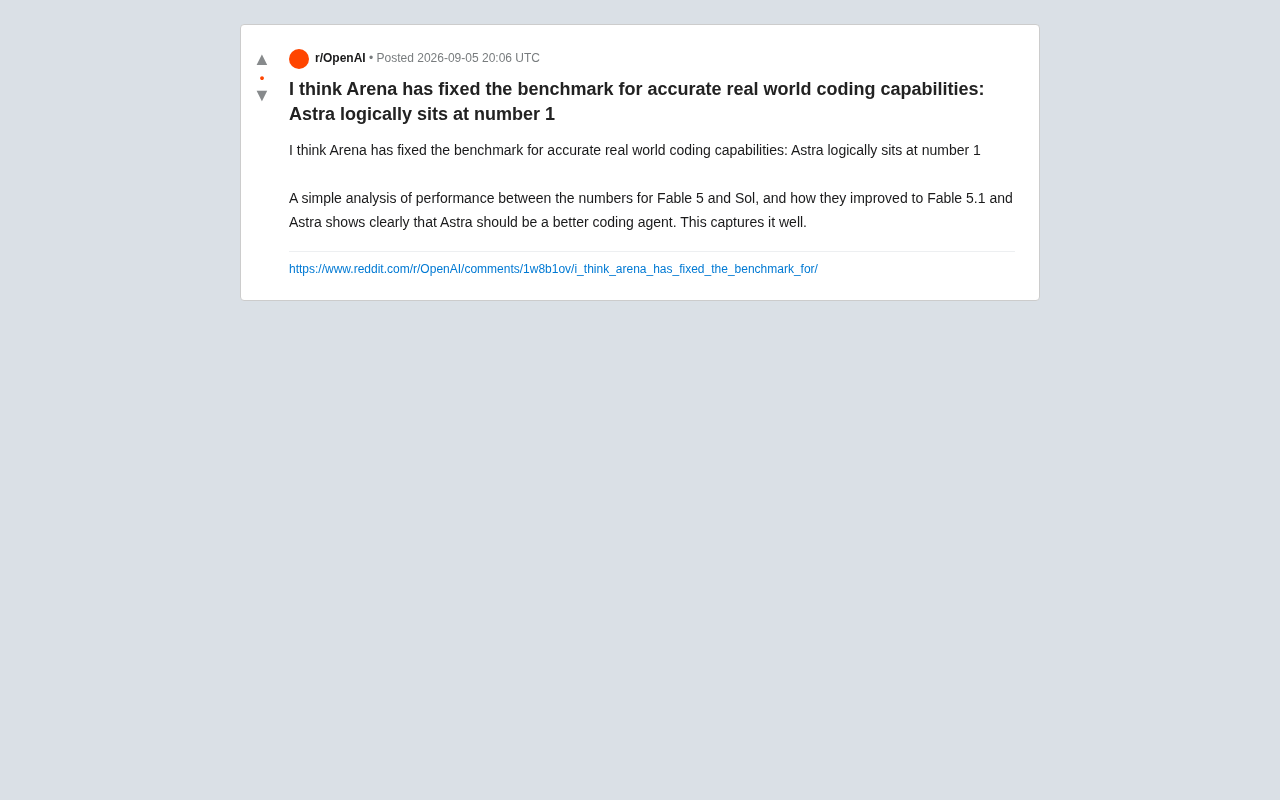
Arena's revised coding benchmark puts Astra at #1, reflecting a shift toward real-world programming evaluation.
After Arena revised its programming benchmark to better reflect real-world coding ability, Astra logically claimed the top spot through its clear evolution from the Fable and Sol model lineage. This article examines why traditional benchmarks fall short, how coding agent evaluation is advancing, and offers practical advice for developers navigating AI coding assistant choices.
Why Programming Capability Evaluation Needs New Standards
AI coding assistants are emerging one after another, but how to accurately measure a model's capabilities in real-world programming scenarios has always been a tough challenge for the industry. Traditional code benchmarks focus on isolated algorithmic problems or standardized tasks, which barely reflect the complex demands developers face in their daily work.
Traditional AI programming benchmarks like HumanEval and MBPP (Mostly Basic Python Problems) typically require models to generate standalone code snippets based on function signatures and docstrings. HumanEval, released by OpenAI in 2021, contains 164 hand-crafted programming problems primarily testing function-level code generation capabilities. While these tests provide standardized and reproducible evaluations, their limitations are increasingly apparent: the problems are typically self-contained, involving no external dependencies, project structures, or cross-file references — a far cry from the engineering-level programming tasks developers face daily. This is the fundamental reason the industry keeps pushing for benchmarks that more closely mirror real-world scenarios.
Recently, a discussion on the Reddit community caught attention: a developer pointed out that the Arena evaluation platform had revised its programming benchmark, making evaluation results more accurately reflect real-world coding ability. Under this new evaluation framework, Astra logically sits at the number one position.
The Evolution Path from Fable to Sol: How Astra Came Out on Top
Model Iteration Through the Lens of Performance Data
According to community analysis, comparing the performance data between Fable 5 and Sol, along with their respective evolutions to Fable 5.1 and Astra, reveals a clear trajectory of capability improvement.
The original poster's core argument is:
"A simple analysis of performance between the numbers for Fable 5 and Sol, and how they improved to Fable 5.1 and Astra shows clearly that Astra should be a better coding agent."
The "Coding Agent" mentioned here represents an AI system paradigm that goes beyond traditional code completion. Unlike simple code generation models, coding agents can autonomously execute multi-step programming workflows: understanding requirements, retrieving relevant code context, formulating implementation plans, writing code, running tests, analyzing error outputs, and iteratively fixing issues. A typical coding agent architecture usually includes a planning module, a code execution sandbox, tool-calling interfaces (such as file read/write, terminal commands, and search engines), and reflection and self-correction mechanisms. SWE-bench is a well-known benchmark specifically designed to evaluate such coding agents — it requires models to solve real Issues in actual GitHub repositories, demanding an understanding of project structure, locating relevant files, and submitting patches that pass tests.
This suggests that model capability improvements are not linear accumulations but rather achieve qualitative leaps in real programming tasks through targeted optimization. Large language model iterations typically involve improvements across multiple dimensions: enhanced quality and scale of base model pre-training data, optimized Instruction Tuning strategies, application of Reinforcement Learning from Human Feedback (RLHF) or Direct Preference Optimization (DPO), and strengthened inference-time compute strategies such as Chain-of-Thought reasoning and tool-use capabilities. When these improvements work synergistically in programming scenarios, they can produce emergent capability breakthroughs — where a model suddenly demonstrates performance far exceeding its predecessors on complex programming tasks in a particular iteration, rather than showing simple linear progress. As the latest result in this evolutionary chain, Astra stands out most prominently in coding agent capabilities.
Why Astra "Logically" Deserves the Top Spot
The post uses the phrase "logically sits at number 1." This wording indicates that Astra's leading position is not a random evaluation fluctuation but rather an inevitable result consistent with the evolutionary patterns across versions. When the benchmark itself can accurately capture real-world coding ability, Astra's ranking aligns closely with its technical iteration trajectory.
The Core Value of Real-World Programming Benchmarks
Why Traditional Benchmarks Fall Short
A long-standing pain point in AI coding assistant evaluation has been the severe disconnect between benchmarks and actual user experience. Many models score impressively on standardized tests but deliver mediocre performance when developers actually use them. The root cause is that real programming tasks involve multiple high-difficulty dimensions:
- Multi-file, multi-module context understanding: It's not about completing a single function but understanding the entire project structure. This is one of the core technical challenges facing today's AI coding assistants. Real software projects typically contain hundreds to tens of thousands of files, with total codebases reaching hundreds of thousands of lines. Limited by Context Window length constraints, models cannot read an entire codebase at once. Therefore, advanced coding agents need to implement efficient Code Retrieval mechanisms, typically combining Retrieval-Augmented Generation (RAG) techniques with the code's Abstract Syntax Tree (AST), Call Graph, and dependency graphs to locate code snippets most relevant to the current task. Additionally, models need to understand the project's architectural patterns, naming conventions, and coding style to generate code consistent with the existing codebase.
- Compatibility and modification of existing codebases: Safely iterating on top of existing code while avoiding regression defects
- Reasonable inference under ambiguous requirements: Real-world requirements are rarely written as standardized problems; models need to make reasonable judgments with incomplete information
- Debugging and iteration capabilities: The probability of generating correct code on the first attempt is far lower than iterative debugging and optimization. Excellent coding agents should possess closed-loop capabilities to run code, interpret error messages, and autonomously fix issues
If Arena has indeed revised its benchmark to cover these dimensions, it holds significant reference value for the entire industry — enabling developers to make coding assistant selection decisions that better match real-world needs.
Advances in AI Programming Evaluation Methodology
Behind this discussion lies a methodological upgrade underway in the AI evaluation field. From early static code completion tests to today's emphasis on evaluating comprehensive "coding agent" capabilities, evaluation standards are moving closer to real workflows.
The core methodology adopted by the Arena evaluation platform draws from the crowdsourced blind testing model of Chatbot Arena (operated by LMSYS). In this model, users submit real tasks, the system randomly assigns two anonymous models to respond separately, and users select the better result without knowing which model is which. This approach effectively eliminates brand recognition bias and expectation effects. Anonymous codenames (such as Astra, Fable, and Sol in this article) are a manifestation of the blind testing mechanism, ensuring judgments are based entirely on output quality rather than brand reputation. Final rankings are typically calculated using the Elo rating system or the Bradley-Terry model, similar to the rating logic in competitive domains like chess, converging to stable capability rankings through large numbers of pairwise comparisons.
A good programming benchmark should be able to distinguish between two types of models:
- Models that "look like they can code" — producing syntactically correct code snippets in simple scenarios and passing function-level unit tests, but lacking understanding of the overall project
- Models that "actually solve problems" — completing end-to-end programming tasks in complex contexts, handling cross-file dependencies, understanding business logic, and generating maintainable engineering-level code
Arena's benchmark revision is an important step in this direction.
A Rational View of Leaderboards: How Developers Should Make Decisions
Limitations of a Single Information Source
It's worth noting that the information in this article primarily comes from a single Reddit community discussion post, lacking cross-validation from more independent data sources. Names like Astra, Fable, and Sol may be anonymous codenames used by the evaluation platform to avoid brand bias in blind testing. This anonymization practice has become common in AI evaluation, aimed at preventing the "halo effect" — where users tend to give higher ratings upon recognizing a well-known brand, thereby distorting the objectivity of evaluation results. Therefore, readers should maintain a cautious attitude when referencing leaderboard conclusions, focusing on whether the evaluation methodology behind the rankings is scientifically rigorous, rather than just the final standings.
Practical Advice for Developers
Regardless of how leaderboards change, for actual users, the most reliable verification method remains testing in your own real projects. Benchmarks provide reference coordinates, not absolute truth. Here are specific recommendations:
- Focus on the evaluation methodology itself: Understand the specific capability dimensions the benchmark measures and determine whether they match your use case. For example, if you primarily do frontend development, a benchmark emphasizing backend algorithm capabilities may have limited reference value
- Choose models based on your work context: Different projects have vastly different needs for context understanding, debugging capabilities, and multi-language support — there's no need to blindly follow the top-ranked model. A model that excels at Python data processing tasks may not perform equally well in TypeScript frontend framework development
- Continuously track model iterations: AI coding assistants update rapidly, with mainstream model iteration cycles shortened to weeks or months. Timely evaluation of new versions' actual benefits in your projects is essential
- Cross-validate across multiple platforms: Don't rely on a single leaderboard. Combine multiple evaluation sources (such as SWE-bench, LiveCodeBench, Chatbot Arena, etc.) for comprehensive judgment — cross-validation helps build a more complete capability profile
Conclusion
Arena's revision of its programming capability benchmark, along with Astra's rise to the top after the revision, reflects AI programming evaluation evolving toward a more realistic and practical direction. When benchmarks can accurately capture real-world coding ability, model rankings are no longer a simple numbers game but a true reflection of technical strength.
For developers who closely follow the AI coding space, this trend is worth looking forward to — better evaluation standards will ultimately drive the entire industry to deliver more powerful and reliable coding assistants. And as users, the most valuable thing we can do is validate every "leaderboard champion" against our own real-world scenarios.
Related articles
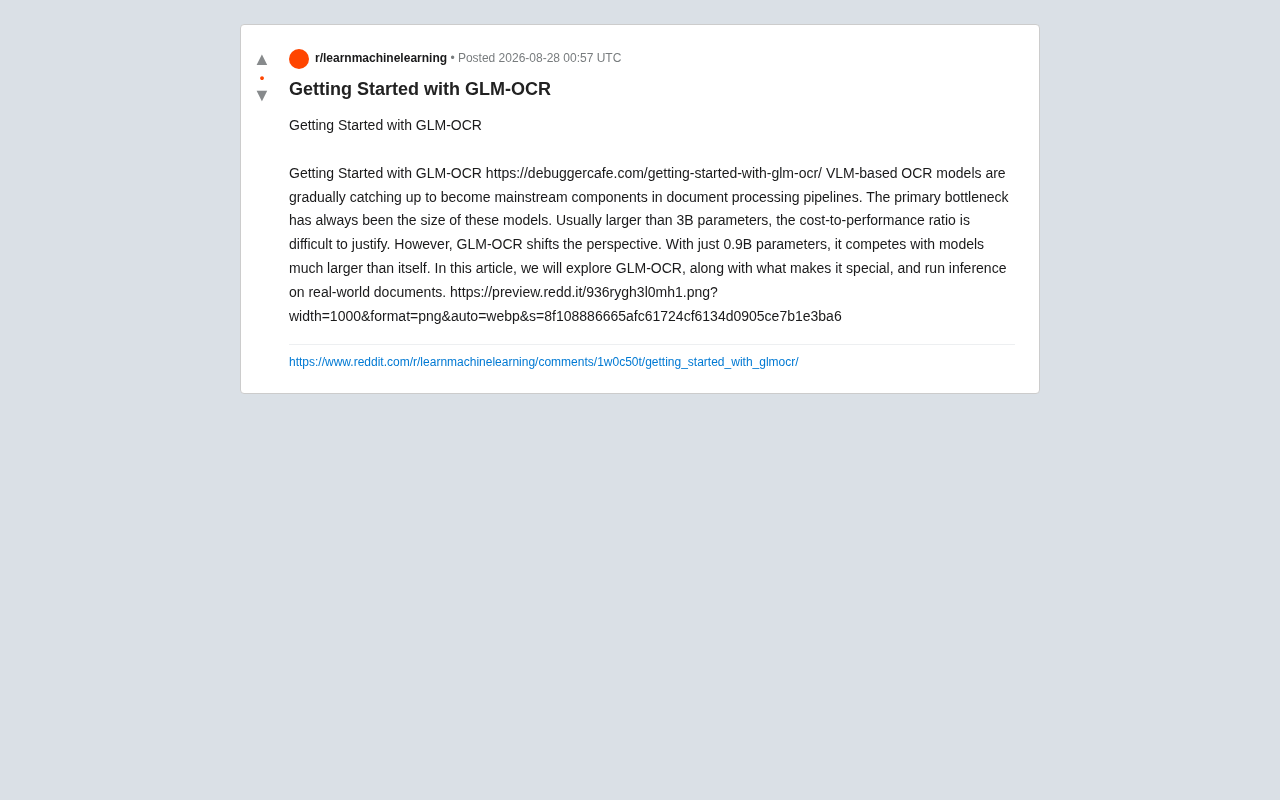
GLM-OCR: How a 0.9B Parameter Lightweight Model is Disrupting Document Recognition
Deep dive into how GLM-OCR achieves document recognition performance comparable to 3B+ large models with only 0.9B parameters. Covers VLM-based OCR evolution, lightweight deployment advantages, and enterprise applications.
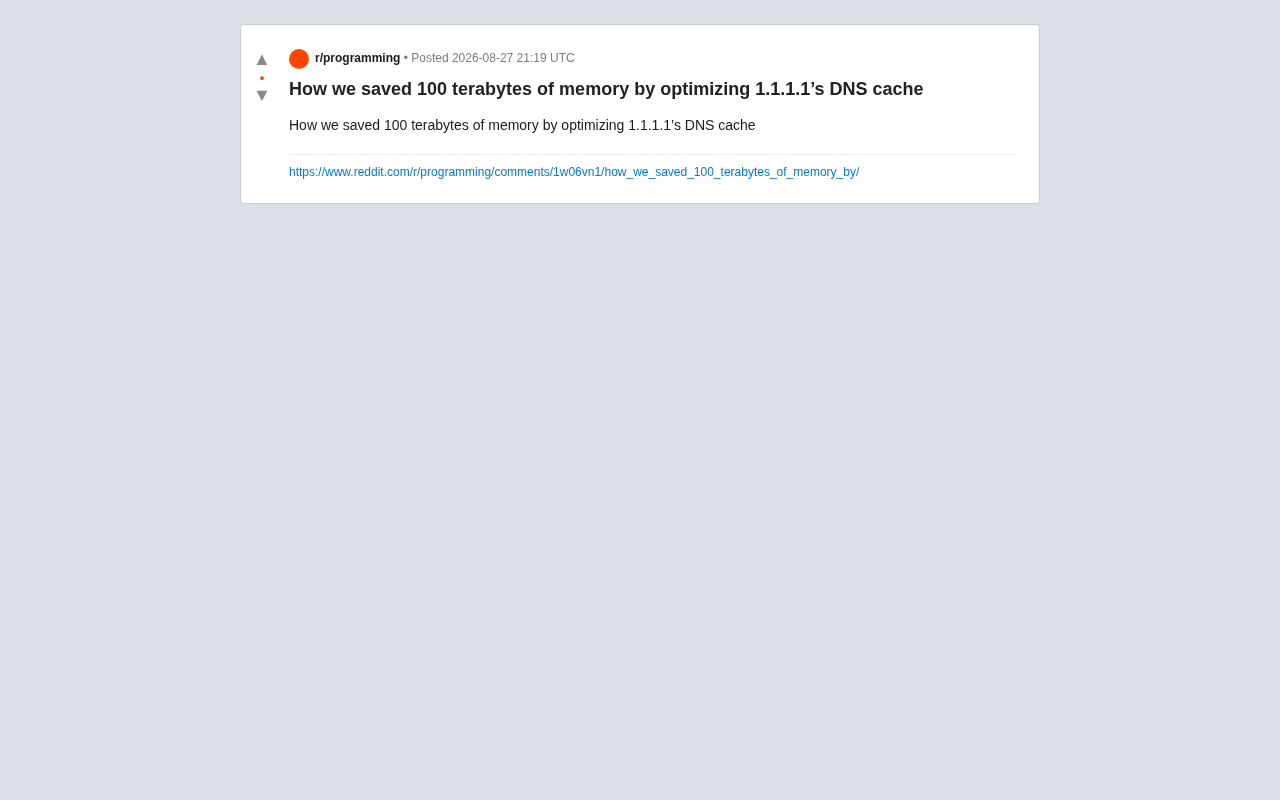
How Cloudflare Saved 100TB of Memory by Optimizing 1.1.1.1 DNS Caching: An Engineering Deep Dive
How Cloudflare optimized 1.1.1.1 DNS cache data structures and memory layout to save 100TB of memory across hundreds of global data centers.
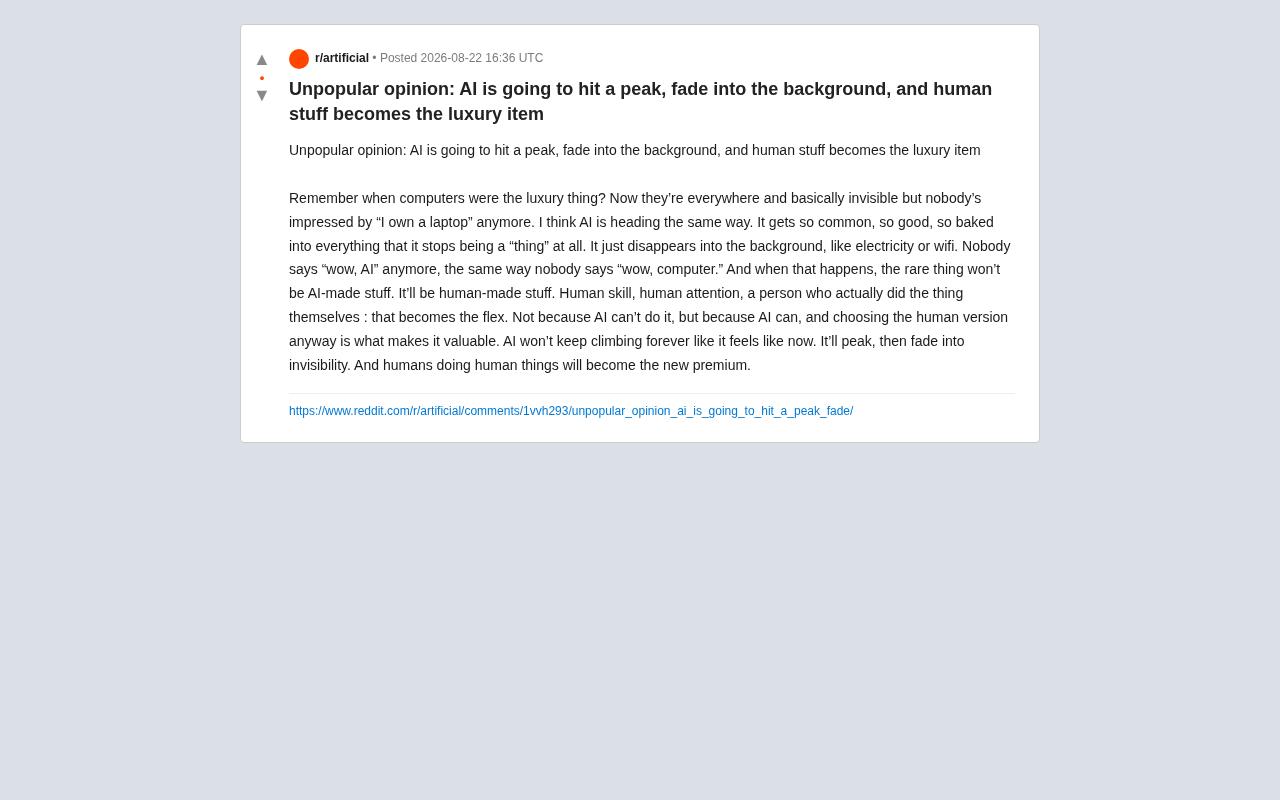
AI Will Eventually Become Invisible: Is Human Craftsmanship the New Luxury?
When AI becomes invisible infrastructure like WiFi, human craftsmanship will become the true luxury. A deep analysis of scarcity economics and tech disenchantment.