ARR August Cycle Discussion: Review Quality, Result Timing, and Rebuttal Period Changes
Reddit community discusses ARR August cycle: uneven review quality, delayed results, and a longer rebuttal window.
This article breaks down a Reddit discussion about the ACL Rolling Review (ARR) August cycle, focusing on three core issues: polarized review quality (with some papers showing minimal citations and reviewers now treating AI-generated content as a distinct concern); unpredictable result release timing that historically runs at least half a day late; and the rebuttal period being extended from the usual 6–7 days to 10 days — a meaningful benefit for authors coordinating across time zones or responding to multiple reviewers. The article also captures the lighter moments of peer banter during a stressful submission season, and closes with practical advice on evaluating review feedback, managing timeline expectations, and making the most of the extended rebuttal window.
ACL Rolling Review August Cycle: Community Discussion
ACL Rolling Review (ARR) is a key paper review mechanism in the natural language processing field, and each cycle tends to spark extensive discussion across the academic community. A recent Reddit thread focused on the ARR August cycle reflects researchers' widespread concerns about review quality, result publication timing, and process changes.
While these conversations may seem scattered, they highlight persistent pain points in the academic review system and offer first-hand observations that are genuinely useful for researchers who are preparing to submit or have already submitted papers.
A Tale of Two Reviews: Quality Polarization
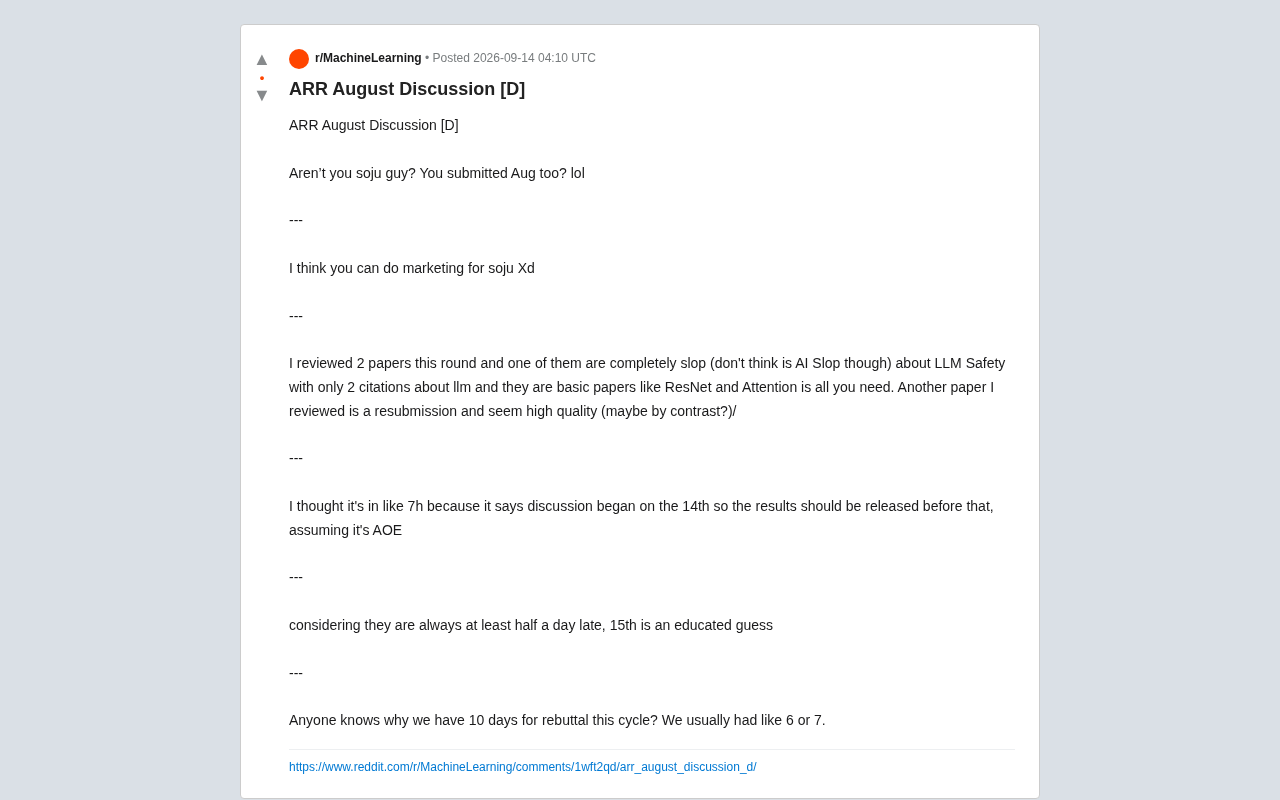
One participant shared a telling account of their experience as a reviewer this cycle, describing a stark contrast in paper quality. One of the papers they reviewed — on LLM Safety — was described as "completely slop," with only two citations throughout the entire manuscript, both of which were foundational references like ResNet and "Attention is all you need."
Notably, the reviewer was careful to clarify that they "don't think [it] is AI Slop" — meaning they didn't believe it was low-quality content generated by AI, but rather that the authors themselves were simply underprepared. This detail is telling: in the age of generative AI, reviewers have begun treating "AI-generated filler content" as a distinct evaluative dimension in its own right.
By contrast, the other paper they reviewed was a resubmission of noticeably higher quality — though the reviewer half-jokingly added "maybe by contrast?" This quip captures a real problem: when a batch of submissions varies wildly in quality, reviewers' judgments of "good" and "bad" inevitably become skewed by relative comparison.
Uncertainty Around Result Publication
The question of when review decisions would be released also surfaced in the discussion, with participants offering guesses and experience-based inferences. One person reasoned that, given the official note that "discussion began on the 14th," results should arrive before the 14th, assuming AOE (Anywhere on Earth) time.
A more seasoned participant offered what they called an "educated guess" based on historical patterns: given that ARR is "always at least half a day late," the 15th was a more realistic expectation.
This kind of speculation around release timing has become a recurring fixture of every review cycle, and it indirectly signals that there is room for improvement in how the organizers communicate timelines. For researchers who rely on decisions to plan subsequent submission strategies, this uncertainty creates genuine logistical headaches.
Extended Rebuttal Period Draws Attention
One noteworthy procedural change flagged in the discussion was the adjustment to the rebuttal window. A user asked: "Anyone knows why we have 10 days for rebuttal this cycle? We usually had like 6 or 7."
The rebuttal period has been extended from the usual 6–7 days to 10 days — a substantive change. While the discussion didn't surface any official explanation, a longer rebuttal window is generally a win for authors. It allows more time to craft responses, run additional experiments, or organize arguments — especially when cross-timezone collaboration is needed or when addressing concerns from multiple reviewers.
The change may also reflect a deliberate effort by the organizers to improve the quality of reviewer-author interaction. Shorter rebuttal periods have long been criticized as perfunctory, with authors often unable to provide substantive responses in time. Extending the window could be an attempt to address that criticism.
The Lighter Side of Academic Community
Beyond the procedural discussions, the thread also captured the humor that's characteristic of academic communities. The opening exchanges between users joking about "soju guy" — "You submitted Aug too? lol" and "I think you can do marketing for soju" — show how researchers interact socially during the high-stress submission season.
These lighthearted exchanges may seem trivial, but they play an important role in sustaining community cohesion. In the midst of a high-pressure review cycle, the camaraderie and mutual recognition among peers adds a rare human touch to what is otherwise an intensely demanding professional environment.
Takeaways for Researchers
A few practical insights emerge from this discussion for anyone navigating the submission process. Review quality is inherently variable — when faced with uneven feedback, authors need to calmly assess which comments represent constructive critique and which reflect an underprepared reviewer.
Result announcements tend to run late, so there's no need to panic if the expected date passes without news. And the extended 10-day rebuttal window this cycle is an opportunity worth using fully — investing the time to prepare a well-argued, evidence-backed response can meaningfully improve a paper's final outcome.
Related articles
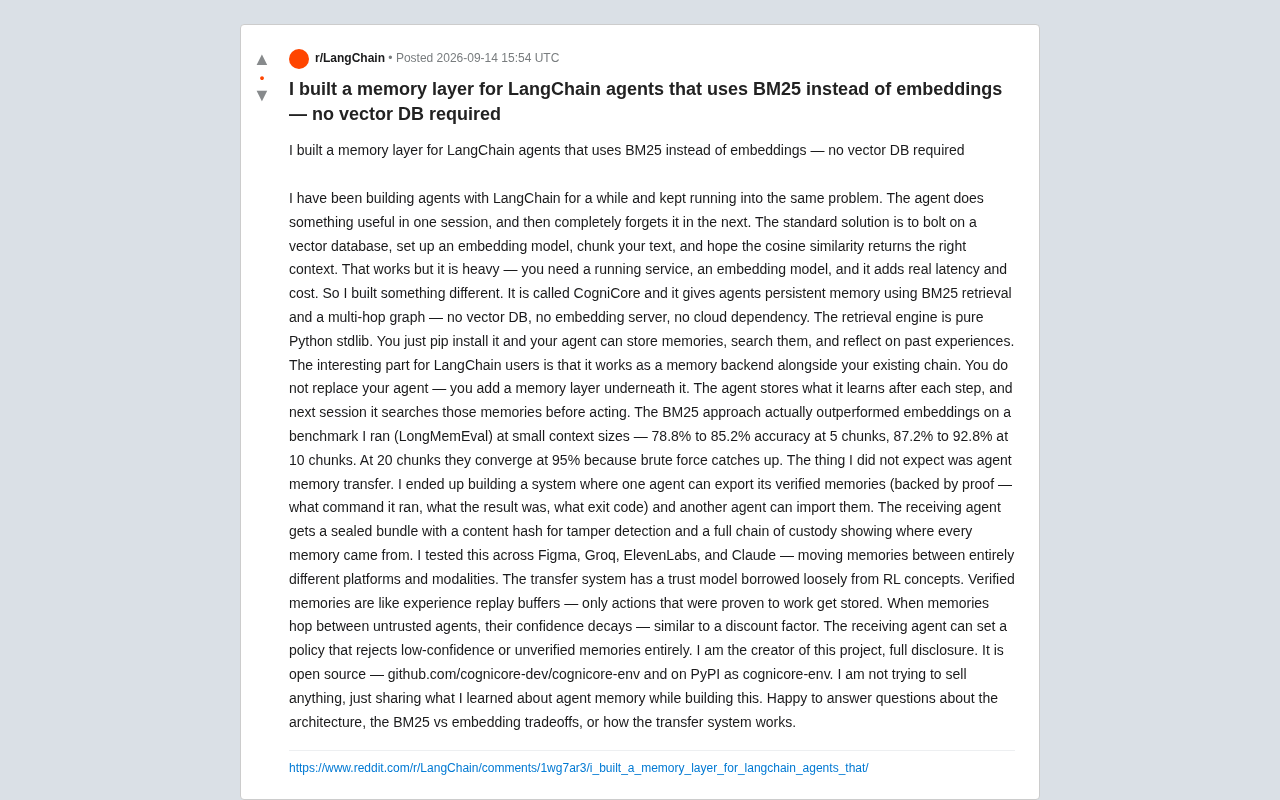
Ditch the Vector Database: Building a Memory Layer for LangChain Agents with BM25
CogniCore replaces vector databases with BM25 retrieval for LangChain agent memory, outperforming embeddings in small-context benchmarks with zero external dependencies.
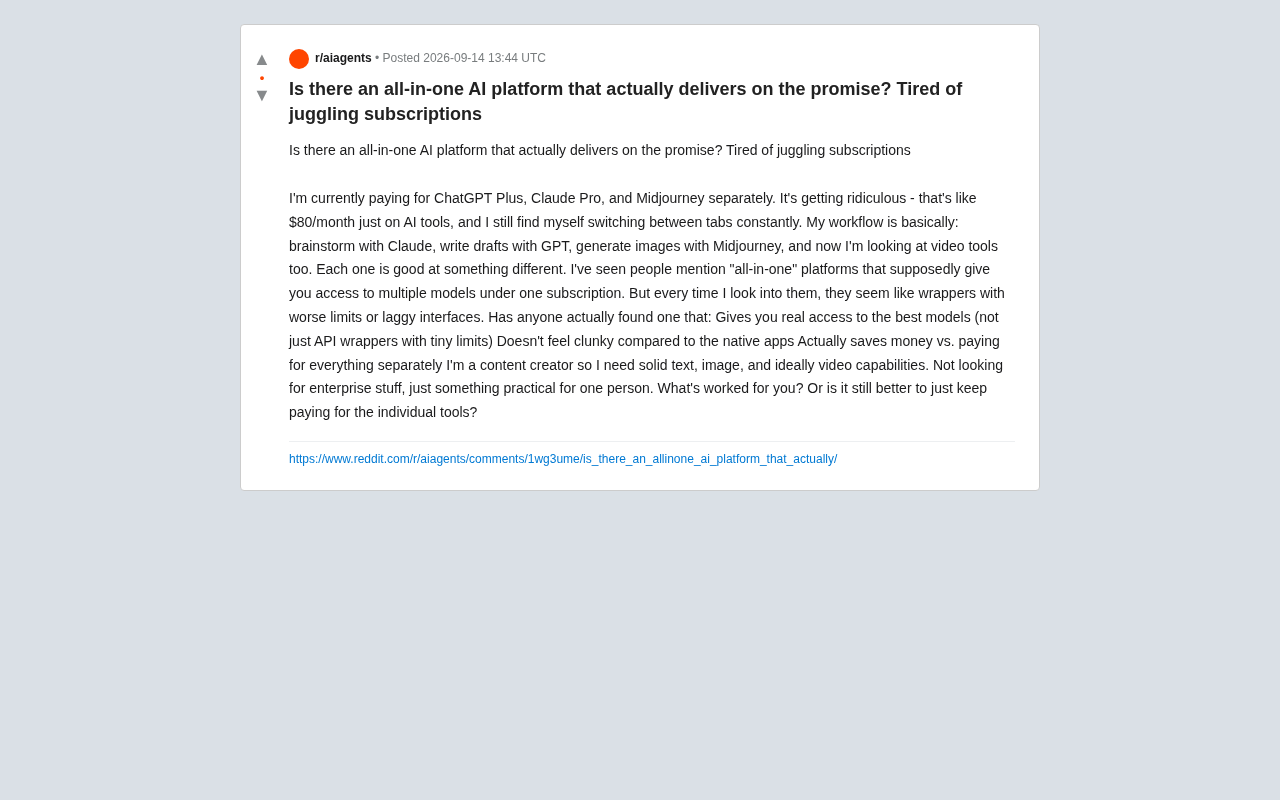
Are All-in-One AI Platforms Actually Worth It? A Practical Guide to Escaping Subscription Overload
Tired of paying for ChatGPT, Claude, and Midjourney separately? We break down whether all-in-one AI platforms are actually worth it — and what a smarter subscription stack looks like.
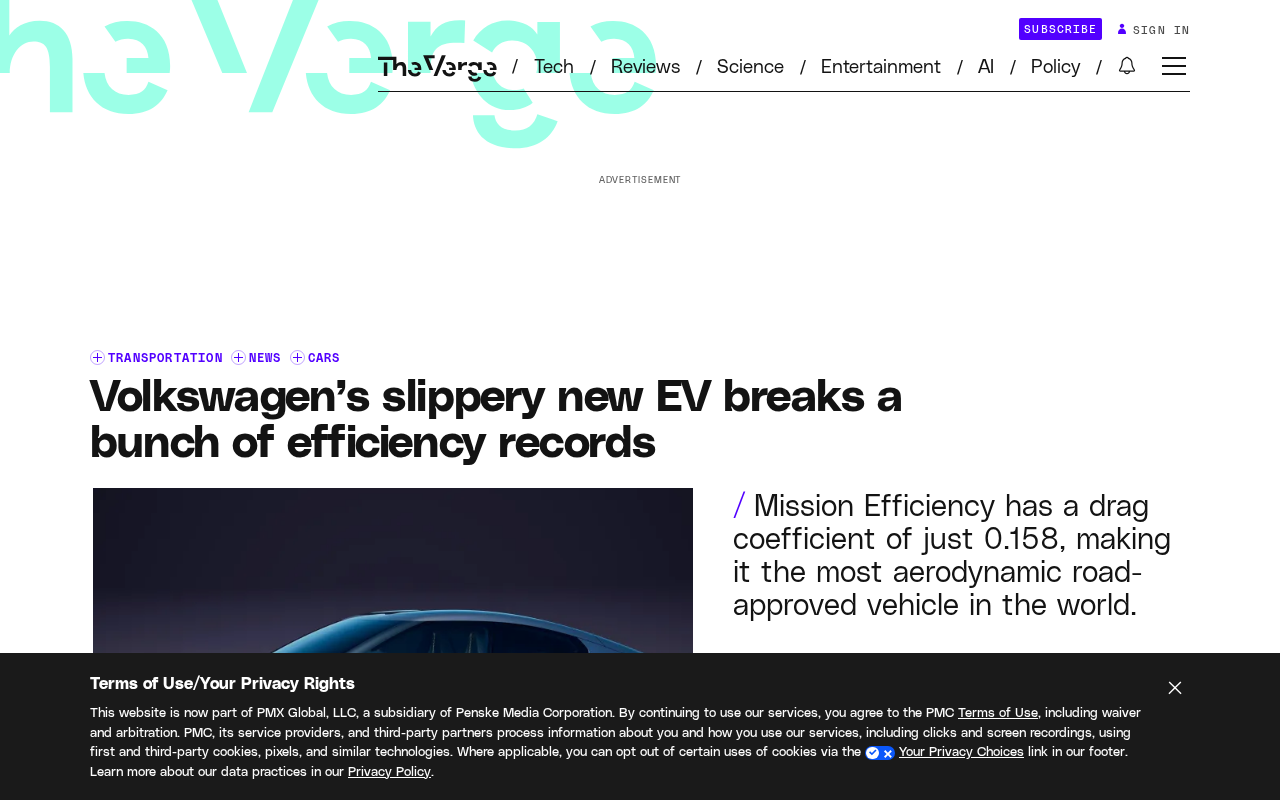
Volkswagen Mission Efficiency: The World's Lowest-Drag EV Breaks Multiple Efficiency Records
Volkswagen's Mission Efficiency prototype claims the world's lowest drag coefficient, built on MEB+ platform with ID. Polo and ID. Cross components. Here's what it means for EV efficiency.