Askmeety Review: A Local AI Meeting Notes Tool for Mac with Zero Data Upload

Askmeety is a fully local Mac AI meeting notes tool that keeps all data private on-device.
This article reviews Askmeety, a local AI meeting notes tool that leverages Apple Silicon's Neural Engine and OpenAI's open-source Whisper speech recognition model to perform 100% on-device meeting transcription and processing on Mac—no cloud upload required. Its core advantage is data privacy protection, completely avoiding GDPR, CCPA, and other data compliance risks, with no bot needed to join meetings, making it fully transparent to participants.
Why You Need a Local AI Meeting Notes Tool
Have you ever experienced this: you're fully engaged in a meeting—listening, nodding, contributing to the discussion—only to walk out and realize you didn't capture any of the key information?
Most AI meeting note tools solve this problem by uploading audio to cloud servers, but that means your conversation data could be used for model training, and you'll need to pay a monthly subscription. Askmeety offers a fundamentally different approach—all processing happens 100% locally on your Mac, with no data ever uploaded to external servers.
This local processing capability is technically dependent on the breakthrough advances in Apple Silicon chips. Since Apple introduced the M1 chip in 2020, the M-series processors have included a dedicated Neural Engine—not just a general-purpose compute unit, but a hardware accelerator specifically designed for core AI inference operations like matrix multiplication and convolution. Its design philosophy draws from Google's TPU (Tensor Processing Unit) architecture, but with extensive optimization for the power constraints of mobile and desktop devices. Peak compute has leapt from 11 TOPS (Trillion Operations Per Second) on M1 to 38 TOPS on M4—a more than 3x performance improvement. More critically, the Neural Engine shares a Unified Memory Architecture with the CPU and GPU, eliminating the bottleneck of data transfer between separate memory pools in traditional heterogeneous computing. This allows large language model KV Caches to reside efficiently in memory, significantly reducing inference latency.
OpenAI's open-source Whisper speech recognition model, released in 2022, further lowered the technical barrier for local speech-to-text conversion. Whisper is an end-to-end speech recognition system based on the Transformer architecture, trained on 680,000 hours of multilingual audio, supporting recognition and translation in 99 languages. Its architecture uses an encoder-decoder structure: the encoder transforms audio Mel Spectrograms into high-dimensional feature representations, while the decoder generates text output word by word in an autoregressive manner. Whisper offers multiple sizes ranging from tiny (39M parameters) to large-v3 (1.5B parameters), allowing developers to choose the appropriate model size based on device compute power. On Apple Silicon devices, leveraging Core ML conversion tools and ANE acceleration, the Whisper medium model can achieve near real-time transcription speeds with accuracy approaching cloud service levels, running smoothly on consumer-grade devices. It's precisely the maturation and convergence of these two technologies that has made fully local AI meeting tools like Askmeety a reality rather than just a concept.
Askmeety Core Features in Detail
Fully Local Processing: Data Never Leaves Your Device
Askmeety's greatest differentiator is its fully local architecture design. Unlike mainstream AI meeting note tools on the market (such as Otter.ai, Fireflies, etc.), Askmeety never sends your audio data to any cloud server. Specifically:
- Your meeting content cannot be accessed by third parties
- Conversation data is never used for AI model training
- No concerns about data breaches or privacy compliance issues
This feature is particularly important given the increasingly strict global data privacy regulations. The EU's General Data Protection Regulation (GDPR) explicitly requires that companies using third-party tools to process personal data must sign a Data Processing Agreement (DPA) and ensure data is not used for unauthorized purposes. The California Consumer Privacy Act (CCPA) similarly grants users the right to know about and delete their personal data. For multinational enterprises, uploading meeting recordings to overseas cloud servers could even trigger regulatory reviews on cross-border data transfers. Askmeety's local architecture fundamentally sidesteps this regulatory complexity—since data never leaves the user's device, there is no legal "data processing" relationship to speak of. This feature is especially critical for professionals handling sensitive business information, legal consultations, or medical discussions.
No Bot Intrusion: Completely Transparent to Meeting Participants
Many AI meeting tools require a "Bot" to join the meeting,
Related articles
 Product Reviews
The Programmer's Desk Setup Guide: Building a Workspace That Feels Like Home
Discover how programmers build productive, comfortable workspaces. From multi-monitor setups to ergonomic design, explore the desk philosophy that drives focus and flow.
 Product Reviews
Qoder vs Cursor Real-World Comparison: Which $20/Month AI IDE Is Better?
Hands-on comparison of Qoder vs Cursor AI IDEs: Agent autonomy, human interaction count, and architecture decisions. Qoder needed only 2 interactions vs Cursor's 8.
 Product Reviews
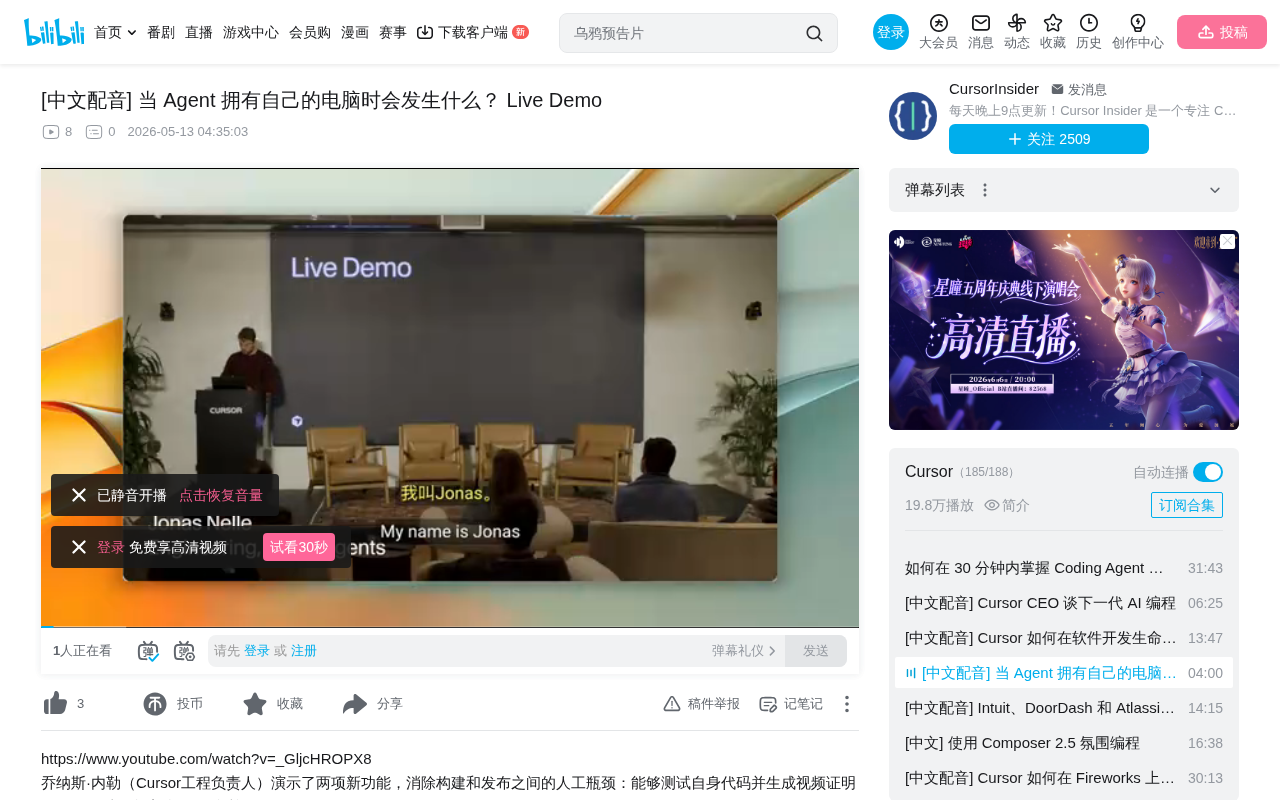
Cursor Cloud Agent Demo: Eliminating Bottlenecks Across the Entire Software Development Lifecycle
Deep analysis of Cursor's Cloud Agent demo showing how cloud VMs, automated test artifacts, and a full-chain control plane systematically eliminate human bottlenecks across the software development lifecycle.