Asteroid Terraforming: Humanity's First Achievable 'World-Building' Project

Asteroids, not planets, are likely humanity's first achievable world-building project.
The article argues that when the term terraforming first appeared in 1942, its subject was an asteroid, not a planet, and asteroids may become humanity's first completed world-building project due to their finishability. Asteroid transformation cannot copy planetary terraforming and sits between terraforming, paraterraforming, and bioforming. Carbonaceous asteroids' water, organics, and phosphorus are more valuable than precious metals, while nitrogen is the awkward import. The first step may be bagging rubble-pile asteroids for processing. Core engineering includes rotating habitats for gravity, sealed shells for atmosphere, and mirrors plus automation for energy. Economically, transformation turns mining camps into permanent cities, making settlements outlive ore veins and spawning specialized trade. Ultimately, asteroids may become more numerous, diverse micro-worlds, changing our understanding of a world.
When we talk about terraforming, what usually comes to mind is Mars turning blue, Venus cooling down, or distant exoplanets being shaped into a second Earth. But when the word "terraforming" first appeared, its subject was surprisingly small—not a planet, not a moon, but an asteroid. In 1942, Jack Williamson coined the term in Collision Orbit, and the body being transformed was only a few miles wide.
According to analysis by the YouTube channel Science & Futurism with Isaac Arthur, asteroids are not an edge case of terraforming—in a sense, they are the "original case." This leads to a counterintuitive conclusion: the first world-building project humanity completes is very likely not a planet, but those floating piles of rubble in space.
Why Asteroids: Small Enough to 'Finish'
Planet-scale transformation is a civilization-scale exercise in patience. Terraforming Mars takes centuries; terraforming Venus requires an entire epoch-level toolkit of mirrors, sunshades, chemical processing, and atmospheric removal. Asteroids are different: small enough to be wrapped, hollowed, spun, heated, shielded, and seeded with life, on a timescale closer to "building a city" than "remaking a planet."
This "finishability" brings enormous political and economic appeal. A modest coalition of nations could, in theory, genuinely complete the transformation of an asteroid within a human timescale; larger bodies like Ceres, Vesta, and Pallas are already dwarf-planet-class worlds that could develop into archipelagos of enclosed seas, underground cities, and orbital habitats.
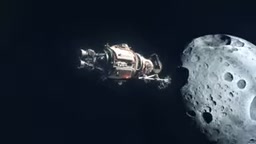
But first, a common misconception must be cleared up: the asteroid belt is not the crowded boulder field of sci-fi films where spaceships dodge giant rocks. It is extraordinarily vast, thin, and mostly empty, with average spacing between large asteroids measured in millions of kilometers. Still, there are millions of bodies worth studying, and thousands large enough to become major settlements.
Asteroid Terraforming Is Not 'Planetary Terraforming' but 'World-Building'
Planetary-style terraforming cannot be copied onto asteroids: you cannot pour an ocean onto a two-kilometer-wide rock and wait for clouds to rise, because there is no sky to see. Air would escape; water would drift away, boil, freeze, or splash into space. Most asteroids have gravity so weak that rockets are unnecessary—the tiny push of a normal step is enough to send you floating off the surface.
Asteroid terraforming therefore sits on the blurred boundary between terraforming and paraterraforming. Classic terraforming changes the world itself, ideally leaving an ecosystem that requires no continuous mechanical maintenance; paraterraforming relies on domes, mirrors, shielding, artificial magnetospheres, rotating habitats, and other structures and active systems. There is also bioforming—engineering organisms to adapt to an alien environment rather than engineering the environment to suit humans.
For asteroids, the lines between these three are especially blurred. The essence of world-building is: take a rock that is "naturally broken by human standards" and supply what is missing—enclosure, gravity, energy, ecology, economy, and time.
Paraterraforming is a key concept in planetary engineering: rather than altering a body's overall environment, it creates localized habitable spaces through enclosed or semi-enclosed structures (such as domes, underground cities, and pressurized vessels). Unlike classic terraforming, which pursues a global, self-sustaining ecosystem, paraterraforming depends on continuous technical maintenance but can achieve habitability on a smaller, faster, and more economical timescale. The term is often discussed alongside bioforming (adapting organisms to the environment), and the three form a continuum from "transforming the world" to "transforming the organism." For bodies like asteroids, with extremely weak gravity and no ability to retain an atmosphere, paraterraforming is virtually the only feasible engineering path.
The Raw Materials of World-Building: Carbonaceous Asteroids Are the Real Treasure
Calling an asteroid "a rock in space" is like calling a city "bricks on land." Asteroids vary enormously: metallic types offer nickel, iron, and platinum-group metals; stony types offer silicates, oxygen-bearing minerals, and raw materials for ceramics and glass; carbonaceous asteroids, though less glamorous, may be the real prize for world-building—water, organics, carbon, sulfur, phosphorus, and other chemicals useful for life.
Gold is nice, but phosphorus feeds civilizations. Phosphorus is a bottleneck resource for agriculture. Even in a mature space economy, it may be worth paying a premium for.
A habitable world needs not just structure but volatiles and life chemistry: hydrogen, carbon, nitrogen, oxygen, sulfur, phosphorus, trace elements, and plenty of water. Oxygen is relatively easy—it is everywhere in rocky material, locked in silicates and oxides; water is harder because it needs hydrogen, which is reactive and prone to escape; nitrogen is often a headache because breathable air is mostly nitrogen, and nitrogen is not enriched on many asteroids.
This means the best candidates for transformation are not pure metallic asteroids, nor pure rubble piles, but useful hybrids: metals for structure, silicates for glass and ceramics, carbon compounds for chemistry, hydrated minerals and ice for water, and enough trace elements that agriculture and industry need not import everything.

The First Step May Be 'Bagging the Rock'
Many asteroids are not solid monoliths but loose aggregates—rubble piles, fractured bodies, porous boulders, mixtures of dust, metal, ice, and carbon-rich material. Stirred by Jupiter and shattered by billions of years of collisions, they sometimes reassemble loosely. A rubble pile sounds like poor real estate, but if you want to process it as a whole, it is perfect: a solid planet resists your ambitions, while a rubble pile welcomes disassembly.
You can bag it, center it, melt it, sort it, compress it, spin it, inflate it, and turn it into something far more useful than its original shape. The first step may not be adding air, planting trees, or adding gravity at all, but wrapping the asteroid in a containment membrane or net—preventing material and dust from drifting away, providing anchor points, and letting you process the rock without losing material. For small bodies of tens to hundreds of meters, you could wrap them in graphene-reinforced nets, metal foil bags, or membrane layers, then heat, vibrate, sort, and mine inside the bag.
The economic logic matters too: asteroid settlements will not be built because people "like rocks," but because asteroids are useful—water, metals, convenient orbits, or as fuel depots, dry docks, research stations, military outposts, and construction sites outside planetary gravity wells. The real value of asteroid mining is not shipping iron back to Earth—Earth lacks neither iron nor stone—but building in space: every ton of refined material can become habitat walls, mirrors, pressure tanks, radiation shielding, farm equipment, or rotating habitats without launching from a planet.
Engineering Micro-Worlds: Gravity, Containers, and Atmosphere
Imagine an asteroid about two kilometers in diameter: billions of tons of material, small enough to discuss enclosing most of it and converting it into a coherent engineered environment.
The first issue is gravity. Surface gravity on such bodies is essentially negligible for humans—you do not walk, you jump, drift, tether, and climb. Three solutions: adapt life to microgravity (bioforming), build rotating habitats, or add artificial gravity. For baseline humans and familiar agriculture, rotating gravity is the mainstay. But if it is a rubble pile, you cannot spin the whole thing—1 Earth gravity would simply fling it apart; in fact, "spinning an asteroid apart" is itself a proposed mining technique.
So the first habitat is more likely a small rotating drum, hundreds of meters in diameter, with comfortable gravity and a rotation rate not so fast as to make people sick. The asteroid becomes shielding and feedstock; what people actually inhabit is a "rotating valley." A cylinder with a radius of about 225 meters provides Earth gravity at roughly two revolutions per minute; some people might notice the Coriolis effect but most can tolerate it. A one-kilometer-radius cylinder at about one revolution per minute feels much better and offers a much vaster interior landscape.
As for artificial gravity, known physics offers no clear path, but the scientific community does not treat it as a hard taboo the way it does faster-than-light travel. More speculative options include gravity manipulation, or placing an artificial black hole at the center—physically tiny, it would not swallow the asteroid, and at that scale would actually be hard to feed. Engineering-wise absurd, but conceptually not magic.
Atmosphere is a harder constraint. Even if you gave the surface of a two-kilometer asteroid Earth gravity, you would not get a normal atmosphere: on a small body gravity falls off extremely quickly—rising one kilometer might sharply weaken it—while escape velocity remains low. A two-kilometer micro-world with 1G at the surface might have an escape velocity of only about 140 m/s, while nitrogen and oxygen molecules at room temperature typically move at several times that speed. Earth holds onto its air thanks to a deep gravity well, not merely the 1G beneath your feet.
So a shell is not optional. But asteroids are not that absurd either: you do not need to withstand hurricanes, oceans, earthquakes, or an entire planet's weather—mainly you need to maintain pressure, block micrometeoroids, manage heat, and keep your own debris from choking you like a dust storm.
A major advantage of asteroids over planets is "patch-style" construction: enclose one cave, then one crater, then one valley, then connect them with pressurized tunnels. It grows like a quilt, with each newly enclosed area adding farms, workshops, housing, reservoirs, parks, or industrial zones.

Air and water thus become more about inventory management than planetary miracles. A fully enclosed habitable area of one square kilometer with a 100-meter ceiling holds about 100 million cubic meters of air; at Earth-like pressure and temperature that is about 120,000 tons, of which roughly 90,000 tons is nitrogen and 28,000 tons is oxygen. Oxygen is not hard—rock and water are mostly oxygen by mass; nitrogen is the awkward import. Different habitats could even use different gas mixes: farm caves, residential drums, low-pressure industrial chambers, and microgravity greenhouses each with their own rules. Water needs vary even more, from tens of thousands of tons per square kilometer for a dry version to hundreds of thousands or even millions of tons for a lush version—huge by spacecraft standards, but trivial by asteroid standards; a two-kilometer asteroid may weigh billions of tons.
Rotating habitat is a space structure that simulates gravity through centrifugal force generated by rotation, with typical designs such as the O'Neill cylinder. The key parameter is matching radius to rotation rate: the smaller the radius, the higher the rotation rate needed to reach 1G, and the more pronounced the Coriolis effect, which may cause dizziness, nausea, and other vestibular disorders. Empirically, a radius of hundreds of meters and a rotation rate of 1-2 revolutions per minute is the comfort zone. For rubble-pile asteroids, spinning the whole body would cause it to disintegrate because centrifugal force exceeds gravity, so rotating habitats must be built as independent structures, with the asteroid providing only shielding and feedstock. This distinction is central to understanding asteroid settlement engineering.
Energy, Industry, and the Economics of Turning Rock into Real Estate
No energy, no world-building. Sunlight in the inner asteroid belt is weaker than near Earth—at about 2.5 AU, intensity is roughly one-sixth that of Earth. That sounds bad, but space has no clouds, no weather, no night (for suitably positioned collectors), and no gravity to make giant mirrors heavy. A square kilometer of cheap metallic mirror focusing light onto a collector is not a mountain of steel but thin film, tension structures, or a light frame. Mirrors are one of the most important enabling technologies in the asteroid belt: concentrated solar power, heating furnaces, driving chemical processing, lighting farms. With aluminum, carbon, silicon, and automation, you can make vast numbers of mirrors; metallic asteroids become mirror factories, and mirror factories become an energy economy.
Deeper or darker regions need nuclear fission, fusion, or beamed power. Fusion especially changes the equation: the asteroid belt is rich in building materials but unevenly lit. In a deuterium economy, hydrogen or water could be imported from icy bodies and fuel extracted locally—refinery-grade chemistry, not a compact filter cartridge; manageable for large asteroid cities, while small mining camps are more likely to rely on solar, fission, or imported fuel.
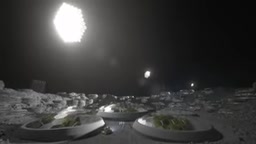
Automation is equally critical: a dozen people might supervise robots processing millions of tons of material. The early motivation is mostly mining: a mining base arrives, processes metals, water, carbon compounds, and volatiles, and needs shelter, radiation protection, maintenance, fuel, food, and local intelligence, because communication delays can be minutes long. The first habitat is probably a workshop with bunks, then a greenhouse, a clinic, a refinery. Once families arrive, the economics change: no longer optimizing only for extraction, but for living.
Asteroid transformation thus becomes real estate: a raw asteroid is a claim, an enclosed asteroid is a title, an interior rotating habitat is housing, a controlled ecosystem is food security, a docking port is trade, a refinery is industry, a school is permanence. A ten-thousand-person asteroid habitat already has most of the characteristics of a town or city-state; a million residents might operate as a nation, even if everyone lives in the same transformed rock.
The key conclusion: transformation changes the economics of "staying." A bare mining camp loses workers when the ore runs out; a transformed or deeply paraterraformed asteroid can outlive the mine, shifting from extraction to manufacturing, from manufacturing to services, from services to culture, research, ship repair, agriculture, and tourism. It need not be self-sufficient: one asteroid specializes in alloys, one in biotech, one supplies water and organics, one does ship repair or luxury habitats—specialization remains powerful; transformation does not eliminate trade but gives it a permanent population to serve.
Sunlight intensity falls off with the square of distance: the main asteroid belt lies about 2.2-3.2 AU from the Sun, with light intensity only 1/5 to 1/10 that of Earth. This means solar collector areas must be correspondingly larger, but the space environment has no clouds, no day-night cycle, and no atmospheric attenuation, and mirrors can use lightweight films or tension structures that bear no gravity loads. Concentrating mirrors thus become the cornerstone of the asteroid belt's energy economy: they can simultaneously provide power generation, industrial heating, chemical processing, and agricultural lighting. In more distant or shadowed regions, nuclear fission, fusion, or beamed power must supplement. Energy availability directly determines the scale and speed of transformation.
From Base to Home: The Civilizational Significance of Small Worlds
Transforming asteroids also changes how we see "worlds." Earth remains the crown jewel of the known universe, but smaller worlds can be made. The story could go like this: a dim carbonaceous rock tumbles between Mars and Jupiter, survey drones land, a beacon is planted, a mining crew arrives, craters are sealed, greenhouses sprout under artificial light, the first rotating drum spins up, the first child is born there, and grows up seeing Earth as the "old country" rather than home. Generations later, tunnels widen, pressure chambers multiply, soil thickens with fungi and earthworms, old mine shafts become marketplaces. At some point, no one calls it a base anymore—just home.
This may be the most important lesson about world-building: it is not about making a planet look like Earth, but about letting life in a place continue, adapt, and generate meaning. Sometimes it is an ocean under an open sky, sometimes a forest inside a rotating drum, sometimes a micro-world wrapped in hard glass and carbon fiber, with rivers curving overhead and a sun made of mirrors. Asteroids may never become Earths in the classic sense, but they may become something more numerous, more diverse in form, and in many ways more practical—millions of small worlds, each built from local stone, local ambition, and the ancient human habit of turning camps into towns and towns into cities.
In the end, an asteroid just needs to give people enough streets to name—then it becomes hard to abandon.
One-line Summary
Asteroids, not planets, are likely humanity's first achievable world-building project.
Paragraph Summary
The article notes that when the term terraforming first appeared in 1942, its subject was an asteroid rather than a planet, and asteroids, because of their "finishability," may become humanity's first completed world-building project. Asteroid transformation cannot copy planetary-style terraforming and sits on the blurred boundary between terraforming, paraterraforming, and bioforming. The water, organics, and phosphorus of carbonaceous asteroids are more valuable for world-building than precious metals, while nitrogen is the most awkward imported resource. The first engineering step may be wrapping rubble-pile asteroids in containment membranes for processing. Core engineering includes rotating habitats for gravity, sealed shells for atmosphere, and concentrating mirrors and automation to support the energy industry. Economically, transformation turns mining camps into permanent cities and real estate, making asteroid settlements longer-lived than ore veins and spawning specialized trade. Ultimately, asteroids may become more numerous and diverse micro-worlds, changing our understanding of what a "world" is.
Related articles

Caramel Apple Phyllo Spiral: A New Thanksgiving Dessert Favorite
Pastry chef Natasha Pickowicz's Caramel Apple Phyllo Spiral on NYT Cooking: miso caramel, phyllo rolling, dual textures—flavor layers and difficulty analyzed.

The Real Experience of Alzheimer's: Five Years from Awareness to Forgetting
A family member recounts five years of caring for a father with Alzheimer's: early awareness and denial, the middle stage when problems shift from self to others, and the terminal stage when all functions shut down.

Single Graph Hypernetwork Zero-Shot Generates Weights for Multiple Architectures, Open-Source Implementation Achieves Cross-Modal Generalization
Reddit developer open-sources Graph HyperNetwork GHN, generating weights for ResNet, MLP-Mixer, MobileNet, and Transformer in a single forward pass, covering vision, text, and waveform modalities, with zero-shot accuracy reported.