Caramel Apple Phyllo Spiral: A New Thanksgiving Dessert Favorite

Pastry chef Natasha Pickowicz's miso caramel apple phyllo spiral on NYT Cooking uses phyllo instead of pie crust for crispy and tender textures in one dessert.
This Caramel Apple Phyllo Spiral, created by pastry chef Natasha Pickowicz and featured on NYT Cooking, is inspired by French tarte Tatin but replaces the repeatedly-folded pie crust with phyllo dough, greatly lowering the difficulty. The process starts with miso caramel, then divides apples: some layered in the pan with caramel, others rolled into oil-brushed phyllo, shaped into tubes, and coiled for baking. After baking, invert while hot. The result combines phyllo's crispy layers with soft caramel apples, while miso enhances the caramel's depth for a sweet-savory complexity. Medium-low difficulty, ideal for home bakers wanting a memorable Thanksgiving dessert without complex pie crust.
A dessert called "Caramel Apple Phyllo Spiral" is generating buzz in food circles—created by pastry chef Natasha Pickowicz and featured on NYT Cooking. This dessert combines caramel apples with crispy phyllo dough. It's not complicated to make, yet delivers two textures at once: a crispy outer layer, a soft and sticky filling, and a layer of caramel-soaked "candied" apple slices at the bottom.
Why This Dessert Is Worth Noticing
Traditional Thanksgiving desserts tend to center on pumpkin pie or apple pie, which involve lengthy processes and high baking skill requirements. The cleverness of this Caramel Apple Phyllo Spiral lies in substituting phyllo dough for pie crust that requires repeated folding, significantly lowering the barrier to entry while preserving the classic "flaky pastry + fruit filling" combination.
According to Natasha Pickowicz in the video, the dessert was inspired by French tarte Tatin, but she added miso paste, giving the caramel a layer of savory umami beyond sweetness, creating a complex "sweet-and-savory" flavor profile. This approach has become common in dessert innovation in recent years, but it's unusual in a Thanksgiving apple dessert—making it a distinctive twist.
Phyllo dough is an extremely thin pastry originating from the Middle East and Balkans, typically made from flour, water, and a small amount of oil, with thickness as low as 0.1mm. It's usually machine-rolled in mass production, so home bakers almost never need to make it from scratch—it's available in the supermarket freezer section. What makes phyllo unique is its ultra-thin layered structure: each layer is brushed with melted butter or oil, and during baking, moisture evaporates and steam creates gaps between layers, resulting in an extremely crispy, shatter-on-touch flaky texture—the signature texture of baklava and spanakopita. Unlike pie crust that requires repeated folding and is sensitive to butter temperature, phyllo is more forgiving; even uneven edges don't affect the final appearance or crispness, which is why it's often used to replace traditional pastry to lower the difficulty. Note that phyllo dries out very easily—exposed to air for just a few minutes it will crack, so unused portions must be covered with a damp cloth during handling.
Breaking Down the Process: From Caramel to Spiral
Step 1: Making Miso Caramel
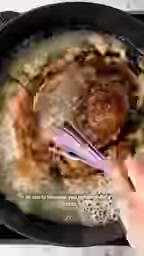
As demonstrated in the video, the starting point is similar to tarte Tatin—make the caramel first. Pickowicz adds miso paste to the caramel and stirs until fully incorporated. The miso doesn't make the caramel "savory" but rather rounds out the sweetness while bringing a deep, caramel-cream-like color. The key here is controlling the heat to prevent the solid particles in the miso from burning.
Miso is a traditional Japanese fermented seasoning made primarily from soybeans, grains (such as rice or barley), salt, and koji, fermented over months to years. Depending on ingredients and fermentation time, miso ranges in color from light yellow to dark brown, and in flavor from mild and sweet to rich and savory. Adding miso to desserts isn't gimmicky—it's a "flavor enhancement" technique commonly used by pastry chefs in recent years: free amino acids (especially glutamate) and nucleotides in miso significantly boost umami, while its saltiness suppresses the perception threshold for sweetness, making caramel taste sweet without being cloying and adding depth. Common types include white miso (Shiro Miso—sweeter, less salty, suitable for beginners) and red miso (Aka Miso—stronger flavor). Since miso contains solid particles and high protein content, after adding to caramel you need to stir continuously and control heat, otherwise the particles can burn at high temperatures and produce bitterness.
Step 2: Preparing Apples for Two Uses
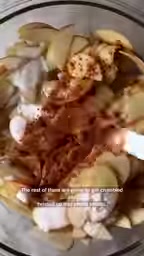
Apples need to be thinly sliced. Some slices are placed directly in the bottom of the baking pan and mixed with caramel; others are used to roll into the phyllo dough. This "one ingredient, two uses" design is the source of the dessert's layers.
Step 3: Rolling the Phyllo Spiral
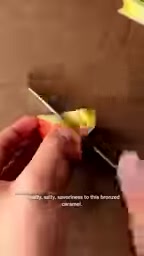
Roll the remaining apple slices into oil-brushed phyllo dough, forming tubes, then bend and coil these tubes into the baking pan already containing apple slices and caramel. Phyllo is extremely thin and easily forms a crispy, flaky texture when baked, and the rolling process doesn't require the neat edges of pie crust—it's quite forgiving.
Step 4: Baking and Inverting
During baking, the caramel at the bottom continuously bubbles and concentrates, "candying" the apple slices at the base—making them translucent and chewy. Meanwhile, the apple slices rolled inside the phyllo heat in a sealed environment and become tender. After baking, invert while hot so the caramel apple layer faces up, creating an appearance similar to an upside-down cake.

Tarte Tatin is a classic French dessert. The traditional method involves cooking apple chunks with butter and sugar in a pan into caramel, then topping with pastry (pâte brisée or puff pastry), baking the whole thing, and inverting to unmold so the caramel apple layer faces up. Its core mechanism is the same as this phyllo spiral: the sugar at the bottom continuously dehydrates and concentrates during baking, undergoing Maillard reactions and caramelization with pectin and juices released by the apples, making the slices translucent and chewy while developing a deep amber sheen. Timing the inversion is critical—it must be done while the pan is still hot, because caramel hardens quickly as it cools, causing apples to stick to the bottom and preventing clean unmolding; but when too hot, the caramel is still bubbling and can cause burns, so thick gloves and a large plate for a single flip are usually needed.
Flavor and Texture: One Dessert, Two Experiences
Pickowicz summarizes it in the video as "two amazing desserts in one": the phyllo portion provides a crispy, flaky texture similar to baklava; the caramel apple bottom provides a soft, rich flavor close to tarte Tatin. Both are completed in the same baking pan, and each bite after slicing delivers crispy pastry, tender apples, and caramel simultaneously.
The miso's presence isn't overly prominent in the final product—it functions more as a "flavor enhancer," elevating the caramel's depth and preventing the overall sweetness from being one-dimensional. For those unfamiliar with miso in desserts, this is a worthwhile introductory approach since the amount and effect are relatively controllable.
Who Should Make It: Difficulty and Considerations
The difficulty level of this dessert is medium-low. Phyllo dough is available in the supermarket freezer section, saving the time of making pastry from scratch; caramel-making requires some experience, but the state shown in the video (bronzed caramel) serves as a visual reference. Note that phyllo dries out easily—cover unused portions with a damp cloth during rolling; be careful of caramel burns when inverting the pan.
From a reach perspective, this dessert appearing on NYT Cooking means the recipe has been editorially reviewed and standardized—home kitchens can reproduce it by following the steps. For those wanting to add a "memorable" dessert to the Thanksgiving table without tackling complex pie crust, this is a worthwhile option.
One-line Summary
Pastry chef Natasha Pickowicz's miso caramel apple phyllo spiral lands on NYT Cooking, using phyllo instead of pie crust to deliver both crispy and tender textures in one dessert.
Paragraph Summary
This dessert called "Caramel Apple Phyllo Spiral" was created by pastry chef Natasha Pickowicz and featured on NYT Cooking. Inspired by French tarte Tatin, it replaces the repeatedly-folded pie crust with phyllo dough, significantly lowering the difficulty. The process starts by making caramel with miso paste, then dividing apples for two uses: some layered in the pan bottom with caramel, others rolled into oil-brushed phyllo, formed into tubes, and coiled in the pan for baking. After baking, invert while hot so the caramel apple layer faces up. The result delivers both the crispy flakiness of phyllo and the soft richness of caramel apples below, with miso acting as a flavor enhancer to deepen the caramel and create a complex sweet-savory profile. Medium-low difficulty, suitable for home bakers wanting a memorable Thanksgiving dessert without tackling complex pie crust.
Related articles

Asteroid Terraforming: Humanity's First Achievable 'World-Building' Project
Asteroids may be humanity's first terraforming target. This article analyzes the raw materials, enclosure engineering, rotating gravity, atmosphere, and energy economics of asteroid world-building, and why small worlds become home before planets do.

The Real Experience of Alzheimer's: Five Years from Awareness to Forgetting
A family member recounts five years of caring for a father with Alzheimer's: early awareness and denial, the middle stage when problems shift from self to others, and the terminal stage when all functions shut down.

Single Graph Hypernetwork Zero-Shot Generates Weights for Multiple Architectures, Open-Source Implementation Achieves Cross-Modal Generalization
Reddit developer open-sources Graph HyperNetwork GHN, generating weights for ResNet, MLP-Mixer, MobileNet, and Transformer in a single forward pass, covering vision, text, and waveform modalities, with zero-shot accuracy reported.