Atlas World Model Explained: How Next View Prediction Unifies Generation and Reconstruction
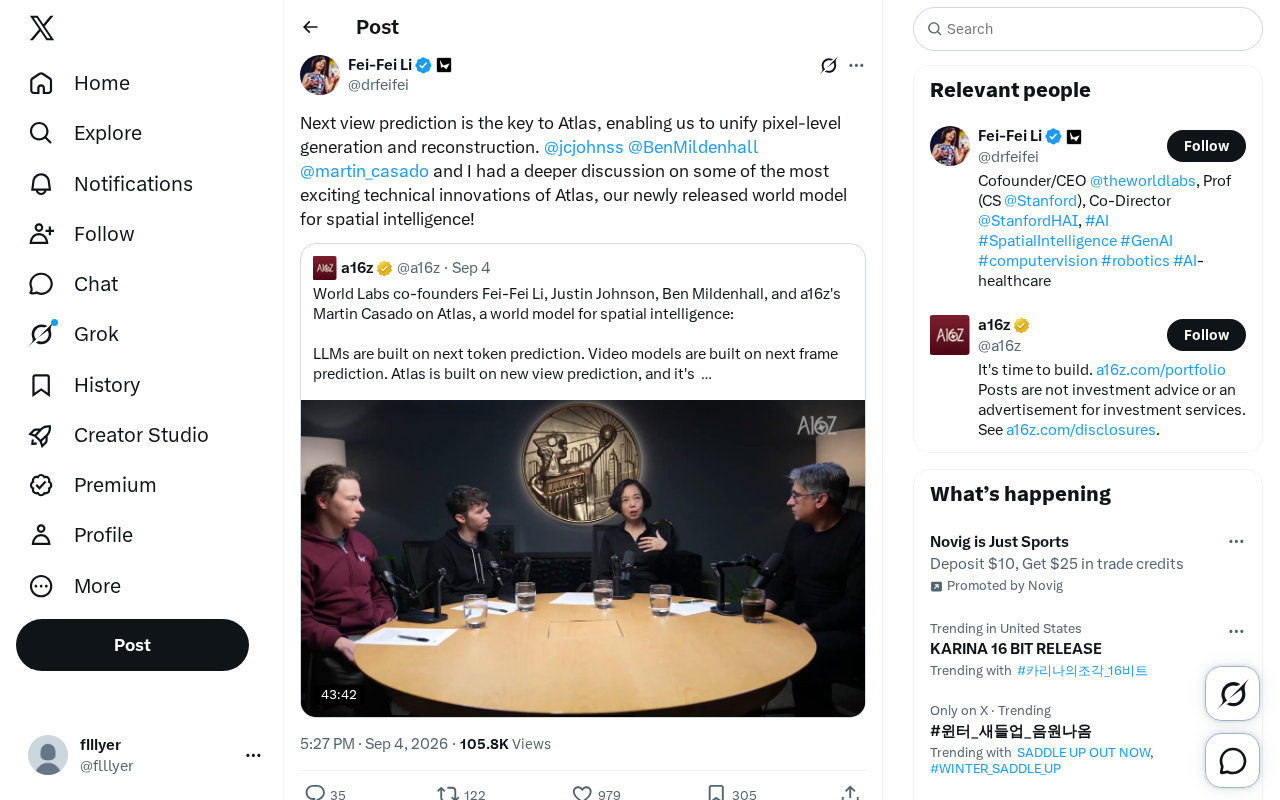
Atlas world model unifies 3D scene generation and reconstruction through a single Next View Prediction objective.
Atlas is a world model for spatial intelligence whose core innovation is using "Next View Prediction" as a unified training objective that covers both pixel-level generation and reconstruction. Where traditional 3D vision relies on two separate mechanisms, Atlas takes a page from the language model playbook — analogous to "next token prediction" — and frames both tasks as predicting the pixel content of the next viewpoint given existing visual context. This unification lets the model operate across a continuous spectrum: leaning toward precise reconstruction when observations are rich, and drawing on generative priors to complete scenes when observations are sparse. The design aligns with the reality that real-world agents always face incomplete observations, while also reducing engineering complexity. Full technical details have yet to be published; current information is based on public discussions from team members.
The Core of the Atlas World Model: Next View Prediction
Spatial Intelligence is rapidly emerging as a major frontier in AI research. The recently unveiled Atlas world model introduces a compelling technical idea — placing "Next View Prediction" at the center of its entire architecture, enabling a single unified framework to handle both pixel-level generation and reconstruction.
According to public discussions from team members (including @jcjohnss, @BenMildenhall, @martin_casado, and others), this design philosophy is considered one of Atlas's most exciting technical innovations. This article draws on that public information to unpack the significance and potential value of this approach.
Why "Next View Prediction" Is the Key
In traditional 3D vision and computer graphics, generation and reconstruction are typically treated as two distinct problems. Reconstruction focuses on recovering a scene's geometry and appearance from existing observations, while generation emphasizes "creating" new visual content from latent representations or prior knowledge. The two have historically relied on different methodologies and model architectures.
Atlas reframes both tasks as a single problem: predicting the "next view." In other words, whether completing an unobserved angle or reconstructing detail from a known viewpoint, both can fundamentally be modeled as: given existing visual context, predict the pixel content that the next frame or viewpoint should show.
The immediate advantage of this unification is that the model no longer needs two separate mechanisms for generation and reconstruction — both share the same underlying representations and predictive capabilities. This mirrors the "next token prediction" paradigm that has proven so powerful in language and multimodal models: a single, elegant prediction objective that unlocks a wide range of downstream capabilities.
The Technical Significance of Unifying Generation and Reconstruction
Bringing pixel-level generation and reconstruction into the same framework means Atlas can operate across a continuous capability spectrum: when observations are abundant, the model leans toward precise reconstruction; when observations are sparse or absent, it draws on generative priors to "imagine" plausible visual content.
This continuity is especially important for spatial intelligence. Real-world agents — whether robots or virtual agents — almost never have complete observations of their environment. They must constantly reason between what they can see and what they cannot. A world model capable of both reconstruction and generation is perfectly suited to this challenge: it faithfully restores visible parts of a scene while producing physically and semantically plausible completions for what remains hidden.
From an engineering standpoint, a unified architecture also reduces system complexity. Developers no longer need to maintain multiple specialized models, and transferring and coordinating capabilities across tasks becomes significantly easier.
World Models and the Direction of Spatial Intelligence
Atlas is positioned as a world model for spatial intelligence — a framing that reflects a broader trend in AI research: moving beyond understanding 2D images and text toward modeling 3D space, geometric structure, and dynamic scenes.
The value of a world model lies in its attempt to give AI systems an internal representation of how the physical world operates, enabling prediction, planning, and reasoning. "Next view prediction" as a training objective naturally forces the model to learn spatial consistency, view transformation relationships, and the implicit structure of scenes — precisely the core capabilities that spatial intelligence depends on.
It's worth noting that the information currently available comes primarily from team members' discussions on social platforms, and a complete technical paper with detailed specifications has yet to be released. As such, this article is more an interpretation of the design philosophy than a definitive assessment of specific performance.
Open Questions Worth Watching
For world models like Atlas that center on next view prediction, several questions are worth tracking going forward: First, how does the model automatically balance generation and reconstruction under extremely sparse observation conditions? Second, how does this unified framework perform in terms of computational efficiency and scalability? Third, can the spatial representations the model learns transfer effectively to downstream tasks like robot control and navigation?
As more technical details become available, we'll be better positioned to assess where Atlas actually stands in the world model landscape. For now, the idea of "using next view prediction to unify generation and reconstruction" offers a clean and imaginative direction for modeling spatial intelligence.
Related articles
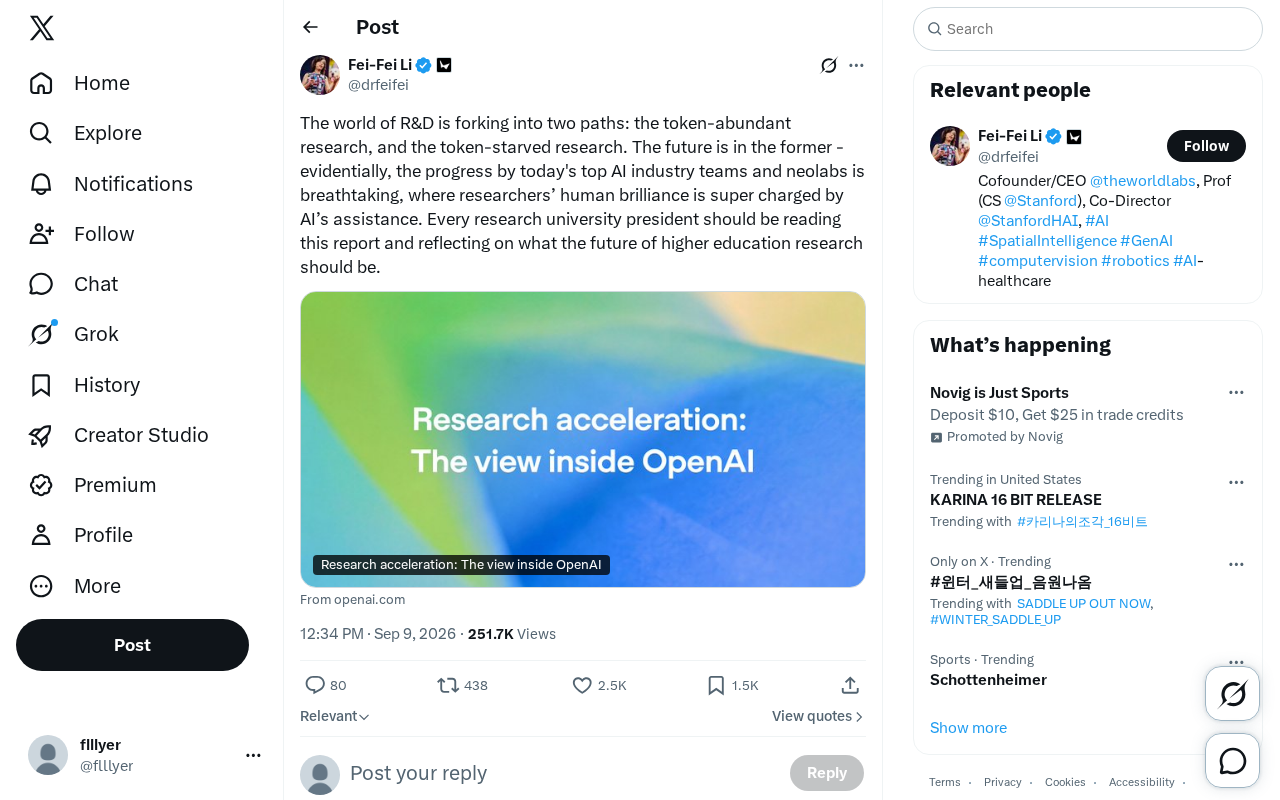
R&D Is Forking: The Coming Battle Between Token-Abundant and Token-Starved Research
R&D is splitting into token-abundant and token-starved research. Top AI labs are pulling ahead—here's what it means for universities and the future of science.
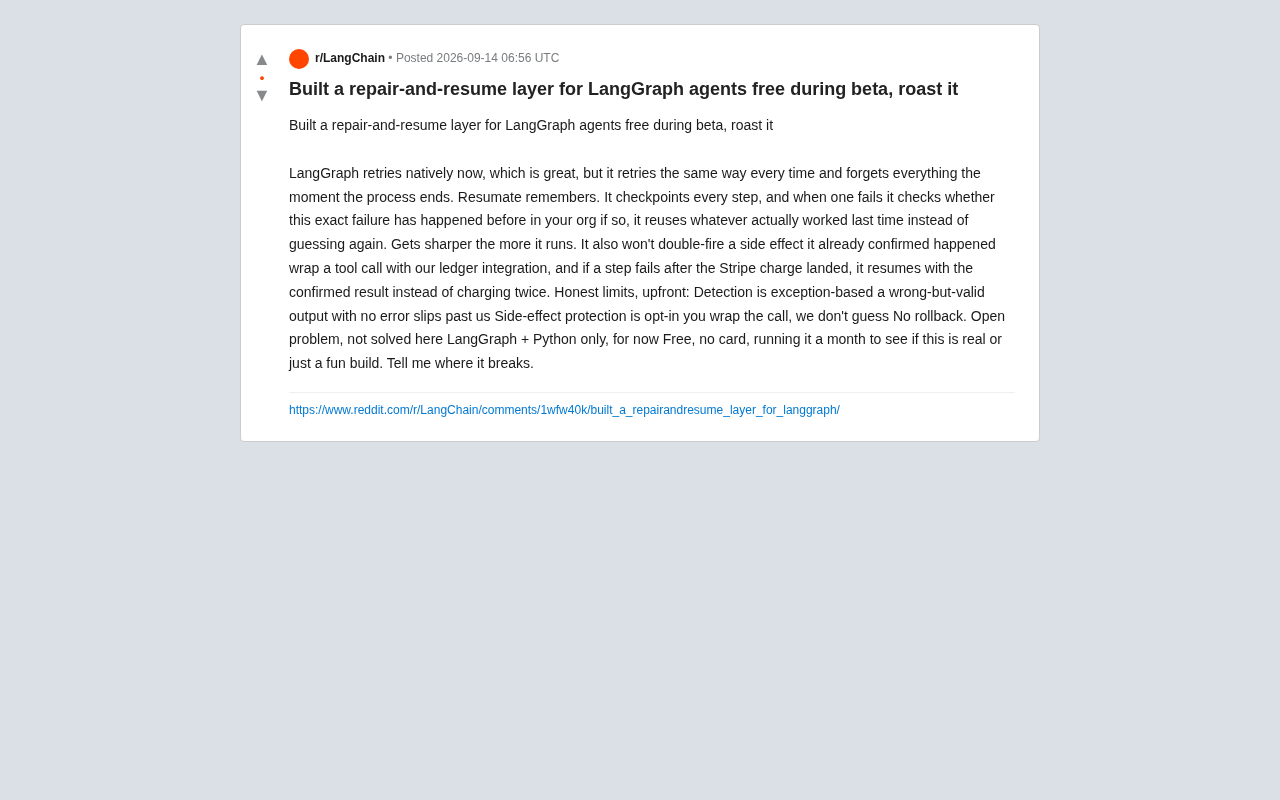
Resumate: A Deep Dive into the Repair-and-Resume Layer for LangGraph Agents
Resumate adds memory-aware checkpointing and idempotent side-effect protection to LangGraph agents, preventing issues like duplicate Stripe charges on retry.

Airbnb vs. BnB: Platform Brand Protection and the Trademark Battle
Airbnb's attempt to restrict use of the abbreviation "BnB" raises questions about trademark overreach, platform power, and the rights of independent hospitality operators.