Automating AI Community Operations with n8n: 5 Workflow Breakdowns
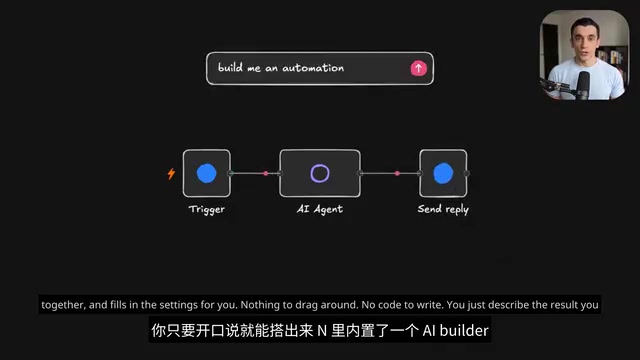
Build a complete AI-powered community automation system with n8n using just one prompt and 5 workflows.
Learn how to automate community operations using n8n, an open-source workflow automation platform. This practical guide breaks down 5 essential workflows: member database management, AI-powered lead scoring, automated news digests, content creation assistance, and engagement maintenance. Discover why n8n's self-hosted architecture, native AI integration, and built-in DataTables make it superior to alternatives for AI community management.
From Manual to Automated: Building a Community Operations System with One Prompt
What's the biggest pain point for community managers? It's not content creation—it's the repetitive, tedious tasks: welcoming new members, qualifying leads, curating news, maintaining engagement. These tasks seem simple but consume enormous time and energy.
One creator built a complete AI-driven community operations system using n8n, an open-source automation tool. The system consists of 5 independent workflows covering everything from member management to content production. Most surprisingly, the initial setup required just one long prompt, automatically generated through n8n's built-in AI Builder.
n8n is a workflow automation platform built on Node.js, released under a fair-code license. Unlike pure SaaS products, users can deploy complete instances on their own servers with all data flows and business logic running locally. The name comes from "nodemation" (node + automation), with a core design philosophy of achieving complex multi-step automation through visual node orchestration. As of 2024, n8n supports over 400 third-party service integrations and has accumulated more than 40,000 stars on GitHub, making it one of the most active projects in the open-source automation space.
Why Choose n8n Over Zapier, Make, and Other Automation Tools
Automation tools aren't rare—Zapier and Make both have mature user bases. But for AI community operations specifically, n8n offers several irreplaceable advantages:
Open Source & Self-Hosted: You maintain complete control over data and logic, unrestricted by platform limitations. This is especially critical for community operations handling user information.
Native AI Integration: AI models can be embedded directly into any workflow step—not just simple data transfers, but understanding, judging, and generating content. This upgrades n8n automation from "mechanical execution" to "intelligent decision-making."
Built-in DataTables Database: The system has built-in memory without needing external Airtable or Notion. Every member, lead, and article is stored locally, with workflows sharing state directly and avoiding duplicate operations. DataTables solves a long-standing pain point in automation systems—cross-workflow state sharing. In traditional solutions, data transfer between workflows typically relies on external databases or middleware services, increasing system complexity while introducing additional failure points and latency. DataTables embeds a lightweight database directly into the runtime environment, supporting CRUD operations and simple queries, enabling deduplication checks, status marking, and history logging to complete within the platform—similar to "shared state storage" in microservices architecture but with minimal complexity.
AI Builder Capability: Describe your needs in natural language and the system automatically generates workflow structure. This dramatically lowers the technical barrier, enabling non-technical users to quickly build community automation systems. AI Builder represents an emerging "natural language programming" paradigm—users don't write code or manually drag nodes, but describe business requirements in everyday language, with large language models understanding intent and automatically generating workflow structure. This approach essentially uses LLMs as "requirement translators," converting unstructured human intent into structured automation logic. Similar concepts appear in products like GitHub Copilot Workspace and Replit Agent, but n8n focuses it on the vertical scenario of workflow automation.
Complete Breakdown of Five n8n Workflows
Workflow 1: Member Management & Database
This is the foundational infrastructure of the entire community automation system. DataTables acts as the system's "memory hub," recording all member information, interaction history, and processing status.
Whenever a new member joins the community, the n8n workflow first queries the database to confirm whether a record already exists. This deduplication mechanism prevents awkward situations like duplicate welcome emails. After processing completes, the system automatically updates logs, recording operation time and results.
This design allows workflows to collaborate safely, avoiding conflicts.
Workflow 2: AI Intelligent Lead Scoring System
When potential customers submit information through forms, AI doesn't simply store it—it deeply analyzes the form content.
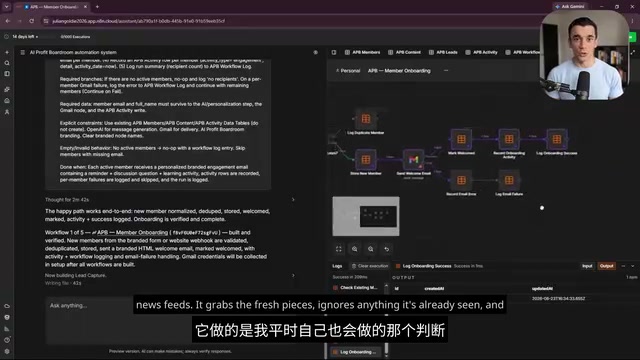
The system passes form data to an AI model, which assigns tags (like Hot, Warm) and quantified scores from 0-100 based on content quality and requirement fit. In actual testing, a real lead was rated Hot level with 88 points, immediately triggering an email notification for team follow-up.
Lead Scoring is a classic concept in CRM and marketing automation, originally popularized by enterprise tools like Salesforce and HubSpot. Traditional approaches use rule engines—assigning scores based on user behavior (like opening emails, visiting pricing pages) and demographic attributes (like job title, company size). With AI, scoring models can process unstructured data (like free-text descriptions in forms), understanding semantic-level requirement fit rather than relying solely on keyword matching. This shift from "rule-driven" to "semantic understanding" gives small teams intelligent filtering capabilities previously only available in enterprise CRM.
The core value of this workflow: standardize human judgment so high-quality leads won't be lost due to oversight. What AI judges in one second might take humans 5-10 minutes.
Workflow 3: AI Daily News Digest Generator
This is the most surprising module. Every morning, the n8n workflow automatically executes these steps:
- Scrape latest articles from multiple AI news sources
- Compare against the database, filtering already-processed content
- Pass new articles to an AI model for rewriting as brief summaries
- Format into emails and automatically send to community members
In one actual run, the system scraped 27 articles, identified 4 genuinely new pieces, completed summary formatting, and sent automatically. The entire process required no human intervention—the operator didn't even need to glance at headlines.
The deduplication mechanism here addresses a core problem of the information age—information overload. RSS aggregators, news APIs, and similar data sources generate massive daily content, much of it duplicate coverage, reposts, or rehashed old news. n8n uses DataTables to store unique identifiers of processed articles (like URLs or title hashes), comparing and filtering with each scrape. This pattern technically resembles search engine deduplication algorithms but simplified to exact-match lightweight implementation. From practical results, filtering 27 articles down to 4 new pieces (roughly 85% filter rate) is typical in the AI news space, precisely illustrating the degree of information redundancy and highlighting the necessity of automated filtering.
Workflow 4: Community Content Creation Assistant
Communities need continuous content output to maintain engagement. This n8n workflow runs automatically several times weekly, requesting AI to generate:
- Practical tips
- Reusable prompt templates
- Open-ended discussion questions
The system checks whether content duplicates history, ensuring freshness. Generated content is stored as drafts, categorized by type, then batch-sent to operators for review. This semi-automated mode ensures efficiency while preserving human quality control.
Workflow 5: Member Engagement Maintenance
New members are most likely to churn early on. This workflow triggers periodically, sending members:
- Friendly greeting messages
- Thought-provoking questions
- Small learning tasks
These interaction designs help new members pass the "cold start period" and gradually integrate into community culture. Community operations research shows that if new members don't have meaningful interactions within the first 72 hours of joining, churn probability exceeds 70%. This time window is called the "activation window." Traditional operations rely on manual attention from community managers, but when communities scale beyond hundreds of members, personalized care becomes unsustainable. Automated outreach—like timed greetings, recommended onboarding content, light task assignments—essentially systematizes mature user activation strategies, ensuring every new member receives guidance at critical moments without being "neglected" due to limited manager bandwidth.
Fault Tolerance: Key to Stable Automation Systems
Many automation systems have a fatal flaw: "pretending to succeed"—when a step fails (like email sending), the system still marks the task complete.
Every workflow in this n8n community operations system has built-in error capture logic:
- If email sending fails, member status isn't updated
- Error information is logged
- Data consistency is guaranteed, avoiding duplicate or missing user notifications
This "won't incorrectly mark complete on failure" design essentially applies the "idempotency" design principle from distributed systems. Idempotency means the same operation executed multiple times has the same effect as once. In automation workflows, this is typically achieved through transactional sequencing: "execute core operation first, update status only on success." If email sending fails but status is marked "complete," the next run will skip that member, causing notification loss; conversely, if status isn't updated, retries might duplicate sends. Mature automation systems need to balance these risks, typically leaning toward "better duplicate than miss," then handling redundancy through deduplication layers.
This is the essential difference between "cute little toy" and "reliable production system."
Practical Advice: The Right Approach to Building Community Automation with n8n
Build Incrementally, Don't Overreach: Don't try building all 5 workflows at once. Complete the member welcome flow first, get it running, then expand other modules.
Describe Outcomes, Not Steps: When inputting prompts in n8n AI Builder, clearly state "what to achieve" rather than "how to achieve it." For example, "send welcome email and materials to new members" instead of "add a trigger, then connect email node." This outcome-oriented description lets AI better understand global intent and generate more reasonable workflow structure.
Leverage DataTables Deduplication: Use DataTables for status checks across all workflows to prevent duplicate operations. This is key to keeping the system clean.
Build Architecture First, Connect Services Later: Let AI Builder generate complete logical structure first, then connect real email accounts and API keys last. This makes debugging more efficient.
Standardize Naming: Give each node clear names, delete auto-generated random labels. When maintaining three months later, you'll thank today's self.
AI Automation Limitations and Human Value
After running the system, you'll find AI occasionally gives unreasonable scores or generates inconsistent quality content. This is normal and why many abandon automation.
But the key isn't whether AI is perfect—it's whether it frees you from repetitive labor. Lead scoring might need human review, but the screening scope is already reduced 90%; content generation might need polishing, but the draft is complete.
Automation's value isn't replacing humans—it's letting humans focus on what only humans do well: building real connections, making complex judgments, creating unique value.
The creator of this system compiled the complete prompt, n8n workflow templates, and troubleshooting guide into course resources, helping more people cross technical barriers. Automated community operations isn't a future trend—it's a productivity leap achievable today.
Related articles
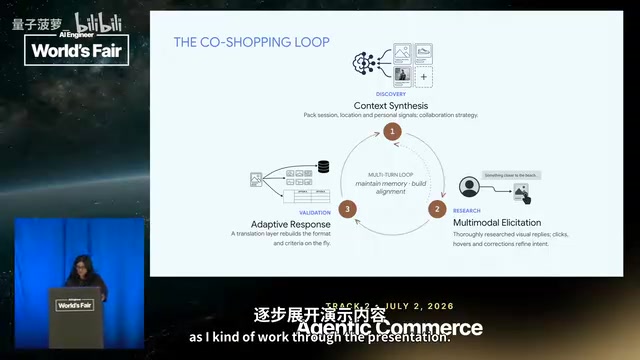
Multimodal Collaborative Agents: A Complete Methodology from Vague Intent to Precise Recommendations
Deep dive into Google DeepMind's multimodal collaborative agent methodology: three-stage framework (Discovery, Research, Response) solving user articulation gaps, with design principles and evaluation systems.
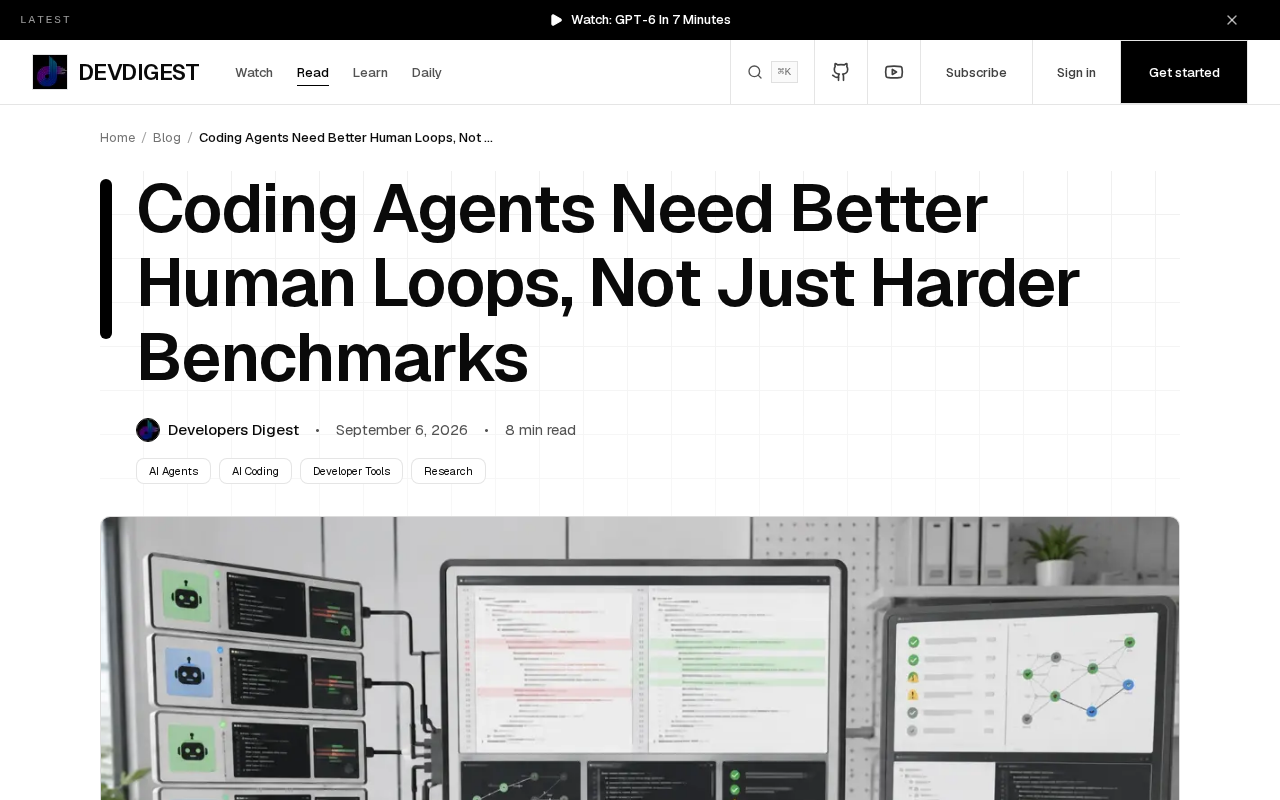
The Real Bottleneck for Coding Agents: Human-AI Collaboration, Not Benchmark Scores
AI coding agents over-pursue benchmark scores while ignoring human-AI collaboration—the real bottleneck. This article explores steering, verification, and adaptation challenges, and why Human-in-the-loop matters more than SWE-bench rankings.
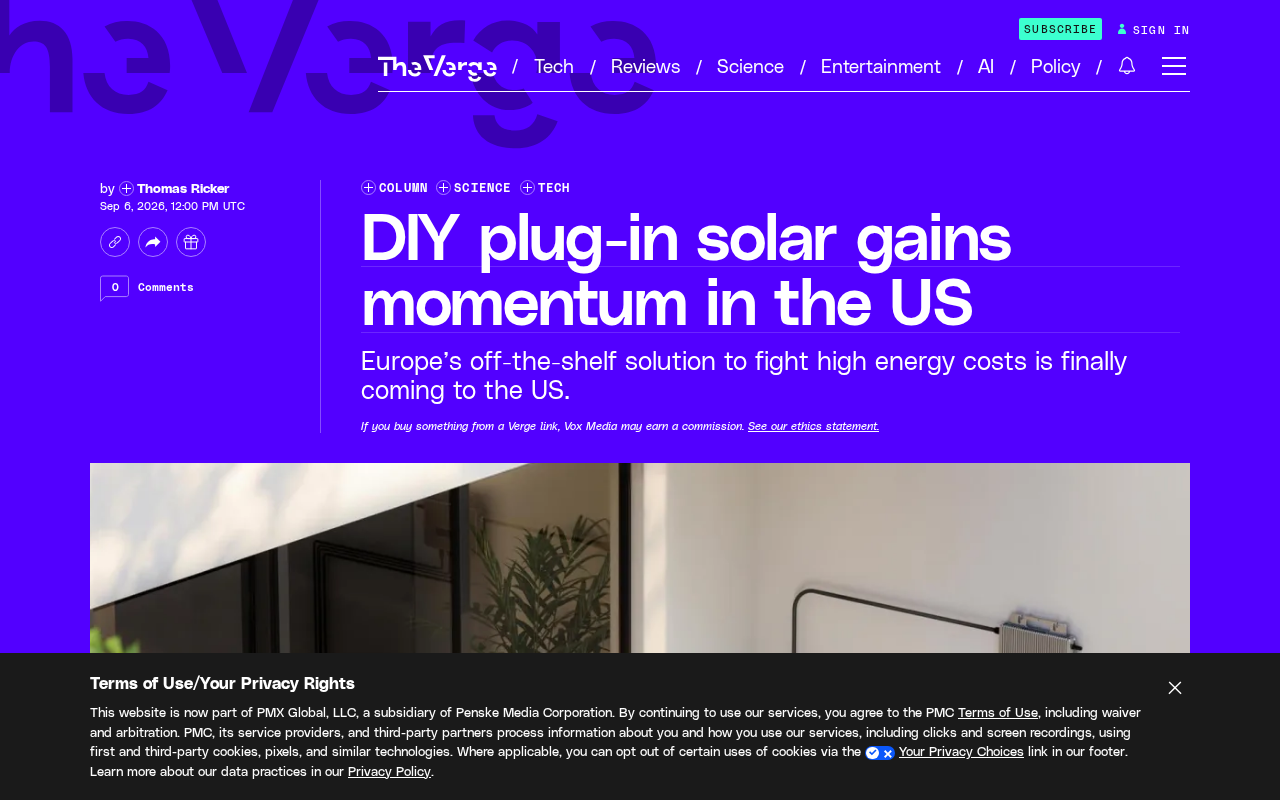
Plug-in Solar: A New Wave of DIY Photovoltaics Is Rising in America
Plug-in solar is spreading from Europe to America. Learn how balcony PV works, the regulatory hurdles in the U.S., and how rising electricity costs and DIY culture are driving this distributed energy revolution.