Autonomyware: Using AI to Turn Ideas Directly Into Physical Products

Autonomyware is an AI-native hardware engineering workspace that automates the full path from idea to manufacturing-ready product.
Autonomyware positions itself as an "AI-native workspace" that consolidates traditionally fragmented hardware engineering stages — product definition, architecture design, CAD modeling, BOM generation, firmware writing, validation testing, and manufacturing readiness — into a single unified platform with automatically connected decisions. This directly addresses the real pain point of information silos in hardware development. However, bringing autonomous AI into a domain constrained by physical reality is far harder than software engineering, and the product's public-facing information still leans heavily on claims rather than demonstrated engineering outcomes.
In the software world, AI can already help engineers write code, run tests, and deploy applications. But in hardware engineering — a field that's far more complex and heavily reliant on specialized expertise — AI adoption has been comparatively slow. Autonomyware is looking to change that. The product landed at #3 on Product Hunt, built around an ambitious concept: letting autonomous AI take over the entire engineering workflow, from initial idea to finished physical product.
One Workspace, Connecting the Full Chain from Concept to Manufacturing
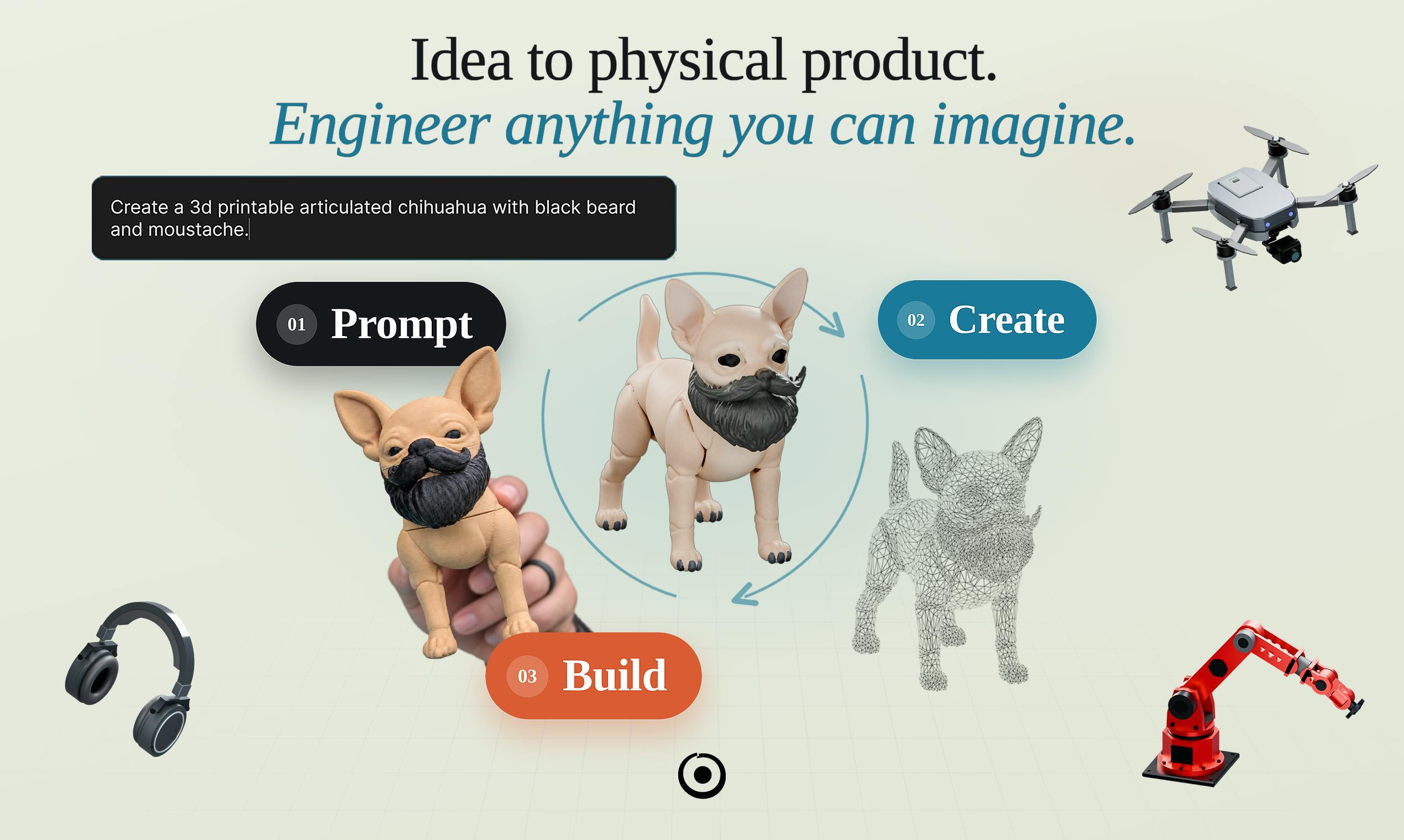
Autonomyware's core positioning is as an "AI-native workspace." Users start by describing their product vision — and from there, autonomous AI handles the rest of the engineering process end-to-end. According to the official description, this pipeline covers product definition, architecture design, risk assessment, CAD modeling, bill of materials (BOM), code writing, validation testing, and all the way through to manufacturing readiness.
This chain encompasses nearly every critical milestone a hardware product needs to go from concept to mass production. Traditionally, these stages are scattered across different software tools, teams, and specialized roles — mechanical engineers handle CAD, procurement manages the BOM, embedded engineers write firmware, and quality teams own validation. What Autonomyware aims to do is consolidate these fragmented stages into a single, unified interface.
A Bill of Materials (BOM) is a core document in hardware product development that lists every component, raw material, quantity, specification, and sourcing information required to build a product. The complexity of a BOM is often underestimated — a consumer electronics product's BOM might contain hundreds or even thousands of line items, each tightly linked to cost estimation, supplier relationships, inventory management, and production scheduling. Traditionally, maintaining a BOM requires ongoing coordination between procurement, engineering, and production teams, and swapping out a single part can trigger a cascade of document revisions. If AI can automatically generate and dynamically maintain a BOM based on the design, it would dramatically reduce the manual coordination costs between design and procurement.
"Keeping Every Decision Connected" Is the Key Selling Point
One theme that recurs throughout the product's description is keeping every decision and engineering artifact connected from idea to execution. This speaks directly to a genuine pain point in hardware engineering: information silos.
In real-world product development, a single design change can set off a chain reaction — a structural modification might affect cost, which impacts the BOM, which could ripple into firmware logic and validation plans. But in traditional toolchains, these connections are often implicit and manually maintained. The "connected decisions" approach Autonomyware proposes — if it can genuinely deliver automated traceability and cascading updates — would provide real value in reducing engineering rework and communication overhead.
AI's Attempt to Move From Software Into Hardware
The fact that Autonomyware spans three categories on Product Hunt — Hardware, Artificial Intelligence, and 3D Modeling — speaks to its inherently cross-disciplinary nature. Compared to AI coding tools, which have reached relative maturity, bringing "autonomous AI" into hardware engineering is a considerably harder problem.
Hardware involves the constraints of the physical world — material properties, tolerances, thermal management, manufacturability, and supply chain realities. None of these can be iterated on purely in digital space the way software can. Whether an AI-generated CAD model or BOM is truly manufacturable, reliable, and cost-effective requires substantial domain knowledge and real-world validation to confirm. That's precisely where products like this face their most critical market test.
Its Product Hunt performance — 160 upvotes, 33 comments, and a #3 ranking — suggests the direction has genuinely caught the community's attention. The vision is ambitious enough: "engineer anything you can imagine." But the bigger the vision, the steeper the path to execution.
Design for Manufacturability (DFM) is a key standard in hardware engineering that measures whether a design can be efficiently realized by actual production processes. It encompasses factors like tolerance fit (whether part machining precision falls within equipment capability), material availability, assembly complexity, and yield control at scale. A model that looks perfect in CAD software can cause manufacturing costs to multiply — or become outright impossible to produce — due to uneven wall thickness, insufficient draft angles, or overly tight hole tolerances. This is the core challenge facing today's AI-generated design tools: generating geometry that "looks plausible" is far easier than generating engineering solutions that are truly manufacturable.
Worth Watching, But Approach With Realistic Expectations
For hardware founders, independent developers, and small engineering teams, the scenario Autonomyware paints is genuinely appealing: pushing an idea toward manufacturing-ready status without needing to assemble a full engineering team. This aligns with the broader trend of AI lowering the barrier to specialized expertise.
That said, the publicly available information currently sits mostly at the level of positioning and feature claims, without concrete engineering case studies, accuracy benchmarks, or user-tested feedback. The true capability boundaries of this kind of end-to-end automation — how much the AI can actually handle autonomously, where human intervention is still required, and how reliable the generated outputs are from an engineering standpoint — remain to be validated through real-world use.
For interested users, the best approach is to treat it as an early-stage product worth tracking: start with small, low-stakes projects to test it hands-on before judging its actual value in your own workflow.
Related articles

Felix Rieseberg Personal Homepage
Felix Rieseberg's personal homepage sparks attention on Hacker News. This article covers the Slack engineer's technical background, the rise and fall of nativefier, and the value of a developer homepage as a tech calling card.

@ai-sdk/vue 3.0.306 Patch Release Syncs with [email protected] Update
@ai-sdk/vue 3.0.306 released, synced with [email protected]. A routine patch release for the Vercel AI SDK ecosystem with no public API changes; the Vue adapter layer stays version-aligned with the core package.

Gemini 4 Argon API Launches: The Era of Million-Token Output Begins
Google launches Gemini 4 Argon with sparse MoE architecture, up to 1M output tokens, and a 68.90% Vals Index score, available across API, AI Studio, and the Gemini app.