Avian Flu Vaccine Halted? The Political Battle Behind Rising Egg Prices

U.S. avian flu has sent egg prices soaring, yet vaccination plans are suspended due to anti-vaccine positions and broiler export interests.
Since 2022, avian flu has led to the culling of about 160 million laying hens in the U.S., driving egg prices up over 50%. Although multiple safe and effective vaccines are approved and farmers want them, Agriculture Secretary Brooke Rollins suspended vaccination plans due to HHS Secretary RFK Jr.'s anti-vaccine stance. Broiler exporters also oppose vaccination over trade barrier fears. Experts warn of higher prices and more culls without vaccination. The costs fall on consumers, farmers, and animals—a governance dilemma where science is hijacked by politics and trade.
Egg prices are climbing again. Over the past winter, U.S. egg prices surged by more than 50% in just a few months—and behind this price spike, beyond the avian flu virus itself, lies a political power struggle over vaccines.
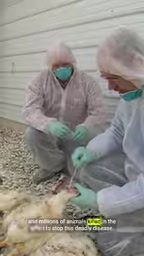
According to Vox, avian flu has led to the culling of approximately 160 million laying hens since 2022. The virus has not only driven up living costs for consumers but also inflicted devastating losses on farmers—once the virus is detected, entire flocks in a barn must be culled, sometimes by shutting off ventilation systems and letting the birds literally overheat to death within hours.
Surprisingly, there is a shelved solution in this crisis: vaccines. The U.S. has already approved multiple safe and effective avian flu vaccines, and many egg and turkey farmers want to use them. However, according to a recent Politico report, U.S. Secretary of Agriculture Brooke Rollins has suspended potential vaccination plans, largely due to the anti-vaccine stance of Health and Human Services Secretary RFK Jr.
A Scientific Solution Put on Hold
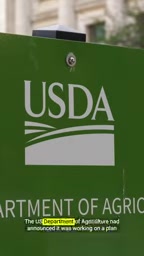
From a purely scientific perspective, the logic of avian flu vaccines isn't complicated. The USDA had previously announced it was developing a plan to vaccinate farmed birds, and it appeared last year that farmers would soon have access. Veterinarians and infectious disease experts interviewed by Vox made it clear: now is the time to vaccinate poultry.
But the suspension of the vaccine plan exposes a deeper problem: the USDA's job is to manage disease outbreaks, yet RFK Jr. and his "Make America Healthy Again" (MAHA) movement appear to wield enough influence to shape America's response to one of the worst avian flu outbreaks in history.
This influence doesn't come from professional judgment—it comes from politics.
Avian influenza is an infectious disease of birds caused by type A influenza viruses. Highly pathogenic strains (such as H5N1 and H7N9) have extremely high mortality rates in poultry. The traditional control strategy centers on "culling + quarantine"—once the virus is detected, the entire flock is destroyed to break the transmission chain. Vaccines offer another approach: by reducing infection rates and viral shedding, they can lessen the need for culling. But avian flu vaccines face unique challenges—vaccinated birds may carry the virus asymptomatically, and vaccine-induced immune responses are difficult to distinguish from natural infection, complicating outbreak surveillance and trade quarantine. This is also the technical basis some countries use to justify import barriers. The vaccines approved in the U.S. mostly use inactivated virus or recombinant vector technology, with safety and efficacy backed by data.
Opposing the Vaccine Isn't Just RFK Jr.
Interestingly, RFK Jr. is not the only force opposing avian flu vaccines. Broiler chicken companies also oppose vaccination, and their political influence exceeds that of egg and turkey producers.
The reason is straightforward: these meat producers earn substantial profits through exports, and vaccination would disrupt trade. Many importing countries have barriers against poultry products from vaccinated birds—once the U.S. begins large-scale vaccination, export channels could be blocked. Thus, a decision affecting public health and food prices has been hijacked by trade interests.
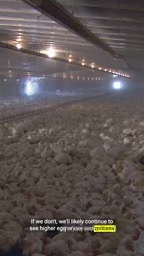
Experts interviewed by Vox say that if vaccination continues to be avoided, we are likely to see higher egg prices and millions more animals culled in the future.
International trade's "vaccination barriers" stem from the rules framework of the World Organisation for Animal Health (WOAH). For diseases like avian flu, importing countries often require exporters to prove products come from non-immunized or disease-free zones. Poultry products from vaccinated birds may be treated as "posing infection risk" and rejected. The U.S. broiler industry is highly export-dependent, with annual exports worth billions of dollars, with major markets including Mexico, China, and Canada. Large-scale vaccination would force exporters to renegotiate quarantine agreements—costly and time-consuming. Therefore, the broiler industry's lobbying against vaccination is essentially about protecting short-term interests in existing trade channels, not denying the scientific validity of vaccines. This divide also reflects structural differences between the egg industry (domestically focused) and the broiler industry (export-oriented).
Who Pays for the Price Increase
The costs of this battle ultimately fall on ordinary consumers and farmers. Consumers face more expensive eggs on store shelves, farmers face operational crises after whole-flock culls, and the animals themselves endure the suffering of being overheated to death.
Since 2022, the loss of approximately 160 million laying hens has demonstrated that a culling-only approach to outbreak control is unsustainable. Vaccines could have been the tool to break this cycle, but they are stuck at the intersection of politics and trade.
RFK Jr.'s anti-vaccine agenda doesn't stop at personal opinion—it is reshaping how a multi-billion-dollar industry operates through policy influence, and changing the breakfast costs of ordinary families.
When a scientific solution is ready but put on pause by political positions and export interests, rising egg prices are no longer just a market issue—they become a governance question about who has the right to decide public health policy.
Currently, the vaccination plan remains suspended. Veterinarians and infectious disease experts continue to call for vaccination to begin, broiler exporters continue to lobby against it, and consumers continue to bear the uncertainty of the next avian flu outbreak before next winter arrives.
Culling is currently the core method for controlling highly pathogenic avian flu, referring to the centralized destruction of entire barns or farms of poultry after virus detection, typically using carbon dioxide suffocation, heat death by shutting off ventilation, or mechanical maceration. The USDA provides partial compensation to farmers whose flocks are culled, but compensation standards are often below market value and the process is lengthy. In outbreaks since 2022, culling scale has reached record levels, sparking animal welfare controversies and keeping the egg supply chain under persistent strain. The logic of culling is to "eliminate the source of infection," but when the virus is widespread in wild birds, culling alone cannot prevent repeated introductions, creating a "outbreak—cull—re-outbreak" cycle—which is why experts call for integrating vaccines into comprehensive control measures.
One-line Summary
U.S. avian flu has sent egg prices soaring, yet vaccination plans are suspended due to anti-vaccine positions and broiler export interests.
Paragraph Summary
The article notes that since 2022, avian flu has led to the culling of approximately 160 million laying hens in the U.S., with egg prices rising over 50% in a few months. Although the U.S. has approved multiple safe and effective avian flu vaccines and many farmers want to use them, Agriculture Secretary Brooke Rollins suspended vaccination plans due to the anti-vaccine stance of HHS Secretary RFK Jr. Meanwhile, broiler exporters also oppose vaccination over fears of trade barriers. Veterinarians and experts warn that without vaccination, we will face higher egg prices and more animal culls. The costs of this battle ultimately fall on consumers, farmers, and animals, highlighting a governance dilemma where scientific solutions are hijacked by political and trade interests.
Related articles

Kimi K3.1 Hands-On Test: Open-Source Model Nears Opus, Video Generation Steals the Show
Kimi K3.1 completed motion graphics, 3D rendering, mini-games, and video generation in a live test. Analysis of its 2.8T MoE architecture, gap vs Opus/GPT, and hidden video generation.

Sam Altman: Why Life's Biggest Advice Should Still Come from Humans
OpenAI CEO Sam Altman on the limits of AI advice: AI can talk you out of an impulsive email, but life's biggest advice should still come from humans.

"Black October": Did AI Uncover 3% of All Critical Vulnerabilities Ever?
A Reddit post claims 3% of all critical software vulnerabilities ever were found in the past month, dubbed 'Black October.' We break down the statistical issues, how AI-assisted code auditing accelerates discovery, and how developers should respond.