Azure HorizonDB + VS Code: A New Workbench for AI App Development

Microsoft Horizon DB uses deep VS Code integration and an enterprise-grade foundation to bring transactions, vectors, and AI capabilities into a single Postgres platform.
Azure Horizon DB is Microsoft's enterprise-grade managed Postgres service, featuring AMD EPYC compute, zone-redundant high availability, storage that automatically scales to 128 TB, and Entra ID authentication and Private Link enabled by default. Its core feature is deep VS Code integration: Copilot writes SQL, Object Explorer browses structures, Visual Query Plan turns Explain Analyze output into a readable execution tree, and backups, parameter tuning, and monitoring are done in the same interface. AI capabilities are built into the database layer: vector indexes support semantic search, and AI pipelines and built-in models cover data chunking and embedding generation, reducing cross-system integration for RAG applications. Scaling is click-based horizontal scaling of read replicas, requiring no refactoring and incurring no downtime. The article argues that its direction fits the pain point of data stack fragmentation, but actual experience still depends on ecosystem maturity.
Microsoft is turning the database from "back-end infrastructure" into "part of the developer's workbench." Azure Horizon DB is Microsoft's enterprise-grade managed Postgres service, and its deep integration with VS Code sketches out a complete workflow for AI application development: writing code, tuning SQL, managing operations, and doing vector retrieval—all within the same editor.
Enterprise-grade foundation: out-of-the-box from hardware to network
Horizon DB's positioning is clear—enterprise-ready while optimized for developers. The compute layer uses AMD EPYC processors, offers a zone-redundant high-availability architecture, and storage can automatically scale up to 128 TB. These configurations mean teams don't have to agonize over capacity planning in the early stages of a project; the database scales automatically as the business grows.
Security capabilities are enabled by default rather than bolted on afterward. Entra ID authentication and Private Link private network connectivity form the foundation of access control, so data is under enterprise-grade protection with the default configuration.
The deployment entry points are also flexible: you can create an instance from the Azure portal or configure it directly in VS Code. For developers accustomed to "never leaving the editor," the latter eliminates the friction of switching back and forth between the browser and the IDE.
Zone-redundant high availability means that the primary replica and synchronous replicas of a database are distributed across different Availability Zones within the same Azure region, with each Availability Zone having independent power, cooling, and networking. When a single Availability Zone fails, the service can automatically fail over to a replica in another Availability Zone, with an RPO close to zero. This differs from geo-redundant replication, which is used for disaster recovery rather than day-to-day high availability and has higher latency.
Private Link is Azure's private endpoint mechanism. It maps a PaaS service's access entry point to a private IP within the user's virtual network, so traffic travels over Microsoft's backbone network rather than the public internet. Combined with Entra ID (formerly Azure AD) for identity authentication, it enables a two-layer defense of "network unreachable + identity unspoofable," which is also the combination most frequently required in enterprise compliance audits.
Database workflows inside VS Code
The core philosophy of this integration is eliminating context switching. In VS Code, GitHub Copilot can write SQL for you, and Object Explorer lets you browse tables, indexes, and properties without leaving the editor.
For many developers, the most practical feature is Visual Query Plan: it turns the output of Explain Analyze into a highly readable execution tree, so query plans that previously required experience to interpret can now be used to pinpoint performance bottlenecks intuitively.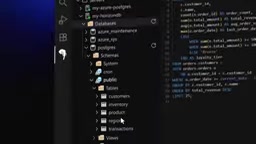
Capabilities aimed at DBAs are also brought into this workspace: backup management, server parameter tuning, and real-time monitoring are all done within the same interface. Database operations and code writing share the same screen, reducing exactly the kind of inefficiency where "changing one line of code requires switching between three tools."
Visual Query Plan is based on EXPLAIN ANALYZE, PostgreSQL's execution plan analysis command: EXPLAIN shows the execution path chosen by the optimizer (sequential scan, index scan, nested loop, hash join, etc.) and the estimated cost; adding ANALYZE actually executes the statement and fills in the actual time and row counts for each step. The raw output is an indented text tree that becomes hard to read when there are many nodes. Visualization tools render each node as a graphical node and color it by time or cost, helping quickly identify typical performance issues such as full table scans and row count estimation deviations (a large gap between estimated vs actual rows).
Object Explorer, meanwhile, is a database metadata browser inside the IDE. By querying system catalogs (such as pg_catalog), it lists databases, schemas, tables, indexes, constraints, and functions, so that structure browsing doesn't depend on a separate client tool.
Pushing AI capabilities down to the database layer
Horizon DB's differentiator is that AI is not an add-on but a built-in capability of the database. Disk and vector indexes support high-performance semantic search, which is a foundational capability for RAG-style applications.
Going further, AI pipelines, AI functions, and built-in AI models provide a complete solution covering data chunking and vector embedding generation. When applications evolve from traditional systems into intelligent systems, teams no longer need to separately build a vector database and embedding service; data preparation and retrieval can form a closed loop within the same platform.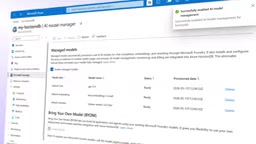
The value of this design lies in reducing integration complexity: transactions, vectors, AI, and orchestration share the same platform, reducing the consistency problems caused by synchronizing data across systems.
Vector indexes are used to accelerate approximate nearest neighbor (ANN) retrieval. In the PostgreSQL ecosystem, the common choice is the pgvector extension, which supports two types of indexes, IVFFlat and HNSW: the former clusters vectors into buckets to reduce the scan range, builds quickly, but its recall is affected by the number of buckets; the latter builds a multi-layer navigable graph with low query latency and high recall, but uses more memory and takes longer to build the index. Semantic search converts text into high-dimensional vectors via an embedding model, then sorts by cosine similarity or inner product—this is the standard approach for the "retrieval" step in RAG (Retrieval-Augmented Generation).
RAG and embedding generation: RAG means that before calling a large model, relevant snippets are first retrieved from a knowledge base and inserted into the prompt, to mitigate model hallucination and outdated knowledge. Its prerequisite steps are data chunking and vector embedding—splitting long documents into semantically complete chunks, then calling the embedding model on each chunk to generate vectors and writing them into vector columns. Building these steps into the database means chunking, embedding, storage, and retrieval share the same transaction boundary and permission system, avoiding data synchronization lag between external pipelines and the primary database.
Scaling approach: horizontal scaling in a few clicks
When application load rises, Horizon DB supports horizontal scaling across replicas with a few clicks, with no re-architecture and no downtime. For scenarios like AI applications with pronounced traffic fluctuations, this scaling approach reduces the burden of capacity planning.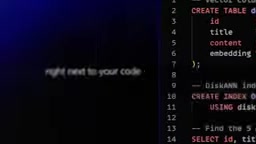
Read replica horizontal scaling means creating one or more read replicas in addition to the primary instance, continuously synchronizing data via streaming replication, and then routing read-intensive workloads such as reporting, analytics, and vector retrieval to the replicas, while the primary database focuses on writes. PostgreSQL streaming replication comes in asynchronous and synchronous modes: in asynchronous mode, the primary commits without waiting for replica acknowledgment, giving high throughput but potentially losing a small number of transactions on failover; synchronous mode guarantees that the replica has received the WAL before committing, which is safer but increases write latency.
Note that read replicas scale read capacity, not write capacity—write throughput is still limited by the single primary database. If the business needs write scaling, it usually requires partitioning, sharding, or queue-based peak shaving. In addition, queries on replicas incur replication lag, so scenarios requiring strongly consistent reads need to be explicitly routed back to the primary database.
A bit of sober judgment
From the official demos, Horizon DB's ambition is to become a unified platform for "transactions + vectors + AI + orchestration." This direction fits the real pain point in current AI application development—data stack fragmentation. However, the actual experience of such integrated services depends on ecosystem maturity: the accuracy of Copilot-generated SQL, the depth of Visual Query Plan's parsing of complex queries, and the range of options for built-in models all need to be tested in real projects. For teams already within the Azure ecosystem, it reduces toolchain complexity; for multi-cloud teams, the migration cost still needs to be weighed.
Key takeaways
- Horizon DB is an enterprise-grade managed Postgres service, with storage automatically scaling to 128 TB and zone-redundant high availability
- Deep integration with VS Code: Copilot writes SQL, Object Explorer browses structures, Visual Query Plan visualizes execution plans
- Vector indexes and built-in AI models support semantic search, data chunking, and embedding generation
- Supports click-based horizontal scaling, with no refactoring and no downtime
Related articles

US AI Secrets Are Leaking: Security Breaches Are Scarier Than Chinese Spies
Vox analysis reveals US AI companies like Nvidia, OpenAI, and Anthropic suffer frequent security breaches—from CEO scandals to internal systems breached in hours—while 'anti-China' info controls mask basic security failures and jeopardize their tech lead.
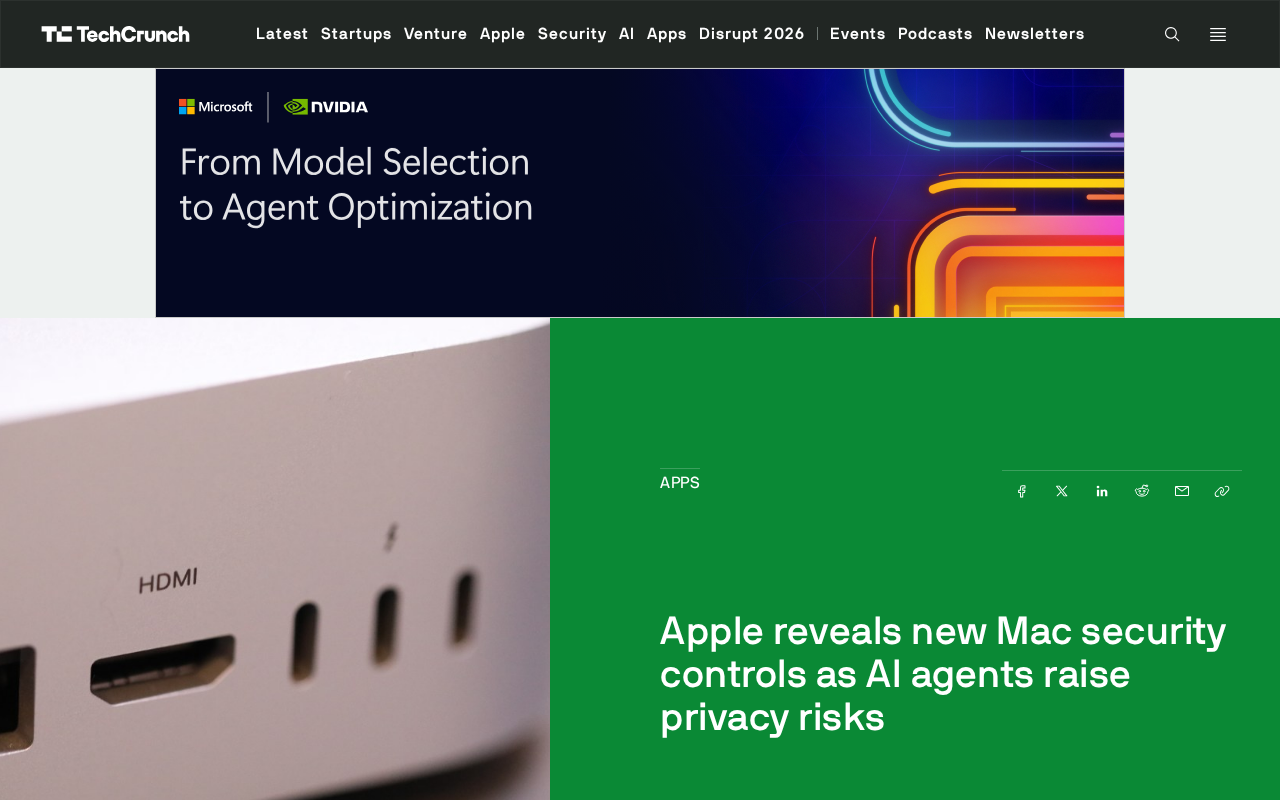
Apple Adds an AI Safety Valve to macOS: How New Permission Controls Address Agent Privacy Risks
Apple discloses new Mac security controls in macOS 27.3: fine-grained permissions for AI agents, runtime warnings, and operation transparency, and how they address the privacy risks of agents dynamically accessing sensitive data, plus impacts on developers and users.

Black Friday PS5 Game Sale: Major Titles Slashed
Black Friday sales start early with steep PS5 game discounts and deals on controllers and headsets. We break down the sale, top picks, and buying tips.