Baidu Moda Real-World Test: 89 RMB for 3 Systems, Replacing 30,000 RMB in Outsourced Development

Baidu Moda AI no-code platform tested: 89 RMB for 3 systems replacing 20-30K RMB outsourcing costs
A user tested Baidu's Moda AI no-code development platform, completing a corporate website, membership management system, and smart sales business card mini-program in one week for just 89 RMB — compared to 20,000–30,000 RMB quotes from traditional outsourcing. The platform generates complete applications from Chinese-language prompts, ideal for MVP validation and lightweight needs, though it still has limitations in customization depth, code quality, and security.
Introduction: Can Baidu Moda Really Replace 30,000 RMB in Development Costs for Just 89 RMB?
AI code generation tools are proliferating, and Baidu's "Moda" (秒哒) platform has been gaining significant attention lately thanks to its ability to generate complete applications driven by Chinese-language prompts with zero coding required. After a one-week real-world test, one user spent just 89 RMB to build three complete systems — the same scope of work that outsourcing teams quoted at 20,000–30,000 RMB. Is this cost gap actually legit? Here's the detailed experience report.
Technical Background: The core technology behind AI code generation tools is Large Language Models (LLMs). Through pre-training on massive code repositories and natural language text, these models learn to understand human intent and translate it into executable code. The "no-code generation" approach that Baidu Moda represents layers application framework templates, automated component library orchestration, and automatic front-end/back-end code integration on top of LLM capabilities, enabling non-technical users to describe requirements in natural language and receive structurally complete applications as output. The industry calls this direction "Generative No-Code" — a generational upgrade from earlier drag-and-drop low-code platforms like Bubble and Webflow.

One-Week Real-World Test: Three Systems Generated with Baidu Moda
Over the course of one week, this user generated three different types of application systems through the Baidu Moda platform, covering three common scenarios: corporate website building, business management, and mini-program development.
Corporate Website: Generated in Minutes, Saving Nearly 10,000 RMB
The first project was a corporate website. After describing the page structure and content requirements using Chinese prompts, Moda directly generated a complete website including page layout, content display, and navigation structure. For small and medium-sized enterprises, outsourcing a basic corporate website typically costs 5,000–10,000 RMB, while Moda can produce a first draft almost instantly.

Membership Expiration Management System: Business Logic Auto-Generated Too
The second project was a membership expiration management system. This type of system involves user data management, time-based logic, expiration reminders, and other functional modules — a typical business logic application. Under traditional development workflows, this requires back-end database design, front-end interface development, API integration, and multiple other steps. Moda generated a runnable system from natural language descriptions alone.
Smart Sales Business Card Mini-Program: Performance in Complex Scenarios
The third project was a smart sales business card mini-program, which is more complex than the first two, involving mini-program interaction design, personal information display, sharing and distribution features, and more. Custom development for this type of mini-program is typically quoted at 8,000–15,000 RMB on the market.

Development Cost Comparison: 89 RMB vs 20,000–30,000 RMB
Throughout the entire development process, the user's total expenditure was just 89 RMB. Compared to traditional outsourced development, the gap is strikingly clear:
| Comparison Dimension | Traditional Outsourced Development | Baidu Moda AI Development |
|---|---|---|
| Total Cost | 20,000–30,000 RMB | 89 RMB |
| Development Timeline | Weeks to months | All completed within one week |
| Communication Cost | Repeated requirement discussions | Just write your own prompts |
| Modification Flexibility | Each change requires scheduling | Adjust prompts and regenerate anytime |

Costs dropped by over 99%, and time efficiency improved several-fold. That said, let's be objective: AI-generated applications definitely have gaps compared to professional development team output in terms of customization depth, code quality, and long-term maintenance.
Industry Background: China's software outsourcing market has long featured clear price stratification — top-tier teams handle complex system integration at quotes ranging from hundreds of thousands to millions of RMB; mid-tier outsourcing companies focus on SME customization needs with per-project quotes concentrated in the 10,000–100,000 RMB range; and at the bottom are large numbers of freelance developers taking on simple websites and mini-programs at quotes of a few thousand RMB. AI no-code tools are first disrupting the bottom and mid-tier markets — these highly standardized, lower technical complexity needs are precisely where current AI generation capabilities are most mature. Gartner predicts that low-code development will account for over 65% of enterprise application development by 2026, and this trend is accelerating.
But if your needs are rapid MVP validation, internal management tools, or simple business systems, the value proposition is already quite compelling.
Concept Explanation: MVP (Minimum Viable Product) is a core concept in lean startup methodology, systematically articulated by Eric Ries in The Lean Startup. The core idea: build a product prototype at the lowest cost and in the shortest time that can validate core hypotheses, then use real user feedback to decide whether continued investment is worthwhile. AI no-code tools are a natural fit for the MVP philosophy — they compress the "idea to usable product" cycle from weeks to hours, allowing entrepreneurs to quickly validate whether market demand truly exists before committing substantial resources.
The Impact of AI No-Code Development on Programmers and the Outsourcing Industry
Behind this case lies the deeper impact of AI no-code tools on the entire software development industry:
Short-term: Standardized, template-based development needs (corporate websites, simple admin backends, information display mini-programs) are being massively replaced by AI tools, with the low-end outsourcing market bearing the brunt.
Mid-term trends: The core value of programmers will shift from "being able to write code" toward higher-level capabilities like "architecture design," "complex business logic," and "performance optimization." Developers who can leverage AI tools to boost efficiency will actually become more competitive.
Long-term outlook: The barrier to software development will continue to decline, enabling more and more people without technical backgrounds to turn their product ideas into reality — potentially sparking a new wave of entrepreneurship and innovation.
Baidu Moda Usage Tips and Pitfall-Avoidance Guide
If you're also planning to try Baidu Moda, here are some practical tips:
-
Write clear prompts: The more specific and structured your Chinese descriptions are, the better the results. For example, listing out page modules, feature points, and interaction logic produces much better results than vaguely saying "build me a website."
Underlying Principle: This follows the core logic of Prompt Engineering — carefully designing input text to guide AI models toward more accurate outputs. For code generation scenarios, high-quality prompts typically need to include: functional goal descriptions, data structure specifications, interaction logic constraints, and boundary condition handling. Research shows that structured prompts (such as itemized feature modules) significantly improve the usability rate of generated code compared to vague natural language descriptions.
-
Build complex systems step by step: Don't expect a single prompt to handle all functionality. Breaking it into multiple modules and generating/adjusting them incrementally yields much higher success rates.
-
Maintain realistic expectations: Moda is great for rapid prototyping and lightweight applications. For scenarios involving high concurrency, complex permissions, or payment integration, professional development is still needed.
-
Pay attention to data security: If sensitive content like customer information or transaction data is involved, understand the platform's data storage and security policies before use.
Security Risk Note: AI-generated code carries several known risks in real-world engineering applications: First, the "hallucinated code" problem — models may generate syntactically correct but logically flawed code; second, security vulnerability risks — a 2022 Stanford University study found that approximately 40% of AI-assisted generated code contains potential security vulnerabilities, with common issues including SQL injection and XSS cross-site scripting; third, dependency library version issues — generated code may reference outdated third-party libraries or those with known vulnerabilities. For commercial systems involving user data and transactions, caution is warranted.
Related articles
 Product Reviews
The Programmer's Desk Setup Guide: Building a Workspace That Feels Like Home
Discover how programmers build productive, comfortable workspaces. From multi-monitor setups to ergonomic design, explore the desk philosophy that drives focus and flow.
 Product Reviews
Qoder vs Cursor Real-World Comparison: Which $20/Month AI IDE Is Better?
Hands-on comparison of Qoder vs Cursor AI IDEs: Agent autonomy, human interaction count, and architecture decisions. Qoder needed only 2 interactions vs Cursor's 8.
 Product Reviews
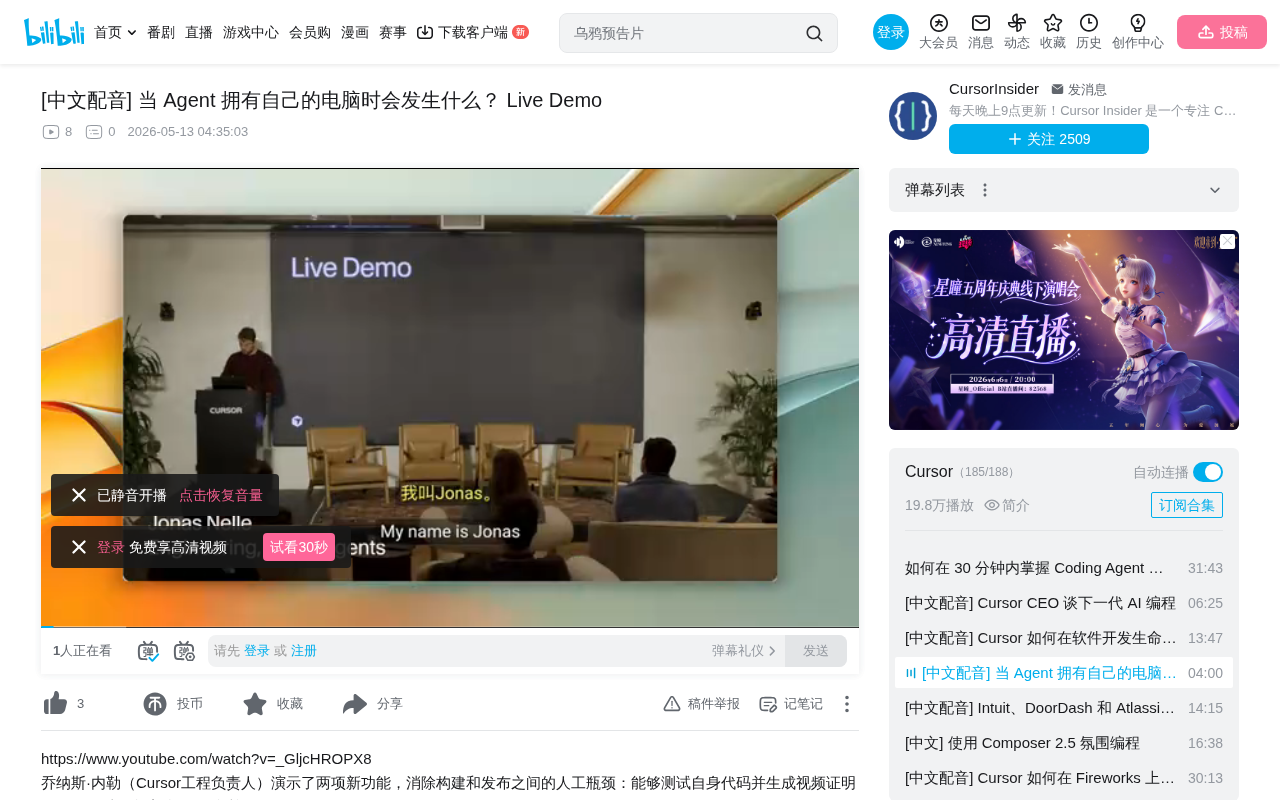
Cursor Cloud Agent Demo: Eliminating Bottlenecks Across the Entire Software Development Lifecycle
Deep analysis of Cursor's Cloud Agent demo showing how cloud VMs, automated test artifacts, and a full-chain control plane systematically eliminate human bottlenecks across the software development lifecycle.