Baidu Releases ERNIE 5.5 Flash: 280B Parameters Takes On DeepSeek and GLM

Baidu releases ERNIE 5.5 Flash as multiple vendors update models and collaboration features
Baidu released ERNIE 5.5 Flash Preview, an MoE model with 280B total and 14B activated parameters and a 1M context window, beating DeepSeek V4.1 Flash and GLM 5.3 Flash on most benchmarks and leading HY4 on some. It is live on Qianfan's API, with weights opening before Nov 25, and described as an intermediate post-training version. The anonymous QDAC was revealed as Quant4 Max Preview with improved world knowledge and coding, now live across Coder at a limited-time 80% discount. Alibaba open-sourced QuantCode 1.0, an embeddable Agent runtime harness; MiniMax open-sourced H3 Image, generating 4K images in 10 seconds with up to 16 reference images. Doubao integrated Cdream 5.5, Claude rolled out three collaboration features plus a free quota reset, and OpenAI, Google, and Musk each disclosed new developments.
280B-Parameter Efficiency Balance
Baidu has officially released its next-generation model ERNIE 5.5 Flash Preview. Post-trained from the previously open-sourced BASE model, it has 280B total parameters, 14B activated parameters, and supports a 1 million token context window. Benchmark results show strong performance at its parameter scale, with most scores beating DeepSeekAd V4.1 Flash and GLM 5.3 Flash, and some leading the recently released HY4 model. The company emphasizes that the model balances intelligence with inference efficiency, and that this is only an intermediate post-training version, with an optimized version to follow. API service is now available on Baidu's Qianfan platform, alongside an open-source model, and the model weights will be opened before November 25.
The core selling point of ERNIE 5.5 Flash is the trade-off between parameter scale and inference efficiency. Its MoE architecture of 280B total parameters and 14B activated parameters means the model retains a large knowledge capacity while calling only a small fraction of parameters per inference, keeping costs down. The 1 million context window lets it handle long documents and codebase-level inputs. Officially positioned as "balancing intelligence and inference efficiency," it is explicitly an intermediate post-training version — a candid disclosure that gives developers clearer expectations for the optimized release to come.
On the competitive front, ERNIE 5.5 Flash's benchmark scores mostly outperform DeepSeek V4.1 Flash and GLM 5.3 Flash, with some indicators leading HY4. This shows that competition among domestic large models on the Flash/lightweight product lines has reached a fever pitch, with every vendor using MoE architectures to claim the "cost-effectiveness" label. For developers, one more available API provider means more room to negotiate between cost and performance.
MoE (Mixture of Experts) architecture is the key to understanding the parameter figures in this article. Traditional dense models activate all parameters on every inference, while MoE splits the feed-forward network into multiple "expert" subnetworks with a routing gate that selects only a few experts per token. Thus "total parameters" measures the model's knowledge capacity and memory footprint, while "activated parameters" determine the actual compute per inference. ERNIE 5.5 Flash's 280B total and 14B activated means only about 5% of parameters are used in each forward pass — precisely why it keeps a large knowledge capacity while lowering inference cost. The trade-off is that memory must still hold all expert weights, and uneven routing can cause expert load imbalance, placing higher engineering demands on training and deployment.
The 1 million context window refers to the maximum total tokens the model can accept in a single pass. The longer the context, the more the model can absorb an entire long document, a complete code repository, or a multi-turn long conversation at once, without relying on external chunked retrieval. But long context is not free: attention computation grows significantly with sequence length, KV Cache memory usage expands linearly, and the practically usable length is often constrained by deployment-side memory and latency budgets. Vendor-claimed window lengths therefore usually correspond to specific inference configurations; developers should evaluate them alongside their own input-length distribution, actual throughput, and first-token latency, rather than looking at the upper-limit figure alone.
Anonymous Model QDAC Revealed: Quant4 Max Preview
QDAC, which launched anonymously on Coder four days ago, was officially unveiled today as Quant4 Max Preview, an upgrade built on QDAC. The company says the model improves daily, and that tasks QDAC previously couldn't complete are now worth retrying with Quant4 Max Preview.
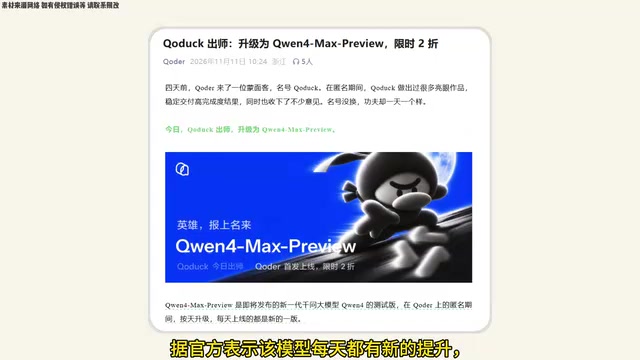
The new model shows significant gains in world knowledge and coding ability, but detailed benchmarks and model information have not yet been disclosed, and the parameter scale is unknown for now. It has launched first across the entire Coder product line; users can access it by updating Coder to the latest version, with a limited-time 80% discount (a multiplier of 0.1), putting it at the same price point as Quant3.8 Flash. Anonymous launch followed by identity reveal has become a common tactic among large model vendors to test real user feedback — without the halo of a brand, model performance better reflects true capability.
Anonymous arena testing is a common evaluation method among large model vendors: a model goes live under a random codename, users compare two models' answers and vote without being told the vendor or model name, and the true identity is revealed at the end. Stripped of brand halo and prior expectations, voting results better reflect relative performance in real usage scenarios, and yield comparison data with real preference labels for later alignment and post-training. The limitation is that participants skew technical, and the task distribution skews toward conversation and coding, which may not represent general scenarios; anonymous-period results are also affected by version iterations. The reputation a codename like QDAC builds before reveal often becomes marketing material for the vendor's official launch.
Alibaba Open-Sources QuantCode 1.0 and MiniMax's Image Model
Alibaba has officially open-sourced QuantCode 1.0, which merges Coder and QuantCode Harness, combining the strengths of both to give developers an Agent runtime harness they can embed in their own products. The code is available on GitHub. This positioning is noteworthy: it is not just a code model, but an open-sourcing of the infrastructure needed to run an Agent, lowering the barrier for developers building their own Agent products.
MiniMax released and open-sourced its image generation model MiniMax H3 Image, derived from the H3 model. It supports text-to-image, image reference, and image editing, and can generate a 4K image in under 10 seconds. The company claims generation speed up to 5x the mainstream level, with instruction-following ability and image generation quality the strongest among open-source models. It supports up to 16 reference images and comes in both a standard and a high-speed version. The model weights are available for download on HuggingFace, and image generation services are offered through the MiniMax open platform, MiniMax Code, and Hailuo products.
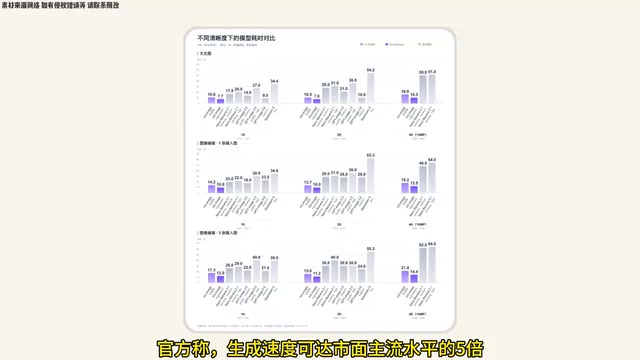
Open-source image models now benchmark against closed-source products on both speed and quality, showing that the open-source camp's focus is shifting from "usable" to "good to use." The 16-reference-image limit has real value for commercial design scenarios requiring multi-image consistency.
Agent Harness refers to the engineering framework wrapped around the model that drives the agent loop: it manages tool calls and function signatures, maintains conversation and task state, executes multi-step planning, handles retries and error recovery, controls context trimming and memory reads/writes, and enforces permission and sandbox boundaries. The same model paired with different harnesses can differ enormously in actual task completion rates, so the harness is often seen as one of the core competitive strengths of agent products. By open-sourcing Coder together with QuantCode Harness, Alibaba hands developers the "model capability + runtime skeleton" as a whole, letting them embed it directly into their own products without building scheduling, tool protocols, and state management from scratch — significantly lowering the starting cost of building Agent products.
Doubao and Claude Collaboration Feature Updates
Doubao's image design capability has been upgraded with the new image creation model Cdream 5.5. According to Doubao, the model focuses on three improvements: multi-turn editing, transparent asset generation, and more natural skin texture, and is now live in Doubao image design. Multi-turn editing and transparent asset generation target high-frequency pain points in e-commerce and design workflows.
Starting today, Claude is rolling out three collaboration features: Whiteboards, Sheets, and Data. They support generating editable whiteboards, organizing data into presentable dashboards, and interactive connectors — opening full versions of tools within Claude and working directly in platforms like Adobe and Atlassian, where users can do the work themselves or let Claude edit alongside them. The company notes that updates roll out in batches, so not all features may appear at once. Whiteboards and Sheets are available in beta to paid plan users, and connectors are available on web and desktop.

Claude also announced a one-time free full reset for all Pro, Max, Ultra, and Team users, covering all models and all limits. The company says it recently fixed several small issues that consumed quota beyond expectations, and users can use it freely until 2 PM Pacific Time on December 12.
Latest Moves from OpenAI, Google, and Musk
OpenAI announced that the Businesses feature in ChatGPT has entered beta testing. Companies can claim their profiles, manage displayed information, and see user interactions; eligible businesses can also create a Business Agent to answer customer questions and help customers understand the services offered.

Mills smart assistant announced an independent email address, allowing it to send and receive emails on behalf of users; the feature is available to paid subscribers in the US and Canada. Logan, a member of the Google Gemini team, said on social media that Carbon is a good model but the team is still preparing something new; the company has not disclosed the new model's name or release date. Musk revealed that Grok4.8 has entered the reinforcement learning stage, with evaluation scores climbing; supervised fine-tuning is complete, data has been heavily cleaned, and a small-scale test for Bot users is expected later this week.
Looking at this round of updates, competition among large model vendors has extended from raw parameters and benchmark scores to Agent infrastructure, collaboration workflows, and enterprise service entry points. The release of Baidu's ERNIE 5.5 Flash is another notable node in this trend.
Related articles
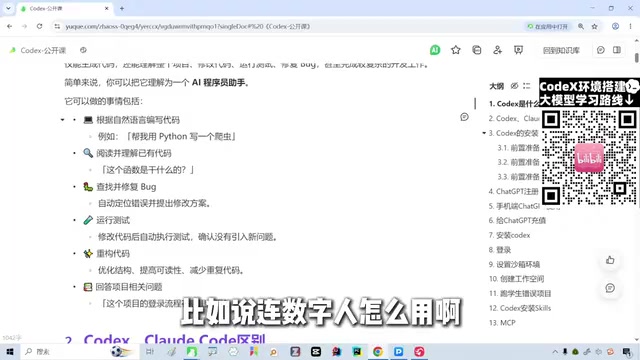
Codex in Practice: From Environment Setup to Skills and MCP Calls
Codex is OpenAI's AI coding assistant. This guide covers its positioning, how it compares to Claude Code, model configuration pitfalls, and practical Skills and MCP usage for beginners.
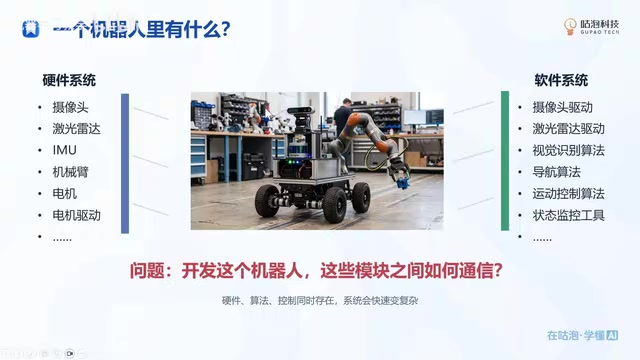
Getting Started with ROS2 Robot Development: Core Concepts and Environment Setup
This article introduces the core concepts and environment setup of ROS2 robot development, explains why ROS2 unifies module communication and facilitates collaborative work, and outlines the Turtlesim simulation experiment to help beginners get started quickly.

SLAM Mapping and Navigation Tutorial: A Complete Learning Path from Theory to Practice
This Bilibili SLAM mapping and navigation tutorial starts with a navigation overview, covering architecture, installation commands, and practical prerequisites, then connects to the Fourteen Lectures on Visual SLAM, slam_toolbox, and Cartographer—a complete learning path from theory to practice.