Barnum's 'The Art of Money Getting': Why 150-Year-Old Business Wisdom Is Going Viral in Silicon Valley Again

Barnum's 1880 'The Art of Money Getting' goes viral in tech, proving timeless business wisdom still resonates.
Kevin Kelly recommended P.T. Barnum's 1880 book 'The Art of Money Getting,' which earned 291 points and 152 comments on Hacker News. This concise volume distills Barnum's lifetime of business experience, with core principles including choosing the right vocation, living within one's means, prioritizing advertising, and operating with integrity. The tech community embraces it for its high information density that aligns with engineering culture, and because its 150-year-old business wisdom remains remarkably consistent with modern startup principles.
Why a Book from 1880 Is Blowing Up in the Tech Community
Recently, Kevin Kelly's Cool Tools recommended a slim volume published in 1880—P.T. Barnum's The Art of Money Getting. The recommendation garnered 291 points and 152 comments on Hacker News, sparking a lively discussion in the tech community about "timeless wealth wisdom."
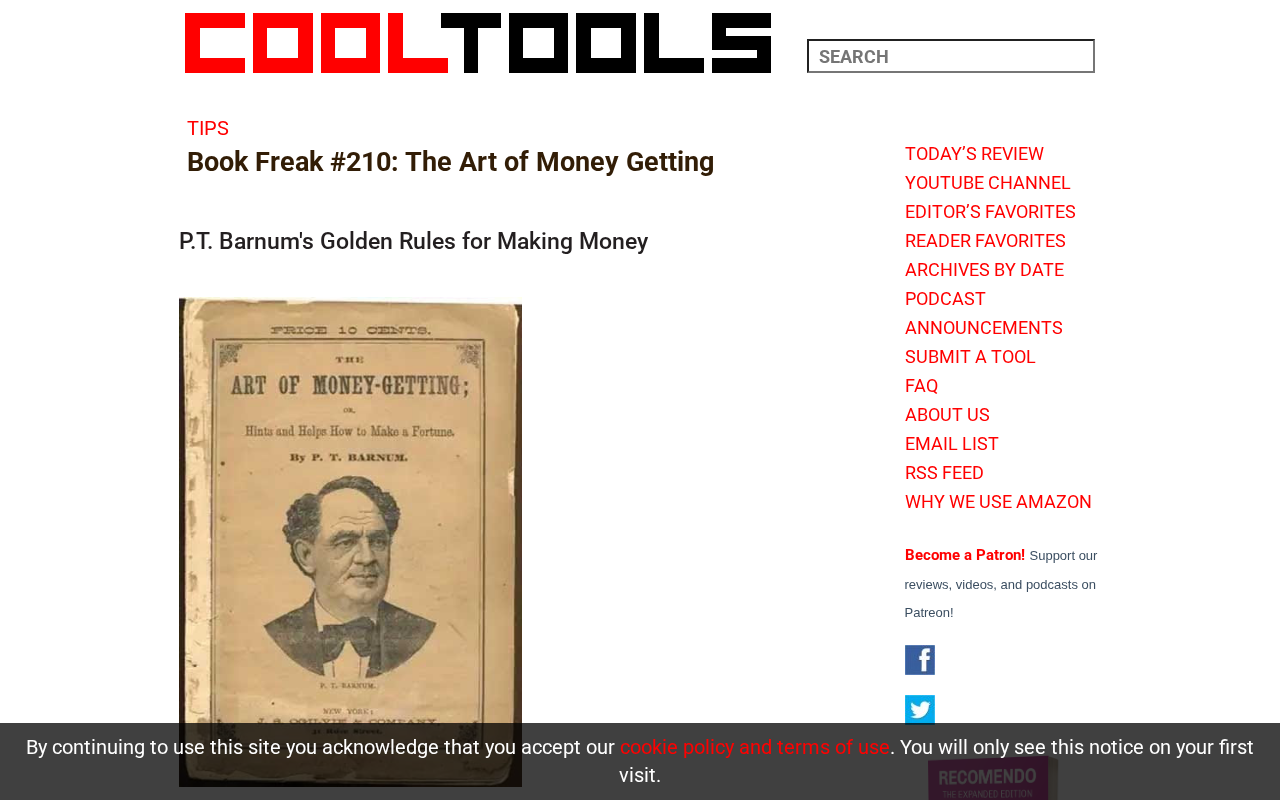
Kevin Kelly and Cool Tools carry significant influence. Kelly is the co-founder of Wired magazine and one of the most influential thinkers in technology culture. His Cool Tools website (kk.org/cooltools), which has been running since the early 2000s, is dedicated to recommending practical tools, books, and resources, forming a high-quality curation community. Cool Tools recommendations carry enormous credibility in tech circles because of their strict selection criteria—only content verified through actual use gets featured. When Kelly recommends a business book from 1880, that alone sends a powerful signal: this book's value has stood the test of time.
P.T. Barnum (Phineas Taylor Barnum, 1810–1891) was one of the most famous entrepreneurs in American history. He founded the Barnum & Bailey Circus, earned the title "The Greatest Showman on Earth," and was a pioneer of modern marketing. His Barnum's American Museum, established in mid-19th century New York, was the city's most popular entertainment venue, attracting hundreds of thousands of visitors annually. Notably, Barnum's business career was far from smooth sailing—he declared bankruptcy in 1855 due to overexpansion, but bounced back through sheer determination and business acumen. This firsthand experience of going bankrupt and rebuilding deeply informed his insights on risk management and living within one's means in The Art of Money Getting, giving the book a weight of real-world experience far beyond armchair theorizing. Yet few people know that he also wrote a practical guide on business and wealth accumulation. Though short in length, the book distills his lifetime of commercial experience.
Barnum's Core Business Principles
Choosing the Right Vocation Is the Starting Point of Success
The first principle Barnum emphasizes is: find a pursuit you're genuinely skilled at and passionate about. He believed that success is virtually inevitable when a person engages in work they're naturally suited for. This insight is particularly relevant in today's tech industry—the most successful founders are almost universally doing something they truly love.
The Balance Between Frugality and Investment
"Don't spend money on things you haven't yet earned"—this advice is especially valuable in today's consumerist culture. Barnum advocated living within one's means, but he wasn't preaching extreme frugality. He emphasized a rational approach to spending: put money where it generates returns, not into vain displays.
The Art of Advertising and Self-Promotion
As someone who built his career on "publicity," Barnum's understanding of advertising far surpassed his contemporaries. He believed that a great product nobody knows about might as well not exist. This view has been validated repeatedly in the internet age—whether it's open-source projects or startups, "build it and they will come" is a myth everyone now recognizes.
Why the Tech Community Is Embracing a 150-Year-Old Book
A Concise, No-Nonsense Writing Style
Unlike modern business books that routinely stretch to 300 pages, Barnum's book is remarkably concise. Each principle is explained briefly, accompanied by vivid examples. This "no filler" style naturally appeals to programmers and engineers.
There's a deeper cultural reason behind this. Hacker News is a tech community forum founded by Y Combinator, with a user base primarily consisting of engineers, founders, and investors, boasting discussion quality that's second to none in tech communities. The tech community's affinity for classical business books follows an inherent logic: programmer culture naturally champions "first principles" thinking, preferring to seek fundamental patterns rather than surface-level tactics. Compared to modern business bestsellers stuffed with redundant case studies and self-repetition, 19th-century business works tend to be closer to original thinking—untouched by the modern publishing industry's "padding" treatment—and thus better aligned with engineers' high expectations for information density. A post earning 291 points is a direct hit on this community's core interests.
The Timelessness of Business Principles
Technology changes, but human nature doesn't. The principles Barnum discussed—operating with integrity, continuous learning, avoiding speculation—remain the most reliable compass in today's landscape of cryptocurrency bubbles and AI startup frenzies. In the Hacker News discussion, many commenters noted that this 150-year-old advice is more valuable than most modern business books.
A Sobering Warning Against the "Get Rich Quick" Mentality
Barnum explicitly opposed shortcuts and schemes. He believed true wealth comes from consistently creating value for others, not from zero-sum games. This aligns perfectly with the philosophy of Silicon Valley's best founders—truly great companies solve real problems.
Four Takeaways for Today's Entrepreneurs
This book reminds us that the essence of business hasn't changed because of technological revolution. Whether it's a circus in 1880 or an AI company in 2025, the underlying logic of success is the same:
- Find genuine needs, rather than manufacturing artificial ones
- Invest consistently, rather than expecting overnight riches
- Build credibility, because integrity is the greatest asset in long-term games
- Master distribution, so great products reach more people
In an era of rapidly evolving AI technology, re-reading such an "ancient" book may help us stay clear-headed amid the noise. Technology is a tool, and the wisdom to wield tools often lies in those fundamental principles that have survived the test of time.
How to Read The Art of Money Getting for Free
Since the copyright has expired, The Art of Money Getting is available in full text for free on platforms like Project Gutenberg. Project Gutenberg is the world's oldest digital library, founded by volunteer Michael Hart in 1971—a full 20 years before the World Wide Web was born. The project's core mission is to digitize literary works whose copyrights have expired and make them freely available to the public. It currently hosts over 70,000 works. In the United States, works published before 1928 have generally entered the Public Domain, meaning anyone can freely copy, distribute, and adapt them. As an 1880 publication, The Art of Money Getting has long exceeded its copyright protection period and can be found not only on Project Gutenberg but also on Internet Archive, Standard Ebooks, and other platforms in beautifully reformatted editions.
The entire book takes less than an hour to read, making it perfect for light weekend reading. For those who find English challenging, the book's language is relatively straightforward, making it excellent material for English reading practice as well.
Key Takeaways
- P.T. Barnum's 1880 The Art of Money Getting has regained attention in the tech community, earning 291 points and 152 comments
- Core principles include choosing the right vocation, rational spending, prioritizing advertising, and operating with integrity
- 150-year-old business wisdom aligns remarkably with modern startup principles, demonstrating that the essence of business hasn't changed despite technological revolutions
- The tech community's interest stems from the book's concise, practical style and its explicit stance against get-rich-quick schemes
- The book is in the public domain and available for free on Project Gutenberg, Internet Archive, and other platforms
Related articles
 Industry Insights
IRS Fully Embraces Claude AI, Accelerating Federal Government's AI Adoption
The IRS is recruiting staff with 24/7 Claude AI access, marking Anthropic's breakthrough into the federal government. Explore the strategic implications and tax use cases.
 Industry Insights
Nadella Introduces the Loopcraft Framework: Building AI Ecosystems Through Feedback Loops
Microsoft CEO Satya Nadella's Loopcraft framework explains how to build frontier AI ecosystems through nested feedback loops across technology, business, and ecosystem dimensions.
 Industry Insights
OpenAI's Internal Codex Usage Surges 56x — AI Coding Is Eating Everything
OpenAI reveals internal Codex usage data: Research up 56x, Customer Support 32x, Engineering 27x, Legal 13x since Nov 2025. AI coding tools are penetrating every department faster than expected.