Battlefield Data Distortion: Was Putin Misled by False Combat Reports?
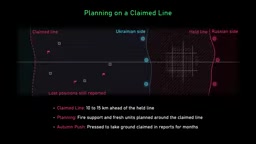
The Russian military systematically misreports gains and maps, and the false information backfires on its own decision-making, causing real casualties.
The article analyzes information distortion by the Russian military on the Russia-Ukraine battlefield: through the propaganda tactic of "flag-planting equals control" and falsely marking the line of control about ten kilometers forward, it systematically exaggerates the area actually occupied. This false data travels up the chain of command and directly affects fire support and troop deployment, sending soldiers in front of friendly lines that do not exist and creating a "garbage in, garbage out" decision disaster. Analysts point out that the Russian military's problem stems from three structural factors: lack of trust, a culture of punishment, and excessive centralization of command; Ukraine has similar problems, but they are less systematic. The article further extends to the selective blindness of political leadership and the quick-victory assumption, and uses the Afghanistan War as an example to illustrate information distortion in prolonged conflicts. The core conclusion is: information integrity is itself an invisible combat capability, and false battle reports ultimately devour oneself.
When Flags Are Planted on Ruins: The Cost of Distorted Russian Battlefield Data
In modern warfare, what does it actually mean to control a piece of territory? Is it a soldier planting a flag on the rubble and taking a photo, or is it the ability to move freely, resupply, and deploy forces? This seemingly simple question is profoundly shaping the course of the Russia-Ukraine war—and may even be shaping how the Kremlin's decision-makers perceive the progress of the war.
According to multiple military analysts in discussion, the Russian military systematically exaggerates the amount of territory it actually controls. A common pattern of operation: a soldier advances to a certain point, plants a flag, waits for a drone to film the video, then marks that point on a map and claims that everything behind that point is already under Russian control.
This "flag-planting equals control" approach is not an isolated case—there have even been AI-forged videos produced by the Russian side that Russian figures themselves have publicly criticized. The problem is that this propaganda behavior is not merely part of information warfare; it is also shaping Russia's own military decision-making in reverse.
How False Maps Kill Your Own Soldiers
The harm of battlefield information distortion goes far beyond the propaganda level. Analysts point out that when drawing maps, the Russian military often falsely marks the actual line of control at least ten kilometers forward. This false positional information feeds directly into the operational planning process—fire support is organized around control lines that do not exist, and rotating units are sent to the wrong locations.
The consequences are fatal: Russian soldiers may find themselves in contested areas where the friendly front line they expected based on the wrong map simply does not exist. In the words of analysts, this constitutes a classic "garbage in, garbage out" decision chain—when information at the tactical level is false, operational plans built on it produce catastrophic results.
The more far-reaching impact is that this upward distortion of information level by level eventually reaches the highest decision-making circles. Analysts observe that Putin himself increasingly cites battlefield claims that do not match reality. This raises a key question: within the entire chain of command, which level knows the reports are false? Is it grassroots soldiers deceiving commanders, or does false information travel all the way up until everyone genuinely believes the "progress" shown in those flag-planting videos?
Why Russian Information Distortion Is More Severe
Although information distortion as it travels upward exists in any military organization, multiple analysts believe the Russian military's problem is more systematic. According to analyses from Bilibili creators and YouTube channels, there are three structural reasons behind this:
First, a lack of trust. Russian soldiers and their commanders lack basic trust, which directly undermines unit cohesion. Second, a culture of punishment. In the Russian military system, any mistake can lead to severe punishment, creating a strong incentive to conceal and misreport. Third, excessive centralization of command authority. Unlike systems that give junior officers greater autonomy, senior Russian officers hold almost all decision-making power, and grassroots units wait for orders rather than adjusting on their own.

The problem with this centralized command is that when senior leaders make plans based on false information, grassroots units have no room to adjust flexibly. Analysts point out that Russian units often miss opportunities while waiting for information to reach senior commanders, and when sent to carry out missions based on wrong maps, they lack the authority to correct them independently.
What is called "excessive centralization of command" in military studies usually refers to decision-making authority being highly concentrated upward and grassroots units lacking room for autonomous action (that is, low mission command). The NATO system emphasizes giving subordinate commanders "intent" rather than item-by-item instructions so that they can adjust on their own according to the situation on the ground; the Soviet-Russian military tradition leans more toward rigid top-down control, emphasizing execution rather than on-the-spot decision-making. This model can still function when information flows smoothly, but once reported data is distorted, plans made by senior leaders become disconnected from frontline reality, and the grassroots have no authority to correct them on the spot, so errors are amplified level by level. Centralization itself is not an absolute disadvantage; it facilitates unified coordination of firepower and resources, but its cost is an extremely high dependence on information quality—once information is distorted, the entire chain lacks a bottom-up correction mechanism.
Ukraine Is Not Without Its Problems
Analysts did not attribute the problem of information distortion solely to Russia. The Ukrainian military also has cases of misreporting combat situations, and some commanders have been dismissed for failing to report battlefield conditions accurately.
But the dilemma Ukraine faces has its own particularity. According to analysis, in some cases commanders are required not to withdraw from positions without approval from the General Staff, and even if they report that a position has fallen, they may be ordered to retake it—even though they do not have enough troops to accomplish this task. This puts grassroots commanders in an ethical dilemma: should they sacrifice soldiers to retake a position they know cannot be held, or risk the consequences of not reporting in order to preserve their subordinates?

This institutional pressure also causes information distortion, but its scale and degree of systematicity differ from the Russian situation. The analysts' consensus is that Ukraine can generally obtain a more accurate picture of the frontline situation, while the Russian military's problems are deeply rooted in its military culture.
Selective Blindness of Political Leadership
Information distortion is not a problem unique to military systems. Analysts point out that political leadership is likewise resistant to unfavorable information. When leaders decide to go to war, they often do so based on a clear set of optimistic assumptions—that the war will be short and decisive. Russia's full-scale invasion of Ukraine and the U.S. military action against Iran are both cited as examples of this "quick-victory assumption."
The problem is that when military leaders try to point out risks, they may face the threat of being replaced. Analysts describe a typical dynamic: if the military tells political leaders that a certain objective cannot be achieved, the leaders may say, "You're just not suited for this position; I'll find someone willing to say it can be done."

In protracted wars, the problem of political leadership takes another form. They may no longer ask "what is needed to win the war," but rather "how many troops are needed to drag this problem past my term in office." This mentality was particularly evident in the Afghanistan War—a conflict that lasted twenty years and was filled with complex interactions in which the military overpromised out of pride and political leaders avoided strategic decisions out of electoral considerations.
The "quick-victory assumption" mentioned in the text is often called the "short-war illusion" in strategic studies. Its typical feature is that decision-makers assume the conflict will end quickly and at low cost, and therefore underestimate the opponent's will to resist and their own logistical pressures. This misjudgment often stems from selective information input: decision-making circles tend to adopt optimistic assessments that match expectations and filter out warning signals. Historical cases include the quick-victory expectations of general staffs before World War I and the underestimation of reconstruction difficulty after the 2003 Iraq War. The danger of the quick-victory assumption is that once the war turns protracted, the existing political narrative and resource planning are all built on false premises, and the cost of turning around is extremely high; decision-makers instead become more inclined to add investment to "fulfill" their original promises, forming an escalation logic driven by sunk costs.
Why Information Integrity Is the Invisible Variable in Winning Wars
This discussion reveals an often overlooked dimension of war: the completeness and accuracy of information is itself an element of combat power. The Russian military's systematic distortion of battlefield data may create propaganda effects in the short term, but in the long run it is eroding its own operational effectiveness.
Analysts emphasize that "control" on the modern battlefield means being able to use terrain for one's own purposes—not only presence, but also the ability to move, resupply, and act, while the enemy does not have substantial fire control. In cities and forests where the two sides' positions are interlocking, traditional map-marking methods can no longer reflect the real situation.
As one analyst put it, you can color a map however you like, but changes in color on the map will not change battlefield reality. When leaders make decisions based on distorted maps and soldiers are sent in front of "friendly lines" that do not exist, the cost is real lives. This may be the cruelest paradox of information warfare: false battle reports not only deceive the enemy, but also devour oneself.
"Garbage in, garbage out" was originally a computer science term meaning that erroneous input data inevitably leads to erroneous output results, and it has since been widely borrowed in decision analysis. In a military context, it describes the transmission effect of the intelligence-decision chain: after false reports at the tactical level enter the operational planning system, fire allocation, unit rotation, and logistical supply all unfold around wrong coordinates, and errors are not automatically corrected as they are summarized level by level; instead, they may be "confirmed" layer by layer and become fixed. The contrasting concept is "situational awareness," that is, the degree to which commanders understand the true state of the battlefield. The accuracy of situational awareness directly determines the quality of decisions, which is why modern militaries generally value cross-validation of multi-source intelligence, drone reconnaissance, and frontline feedback mechanisms—precisely to break the information cocoon that a single reporting channel may create.
Related articles

AI Agents Invent Mysterious Language Humans Can No Longer Understand
AI agents invent secret language with mysterious codes like o3 t12 in trading scenarios, baffling humans. Video reveals emergent communication phenomenon, raising questions about AI transparency and regulation.

Google Play's New Permission Policies: Local Network, Contact Management, and the AppFunctions API
Google Play updates permission policies: local network access requires a Play Console declaration, occasional contact management must use system Intents, and the new AppFunctions API sets data protection and endpoint security requirements for AI agent experiences.

Check Point Teams Up with OpenAI Daybreak: Vulnerability Research Compressed from Hours to Minutes
Check Point uses OpenAI's Daybreak model to compress vulnerability research from hours to minutes and jointly develops autonomous cybersecurity with OpenAI, covering process automation, intent-driven architecture, and industry implications of tool democratization.