Behind PS5's 46% Sales Plunge: How a 30% Price Hike and Storage Crisis Are Crushing Sony's Console

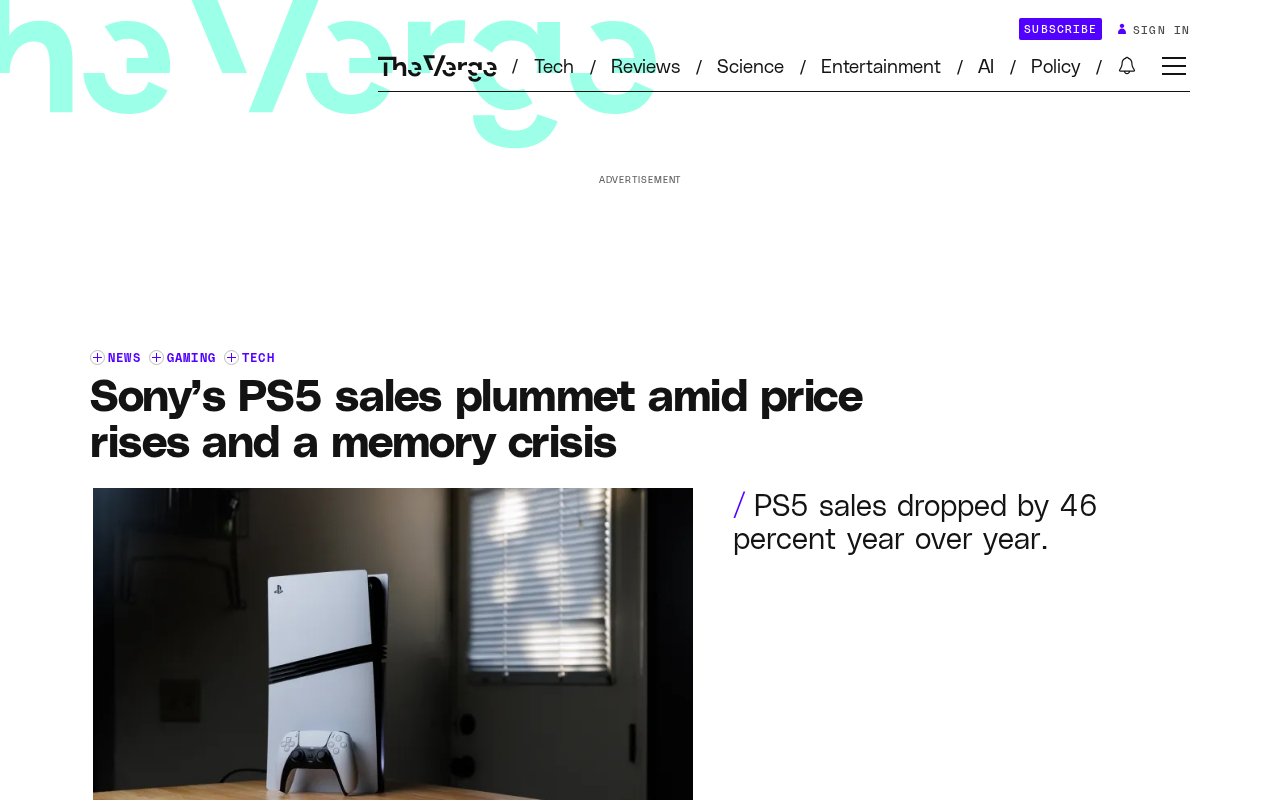
PS5 quarterly sales halved to 1.5M units as two price hikes pushed it to $649, triggering market backlash.
Sony's PS5 sold only 1.5 million units in January–March 2025, a 46% year-over-year decline and an all-time quarterly low since launch. Over the past year, Sony raised the PS5 price twice from $499 to $649—a 30% increase that breaks the console industry's tradition of price cuts over time. Yen depreciation and rising supply chain costs drove the hikes, but the high price now rivals mid-range gaming PCs, causing consumers to walk away.
PS5 Quarterly Sales Cut in Half: 1.5 Million Units Marks an All-Time Low
Sony's latest financial report reveals that PS5 console sales reached only 1.5 million units in fiscal year 2024 Q4 (January–March 2025), a 46% year-over-year decline. This figure marks the lowest quarterly sales since the PS5 launched in November 2020, signaling that the console has officially entered the downward phase of its lifecycle.
Two Price Hikes: From $499 to $649
Over the past year, Sony raised the PS5's price twice, pushing the standard PS5 from $499.99 all the way up to $649.99—a staggering 30% increase. This pricing strategy is extremely rare in gaming console history, and understanding why requires some context on the lifecycle logic the console industry has long followed.
Gaming consoles typically follow a well-established business model: hardware is sold at or near cost (sometimes at a loss), while manufacturers profit through game software licensing fees (typically 15–30% of each game's retail price) and subscription services. Over time, manufacturing costs decline due to economies of scale and process improvements, prompting timely price cuts that expand the installed base and drive overall software sales growth. The PS4 was a textbook example: launching at $399 in 2013, introducing a slimmer model at $299 in 2016, and ultimately surpassing 117 million units sold. PS5's reverse price-hike strategy fundamentally breaks this industry convention, which explains the strong market backlash.
The Logic Behind Sony's Price Increases
Sony's decision to raise prices isn't entirely without reason. Rising global supply chain costs, exchange rate pressure from the continued depreciation of the Japanese yen, and semiconductor component price volatility have all been eroding hardware profit margins.
The transmission mechanism of yen depreciation is more complex than it appears on the surface: Sony is a Japanese company that settles R&D and some manufacturing costs in yen, but its primary markets are North America and Europe. In 2024, the yen briefly fell below 160 to the dollar, hitting a 30-year low. However, since semiconductor procurement is typically denominated in US dollars, yen depreciation actually increases import costs for Japanese companies. Meanwhile, Sony has already raised PS5 pricing multiple times in the Japanese domestic market. The decision to pass cost pressures on to Western markets carries even greater market risk, as consumers in North America and Europe are more price-sensitive and have more alternative options available.
Nevertheless, the approach of passing cost pressures entirely onto consumers is clearly producing a severe market backlash.
Why Consumers Are No Longer Buying In
The $649.99 price point has approached or even exceeded the price range of many mid-range gaming PCs. For price-conscious consumers, this eliminates PS5's value proposition entirely. Especially against the backdrop of the current global economic slowdown, consumers are being more cautious with spending on non-essential items, naturally lowering the purchase priority of a gaming console.
Storage Crisis: The Underestimated Sales Killer
Beyond pricing factors, reports also mention a "memory crisis"
Related articles
Meta Muse Hits 900K Downloads in Six D…
Meta Muse Hits 900K Downloads in Six Days: The AI Agent Era Has Officially Arrived
Meta's AI agent Muse hit 902K downloads in 6 days, topping US App Store and Google Play charts above ChatGPT and Claude. A deep dive into Muse's capabilities and the AI Agent race.
 Industry Insights
IRS Fully Embraces Claude AI, Accelerating Federal Government's AI Adoption
The IRS is recruiting staff with 24/7 Claude AI access, marking Anthropic's breakthrough into the federal government. Explore the strategic implications and tax use cases.
 Industry Insights
The IRS Mobile App Debate: A Trust Crisis in Government Digital Transformation
The IRS's proposed mobile app has sparked heated debate. This article analyzes the core arguments, exploring data security, privacy, and the trust crisis in government digital transformation.