Beluga Deaths at Shedd: Why Even Top Aquariums Can't Meet These Animals' Needs

Three beluga deaths at Shedd Aquarium renew urgent questions about whether captivity can ever truly serve marine mammals.
Chicago's Shedd Aquarium recently lost three beluga whales in rapid succession — longtime resident Beethoven, plus Pikachu and Rain, rescued from a Canadian theme park shut down over animal abuse. While necropsies are pending, the deaths have sparked deep reflection: even the finest aquariums cannot replicate the belugas' wild reality of swimming 19 miles a day and diving hundreds of feet. Experts describe captivity for these intelligent, social animals as near-torturous. The Whale Sanctuary Project, building a natural-bay sanctuary in Nova Scotia, offers a more humane alternative — but it wasn't ready in time for these three whales.
Chicago's renowned Shedd Aquarium recently lost three beluga whales in quick succession, thrusting this high-profile institution into the spotlight and prompting the public to take a hard look at the long-standing practice of keeping marine mammals in captivity. This isn't just a tragedy — it reflects a fundamental, difficult-to-resolve contradiction between captive environments and the natural instincts of wild animals.
Three Belugas, Three Stories
As Vox reported, each of the three belugas had its own history. One, named Beethoven, had lived at Shedd Aquarium for decades. The other two — Pikachu and Rain — were more recent arrivals.
The aquarium described their transfer as an "international rescue operation." The two had been living at a Canadian theme park that shut down two years ago after an investigation exposed widespread neglect and suffering. They were subsequently relocated to Shedd.
The exact cause of death for all three belugas remains unclear, with the aquarium awaiting necropsy results. But regardless of the specific medical findings, the string of deaths has sparked widespread scrutiny.

Why Even Top Aquariums Fall Short
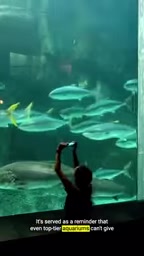
These deaths have put Shedd Aquarium under the microscope and reignited debate about the aquarium model itself. They serve as a reminder that even the best aquariums cannot truly meet animals' needs under captive conditions.
The problem starts with the tanks. The enclosed spaces aquariums provide represent only a tiny fraction of the range these animals would cover in the wild. In their natural habitat, beluga whales can swim up to 19 miles (about 30 kilometers) per day — a migratory scale that is simply impossible to replicate in any aquarium tank.
Natural Behaviors, Stripped Away
Beyond limited space, captivity means the complete loss of a whole range of natural behaviors. In the wild, belugas hunt and dive to depths of hundreds or even thousands of feet. The shallow tanks of an aquarium can offer none of this.
One expert interviewed by Vox described the aquarium environment as "incredibly boring" for these highly intelligent, deeply social animals — going so far as to call such captive conditions "torturous."
This is not hyperbole. Belugas are creatures with complex social structures and advanced cognitive abilities. Being confined for extended periods in a monotonous, cramped, understimulating environment inflicts ongoing harm on their physical and mental well-being.

Beluga whales (Delphinapterus leucas) are known as the "canaries of the sea" for their rich, varied vocalizations. They have exceptionally flexible necks — their cervical vertebrae are unfused, a rarity among cetaceans — allowing them to turn their heads, nod, and display a surprisingly expressive range of facial movements. In the wild, belugas typically live in groups of several to dozens of individuals, relying on complex acoustic signals for navigation, foraging, and socializing. Adult belugas possess highly developed echolocation abilities used to detect prey beneath ice or in murky water. In captivity, the concrete walls of tanks create chaotic sound reflections that chronically disrupt belugas' sonar systems — widely considered a major source of chronic stress. This sustained sensory pressure, compounded by spatial confinement and the breakdown of natural social structures, is why captive belugas generally have shorter lifespans than their wild counterparts.
Sanctuaries: A Different Kind of Future
For the surviving belugas rescued from the Canadian theme park, animal welfare advocates had hoped they could be placed in a purpose-built marine sanctuary rather than a traditional aquarium like Shedd.
Sadly, that vision never came to pass for these animals. But change is underway. An organization called the Whale Sanctuary Project is developing a sanctuary in Sherbrooke Bay, Nova Scotia, Canada, with the goal of ensuring that future displaced whales and dolphins don't have to endure the same fate.

The Fundamental Difference Between Sanctuaries and Aquariums
Marine sanctuaries differ from traditional aquariums not just in scale, but in their foundational philosophy. Sanctuaries typically make use of natural bays, providing animals with water conditions that closely approximate the wild, allowing them to swim more freely, dive, and engage in natural behaviors — without placing public display or commercial performance at the center of operations.
For animals that cannot be returned to the wild after a theme park closure or rescue, sanctuaries offer a middle path between captivity and release — ensuring basic care while respecting animals' natural instincts to the greatest extent possible.
The Whale Sanctuary Project's chosen site in Sherbrooke Bay, Nova Scotia, plans to enclose approximately 40 acres of natural coastline as its first phase. Unlike aquariums, marine sanctuaries do not run breeding programs or attract visitors through animal performances or close-contact interactions; their operational mission is to provide a long-term home that is as close to natural as possible for individuals who cannot be released. Similar models already exist in terrestrial animal conservation, such as elephant sanctuaries and chimpanzee retirement facilities. The unique challenges facing marine mammal sanctuaries include: how to prevent animals from escaping in open-water enclosures, how to manage disease risks from wild animals entering the enclosed area, and how to maintain water quality and temperatures suited to cetaceans. These factors make marine sanctuaries far more costly and technically demanding than their land-based counterparts — and are the primary reason no fully operational whale sanctuary yet exists anywhere in the world.
What This Tells Us
The deaths of three belugas at Shedd Aquarium go beyond questions of management at a single institution. They illuminate a more universal dilemma: no matter how advanced an aquarium's facilities or how dedicated its care team, artificial tanks cannot replicate the vast ocean these animals were shaped by.
As public awareness of animal welfare grows and alternatives like sanctuaries gradually move from concept to reality, the debate over keeping marine mammals in captivity will continue. The loss of these belugas may yet become another pivotal moment pushing the industry toward reflection and transformation.
Related articles

Workbuddy for Absolute Beginners: How a Desktop AI Agent Fits Into Real Workflows
A beginner's guide to the Workbuddy desktop AI agent: installation, claiming credits, file management, and building automated workflows—compared with CodeX for fit and cost, helping professionals shift from AI question-askers to AI managers.

OpenAI's New Agent Stack: Computer Use, Decisions API, and Ultra-Fast Workflows
OpenAI Dev Day unveiled a new agent stack: Computer Use outperforms humans, Decisions API delivers ultra-low-latency classification via Luna, Agents API opens the same Computer Use capabilities, and GPT-6.1 Sol costs only one-seventh of Astra. Core updates, benchmark data, and developer insights.

Liang Wenfeng Open-Sources DeepInfo Inference Framework, Takes On U.S. Ban
DeepSeek open-sources its DeepInfo inference framework after its models, featuring GPU/CPU cross-pipelining, small-model prediction with large-model verification, and full Huawei Ascend and NVIDIA chip support—facing the U.S. federal ban head-on. This article analyzes its significance for AI deployment and open-source strategy.