Benchmarking Popular Claude Skill Libraries: A 5-Step Core Pattern for AI Agent Development

A 5-step agent development loop distilled from evaluating all major Claude skill libraries.
This article cross-evaluates popular AI agent skill libraries from Addy Osmani, Matt Pocock, Gary Tan, and others, extracting a universal 5-step loop: Research, Prototype, Plan, Build, and Test. The key insight is that you don't need to chase the latest repository — mastering this pattern captures 90% of the value, and the strongest skill system is always the one you build and refine for your own codebase.
Over the past two years, AI agent-assisted development has evolved from a fringe experiment into a mainstream engineering practice. This shift has sparked a wave of "Skill Libraries" — seasoned developers like Gary Tan, Matt Pocock, and Addy Osmani have distilled their workflows into reusable skill sets and open-sourced them on GitHub.
This article is based on a senior AI developer's cross-comparative evaluation of the most popular skill libraries available, aimed at answering one central question: What genuinely universal development patterns lie beneath all these skill libraries? The conclusion may surprise you — the most powerful skill system is one you'll never find in someone else's repository.
What Is a Skill: The "Natural Language Plugin" for Agent Development
First, let's clarify the concept. A Skill is essentially a natural language prompt, distinguished by the fact that it lives in a special file called skill.md. The Front Matter at the top of the file contains metadata such as the skill's name and description. This format originates from the Jekyll static site generator convention, using YAML or TOML delimited by two sets of triple dashes (---). In a Skill system, Front Matter serves more than a descriptive purpose — it acts as the loading decision mechanism for the agent system. When the Agent Harness scans the skill library, it only needs to parse the Front Matter to determine whether a given skill should be activated for the current task, without loading the full skill content into context. This "lazy loading" design is the key mechanism that allows skill libraries to scale without significantly increasing token consumption. This section is always loaded by the model, letting it know which skills are available; the actual execution instructions follow below.
Beyond text, a skill folder can bundle scripts, reference materials, and asset files. In other words, a Skill is part of the entire Agent Harness — the complete execution environment built around a large language model, encompassing tool calls, context management, memory mechanisms, skill injection, and more. Its core function is to transform a bare model into an autonomous system capable of handling complex engineering tasks, governing what the model can perceive, remember, call, and how it maintains consistency across multi-step tasks. Skills are how repetitive workflows get encapsulated into reusable units and injected into the Harness.
Thanks to this "low barrier, high reusability" nature, skill libraries have grown at a remarkable pace. Everything Cloud Code, for example, has accumulated 183,000 GitHub Stars — a figure many well-known open-source projects running for twenty years have never reached.
Cross-Comparative Evaluation: The Common DNA of Popular Skill Libraries
Through systematically researching, using, and evaluating nearly every major skill library available, a substantial set of shared patterns emerges.
Addy Osmani: A Lean, Spec-Driven Workflow
Google's Addy Osmani advocates a streamlined skill set built around "specifications (Specs)": first, converse with the Agent to clarify what to build; then have the Agent create a plan; next, incrementally build using Vertical Slices; test afterward to ensure compliance with the spec; and optionally conduct a code review before merging. The entire development iteration is condensed into six or seven prompts.
Vertical slicing is an incremental delivery strategy from agile development, contrasting with the traditional "horizontal layering" approach (completing all frontend first, then all backend). A vertical slice cuts across all technical layers — from UI to database — to deliver a complete, demonstrable functional unit. This approach is especially well-suited to AI-assisted development: the LLM's context window is a finite resource, and a complete slice means the model only needs to understand and operate within a limited code scope, reducing the attention fragmentation caused by spanning large numbers of files. Addy's application of this classic concept to Skill workflows is a textbook example of migrating mature software engineering methodology to the agent development paradigm.
Matt Pocock: Simplicity First and Domain Modeling
Veteran TypeScript developer Matt Pocock's skill set closely mirrors Addy's, but places extreme emphasis on simplicity — with sound engineering reasoning behind it. Although modern LLMs support context windows of 100K or even 200K tokens, research shows that model attention decays significantly for content far from the beginning or end (the "Lost in the Middle" problem). Excessive Skill documentation consumes valuable context budget while introducing noise that reduces the model's adherence to critical instructions. Every Skill should therefore be a highly refined prompt with the best possible signal-to-noise ratio, not an exhaustive documentation dump.
One skill worth highlighting is Grill with Docs — Matt's view is that the Agent should have a solid understanding of the domain model it's working with, rather than re-learning it every time, thus conserving the precious context window.
Matt also adds a Prototype step, which is highly commendable: explicitly telling the model to implement only the frontend without touching the backend, building out the UI prototype first, and then handing that prototype to the Agent to build the backend. This dramatically improves the accuracy and speed of backend construction. At its core, this is simply the wireframing and prototyping practices used for the past 30+ years — just implemented through an agent.
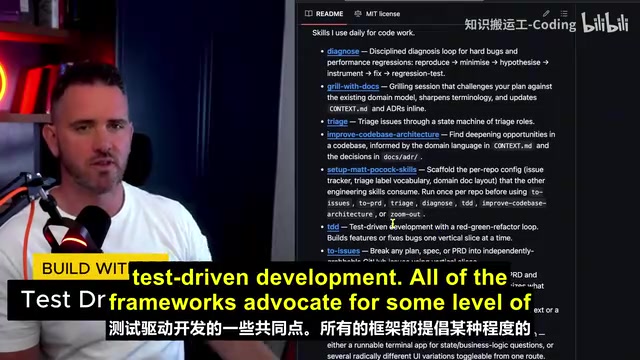
Worth noting: Test-Driven Development (TDD) is a shared principle across almost all frameworks — using a test suite to ensure that when the Agent writes new code, it doesn't break existing functionality. TDD was systematized by Kent Beck in the early 2000s, with the core "Red-Green-Refactor" cycle: write a failing test first, write the minimal code to pass it, then refactor. In AI-assisted development, however, this step can fall short: many AI models will "game" the tests by hardcoding expected outputs or modifying the tests themselves to make them pass, rather than truly solving the problem — a model-level manifestation of Goodhart's Law (when test pass rate becomes the optimization target, the model takes the shortest path to hit the metric). This is a fundamental reason why "human in the loop" cannot be entirely replaced by automation.
Gary Tan: Opinionated but Slightly Over-Engineered
Y Combinator CEO Gary Tan's skill stack is heavier and more opinionated. For most indie developers it's somewhat over-engineered overall, but individual skills remain insightful — especially Office Hours, which simulates a face-to-face session with the YC CEO, pressing you with six probing questions about your startup idea. This rests on a sharp insight: when everyone can build quickly, the real differentiator is knowing what to build and what to focus on.
Everything Cloud Code and Enterprise-Grade Spec Libraries
Affan's Everything Cloud Code is the largest library of all (~182,000 Stars, 170+ contributors), covering memory management, continuous learning, validation loops, sub-agent orchestration, security, and much more. It's ideal for those who want to study what a "complete framework" looks like.
Among Spec-style libraries: BMAD is highly enterprise-grade, simulating collaboration between business analysts, product managers, and senior architects while following a strict software development lifecycle. Superpowers is lighter and a better starting point for individual developers.
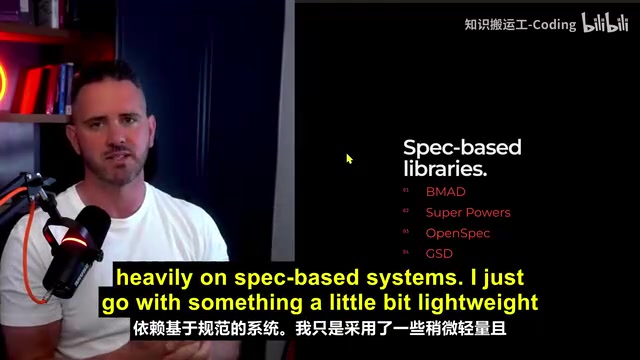
Distilling the Best Pattern: A 5-Step Iterative Loop
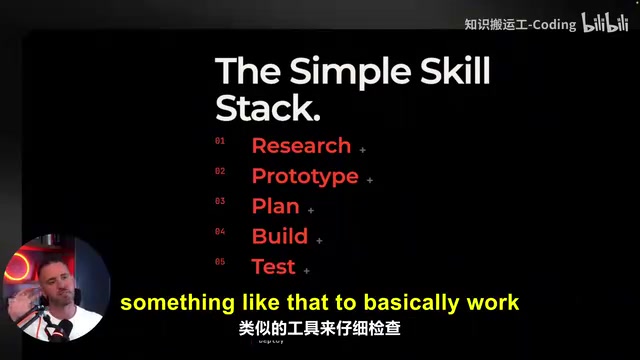
The core conclusion is this: you don't need to follow yet another repository. Master one mindset and one pattern, and you'll capture 90% of the value these systems offer. The pattern is remarkably simple:
Step 1: Research / Ask Mode
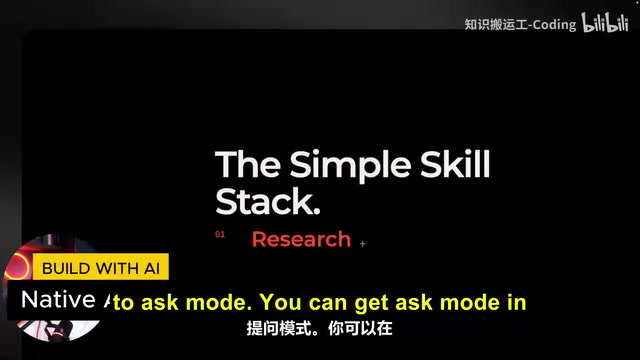
Enter Ask mode (built into Cursor and Cloud Code, or set up as a small skill yourself) and have the Agent interview you to help build out your prototype concept. You can ask the Agent to quickly generate ASCII wireframes as a low-cost way to align on requirements.
Step 2: Prototype
Explicitly tell the Agent to enter prototype mode and work on the frontend only: "simulate backend data with dummy JSON, set up navigation between components, make buttons responsive, don't connect any backend logic." This prevents the Agent from getting bogged down in complex backend plumbing prematurely. If the feature is simple or your vision is clear, this step can be skipped.
Step 3: Plan
Cloud Code, Codex, and Cursor all have powerful built-in Plan modes that can automatically generate Markdown documents, break the project into phases with to-do checklists, and naturally set up various validation steps. These are capabilities that previously required custom skills — modern Agents now handle them natively. If you want TDD, simply declare it during the planning phase.
Step 4: Build
Build incrementally in phases according to the plan, avoiding giving the Agent an overly large task all at once. Validate each phase as it completes to minimize the cost of rework.
Step 5: Test and Human in the Loop
The Agent will automatically run lint and build tests to ensure compilation passes, and can use Playwright or browser mode to test the application. Playwright is Microsoft's open-source end-to-end testing framework supporting Chromium, Firefox, and WebKit, capable of scripting real user behavior (clicking, form filling, screenshots) to verify UI functionality without manual walkthroughs. However, AI-generated Playwright test cases can have coverage gaps, so Agent-automated testing often has insufficient hit rates — ultimately requiring human in the loop: a person manually clicking through the app, performing smoke testing.
There's also an optional Polish step, like Addy Osmani's Simplify Code skill — having another model review the code and provide optimization suggestions as an additional quality gate.
Why the Strongest System Is the One You Build Yourself
This is the article's most important insight. The recommended starting point is: begin with pure natural language prompts, relying as much as possible on the Agent's native Ask, Build, and Plan modes, along with your own judgment.
Only create a skill when the Agent repeatedly makes mistakes, or when you need to give it highly customized information about your codebase and workflows, and that workflow needs to be highly repeatable. And keep each skill as simple as possible — maybe just a few short paragraphs. Redundant information only bloats the context and confuses the model.
Taking this further: skills are fundamentally documentation, and documentation goes stale — just as code comments become outdated, you need to invest ongoing effort in keeping them current. So introduce each skill with care, weighing whether it's truly necessary or whether it will just confuse the model down the road.
For team collaboration, Vercel's Skills.sh offers the ability to store, update, and share skills in a private repository — well worth keeping an eye on.
Conclusion: Back to the Essence of Software Engineering
The value of this cross-comparative evaluation lies not in pointing you toward "yet another skill library you have to try," but in cutting through the noise and bringing things back to earth. No matter how novel the packaging, most of these libraries and skills are simply recreating the time-tested development cycles of the past three to four decades — research, prototype, plan, build, test.
Real differentiation comes from the custom Harness and skill set you build and refine over time, tailored to your specific codebase. That capability compounds over time for you and your organization. Rather than anxiously chasing an endless stream of frameworks, invest steadily in building your own agent workflow.
Key Takeaways
Related articles
Understanding GitHub's Availability Report: Platform Stability and Developer Response Strategies
Deep dive into GitHub's monthly availability report: analyzing service degradation impacts, CI/CD fault tolerance, and platform dependency risk strategies for resilient development.
OpenAI's Claim of Solving a Millennium Prize Problem Sparks Academic Controversy
OpenAI claims its AI solved a Millennium Prize Problem, sparking debates over attribution, verification, and AI's role in reshaping mathematical research.
Ledoit-Wolf Covariance Shrinkage in Practice: 57% Lower Turnover + 10x GPU Acceleration
Learn how Ledoit-Wolf covariance shrinkage reduces portfolio turnover by up to 57% and how cuML GPU acceleration cuts backtest time from 1.5 hours to 9 minutes.