Bending Spoons Acquires Mailchimp: A New Twist in Platform Consolidation

Bending Spoons signs deal to acquire Mailchimp, spotlighting the fate of mature products in the SaaS consolidation wave.
Bending Spoons has signed a definitive agreement to acquire Mailchimp, with the transaction amount and integration plans undisclosed. Rather than speculating on details, the article analyzes the potential impact on Mailchimp's pricing, product roadmap, and customer support based on the acquirer's consistent playbook of acquiring mature products and unlocking profit through operational optimization. Mailchimp has broad brand recognition in the SMB email marketing market but faces competition and pricing pressure from large cloud vendors and emerging tools. The deal reflects how mature SaaS is becoming a target of capital consolidation, with the industry potentially diverging into platform suites and efficiency-oriented standalone products. Existing users should focus on subscription terms, API compatibility, and continuity of automation features, and observe rationally until more information is officially disclosed.
A Deal Worth Watching
According to information on Hacker News, Bending Spoons has signed a definitive agreement to acquire Mailchimp. Though brief, this news has struck a chord across the SaaS and marketing tools community. Bending Spoons is known for acquiring and reshaping mature internet products, while Mailchimp is an iconic brand in email marketing and automation for small and medium businesses—bringing the two together means a classic "capital + product" consolidation.
Public information is currently limited to the fact that the agreement has been signed; the transaction amount, closing conditions, and post-acquisition integration plans have not been disclosed. This article therefore avoids speculating on details and instead analyzes the potential impact of this deal based on the acquirer's consistent playbook and Mailchimp's market position.
Bending Spoons' Acquisition Logic
Bending Spoons is a European-headquartered technology company that has long achieved growth by acquiring mature applications and optimizing their operations. Its track record shows a tendency to take over products with a stable user base but slowing growth, then unlock profit by streamlining teams, restructuring payment models, and improving operational efficiency.
The core of this model is: rather than pursuing zero-to-one product innovation, it runs already-validated products through a more efficient commercial machine. For Mailchimp, this means there could be noticeable changes ahead in pricing strategy, product roadmap trade-offs, and customer support approaches.
PE-style Operations is a key backdrop for understanding Bending Spoons' behavior. Such buyers typically do not view acquired products as long-term projects requiring sustained R&D investment, but rather as productive assets with optimizable cash flow: improving unit economics by cutting redundant positions, scaling back non-core features, raising prices, or adjusting free tiers. Their returns come primarily from profit extraction rather than scale expansion, so their tolerance for product roadmaps is lower. This model is not new in the software industry, but it is particularly sensitive in subscription-based SaaS, because pricing and feature tightening directly change users' migration decisions.
The SaaS consolidation wave refers to the recent phenomenon of mature subscription software being acquired, merged, and restructured at scale by capital firms. Drivers include tightening financing conditions, slowing growth, and stable cash flow from existing products. Consolidators often pursue cross-selling and unified billing, while acquired brands face trade-offs between independence and operational autonomy.
Mailchimp's Situation and Challenges
Mailchimp has broad brand recognition in the email marketing space, particularly having accumulated a massive user base in the small and medium business market. But in recent years, competition in the marketing automation track has intensified, with large cloud vendors and emerging tools continuously squeezing the space for independent service providers, alongside product homogenization and pricing pressure.
Being acquired by a company known for financial discipline and operational efficiency may bring a more focused product strategy in the short term, while in the long term it will test whether it can maintain user experience while cutting costs. For marketing teams relying on Mailchimp, the most important things to watch are subscription pricing, API compatibility, and the continuity of automation features.
Marketing automation refers to software capabilities that automatically trigger emails, SMS, or in-app messages based on user behavior, lifecycle stage, and data tags. Typical features include segmentation, journey builder, A/B testing, and conversion attribution. Mailchimp started with email templates and list management, then expanded into an all-in-one marketing platform. This track has been squeezed in recent years by suite-type products from large cloud vendors (such as CRM and marketing cloud bundles), and independent tools face the dual pressure of feature homogenization and rising customer acquisition costs.
API compatibility is especially important for marketing teams: Mailchimp's open API and integration ecosystem with tools like Zapier are the foundation of many enterprise workflows. If interfaces change, quotas are adjusted, or third-party integrations are restricted after the acquisition, users' data pipelines and automation flows could be disrupted. When assessing risk, focus on API call limits, webhook stability, and data export capabilities.
Potential Impact on the Industry Landscape
This deal reflects a broader trend: mature SaaS products are becoming targets of capital consolidation, rather than merely being the endpoint of independent growth for startups. The marketing tools market may therefore diverge—with suite-type products backed by large platforms on one end, and independently operated products pursuing efficiency and profit on the other.
For competitors, if Mailchimp becomes more aggressive on pricing, it could trigger price competition among small and medium marketing tools; if it shifts toward serving high-value customers, it could cede part of the long-tail market. Either way, users should reassess migration costs and contract terms when choosing an email marketing platform.
The divergence between suite-type and standalone products is a structural trend in the SaaS market. Suite products rely on platform bundling, emphasizing one-stop service and data integration; standalone products rely on vertical depth and cost-effectiveness. Capital consolidation typically pushes standalone products toward the latter—profit-oriented, serving specific customer segments. For users, choosing a platform requires weighing migration costs (data, templates, integrations, team training) against contract flexibility, especially price increase and termination clauses in annual contracts.
Questions Still to Be Watched
Since transaction details have not been made public, several questions are worth tracking: whether Mailchimp's brand and product lines will be retained after the acquisition closes, whether existing users' contract terms will change, and whether Bending Spoons will fold it into its existing product portfolio for cross-selling.
Until more information is officially disclosed, any claims about layoff scale or business restructuring are mere speculation. For developers and marketing practitioners, the rational approach is to follow official announcements and confirm the stability of service terms before renewing or expanding.
Summary
Bending Spoons' acquisition of Mailchimp is a new case in the SaaS consolidation wave. It reminds us that the fate of mature products increasingly depends on operational efficiency and capital allocation, not just feature iteration. For teams using Mailchimp, staying sensitive to product roadmap and pricing changes is more important than ever.
Related articles

Gemini 4 Neon Hands-On Test: Best for Coding but Nearly Twice as Slow — How Do You Account for That?
Overseas reviewers tested Gemini 4 Neon: ranked first on the Coding Agent Index with per-task cost about half of Claude, but nearly twice as slow as the median. We break down third-party cost, speed, and capability data to help you decide if the bill is worth it.

Gemini 4 Neon Hands-On: How Does It Compare to Astra 6.2 for PPT Generation?
Hands-on test of Google Gemini 4 Neon vs Astra 6.2 on the same offline speech PPT task: visuals on par, Neon wins on accuracy and detail and faithfully converts the data source; but revisions return only single pages, and UI and images are easily redrawn. The fast model matches the flagship and is worth using.
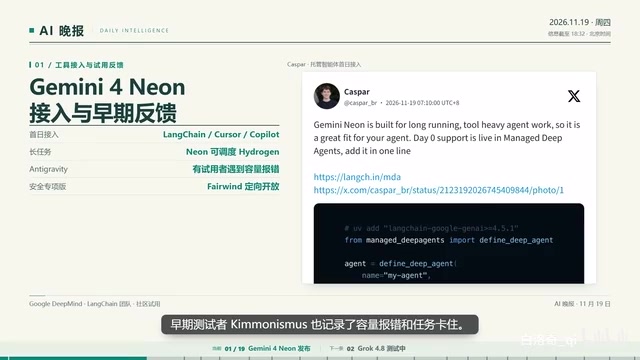
Google Gemini 4 Neon Released: Three-Tier Model System and Pricing Breakdown
Google releases Gemini 4 Neon, positioned between Hydrogen and Carbon for complex high-frequency tasks with multimodal input. Artificial Analysis composite intelligence index around 60, per-task cost about 30% lower than Carbon. Also: Grok 4.8 multi-version testing, Anthropic IPO priced at $83.