Bentley Torcal EV: The Luxury Brand Transformation Challenge Behind Simulated V8 Sound
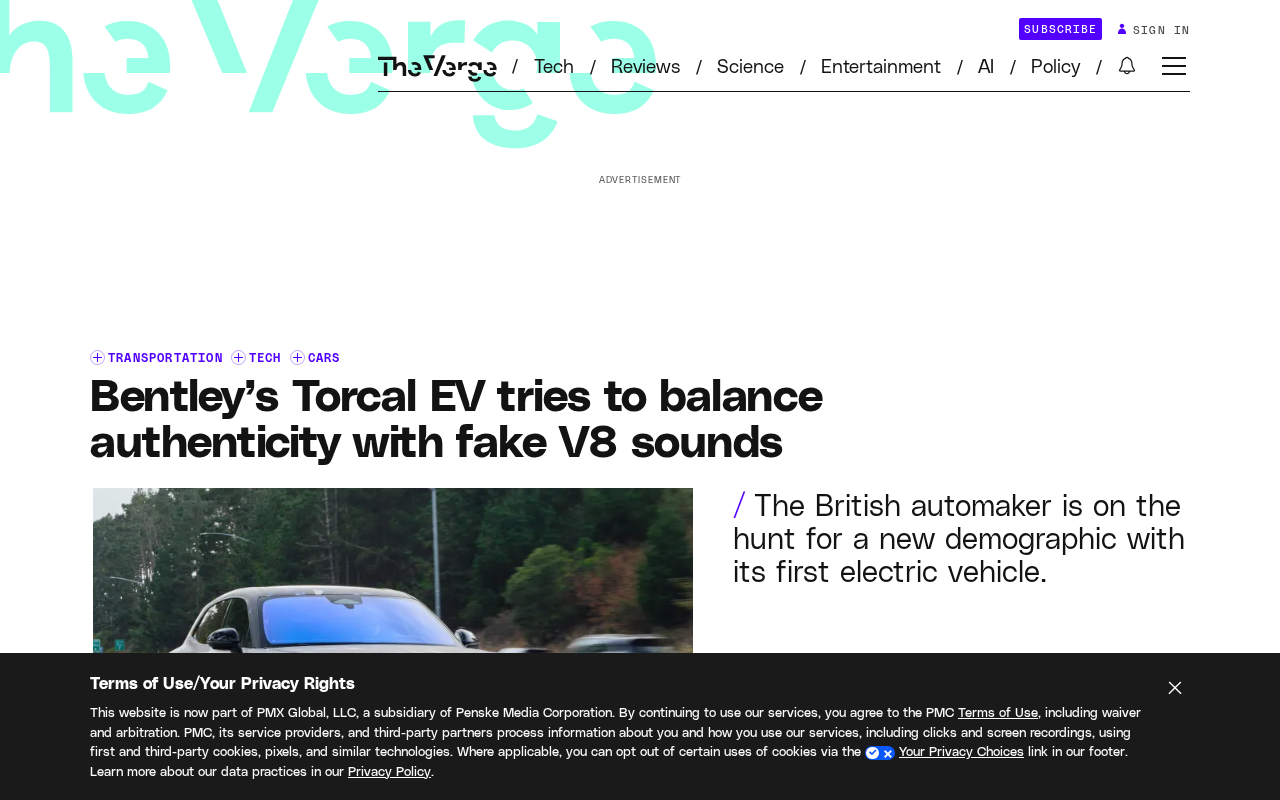
Bentley's Torcal EV uses simulated V8 sound to bridge tradition and electrification in luxury cars.
The Bentley Torcal EV tackles the luxury brand electrification dilemma by incorporating an Active Sound Design system that simulates V8 engine acoustics. As brands like Rolls-Royce, Cadillac, and Mercedes-Maybach push into the EV space, Bentley's approach highlights the tension between preserving emotional heritage and embracing silent electric powertrains — a transitional strategy that may define luxury automotive identity for years to come.
New Challenges in the Luxury EV Market
With their smooth driving dynamics and whisper-quiet powertrains, electric vehicles are rapidly becoming the ideal choice for the premium luxury car segment. Rolls-Royce has launched the Spectre, the Cadillac Celestiq is pushing customization to new heights, and Mercedes has given the EQS the full Maybach treatment. As the crown jewel of the Volkswagen Group, Bentley is likewise accelerating its electrification journey.
The Rolls-Royce Spectre is the British ultra-luxury brand's first fully electric model, with deliveries beginning in 2023. Equipped with a dual-motor all-wheel-drive system producing up to 577 horsepower, it sprints from 0 to 100 km/h in just 4.5 seconds. As Rolls-Royce's first EV in 117 years of history, the Spectre carries forward the brand's signature "magic carpet" ride quality while elevating cabin silence to a new level — the electric powertrain inherently eliminates engine noise, and paired with extensive sound insulation materials, it achieves what Rolls-Royce calls "library-level quietness."
The Cadillac Celestiq is General Motors' flagship all-electric luxury sedan, priced above $300,000 and produced under a fully bespoke model. Each Celestiq is handcrafted to the customer's specifications, with deep personalization available for everything from body color and interior materials to technology features. Built on GM's Ultium electric platform, it boasts a range exceeding 600 kilometers. This "haute couture" approach carries the exclusivity and scarcity of traditional luxury cars into the electric era.
The Mercedes-Maybach EQS is the ultra-luxury variant of the Mercedes electric flagship EQS, featuring an extended wheelbase with significantly enhanced rear-seat space and premium appointments. The Maybach sub-brand represents the pinnacle of luxury within the Mercedes-Benz group, with a heritage dating back to 1909. The Maybach EQS edition comes equipped with executive-class rear seats, an onboard champagne cooler, an ambient fragrance system, and other top-tier features, demonstrating how a traditional luxury brand can marry electric technology with the ultimate in opulent experiences.
Yet the electrification of luxury brands faces a unique contradiction: the emotionally evocative mechanical soundtrack of traditional combustion engines has always been a core element of the luxury driving experience. Once the roar of V8 and W12 engines falls silent, how to sustain a brand's emotional value and driving passion becomes an unavoidable challenge for traditional luxury automakers like Bentley.
Breaking Down the Bentley Torcal EV's Acoustic Design Strategy
The Bentley Torcal EV is attempting to find the optimal balance within this contradiction. The model will reportedly feature a sound system that simulates V8 engine acoustics — a design choice that has sparked heated debate within the industry over whether "authenticity" or "emotional experience" should take priority.
From a technical standpoint, simulated engine sound is far more sophisticated than simply playing a recording through speakers. Active Sound Design (ASD) is a complex acoustic engineering technology. The system uses multiple sensors to collect real-time vehicle dynamic data — including motor speed, torque output, accelerator pedal depth, and rate of speed change — which is then processed in real time by a dedicated DSP (Digital Signal Processor) to synthesize corresponding sound waveforms, ultimately played through specific speakers in the cabin audio system.
Unlike simple playback of pre-recorded audio, an ASD system generates infinitely variable sounds, ensuring that the auditory feedback for every acceleration and deceleration is unique and precisely synchronized with the driver's inputs. For example, when the driver floors the accelerator, the system generates a deep, powerful rumble that gradually rises in pitch; gentle acceleration produces a softer background tone. Advanced ASD systems can even simulate gear-shift jolts and backfire pops, dramatically enhancing the realism and emotional resonance of the sound. This technology isn't exclusive to EVs — brands like BMW and Volkswagen also use ASD in some of their smaller turbocharged combustion vehicles to enhance sportiness.
This design isn't just about satisfying the emotional needs of traditional Bentley owners; it's an extension of brand identity into the electric era. But controversy follows: in an age pursuing zero emissions and technological innovation, is deliberately mimicking mechanical sounds of the past a step backward? Could it actually undermine the core selling point of electric vehicles — their "silent luxury"?
The Identity Crisis in Luxury Brand Electrification
For a brand like Bentley, with over a century of history, sound is more than a physical phenomenon — it's the emotional bond between owner and brand. Traditional Bentley owners aren't just buying a means of transportation; they're buying a lifestyle and a status symbol — and the deep, powerful roar of the engine is an indispensable part of that symbolism.
From a market strategy perspective, Bentley faces a dual challenge: attracting a new generation of customers who embrace electric technology while not alienating loyal enthusiasts who cherish traditional mechanical artistry. The simulated sound system is likely a carefully designed transitional solution — allowing owners to switch freely between "Quiet Mode" and "Sport Mode" to meet personalized driving preferences across different scenarios.
This compromise strategy already has precedents among other luxury brands. The Porsche Taycan's "Electric Sport Sound" is one of the industry's most mature EV sound systems. Developed collaboratively by Porsche's engineering team and acoustic specialists, the system doesn't simply imitate a combustion engine — it creates a distinctive "futuristic electric sports car" sonic character with deep, bass-heavy tones carrying a tech-infused electric timbre. The Taycan's sound varies with driving mode: in Sport Plus mode, the soundtrack is more aggressive and intense; in Normal mode, it's comparatively restrained. Importantly, the sound is also audible outside the vehicle — a low-speed warning tone (complying with EV external sound regulations worldwide) and a sporty roar during high-speed acceleration ensure Porsche owners maintain the familiar "heads-turning" experience.
The Audi e-tron GT shares the same J1 platform as the Taycan but has carved its own path in sound tuning. Audi's e-tron Sound features a calibration style that emphasizes low-frequency impact, creating a resonance reminiscent of a V8 engine. The system also works in concert with the quattro all-wheel-drive system, using sound feedback during spirited driving to help drivers perceive vehicle dynamics — partially compensating for the loss of driving information caused by the absence of engine sound. This demonstrates that during the early phase of electrification, luxury brands widely regard the acoustic experience as a critical dimension of product differentiation.
How Technological Progress and Emotional Value Can Coexist
From a broader perspective, the Torcal EV's acoustic design reflects a deeper question facing the auto industry during technological transformation: how to properly handle emotional value. The technical advantages of EVs are clear — instant torque delivery, lower long-term maintenance costs, zero tailpipe emissions — but whether these rational advantages can fully replace the sensory experience of traditional combustion vehicles remains an open question.
One of the most notable technical advantages of EVs is instant torque delivery. Traditional internal combustion engines require a series of mechanical processes — combustion, piston movement, crankshaft rotation — to produce power, and their torque output curves are constrained by engine speed, typically reaching peak torque only in the mid-to-high RPM range. Electric motors, based on electromagnetic induction, can deliver 100% of their torque from a standstill, with response times measured in milliseconds. This characteristic produces an acceleration experience unmatched by combustion vehicles: the Tesla Model S Plaid achieves 0-100 km/h in just 2.1 seconds, and the Porsche Taycan Turbo S reaches 2.8 seconds. Even ordinary consumer EVs often deliver stronger initial acceleration than comparably priced combustion cars.
Regarding maintenance costs, the powertrain of an EV is far simpler than an internal combustion engine: an electric motor has roughly 20 moving parts, while a traditional engine has over 2,000. This means EVs don't require oil changes, spark plug replacements, timing belt services, or transmission fluid changes. Brake system wear is also significantly reduced thanks to frequent use of regenerative braking. According to U.S. Department of Energy data, the average per-mile maintenance cost for an EV is approximately $0.06, compared to $0.10 for a combustion vehicle — a substantial long-term saving. Tesla has even eliminated traditional annual service requirements, recommending only periodic tire and brake fluid inspections.
In the long run, as generations of consumers who grew up with EVs become the market's driving force, emotional attachment to traditional engine sounds will likely diminish naturally. By then, electric vehicles will have developed their own acoustic aesthetic language — perhaps a futuristic electric hum, or perhaps the ultimate in pure silence. But during this transitional period, Bentley's decision to offer a simulated sound option is a pragmatic response to genuine market demand.
The Bentley Torcal EV's approach reminds us that technological innovation is never solely an engineering challenge — it's also a profound transformation involving cultural heritage and emotional reconstruction. How to preserve brand DNA while firmly embracing new technology will be a long-term challenge that every traditional luxury automaker must confront in the wave of electrification.
Key Takeaways
Related articles

Prequel Review: Cinema-Quality Screen Recorder for Mac with Auto-Zoom and 4K Export
In-depth review of Prequel, a macOS screen recording tool with intelligent auto-zoom, 4K export, and background enhancement. Compare with Screen Studio and analyze its strengths.

AI Daily: The Speed War and Cost War Are in Full Swing
OpenAI GPT 5.6 UltraFast mode delivers 14x faster inference, Gemini 3.7 Flash slashes prices while boosting performance, MOE architecture gains traction, HBF storage breakthrough—AI industry competition shifts from model capability to speed and cost efficiency dual-front battle.
AI-Assisted Creative Production: Building an Interactive Odyssey Narrative Scroll with Astra
A developer with weak 3D skills used Astra AI to create an interactive Odyssey narrative scroll. Learn how AI tools lower technical barriers through story comprehension, parallel workflows, and design iteration.