Best Productivity Resources: A Hand-Curated Directory of Productivity Tools
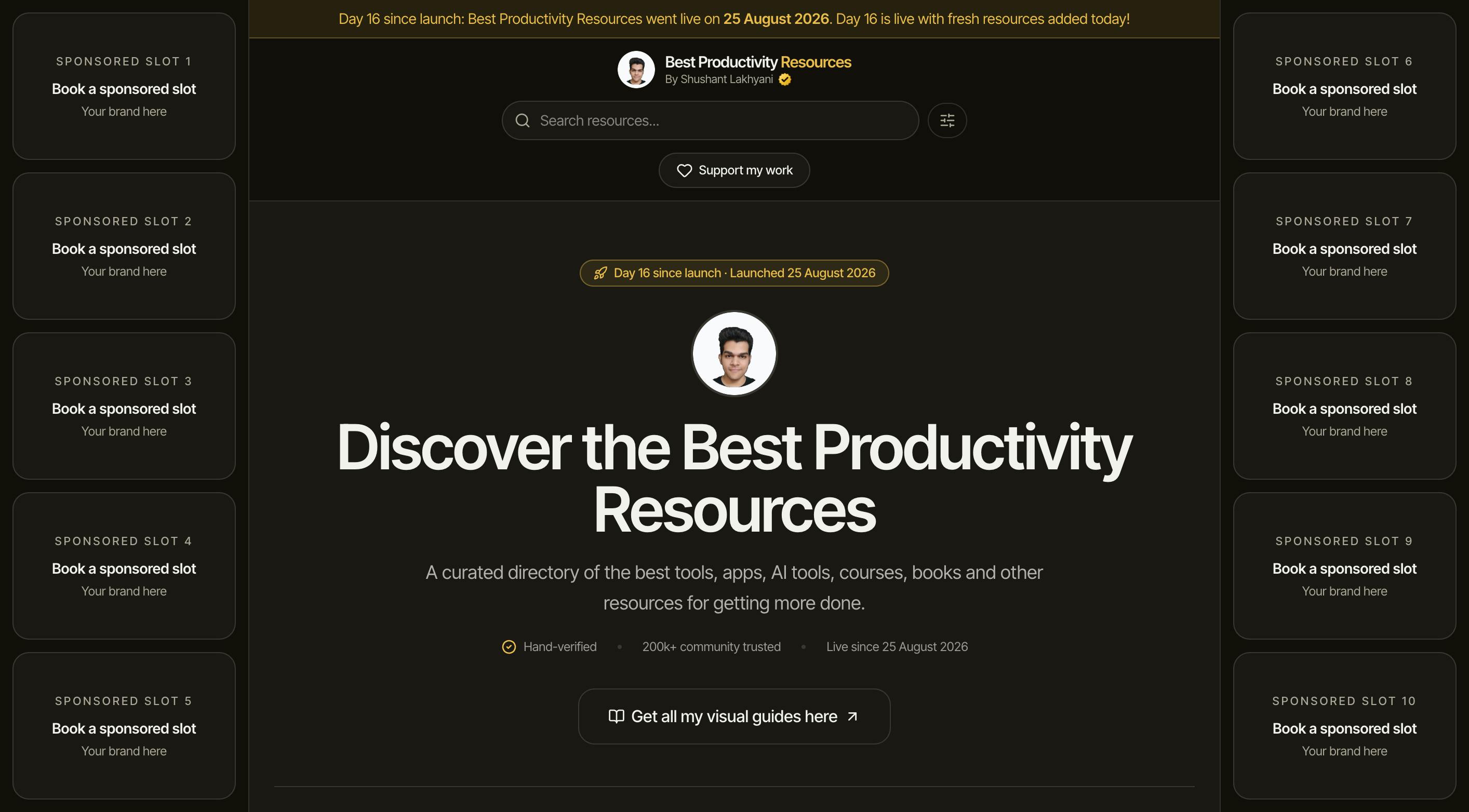
A hand-curated, direct-to-source productivity resource directory designed to cut the cost of tool discovery.
Best Productivity Resources is a productivity directory built by independent developer Shushant Lakhyani, differentiated by fully manual vetting and direct links to official product websites. It covers productivity tools, AI tools, courses, and books, organized by use-case scenarios like task management, focus, note-taking, and automation. The project emerged amid declining search quality and rampant SEO content farms. It earned 10 upvotes and ranked 13th on Product Hunt. The article also flags structural limitations: long-term value depends on sustained content maintenance and transparent standards, while affiliate monetization creates inherent tension with its neutral positioning. Best used as a starting point for discovery, not a final selection tool.
In a world overrun by productivity tools, finding one that's actually reliable often means wading through endless sponsored posts and inflated rankings. Best Productivity Resources, which appeared on Product Hunt, aims to solve exactly this problem — it's not another productivity app, but a hand-curated directory of productivity resources that have been manually reviewed before inclusion.
What It Actually Is
Built by independent developer Shushant Lakhyani, Best Productivity Resources is positioned as a "hand-curated directory" — meaning every entry is personally selected and reviewed before being added. Coverage spans productivity tools, apps, AI tools, courses, books, and more, touching on common productivity scenarios like task management, focus training, note-taking, and workflow automation.
Unlike algorithm-driven aggregator sites, this directory emphasizes that "every listing is vetted before inclusion," and each entry links directly to the product's official website — not an intermediary redirect or affiliate landing page. In a tool-discovery landscape increasingly polluted by information noise, this approach does offer a meaningful layer of trust.
The "hand-curated directory" format has a specific history in product development. Back in the Web 2.0 era, DMOZ (the Open Directory Project) and the Yahoo Directory were the primary entry points for navigating the internet, relying on human editors to maintain quality through categorization. With the rise of search engines, these directories fell out of favor. In recent years, as SEO content farms have degraded search result quality, manually curated directories have made a comeback — the "Awesome" list series in the Hacker News community, Product Hunt's own early form, and countless vertically focused curated newsletters all belong to this resurgence. The core logic: machine algorithms optimize for click-through rates and relevance signals, while human editors optimize for "actually useful" — and these are not equivalent on the quality dimension.
What Problem It Solves
For knowledge workers, founders, and freelancers who frequently hunt for new tools, "tool discovery" itself is an energy-draining task. Search engine results are dominated by SEO content farms, social media recommendations are riddled with commercial promotions, and the value of a curated directory like this lies precisely in front-loading the "filtering cost" — trading the editor's time for the user's.
The directory explicitly categorizes resources by use case — task management, focus, note-taking, automation, and so on. This scenario-first approach, rather than organizing by product name, better matches how users actually think: "I need to solve a specific problem," not "I already know what this product is called."
Performance on Product Hunt
By the numbers, the product earned 10 upvotes and 1 comment on Product Hunt, ranking 13th for the day across three categories: Design Tools, Productivity, and Education. This is a solid but unremarkable debut — neither a breakout hit nor a forgotten launch.
It's worth being clear-eyed about this: the "curated directory" format is far from novel on Product Hunt, and there's no shortage of similar projects. Its long-term value hinges almost entirely on two things: the quality and update frequency of its content, and the transparency of its vetting standards. If it relies solely on the founder manually maintaining entries in the early days, whether it can sustain its "vetted" promise over time will be the defining factor in its success or failure.
Opportunities and Limitations of This Category
From an industry perspective, tool directories, curated newsletters, and AI tool navigation sites have all proliferated in recent years — essentially filling the void left by declining search engine quality. Their opportunity lies in building a trusted brand identity and editorial reputation. Their limitation is that monetization typically depends on affiliate commissions or advertising, which creates an inherent tension with the "objective and neutral" positioning they claim.
For users, a simple heuristic applies when using these directories: treat them as a starting point for discovering new tools, not as the final word on what to use. Actual tool selection still requires weighing your own workflow, hands-on trial experience, and team collaboration needs.
Affiliate marketing is the most common monetization model for directories like this — the site earns a commission from software vendors when a user clicks through and makes a purchase. This model is extremely common in SaaS tool recommendations; some well-known tool sites (such as G2 and Capterra) have ranking orders that are significantly influenced by paid placements from vendors. For users, simple ways to identify whether a directory has commercial conflicts of interest include: checking whether links carry tracking parameters (like
?ref=or?via=), whether affiliate relationships are explicitly disclosed, and whether the line between "curated" resources and paid advertising is clearly drawn. Best Productivity Resources currently leads with a "direct-to-official-site" transparency positioning — if it introduces monetization down the road, maintaining that trust foundation will be a structural challenge it must navigate.
Conclusion
Best Productivity Resources is a cleanly positioned, simply executed productivity resource directory. Manual vetting and direct links to official websites are its key differentiators over algorithm-driven aggregators. For users looking to spend less time filtering through tools, it's worth bookmarking as a go-to discovery channel. Whether it grows into a resource hub with lasting influence depends on the founder's ongoing investment in content maintenance and community building.
Related articles

Can 'Your Mother' Make Us Forget Marvel's Blade Disaster?
Marvel's Blade reboot starring Mahershala Ali collapsed due to mismanagement. We explore why its failure may not be the worst outcome — and what 'Your Mother' has to do with it.
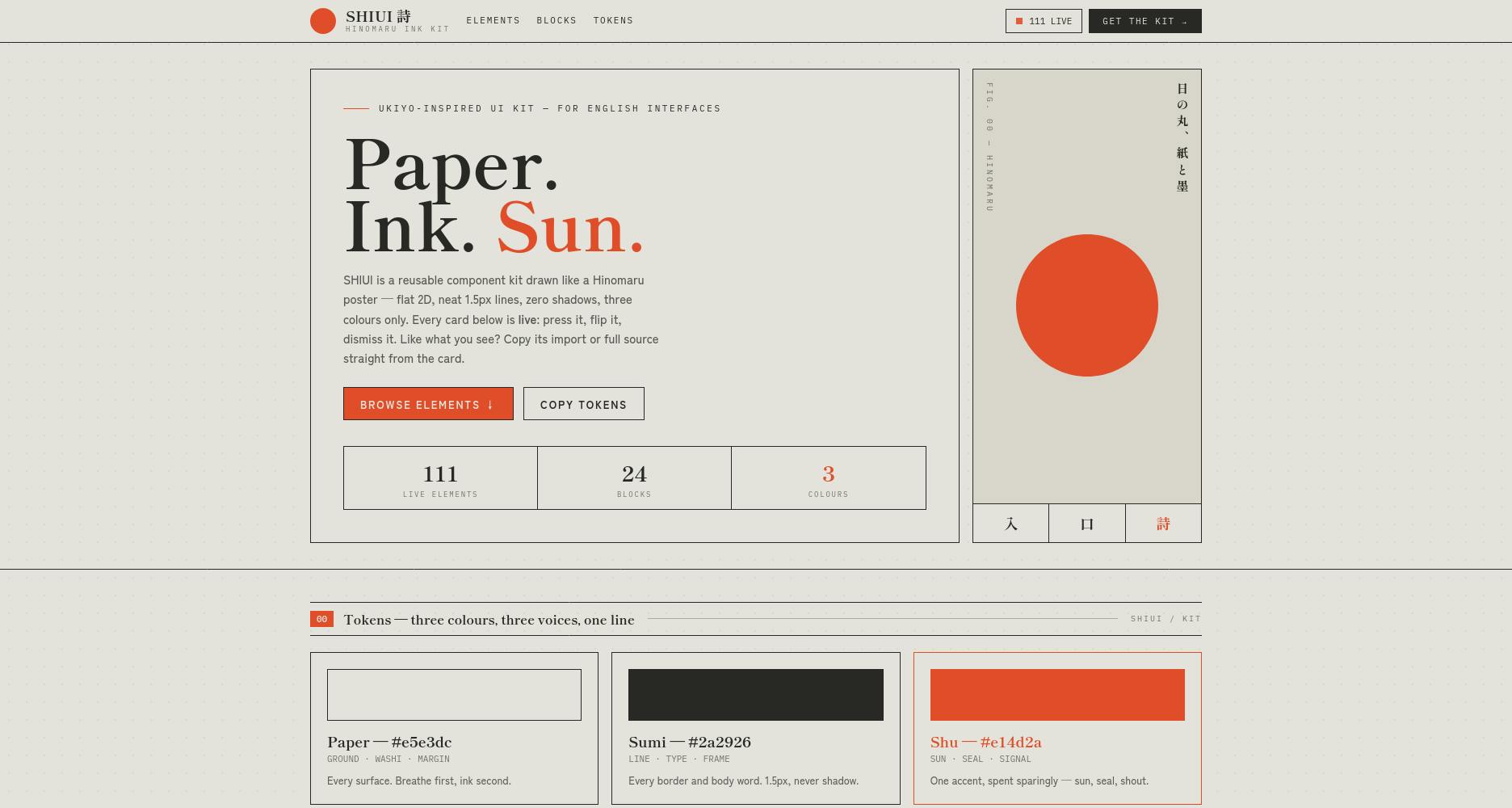
SHIUI: A Minimalist Ink-Wash UI Kit Inspired by Japanese Hinomaru Aesthetics
SHIUI is a flat ink-wash Web UI kit inspired by Japanese Hinomaru poster aesthetics, built around paper, sumi ink, and vermilion with zero shadows. A design breakdown.

Kirokune: An iPhone Work Incident Logger That Requires No Account
Kirokune is an iPhone app for logging workplace incidents — no account required. Combines text, audio, and photos in a timeline. Ranked #9 on Product Hunt with 86 votes.