Beware of AI Fake Marketing: Is the 'GPT-5.6 Release' a Scam?

Debunking the fake 'GPT-5.6 release' video and how to spot AI hype scams.
A Bilibili video claiming OpenAI released a 'GPT-5.6' series with SOAR/TERRA/LURAL models is exposed as traffic-driving marketing full of fabricated names, forged benchmarks, and risky third-party relay sites. This article debunks each flaw and teaches you how to identify AI information traps to avoid data leaks and financial loss.
A Suspicious "Major Release"
Recently, a video appeared on Bilibili claiming that "OpenAI has officially released the GPT-5.6 series," asserting that this new lineup includes a "flagship SOAR model," a "balanced everyday TERRA model," and a "fast, low-cost LURAL model." It came bundled with a series of "performance benchmark" figures and promised users could access the world's top AI models "for free within China, directly, without needing a VPN."
As technical content creators, we have a responsibility to conduct a calm fact-check on this kind of content. After analysis, we found that this content is riddled with factual inaccuracies and logical flaws—it is essentially a textbook case of "riding the AI hype" for traffic-driven marketing. This article will help you sort through the red flags and explain how to identify such information traps.

Multiple Glaring Errors in the Content
Dubious Model Naming and Product Lineup
As of now, OpenAI has not officially released any model series named "GPT-5.6." The three-tier model naming mentioned in the video—"SOAR," "TERRA," and "LURAL"—is completely inconsistent with OpenAI's established naming conventions.
OpenAI's naming system has its own internal logic: GPT (Generative Pre-trained Transformer) itself is named after the Transformer architecture proposed by Google in 2017, with "Pre-trained" emphasizing the central role of large-scale unsupervised pre-training. OpenAI's model naming system reflects the evolution of its product strategy. Since the release of GPT-3 in 2020, the naming logic has undergone several significant shifts: in the GPT-3 era, parameter scale was the core selling point (175 billion parameters), and the naming was simple; GPT-3.5 was a transitional label used to distinguish the conversation-optimized version powering ChatGPT; starting with GPT-4, multimodal capabilities were introduced, and the "o" suffix (derived from "omni") marked the integration of vision and audio capabilities. Notably, beginning with GPT-4, OpenAI deliberately obscured the disclosure of parameter scale, shifting instead to a narrative centered on capability benchmarks—this strategic shift indicates that the pure scale race had given way to the optimization of architectural efficiency. The independently launched "o series" in 2024 specifically targeted scenarios requiring multi-step reasoning, such as math competitions and code debugging; its "o" (omni/reasoning) naming marked the strategic pivot from "capability expansion" to "reasoning depth." Understanding this clear technological evolution is key to identifying fake information—behind genuine naming there must be a corresponding technical milestone, not an arbitrarily added decimal point. The out-of-nowhere "GPT-5.6" decimal naming does not match any product line in OpenAI's history and is the first hard indicator for identifying fake information.
While the so-called "three-tier model" tiering strategy does have precedents in the industry—for example, Anthropic's Claude series uses the Haiku/Sonnet/Opus three-tier naming, using poetic genres to distinguish tiers from lightweight to flagship; Google's Gemini series is also divided into four tiers: Nano, Flash, Pro, and Ultra—these names are all backed by a unified brand logic and official announcements. The video's "SOAR/TERRA/LURAL," on the other hand, are arbitrarily fabricated words devoid of any cultural meaning, exposing their patchwork nature.
Chaotic and Incoherent Benchmark Terminology
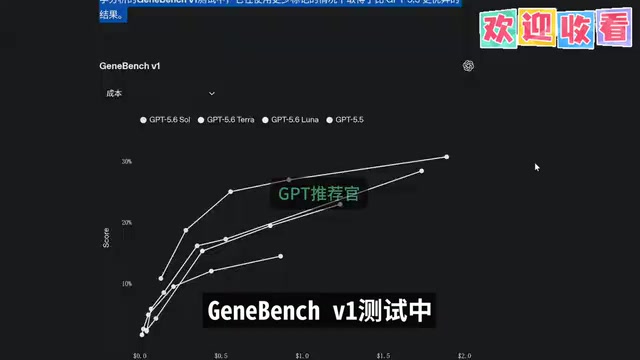
The so-called benchmark names mentioned in the video, such as "TamilabandGID" and "GinBench," do not exist in any mainstream AI evaluation system.
Real AI benchmark systems are publicly verifiable: An AI benchmark is a standardized set of test questions used to measure a model's capabilities, and its authority comes from peer-reviewed academic papers and reproducible open datasets. MMLU (Massive Multitask Language Understanding), published by Hendrycks et al. at ICLR in 2021, covers a comprehensive knowledge test of about 15,000 questions across 57 subjects including STEM, humanities, and social sciences, and is one of the most widely cited comprehensive capability evaluation standards today. GPQA (Graduate-Level Google-Proof Q&A), released by New York University in 2023, features questions written and cross-validated by PhD students in various fields, designed on the principle that "even with a search engine, an ordinary person's accuracy is only about 34%," while human experts achieve only about 65% accuracy—it is specifically used to distinguish genuine reasoning ability from surface-level information retrieval. SWE-bench, proposed by Princeton University, uses real issue fixes submitted on GitHub directly as tasks, requiring models to output code patches that pass unit tests, anchoring the evaluation in real-world engineering scenarios. HumanEval and MBPP focus on programming ability evaluation, while MATH and GSM8K focus on mathematical reasoning. The common features of these benchmarks are: publicly available question sets, open-source scoring scripts, results independently reproducible by third parties, and real-time tracking of model ranking changes on platforms like Papers With Code. Any data claiming to surpass a specific benchmark can be verified by researchers within hours—it simply cannot be fabricated out of thin air.
The video also claims its performance "surpasses Colder's strongest MixOS 5 model"—here, "Colder" and "MixOS 5" are likewise fabricated terms with no basis, apparently patched together from mis-recognized words like "Claude" during the speech-to-text process.
Exaggerated Performance Claims
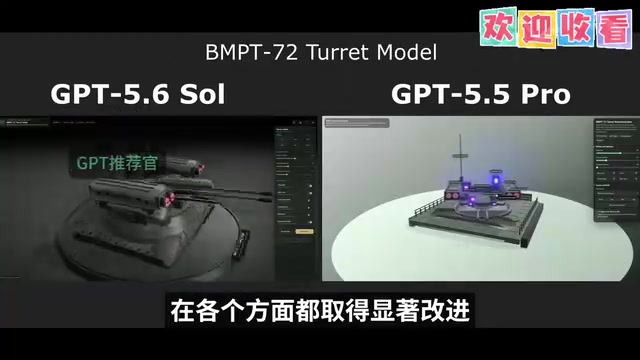
Descriptions like "generate a Minecraft clone in 90 minutes with one click, zero code errors" are classic attention-grabbing rhetoric. Even the most advanced current models are far from achieving "zero errors" in end-to-end generation of complex game projects, which typically requires extensive manual debugging and iteration. Such absolute statements are a red flag in themselves.
The Real "Hook": A Suspicious Third-Party Site
Once you peel away the "new model release" facade, the video's true purpose is fully exposed in its latter half—promoting a so-called "guaranteed site" that supposedly lets users access ChatGPT, Claude, Gemini, and other models "for free within China, directly, without a VPN."
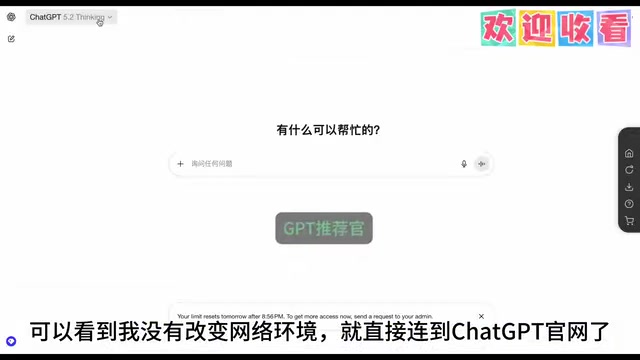
The video claims the site integrates models like the "full-power Claude 4.6, GPT 4.2, and Gemini 3.1" and demonstrates "connecting directly to the official site without changing the network environment." Here, one must be highly wary of the following points:
Technical Principles and Risks of Third-Party Relay Sites
So-called "free direct connection within China" third-party AI sites are typically implemented through one of two technical approaches:
One is API relaying: The operator deploys a layer of reverse proxy on servers within the country, repackages user requests, forwards them to OpenAI's or Anthropic's official API endpoints, and then relays the returned results back to the user. Its core principle is: the operator typically deploys cloud servers overseas or in Hong Kong, running proxy software like Nginx or Caddy, re-signing the HTTP requests of domestic users before forwarding them to the target endpoint. Since the TCP connection is initiated by the proxy server, users locally indeed do not need to configure a VPN—this is the technical basis for the "no VPN needed" promise. However, all of the user's plaintext input (prompts) and model outputs pass completely through the proxy server, and the operator has full data access capability. From the user's perspective, no VPN is indeed needed, but the data path actually passes through one additional opaque intermediate node. OpenAI's Usage Policy explicitly prohibits unauthorized API resale and proxy services; its rate limits and anomalous traffic detection operate at the granularity of the API Key, and once abnormal request volume under a single Key or abnormal distribution of source IPs is detected, automatic banning is triggered, causing simultaneous service interruption for all users of that Key. Since 2023, multiple batches of domestic mirror sites have failed en masse for this reason, and users' prepaid funds have consequently become irrecoverable.
The other is model impersonation: "Knowledge Distillation" was systematically proposed by Hinton, Vinyals, and Dean in their 2015 paper "Distilling the Knowledge in a Neural Network." Its core idea is to use the soft-label outputs (soft logits) of a large "teacher model," rather than hard labels, as training signals to guide a small "student model" in learning richer probability distribution information. A legitimate distillation application like GPT-4o mini is a lightweight version developed officially by OpenAI based on its own model family, with the distillation process fully protected by intellectual property rights. However, some third-party sites employ "black-box distillation"—collecting (prompt, response) pairs by making large-scale calls to commercial APIs, then using this data to fine-tune open-source base models (such as Meta's Llama series or Alibaba's Qwen series), and packaging them as "full-power Claude" to offer as a service. This is essentially knowledge theft that bypasses licensing agreements (OpenAI's Usage Policy, clause 3.c, explicitly prohibits "using output to develop competing models"). Such impersonated models may perform similarly in everyday conversation, but on difficult tasks requiring multi-step logical reasoning—such as mathematical proofs, complex code architecture, or cross-document information integration—there is a measurable and significant gap from the original models. Users pay a fee and expose their data to an opaque operator, yet what they actually use is a capability-limited substitute.
Using such sites carries multiple risks:
- Data security hazards: Everything you input (including potentially sensitive information, code, and documents) passes through third-party servers, creating the risk of being recorded, leaked, or even misused. Furthermore, Article 38 of the Personal Information Protection Law (effective 2021) stipulates that providing personal information overseas must meet one of several conditions, such as passing a security assessment by the Cyberspace Administration of China; the Data Security Law also imposes dedicated controls on the cross-border transfer of important data. Processing sensitive data through such gray channels neither fulfills compliance assessment procedures nor allows tracing the subsequent flow of data, posing clear legal compliance risks. For enterprise users, it may also trigger data localization regulatory requirements in industries like finance and healthcare.
- Account and payment risks: Some sites induce users to register, top up, or link payment information, presenting the possibility of fraud. Additionally, unauthorized API resale violates the terms of service of companies like OpenAI, and such sites face being banned by officials at any time, with users' prepaid funds lost accordingly. Legitimate commercial AI services typically offer a Data Processing Agreement (DPA) and an explicit commitment not to train on your data, whereas gray sites are in a murky zone regarding legal entities and data jurisdiction. Once the operator experiences financial problems or suffers an attack, user rights are completely out of control.
- Unstable service: The so-called "free full-power" access is often just a bait to attract traffic, and it may later shift to charging fees or inserting ads.
The Flaw in the Version Numbers
The version numbers mentioned in the video, such as "Gemini 3.1" and "GPT 4.2," are likewise inconsistent with the official current status. This practice of arbitrarily piling up version numbers is precisely intended to create the illusion of being "the latest and greatest," luring unwitting users into clicking the "pinned comment" link.
How to Identify This Kind of AI Information Trap
Faced with the endless stream of AI hype content, ordinary users can master the following four principles for discernment:
1. Trust Official Channels
For any major model release, companies like OpenAI, Anthropic, and Google will simultaneously announce it through their official blogs and social media accounts. When you encounter a "major release," verify it on the official site immediately, rather than blindly trusting secondhand accounts.
2. Be Wary of "Free Full-Power Direct Connection" Rhetoric
Genuine top-tier AI services require enormous computing costs, and the promise of being "completely free, with no barriers whatsoever, connecting directly to the official site" is almost impossible to fulfill. Any content that emphasizes such selling points and directs you to third-party sites should be treated with high suspicion.
3. Verify Technical Terminology
Search and verify the model names and benchmark names that appear in the content. Platforms like Papers With Code, official blogs, and arXiv are reliable channels for verification. These platforms track in real time the ranking changes of models on public benchmarks, and any suspicious data can be cross-verified within hours. If no evidence can be found or the names are incoherent, it can basically be judged as fabricated patchwork.
4. Protect Personal Data
Never input personal privacy, corporate secrets, or perform payment operations on AI sites of unknown origin. Compliant use of AI should be through official channels or service providers with proper qualifications, and you should confirm that they provide an explicit Data Processing Agreement.
Conclusion
This "GPT-5.6 release" video is essentially traffic-driving marketing packaged in AI hype, riddled with fabricated model names, forged benchmark data, and high-risk third-party site promotion. At a time when AI technology is advancing rapidly and it's hard to distinguish truth from falsehood, maintaining critical thinking and insisting on verifying official sources is a basic quality every tech enthusiast should possess. Truly noteworthy AI advances never need exaggerated rhetoric and suspicious links to prove themselves.
Related articles

Felix Rieseberg Personal Homepage
Felix Rieseberg's personal homepage sparks attention on Hacker News. This article covers the Slack engineer's technical background, the rise and fall of nativefier, and the value of a developer homepage as a tech calling card.

@ai-sdk/vue 3.0.306 Patch Release Syncs with [email protected] Update
@ai-sdk/vue 3.0.306 released, synced with [email protected]. A routine patch release for the Vercel AI SDK ecosystem with no public API changes; the Vue adapter layer stays version-aligned with the core package.

Gemini 4 Argon API Launches: The Era of Million-Token Output Begins
Google launches Gemini 4 Argon with sparse MoE architecture, up to 1M output tokens, and a 68.90% Vals Index score, available across API, AI Studio, and the Gemini app.