Bill Gates' Old Interview Resurfaces: Why Is Public Scrutiny Fixed on Jensen Huang?

An old Gates interview resurfaces and sparks a comparative narrative, but the claim that Jensen Huang was forced to resign is unsubstantiated.
The article discusses an old Bill Gates interview clip circulating on Bilibili that has been re-edited into a comparative narrative of "different treatment for Gates and Jensen Huang." It clarifies that the claim Jensen Huang was forced to resign over marital issues lacks reliable public evidence, analyzes why scrutiny differs—Gates is a retired philanthropist judged morally, while Huang is a sitting CEO of an AI-core company whose personal rumors get amplified—and breaks down the fixed tricks of short-video comparison narratives, urging readers to check sources and comparability before accepting conclusions.
Why an Old Interview Is Reigniting Public Debate
Recently, an old interview clip of Bill Gates has been circulating on Bilibili, covering his dealings with Epstein and questions about his marriage. In the video, the host directly asks Gates whether he was unfaithful in his marriage and whether that contributed to the divorce. Gates responds that he "made mistakes" and "caused pain," but declines to go into detail. When it comes to Epstein, he admits that meeting with him was a "huge mistake," saying he was focused on raising funds for a global health project at the time and didn't realize that associating with Epstein would downplay the terrible acts the latter had committed.

This footage itself is nothing new, but after being re-edited and circulated on the Chinese internet, it has spawned a comparative narrative: both involve marital infidelity and both involve contact with Epstein, yet Bill Gates seemingly hasn't faced the same level of public pressure, while Nvidia CEO Jensen Huang is repeatedly rumored to be "forced to resign." The original headline even jumps straight to a conclusion, framing it as "double standards" and treating Jensen Huang as "an outsider."
One basic fact needs to be clarified first: the claim that Jensen Huang was forced to resign over marital issues lacks any reliable basis in publicly available information. Placing it alongside Gates' interview clip looks more like the comparison framework short-video platforms habitually use than a parallel comparison grounded in fact.
Two Figures, Two Logics of Public Opinion
Why Gates' "Old Scores" Didn't Keep Simmering
Gates' dealings with Epstein sparked widespread discussion after the divorce news went public, and Melinda also publicly stated that this relationship was one of the sources of stress in their marriage. Gates' own response style is worth noting: he didn't deny the contact, admitted it was a mistake, and steered the conversation toward "fundraising goals" and "errors of judgment." This "acknowledge the mistake but don't elaborate" strategy effectively reduced the sustained heat of the topic at the PR level.

More importantly, Gates had long since stepped back from Microsoft's day-to-day operations, and his public identity is that of a philanthropist. Scrutiny of him falls more on the moral level than on corporate governance, so the transmission chain of public backlash is short—criticism stays criticism, with no real-world question of "should he step down" to latch onto.
Jeffrey Epstein was an American financier who was convicted in 2008 of procuring a minor for prostitution, arrested again in 2019 on suspicion of sex trafficking of minors, and later died in prison. He had dealings with a large number of prominent figures in politics, business, and academia; from the latter's perspective, these interactions were often just social or fundraising encounters, but the criminal nature of Epstein's acts means anyone who had dealings with him faces moral scrutiny. Gates' meetings with Epstein are discussed repeatedly against this backdrop—the public's focus is not on whether the meetings themselves were illegal, but on why a public figure would still choose to associate with someone who already had a criminal record.
Where Did Jensen Huang's "Forced Resignation" Come From?
Jensen Huang's situation is entirely different. He is the sitting CEO of a major tech company, and Nvidia sits at the core of the AI computing power supply chain, so any rumor about him personally gets amplified and interpreted at the company level. Claims like "pressure to step down" and "resignation" on Chinese social platforms often lack first-hand sources, yet can spread rapidly thanks to Nvidia's high profile.

Juxtaposing these two cases may look like "the same mistake, different treatment," but in essence it puts a philanthropist who has retreated to the background and a sitting CEO on the same ruler. Public opinion naturally demands more of those in office—this is less double standards than a difference in scrutiny driven by role differences. As for the "treated as an outsider" framing, that's emotional attribution lacking verifiable evidence.
Nvidia's position in the AI computing power supply chain means any personal rumor about its CEO can easily be amplified into a signal of operational risk. Global large-model training currently relies heavily on Nvidia's GPUs, and the company's market value and order trends affect the entire AI industry; Jensen Huang himself is seen as a emblematic figure of this AI wave. This high profile means that once unverified claims about him enter Chinese social platforms, they can be retold repeatedly without first-hand sources and get tagged with dramatic labels like "pressure to step down" and "resignation."
Common Tricks of Short-Video Comparison Narratives
The spread logic of this kind of content has several fixed steps: first, clip an informative English interview and add Chinese subtitles to create a sense of "hard evidence"; then, introduce a high-profile figure as a contrast; finally, wrap up with an emotional judgment, such as "double standards" or "outsider." What audiences remember is often not the interview details but that emotional conclusion.

From a content-consumption perspective, this structure is indeed effective; but from an information-acquisition perspective, it forcibly binds two events with limited relevance, making it easy to overlook the most basic question: where is the source for those claims about Jensen Huang? Without a reliable source, the comparison itself loses its premise.
How Readers Should View Such Comparisons
When you encounter the sentence pattern "it's the same X, so why is A fine but B in trouble," you can first run three checks: first, whether the factual basis of the two cases is equivalent, and whether both have first-hand sources; second, whether the two people's identities and stages are comparable; third, whether the conclusion comes from factual reasoning or from the editor's preset emotions.
The Gates interview clip provides his own statements about his marriage and his relationship with Epstein—this is citable fact; whereas Jensen Huang's "forced resignation" is merely a claim in the material, with no evidence to support it. Comparing a well-documented statement with an unsubstantiated rumor, the resulting "double standards" conclusion naturally doesn't hold up.
For tech industry observers, what's more worth watching is not this kind of emotional comparison but Nvidia's actual moves in the AI computing power market and public information at the corporate governance level. As for the "pressure to step down" narrative in short videos, until a reliable source appears, treating it as gossip rather than fact is the more prudent attitude.
One-line Summary
An old Gates interview resurfaces and sparks a comparative narrative, but the claim that Jensen Huang was forced to resign has no substantiation—the double-standards conclusion doesn't hold.
Paragraph Summary
The article centers on an old Bill Gates interview clip circulating on Bilibili, noting that after re-editing it has spawned a comparative narrative of "different treatment for Gates and Jensen Huang." The author first clarifies a basic fact: the claim that Jensen Huang was forced to resign over marital issues lacks reliable basis in public information. It then analyzes the root of the difference in their public scrutiny—Gates has stepped back from operations and is a philanthropist, so scrutiny stays mostly at the moral level; Jensen Huang is a sitting CEO, and Nvidia sits at the core of AI computing power, so personal rumors are easily amplified to the company level. The article further breaks down the fixed tricks of short-video comparison narratives, reminding readers to verify sources and comparability before judging whether a conclusion holds when encountering the pattern "it's the same X, so why is A fine but B in trouble."
Related articles
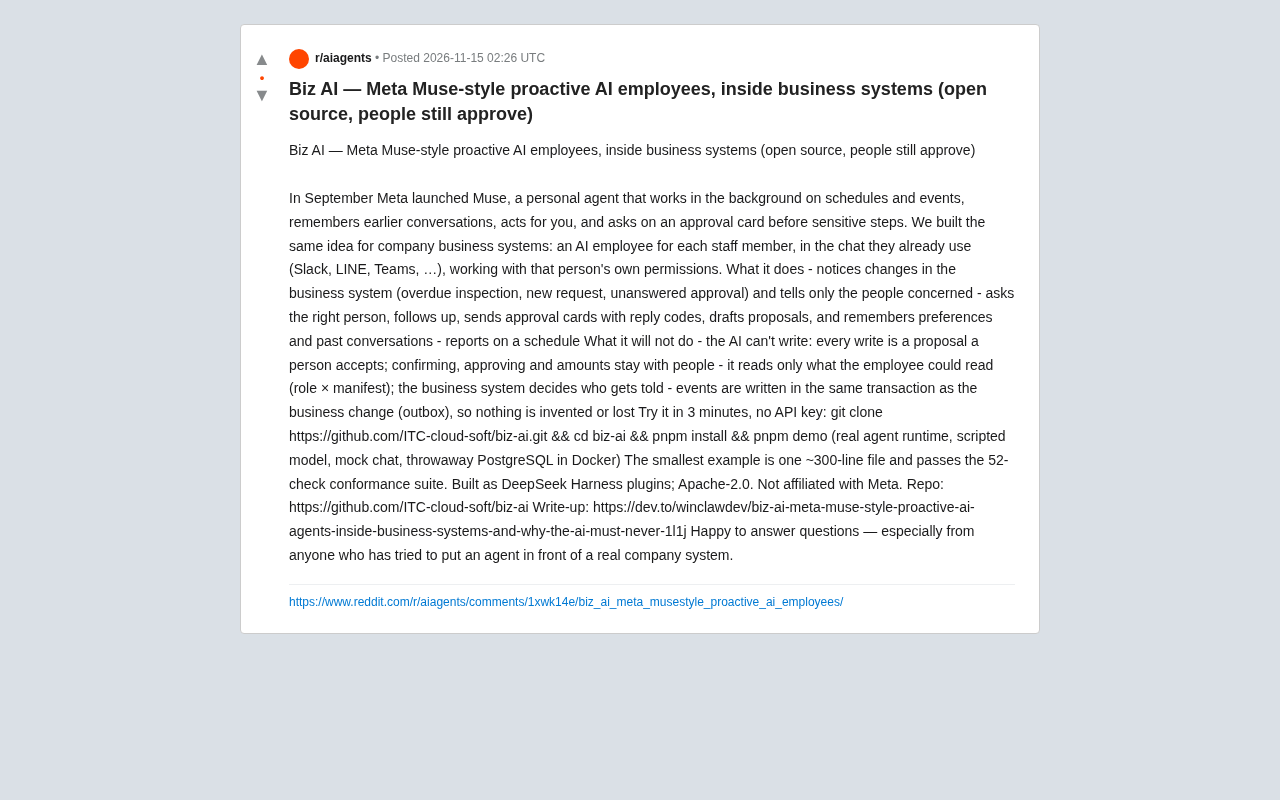
Biz AI: Proactive AI Employees for Enterprise Systems, With Write Access Still in Human Hands
Open-source Biz AI brings Meta Muse-style proactive AI employees to enterprise systems—AI reads and proposes only, all writes require human approval.

LinkedIn and Monster Remove Thousands of Fake Job Listings After Investigation, Highlighting AI's Anti-Fraud Challenges
After a CBC investigation, LinkedIn and Monster removed over 1,000 fake job listings. This article analyzes common motives behind fake jobs, platform review gaps, and AI's capabilities and limits in job fraud detection.
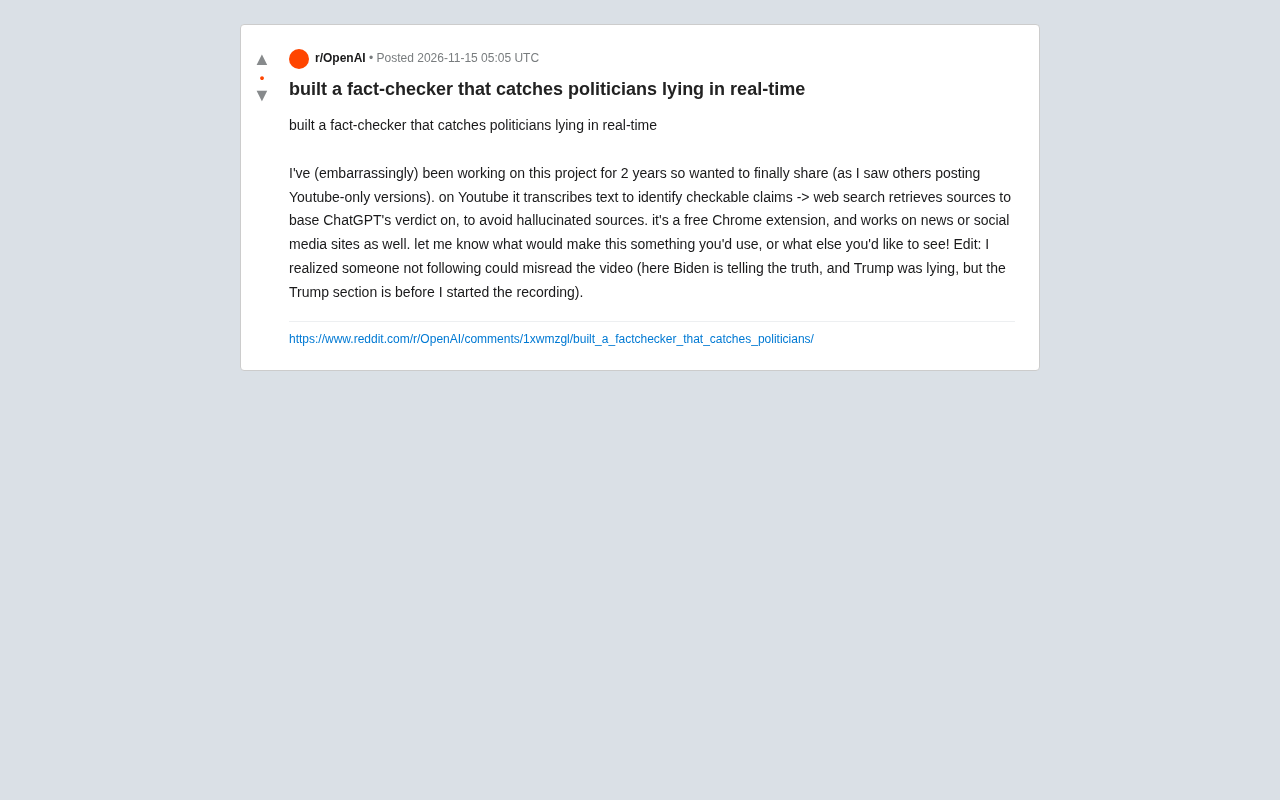
Two Years to Build a Real-Time Fact-Checking Tool That Uses AI to Catch Politicians' Lies
A developer spent two years building a real-time fact-checking Chrome extension that transcribes YouTube, news, and social media content, identifies verifiable claims, and uses web search to avoid ChatGPT hallucinations while judging politicians' statements in real time.