Binance CFO Departs: Executive Shakeup Follows $6.3 Billion Hack

Binance CFO departs one week after a $6.3 billion hack, raising financial governance concerns.
Binance's CFO announced his departure just over a week after the platform suffered a $6.3 billion cryptocurrency hack, saying he will pursue new entrepreneurial opportunities. The article argues that rapid executive exits after major security incidents are often read as internal disagreement over incident handling or an attempt to reshape public image. The $6.3 billion theft ranks among the largest in exchange history, directly impacting reputation, compliance, and fund transparency—and the CFO is the key role for fund management, disclosure, and external communication. For centralized exchanges, CFO stability is a key credibility indicator for institutional investors and regulators, and the overlap of security and personnel events amplifies concerns about Binance's governance. Binance has not disclosed succession or investigation progress.
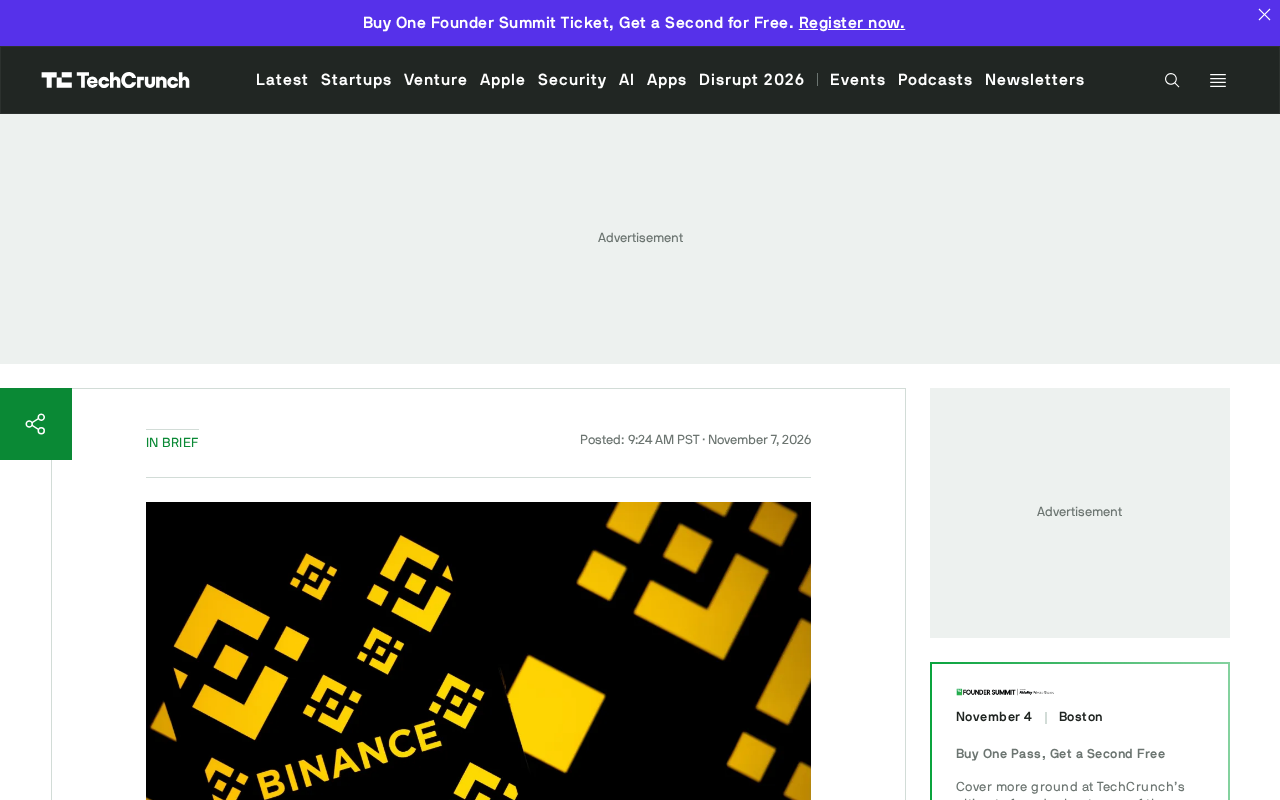
Binance's Chief Financial Officer (CFO) has announced his departure following a massive hack against the platform, a timing that has drawn widespread attention to the exchange's internal governance and risk response.
Sensitive Timing: Departure Just One Week After the Hack
According to RSS sources, Binance's CFO will leave the company to "pursue new entrepreneurial opportunities." The announcement came just over a week after hackers stole $6.3 billion worth of cryptocurrency from Binance users.
When executives exit quickly after a major security incident, the market typically reads it as one of two signals: either there is internal disagreement over how the incident was handled, or the company hopes to reshape its public image through personnel changes. Binance officially attributes the departure to personal career development, but it is hard for outsiders not to connect it to the security crisis that just occurred.
CFO (Chief Financial Officer) is the senior executive responsible for a company's financial management. At cryptocurrency exchanges, this role typically covers custody and liquidity management, financial statement preparation and audit coordination, regulatory communication and compliance filings, and financial disclosure to institutional investors and market makers. Unlike traditional financial firms, an exchange CFO must also be directly involved in hot and cold wallet fund allocation, the issuance and verification of Proof of Reserves, and public explanations of insurance fund size. As such, the CFO is both a key node in the internal risk-control chain and the interface for external trust. Once the position becomes vacant or enters a handover period after a security incident, the market often interprets it as a disruption to the rhythm of financial governance, amplifying doubts about the platform's fund transparency and emergency response capabilities.
The $6.3 Billion Theft Exposes Security Weaknesses
The $6.3 billion figure ranks among the largest in the history of cryptocurrency exchange thefts. Losses of this magnitude not only affect user asset security but also directly damage the platform's reputation and compliance standing. After a hack, an exchange's emergency response capabilities, fund reserve transparency, and internal risk-control processes all come under scrutiny from regulators and users.
The CFO role is particularly critical at this stage—it is responsible for fund management, financial disclosure, and external communication. The CFO's decision to leave at this moment means Binance may face a period of uncertainty in financial governance during the transition.
The scale of funds stolen from centralized exchanges receives particular attention because it directly relates to the platform's solvency and user confidence. The industry standard is to establish an "insurance fund" or "secure asset fund" (SAFU-type mechanism), setting aside reserves as a proportion of trading fees to cover user losses in extreme events and prevent run-style withdrawals. In addition, Proof of Reserves mechanisms require exchanges to publicly disclose on-chain address balances and have third-party auditors verify liability matching, proving that user assets have not been misappropriated. If a theft of $6.3 billion cannot be covered by own funds or an insurance fund, the exchange could face liquidity strain, triggering concentrated user withdrawals. For this reason, the frequency of financial disclosure, compensation plans, and fund reserve transparency after an incident often determine a platform's survival capacity more than the incident itself.
What Executive Changes Mean for the Platform
For centralized exchanges, CFO stability is an important indicator that institutional investors and regulators use to assess platform credibility. Frequent or sensitively timed executive departures can easily raise questions about internal management stability.
Binance needs to complete the handover of its financial leadership in a short period while proving to users and regulators that its fund management capabilities remain unaffected. The follow-up handling of the hack—including user compensation plans and security system upgrades—will also test the coordination abilities of the new finance chief.
The Combined Effect of Security Incidents and Personnel Changes
Neither a single hack nor a single executive departure is enough to shake the foundations of a major exchange, but when the two overlap within a short period, they amplify market concerns about the platform's governance. How Binance balances crisis PR, internal restructuring, and business continuity will determine the actual impact of this wave on its long-term competitiveness.
Currently, public information only confirms the CFO's intention to leave and the scale of the hack. Binance has not disclosed further details about succession arrangements or the progress of the incident investigation.
One-line Summary
Binance CFO departs one week after a $6.3 billion hack, raising financial governance concerns.
Paragraph Summary
Binance's Chief Financial Officer announced his departure just over a week after the platform suffered a hack involving $6.3 billion in stolen cryptocurrency, saying he will pursue new entrepreneurial opportunities. The article argues that when executives exit quickly after a major security incident, the market typically interprets it as internal disagreement over how the incident was handled, or as an attempt by the company to reshape its public image through personnel changes. A theft of $6.3 billion ranks among the largest in exchange theft history, directly damaging the platform's reputation, compliance standing, and fund reserve transparency—and the CFO is precisely the key role responsible for fund management, financial disclosure, and external communication. For centralized exchanges, CFO stability is an important indicator that institutional investors and regulators use to assess credibility. The overlap of a security incident and personnel changes within a short period amplifies market concerns about Binance's internal governance. Binance has not yet disclosed succession arrangements or the progress of the incident investigation.
Related articles
 Tech Frontiers
MuJoCo: An Analysis of DeepMind's Open-Source General-Purpose Physics Simulator
An in-depth analysis of Google DeepMind's open-source physics simulator MuJoCo: high-performance C++ kernel, MJCF modeling format, contact solving principles, MJX GPU acceleration, and robot reinforcement learning use cases.
 Tech Frontiers
Claude API Quick Start: The Official Quickstarts Project Collection
Anthropic's official claude-quickstarts project collection helps developers quickly build deployable apps with the Claude API. Nearly 20k stars, Python-based, great for beginners and prototyping.
 Tech Frontiers
AI Agents Connecting Directly to APIs: Which Calls Can Be Safely Allowed?
AI agents can call any API, but the real challenge is deciding which calls can be safely allowed. This article analyzes allowance decisions from three dimensions—intent matching, least privilege, and controllable impact—and argues that the control layer should sit outside the agent, combined with audit traceability to build a trustworthy API call governance mechanism.