Black Friday Sales Start Early: A Guide to Retailers Like Walmart and Target Jumping the Gun
Black Friday promotions have started early, with retailers like Walmart and Best Buy stretching out the shopping season; consumers should spread out purchases and use price protection.
The article notes that although Black Friday officially falls on November 27, major retailers such as Walmart and Best Buy have already rolled out holiday discounts online and in-store, and Best Buy offers price protection to reduce the risk of buying early. This trend reflects retailers' strategy of smoothing demand by lengthening promotional cycles, easing logistics pressure, and locking in consumer budgets ahead of time. For consumers, the risk of waiting solely for Black Friday itself is growing; a wiser approach is to watch for early price cuts, take advantage of price protection terms, and compare prices across online and offline channels. The article argues that leading retailers' early moves are pushing the entire industry's pace forward, and the boundaries of Black Friday are increasingly blurred.
Black Friday Is No Longer a One-Day Event; Retailers Are Opening the Floodgates Early
According to RSS feed reports, the official date for Black Friday is November 27, but if you plan to complete your holiday shopping only on that day, you could miss out on a large number of deals. Several well-known retailers, including Best Buy and Walmart, are preparing to roll out holiday discounts both online and in-store simultaneously. Best Buy is even offering price protection services; the specific terms are not detailed in the source material, but this move shows how much retailers value locking in customers early.
This trend is nothing new, but the提前 timing this year is worth noting. Retailers are no longer waiting until the Friday after Thanksgiving to release their lowest prices of the year; instead, they are stretching out the shopping season through phased promotions. For consumers, this means adjusting their strategy—the risk of waiting for a single day is increasing, because popular items may sell out or return to full price before the official Black Friday.
A Quick Look at Major Retailers' Moves
Walmart and Target
Walmart has clearly joined the early promotion camp, pushing forward both online and in-store. Although Target is not elaborated on in detail, it appears alongside Walmart in the title, suggesting it is also making early moves. The participation of these two major chains basically sets the tone for this year's holiday shopping season: jumping the gun.
Best Buy's Price Protection
Best Buy is the only retailer in the source material specifically called out for a particular service. Price protection means that if a consumer buys an item within a certain window and the price drops afterward, they can receive a refund for the difference. Although the original text does not give the protection period or scope, this mechanism is an important safeguard for consumers who buy early, reducing concerns about "buying early and losing out."
Price Protection is a common consumer safeguard mechanism in the retail industry, usually meaning that within a certain time window after a consumer purchases a product (such as 14 to 30 days), if the item's price drops at the same retailer, the consumer can apply for a refund of the difference with proof of purchase. This mechanism was initially widely used in credit card benefits and later gradually became a service offered by large retailers themselves. Its core value lies in reducing consumers' decision-making risk—especially as promotional cycles lengthen, consumers no longer need to worry about "buying today and seeing a price drop tomorrow." However, note that price protection usually comes with many restrictions: the protection period is limited, it does not apply to limited-time flash sales or clearance items, the item must remain in stock, and some merchants require consumers to apply proactively rather than receiving automatic compensation. Therefore, before relying on price protection, consumers should carefully read the specific terms and confirm whether it covers price drops on Black Friday itself, as well as the application process and deadlines.
Consumer Strategy: Spread Out Purchases Rather Than a Single-Day Rush
The core advice of the original article is straightforward: do not treat Black Friday itself as the only shopping window. Combined with retailers' moves, several practical strategies can be derived.
- Pay attention to categories with early price cuts: large retailers usually release some bestsellers or items under inventory pressure first as a test; the real depth of these discounts needs to be judged against historical prices.
- Use price protection: for merchants like Best Buy that offer price protection, the risk of buying early is lower, but you need to confirm whether the protection terms cover price drops on Black Friday itself.
- Compare prices online and offline: Walmart is pushing both channels at the same time, and some items may differ by channel; sometimes ordering online and picking up in-store can lock in inventory.
What It Means for the Retail Industry
The essence of early promotions is demand smoothing. By lengthening the promotional cycle, retailers ease logistics and store pressure on Black Friday itself while locking in consumer budgets in advance. Best Buy's price protection is a trust tool—it acknowledges that prices will continue to fall, but uses a compensation mechanism to encourage consumers to decide early.
This model puts pressure on small and medium-sized retailers: without equally strong price protection and early discounts, consumers may be diverted by leading merchants. The source material does not mention specific moves by other giants such as Amazon, but given the scale of Walmart and Best Buy, they are enough to drive the pace of the entire industry.
Demand Smoothing is a core concept in supply chain management and retail operations, referring to the use of pricing, promotions, or reservations to spread demand concentrated at a single point in time across a longer time window. The concentrated consumption on Black Friday itself often leads to logistics overload, store congestion, and a surge in customer service pressure, while also making inventory forecasting and replenishment more difficult. Early promotions allow retailers to release inventory in batches, stagger delivery resources, and use early sales data to dynamically adjust subsequent promotional strategies. In addition, demand smoothing helps retailers recoup cash earlier, test market response, and lock in consumers' holiday budgets before competitors do. From an industry perspective, when leading retailers are the first to lengthen the promotional cycle, small and medium-sized merchants are often forced to follow, otherwise they face the risk of having foot traffic and sales diverted—this is precisely the structural reason why Black Friday promotions have been moving earlier and earlier in recent years.
Conclusion
The boundaries of Black Friday are blurring; November 27 is just an anchor point. For consumers, paying early attention to target retailers' promotional calendars, understanding price protection rules, and spreading out purchase timing is more practical than stubbornly waiting for a single day. The race among retailers to jump the gun is, in the short term, a discount war; in the long term, it is a battle for consumer attention and budgets.
One-line Summary
Black Friday promotions have started early, with retailers like Walmart and Best Buy stretching out the shopping season; consumers need to spread out purchases and make good use of price protection.
Paragraph Summary
The article points out that although the official date of Black Friday is November 27, large retailers such as Walmart and Best Buy have already launched holiday discounts online and in-store, and Best Buy is also offering price protection services to reduce the risk of consumers buying early. This trend reflects retailers' strategy of smoothing demand by lengthening the promotional cycle, easing logistics pressure, and locking in consumer budgets in advance. For consumers, the risk of stubbornly waiting for Black Friday itself is increasing; a wiser approach is to pay attention to categories with early price cuts, use price protection terms, and compare prices across online and offline channels. The article argues that leading retailers' early moves are driving the entire industry's pace forward, and the boundaries of Black Friday are becoming increasingly blurred.
Related articles

Codex and AI Coding Agents in Practice: A Complete Guide from Prompts to MCP
A Codex-centered guide to agentic coding: Task-Context-Output prompts, AGENTS.md project memory, plan mode, skills, characterization vs. spec tests, permissions and config.toml, MCP tool calls, plus secrets safety and context management.

GPT-6 Security Model and the AI Attack-Defense Escalation: This Week in AI
This week in AI: OpenAI's GPT-6 Saber found 948 Linux kernel root-escalation paths; Cursor deploys full apps from one sentence; Binance details a social engineering attack; C++26 fails ISO vote.
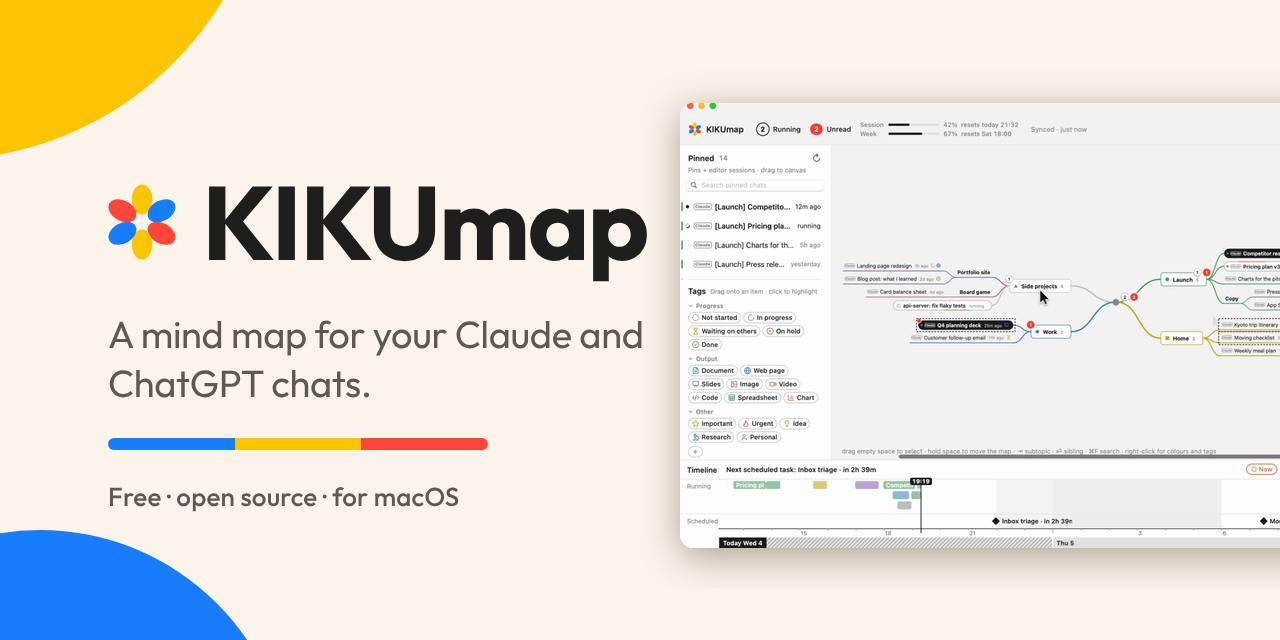
KIKUmap: Manage Your Claude and ChatGPT Conversations with Mind Maps
KIKUmap is a macOS menu bar app that visualizes Claude and ChatGPT conversations as mind maps with real-time status. Free and open source.