Blade Runner 2099 Showrunner on the Adaptation: "Not for the Faint of Heart"

Blade Runner 2099's showrunner faces the adaptation challenge with fan enthusiasm, set 50 years after 2049.
Blade Runner 2099 showrunner Silka Luisa, a longtime franchise fan, feels excitement rather than fear about adapting the classic films for TV. Set 50 years after Blade Runner 2049, the series offers room to expand its world and deepen the replicant theme. The article examines adaptation challenges—pacing, character development, visual aesthetic—and notes the renewed relevance of replicant identity and rights amid rapid AI advancement.
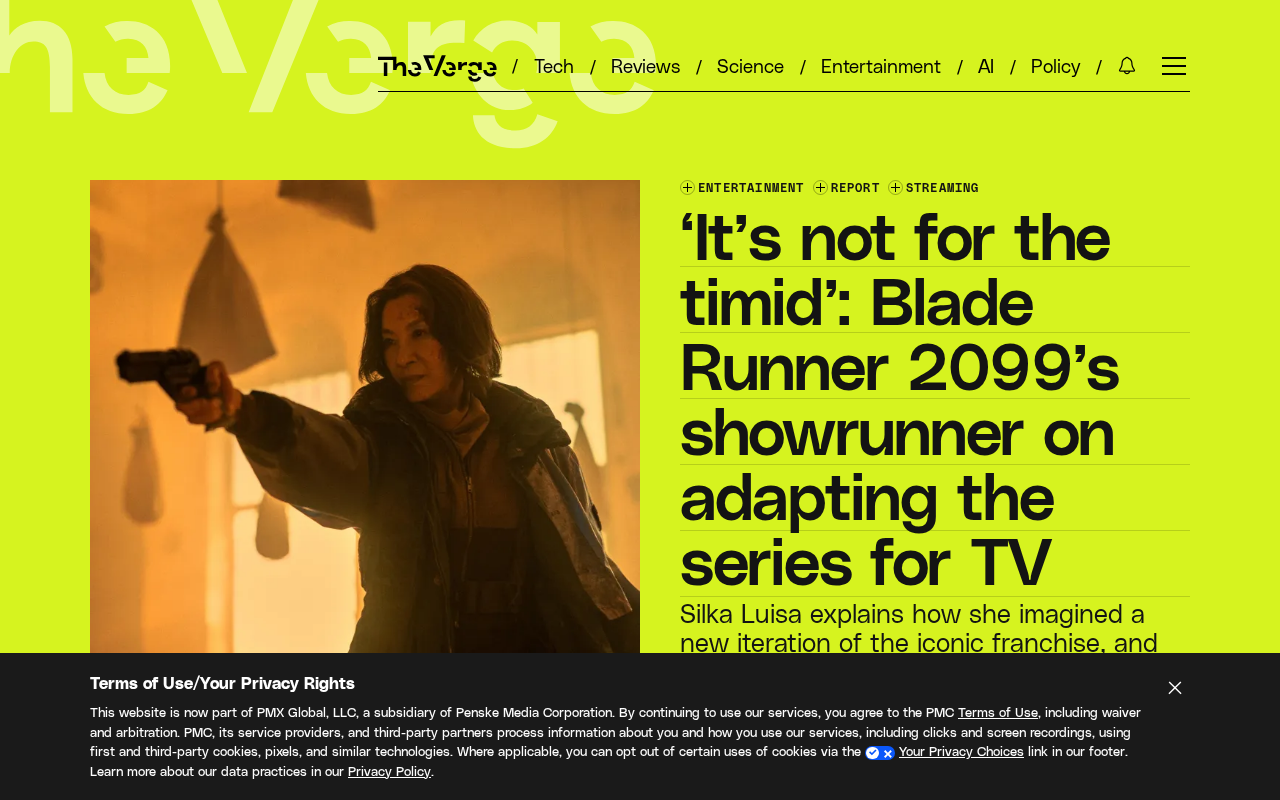
As a longtime fan of the Blade Runner films, Silka Luisa, showrunner of the series Blade Runner 2099, says she feels more excitement than fear when it comes to adapting the franchise for television. Set 50 years after the 2017 film Blade Runner 2049, the new series envisions a bleak future in which beings known as replicants...
From Film to Series: A Fan's Excitement and Awe
Silka Luisa readily admits she has been a longtime fan of the Blade Runner films, so when she took on the task of adapting this classic sci-fi franchise into a TV series, her first reaction was excitement rather than trepidation. That attitude may be exactly the psychological fortitude required when adapting a work with a massive fan base and deep cinematic prestige. She described the task as "not something for the faint of heart," hinting at the challenges and pressure involved.
Adapting Blade Runner has never been easy. Ridley Scott's original film was not a commercial success when it was released in 1982, but over time it gradually became a landmark of science fiction cinema, its visual style and philosophical themes profoundly influencing countless subsequent works. The 2017 sequel Blade Runner 2049, directed by Denis Villeneuve, also received critical acclaim. Now, bringing this franchise to the small screen means exploring new narrative territory while staying faithful to the established world.
Replicants are a core concept in the Blade Runner universe, referring to artificial humans manufactured through bioengineering by the Tyrell Corporation (and later the Wallace Corporation), nearly indistinguishable in appearance from humans and used to perform dangerous or grueling tasks. Replicants possess strength and intelligence beyond human capability but are designed with only a four-year lifespan (later models were improved) and are forbidden from having emotions or free will. In the original film, a group of escaped replicants returns to Earth seeking a way to extend their lives, raising profound questions about humanity, memory, and slavery. Whether replicants can be considered "human," whether their memories are real, and whether they should be granted rights constitute the franchise's most central philosophical propositions—issues that Blade Runner 2099 will inevitably continue to explore.
Timeline Setting: A Future 50 Years Later
The story of Blade Runner 2099 takes place 50 years after Blade Runner 2049. This time setting gives the series tremendous creative freedom. The ending of Blade Runner 2049 left many mysteries unresolved, and a 50-year gap is enough for the world to undergo earth-shattering changes.
From the "2099" in the title, it can be inferred that the series will depict an even more distant future. In the Blade Runner universe, replicants—artificial beings created to serve humans—have always been a core issue. The films explored philosophical questions about what constitutes humanity, the authenticity of memory, and whether artificial life should have rights. Set 50 years later, the series will likely delve deeper into these themes while introducing new technological and social contexts.
The Ending of Blade Runner 2049 and Its Unresolved Mysteries: The 2017 sequel, directed by Denis Villeneuve, revolves around a new-generation replicant named K. While investigating the remains of a replicant, K discovers that replicants are capable of reproducing—a fact that shakes the fundamental boundary between humans and replicants. At the film's end, K reveals his discovery to former protagonist Deckard and sacrifices himself to help Deckard reunite with his daughter. This open-ended conclusion leaves many questions hanging: How will the existence of replicant offspring change the social order? How will the human government and the replicant resistance movement act? The 50-year gap provides exactly the narrative space for these threads to develop, allowing the series to construct an entirely new power structure and set of techno-ethical dilemmas.
The Challenges of Adaptation: Expanding the World While Preserving Its Essence
Expanding a two-hour film into a multi-episode TV series requires handling challenges in narrative pacing, character development, and world-building. Films are constrained by runtime and often can only focus on a relatively tight storyline, whereas TV series have more room to explore subplots and supporting characters' backstories.
However, this also brings risks: excessive expansion can lead to sluggish pacing or deviation from the source material's core spirit. As showrunner, Silka Luisa needs to find a balance between meeting the expectations of longtime fans and attracting new viewers. Her enthusiastic attitude may indicate she is well prepared for this challenge, but the actual results remain to be seen.
The Blade Runner franchise is known for its distinctive visual style—neon-drenched cities, relentless rain, and streetscapes blending Eastern and Western cultures. Whether the TV series can recreate this aesthetic on a limited budget is also a concern for fans. However, as streaming platforms increase their investment in high-quality series, technical limitations are gradually diminishing.
Cyberpunk Aesthetics and Blade Runner's Visual Legacy: Blade Runner laid the foundation for cyberpunk visual style—towering megastructures, ceaseless acid rain, crowded streets illuminated by neon, bustling marketplaces blending Eastern and Western cultures, and dark, damp industrial ruins. This aesthetic not only influenced subsequent sci-fi films but also profoundly shaped works like Ghost in the Shell and The Matrix. To recreate this texture on a limited budget, TV series typically rely on virtual production, LED walls, and meticulous art design. Streaming platforms' heavy investment provides technical possibilities for such series, but how to maintain cinematic immersion on the small screen remains a practical test for the production team.
The Contemporary Resonance of the Replicant Theme
One of Blade Runner's core themes—the identity and rights of artificial beings—remains powerfully relevant today. With the rapid development of artificial intelligence and robotics, discussions about whether machines can possess consciousness and how humans and artificial life can coexist are becoming increasingly frequent.
Set 50 years in the future, the series serves as a stage for a thought experiment, exploring the social transformations these technologies might bring. Although details about the series' specific plot remain scarce, audiences can expect it to continue the films' philosophical exploration of humanity, memory, and identity while incorporating new issues relevant to our era.
Anticipation and the Unknown
Currently, public information about Blade Runner 2099 remains limited. Beyond the time setting and the showrunner's interview, details such as the cast, streaming platform, and specific release date have not been announced. But one thing is certain: this work carries the expectations of many sci-fi fans.
Silka Luisa's expression of "excitement" is a positive signal. In Hollywood, adapting classic IP often comes with enormous pressure, and being able to approach it with enthusiasm rather than fear at least indicates that the creative team has a clear vision for the project. For fans, perhaps cautious optimism is warranted: this series could bring new dimensions to the Blade Runner universe, or it could be a bold experiment. Either way, it has already succeeded in attracting attention.
One-line Summary
Blade Runner 2099's showrunner embraces the adaptation challenge with fan enthusiasm, with the story set 50 years after 2049.
Paragraph Summary
Blade Runner 2099 showrunner Silka Luisa, a longtime fan of the franchise, feels excitement rather than fear about adapting the classic sci-fi films into a TV series. Set 50 years after Blade Runner 2049, the series offers vast space to expand the world and deepen the replicant theme. This article analyzes the challenges of adapting from film to series, including narrative pacing, character development, and recreating the visual aesthetic, and notes that the philosophical questions about replicant identity and rights carry strong contemporary relevance amid rapid AI development. Although details such as the cast and release date remain unannounced, the creative team's positive attitude offers a cautiously optimistic signal for this highly anticipated work.
Related articles

Michael Nielsen Takes Down His Classic Neural Network Textbook, Sparking Community Discussion
Michael Nielsen's classic free textbook Neural Networks and Deep Learning has been taken offline, sparking discussion on Hacker News about the reasons and impact.

Inside the AI Training Data Market: The Trade-off Between Exclusivity and Discounts
G2i founder Gabe Greenberg reveals the dual-track pricing of the AI training data market: labs pay a premium for exclusive data or accept discounts that allow others to buy it.

SessionGraph: Unifying All Coding Agent Sessions in One Interactive Graph
SessionGraph aggregates coding agent sessions into an interactive graph, helping developers review, debug, and manage AI coding workflows across sessions. This article examines its positioning, value, and open questions.