Blood on the Clocktower Minecraft Custom Role Draft: How the Evil Team Claimed Victory
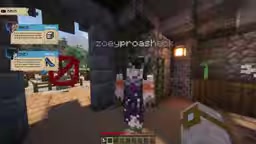
Evil wins a Minecraft Blood on the Clocktower draft via Vortox misinformation, Cult Leader ability, and a clutch Damsel call-out.
This Blood on the Clocktower session used a "Sushi Buffet" self-draft format where players pick from three random roles. The evil team assembled a brutal combo: Nilesy drew Vortox, corrupting every Townsfolk information ability; Minion Kirstie used Boffin to grant Nilesy a Cult Leader win condition. Despite the good team fielding a Savant, Dreamer, and Flower Girl, the Vortox effect rendered all their intel false. Zoe's hidden Damsel role — instantly lethal if a Minion names her publicly — went undetected until the final moment. A nomination misplay by Ben created a tie vote that saved Nilesy, and Kirstie's public call-out of Zoe ended the game in evil's favor.
Blood on the Clocktower is a social deduction board game that relies heavily on information reasoning and psychological gameplay. Nilesy's crew brought it into Minecraft and added a unique "Sushi Buffet" twist — players choose their own roles from a random selection of three. This format makes every session unpredictable. Here's a full breakdown of this particular game, which ended in a decisive victory for the evil team.
What Is the "Sushi Buffet" Role Draft?
In a traditional Blood on the Clocktower game, the Storyteller assigns roles. This session used a self-select mechanic instead: each player takes turns picking one identity from three randomly drawn roles, with the pool drawing from every character in the game — Townsfolk, Outsiders, Minions, and Demons alike. Players can also choose to "mulligan" and receive a randomly assigned role instead.
The appeal of this format is its near-limitless freedom — as the Storyteller put it, "anything can happen." But freedom comes with risk. Zoe mulligan'd her way into the extremely dangerous Damsel role: if any Minion publicly and correctly identifies her, the good team loses instantly.
The Damsel is an Outsider character aligned with the good team, but her presence is a liability rather than an asset. Her loss condition is both brutal and irreversible: if any Minion in the game correctly names her in public, the good team immediately loses. To survive, the Damsel must impersonate other characters at all times and actively spread misinformation — but once an experienced Minion narrows her down through process of elimination, there's no recovering. Under the Sushi Buffet rules, the Damsel's risk is amplified even further. Whether Zoe actively chose or was forced into this high-stakes identity is itself an information leak, since other players may pick up on defensive behavioral cues.
Key Roles and How They Set the Stage
The opening role selections foreshadowed the entire arc of the game. Kirstie picked Boffin, a Minion whose ability grants the Demon an unused good character's ability. She handed the Cult Leader ability to Nilesy — meaning Nilesy could win outright by convincing the entire town to join his cult, and he could never be converted to good.
On the other side, Nilesy's Demon role turned out to be Vortox — widely regarded as one of the strongest Demons in the game. Every night, Vortox kills a player while simultaneously causing every Townsfolk's information ability to return a false result. This created massive information chaos throughout the game.
On the good team's side: Rhydian chose Savant, receiving one true and one false piece of information each night; Duncan picked Dreamer; and Ben chose Flower Girl, who learns whether the Demon voted on any given day.
Vortox is considered one of the most mechanically oppressive Demons in Blood on the Clocktower. Its core mechanic is "information corruption": as long as Vortox is alive, every Townsfolk ability that produces information must return a false result — the Storyteller is obligated to actively feed bad intel. This means every clue the good team collects could be pointing them in the wrong direction. Making things trickier, Vortox has a built-in self-destruct clause: if a day ends without an execution (everyone votes to skip, or no one is nominated), the good team wins automatically. This puts extra pressure on the evil team to ensure someone gets executed every single day. Boffin, as a Minion, essentially lets the Demon "dual-wield" an extra good-aligned ability. Since the ability's source character doesn't enter the normal role pool, the good team can't detect the anomaly by noticing that "nobody claimed that role" — making it exceptionally stealthy.
How Vortox Drowned the Town in Misinformation
Vortox's presence made every piece of information in this game unreliable. Oze, playing as Steward, learned that Kirstie was good — but thanks to the Vortox effect, that information was false. Duncan dreamed that Oze was either a "High Priestess" or "Cerenovus" — also fabricated. Rhydian's Savant information became a nightly puzzle, trying to figure out which of the two pieces was real.
The sharper players started suspecting this was a Vortox game. Rhydian's first-night information — "there's a Mastermind in play, or there's a Lunatic" — actually helped Nilesy by ruling out the possibility that Rhydian himself was the Lunatic. This kind of cross-referencing is central to Blood on the Clocktower's appeal, but in a Vortox game, even the verification process can be a trap.
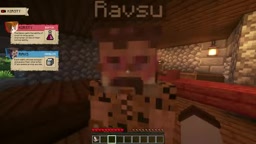
Ravs deserves a special mention for his performance. He drew the Gambler role but played up an exaggerated "unhinged" persona as cover the entire game, and pulled off a social trick involving a "keycard" that kept Ben's speaking opportunities effectively in his grip.
Two Failed Cult Votes and the Final Reversal
Nilesy's Cult Leader ability required all good players to vote to join his cult in order to win. He called two "join the cult" votes on consecutive days, enticing players with absurd perks like free train tickets and Shark Week, keeping the atmosphere light and entertaining. Both attempts failed because Ben flatly refused — in hindsight, Ben's refusal on day one was the only thing that stopped the evil team from rushing an early win.
The real turning point was that Zoe's Damsel identity went undetected for so long. Kirstie, as a Minion, knew there was a Damsel in play, but it wasn't until late in the game that she deduced — through Ravs's Gambler behavior — that Zoe was the one.
On the final day, Nilesy even publicly declared that he was evil, deliberately sowing confusion. When the good team then made a critical error during the nomination phase — Ben's extra nomination allowed the evil team to force a tie vote — the game swung decisively toward evil. Kirstie publicly named Zoe as the Damsel, and the evil team — Nilesy and Kirstie — won.

Blood on the Clocktower's nomination mechanic has a key rule: within the same day, a new nomination only replaces the current execution candidate if it receives strictly more votes than the current highest tally. When Ben submitted an extra nomination, if both nominees ended up tied on votes, the Storyteller typically rules that neither is executed — or rules based on the specific variant that no one is eliminated that day. This detail is easy to misplay for anyone unfamiliar with the rules. The instinct is "more nominations = more chances," but it can actually help the evil team manufacture a tie and dodge an execution. That's exactly what happened here: what could have been a clean execution of Nilesy turned into a deadlock, buying Kirstie the time she needed to call out the Damsel and seal the win.
What Made This Game Worth Watching
This session demonstrated just how much depth Blood on the Clocktower contains: information warfare, identity deception, social manipulation, and rules literacy all played decisive roles. The Vortox Demon corrupted every piece of intel the good team gathered. The Boffin's Cult Leader gift created a dual-threat win condition. And the Damsel lurked as a sword of Damocles hanging over the good team's head the entire game.
The good team's loss can largely be traced back to a misunderstanding of the voting system. Ben admitted "I didn't do the math," and the Storyteller playfully noted that players might want to learn "the finer points of the Blood on the Clocktower nomination system." It's a reminder that in social deduction games, mechanical fluency matters just as much as reading people.
The Minecraft version of Blood on the Clocktower uses visual environments, player movement, and Storyteller narration to bring what is normally an abstract tabletop game to life — making it far more watchable and immersive, and offering a compelling new format for social deduction content.
Related articles
AI Agent Terminology Too Confusing? One Interactive Concept Map to Untangle 40+ Core Terms
Confused by AI Agent terms like MCP, harness, orchestration, and skills? AI Concept Atlas is an interactive map visualizing 40+ concepts and their relationships, with cited sources.
Meta's Broken Promise: Community Demands to Know Where the Muse Spark Weights Are
Meta promised to open-source Muse Spark model weights over a month ago, but still hasn't delivered. The community questions how this squares with Zuckerberg's "can't delay even a month" stance.
Running Qwen3 27B Locally on a Single RTX 5090: What Can It Actually Do?
A developer runs Qwen3 27B locally on a single RTX 5090 via the Row-Bot Agent framework, generating an 8-scene, 105-second interactive animation from one prompt — including real-time math, fractals, and physics.