Build a Free Whisper Transcription Tool with Cloudflare Workers AI
Build a Free Whisper Transcription Too…
Run Whisper speech transcription for free on Cloudflare Workers AI — no GPU or server required.
This article explores an open-source project that leverages Cloudflare Workers AI's free tier to run OpenAI's Whisper model for speech transcription — eliminating the need for GPU hardware or backend servers. It covers the technical architecture, edge computing advantages, privacy considerations, and the practical limits of the free tier, making it a useful reference for indie developers and small teams.
The Cost Problem with Speech Transcription
Speech-to-Text has become a foundational capability for countless applications — from meeting notes and podcast captions to voice memos. Yet mainstream commercial speech recognition APIs carry a hefty price tag, and heavy usage can translate into significant ongoing costs.
OpenAI's Whisper model is open-source and performs exceptionally well, but self-hosting it has real hardware requirements (especially GPU), making it unfriendly for individual developers and small teams. Whisper was open-sourced by OpenAI in 2022. Built on a Transformer architecture and trained on 680,000 hours of multilingual web audio, it offers multiple model sizes ranging from tiny to large — each striking a different balance between accuracy and compute. Its key strengths are multilingual support, solid noise robustness, and an open-source license that permits commercial use. This makes Whisper a compelling alternative to commercial APIs like Google Speech-to-Text and AWS Transcribe — but running the large variant locally requires a GPU with at least 8GB of VRAM, a hardware barrier that puts many solo developers off.
An open-source project that recently surfaced on Hacker News offers a clever workaround: running a speech transcription service within the free tier of Cloudflare Workers AI. By combining an open-source model, edge computing, and a free tier, it charts a low-barrier path for lightweight speech recognition needs.
Why Cloudflare Workers AI
Cloudflare has been investing heavily in edge AI inference in recent years, launching its Workers AI platform that lets developers call hosted AI models — including the Whisper family of speech recognition models — directly on its global edge network.
Understanding the value of this approach requires appreciating the fundamental difference between edge computing and traditional cloud computing. Traditional cloud computing concentrates compute in a small number of large data centers (like AWS us-east-1), meaning user requests must travel long network paths, incurring tens to hundreds of milliseconds of latency. Cloudflare's edge network, by contrast, spans 300+ cities worldwide, with each Worker instance executing at the Point of Presence (PoP) closest to the user — compressing latency to single-digit milliseconds. For tasks like speech transcription where response speed matters, edge inference offers a meaningful user experience advantage.
Compared to renting your own GPU server, the Cloudflare approach has several notable advantages:
- No infrastructure to manage: Model deployment, scaling, and operations are all handled by the platform — developers just call an API.
- Edge inference, close to users: Requests are processed at the nearest node, reducing latency.
- Generous free tier: Workers AI provides a daily free call quota that's more than sufficient for personal projects and low-frequency use cases.
Cloudflare uses "Neurons" as its AI platform billing unit — each free account gets 10,000 Neurons per day. Whisper inference consumes a certain number of Neurons per minute of audio, and that figure directly determines how much transcription time the free tier actually covers. Developers need to factor this in when planning usage.
This open-source project builds on exactly that, creating a "Free Tier Capable" transcription tool that lets users experience Whisper-level transcription quality at essentially zero cost.
The Value of Open Source: Auditable Data Privacy
The project is released as open source, so users can freely inspect the code, audit data handling flows, and extend it to fit their needs. For use cases where data privacy matters, the open-source + self-hosted combination is particularly compelling.
It's worth being clear-eyed about the privacy sensitivity of audio data. On the regulatory side, the EU's GDPR explicitly classifies voiceprint recognition under "special categories of personal data," and China's Personal Information Protection Law similarly places strict requirements on biometric information. When using third-party hosted transcription services, audio data must be transmitted to the vendor's nodes for processing — organizations must evaluate data processing agreements (DPAs), storage policies, and cross-border transfer compliance. Open-source code lets you clearly see where your audio goes, whether it's cached, and whether it's used for model training — rather than handing it off to an opaque third-party black box. For fields with strict data sovereignty requirements, such as healthcare, legal, and finance, a fully local Whisper deployment remains the preferred path to keeping data on-premises.
Technical Architecture Breakdown
Core Workflow
A typical workflow for this kind of tool looks like this:
- The user uploads an audio file or records audio in the frontend;
- The request is forwarded through a Cloudflare Worker to Workers AI;
- Workers AI calls the hosted Whisper model to perform transcription;
- The transcription result is returned to the frontend for display or export.
The entire pipeline runs on Cloudflare's edge network — no self-hosted backend servers, no GPU instances to maintain. This reflects a profound shift that serverless architecture brings to AI inference: the traditional approach requires keeping a GPU instance running at all times (incurring costs even when idle), whereas serverless AI platforms abstract away cold starts, scaling, and hardware maintenance entirely. Code executes on demand and billing is based on actual invocations. This model has given rise to an "Inference-as-a-Service" niche, with platforms like Cloudflare Workers AI, Groq, and Together AI all competing in this space — differentiated primarily by latency, model selection, pricing, and free tier generosity. The "serverless + hosted model" combination dramatically lowers the complexity of deployment and operations.
The Boundaries of the Free Tier
"Free tier capable" doesn't mean unlimited. Cloudflare's free quota is measured in daily Neurons, and exceeding it requires payment. This approach is therefore best suited to:
- Personal voice notes, occasional meeting transcription;
- Prototype validation and learning;
- Low-frequency, small-scale application integrations.
For high-concurrency, large-batch production environments, you'll still need to evaluate paid costs — or consider a self-hosted Whisper deployment.
Practical Use Cases and Real Limitations
Who Is This Best For
The target audience for this approach is clearly defined: budget-conscious independent developers, students, and small teams who still want reliable speech transcription. It compresses what would normally require GPU hardware and operational overhead into an almost-free API call, significantly lowering the barrier to entry.
Trade-offs You Can't Ignore
Every free solution has its costs. When using Cloudflare's hosted Whisper model, transcription quality depends on the model version the platform provides — you have less control than with a fully self-hosted setup. For instance, you can't freely choose between Whisper large-v3 and large-v2, nor can you fine-tune the model on domain-specific vocabulary. Additionally, audio data still passes through Cloudflare's edge nodes — for highly sensitive data scenarios, fully local deployment remains the safer option.
Interestingly, the project is still in its early stages of community adoption, and its ecosystem has yet to mature. Developers who are curious might treat it as a technical reference and learning resource rather than deploying it directly in core production environments.
Conclusion: A New Approach to Low-Cost AI Application Development
This open-source speech transcription tool built on Cloudflare Workers AI represents a typical trend in AI application development today: leveraging platform-hosted models and free tiers to rapidly build practical tools without bearing the high cost of infrastructure.
As edge AI inference platforms continue to mature, the combination of "open-source code + free hosted models" will become increasingly common. The sustained investment by platforms like Cloudflare and Groq in the "Inference-as-a-Service" space is systematically lowering the barrier to AI capabilities — a genuine dividend for independent developers and small teams. These solutions may not be suited to large-scale production workloads, but for validating ideas, covering personal needs, or learning, they're extremely attractive. For anyone looking to get started with speech recognition application development, a lightweight, free, and auditable project like this is an ideal starting point.
Key Takeaways
Related articles
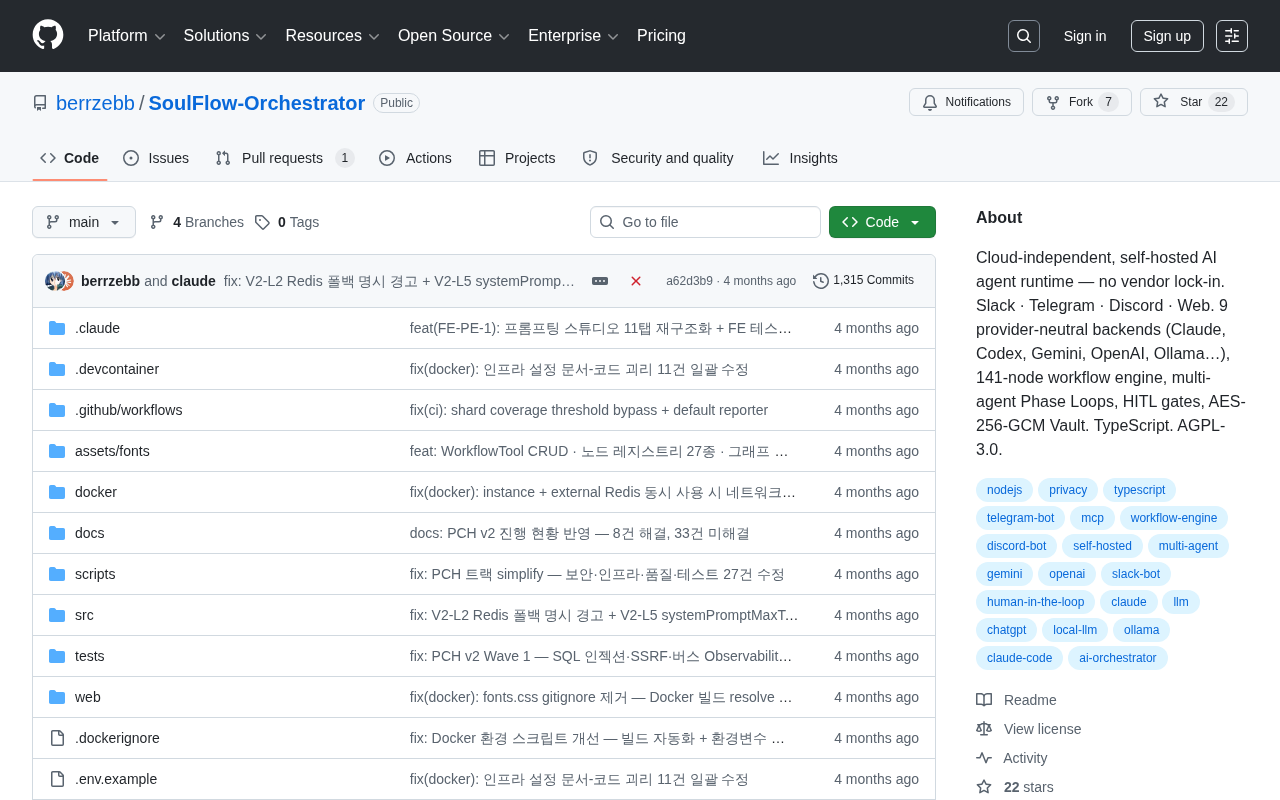
SoulFlow-Orchestrator: A Self-Hosted, Vendor-Lock-In-Free AI Agent Runtime
SoulFlow-Orchestrator is an open-source, self-hosted AI agent runtime with no vendor lock-in. Supports 9 neutral backends (Claude, OpenAI, Ollama), 141-node workflow engine, multi-agent loops, and HITL gates.
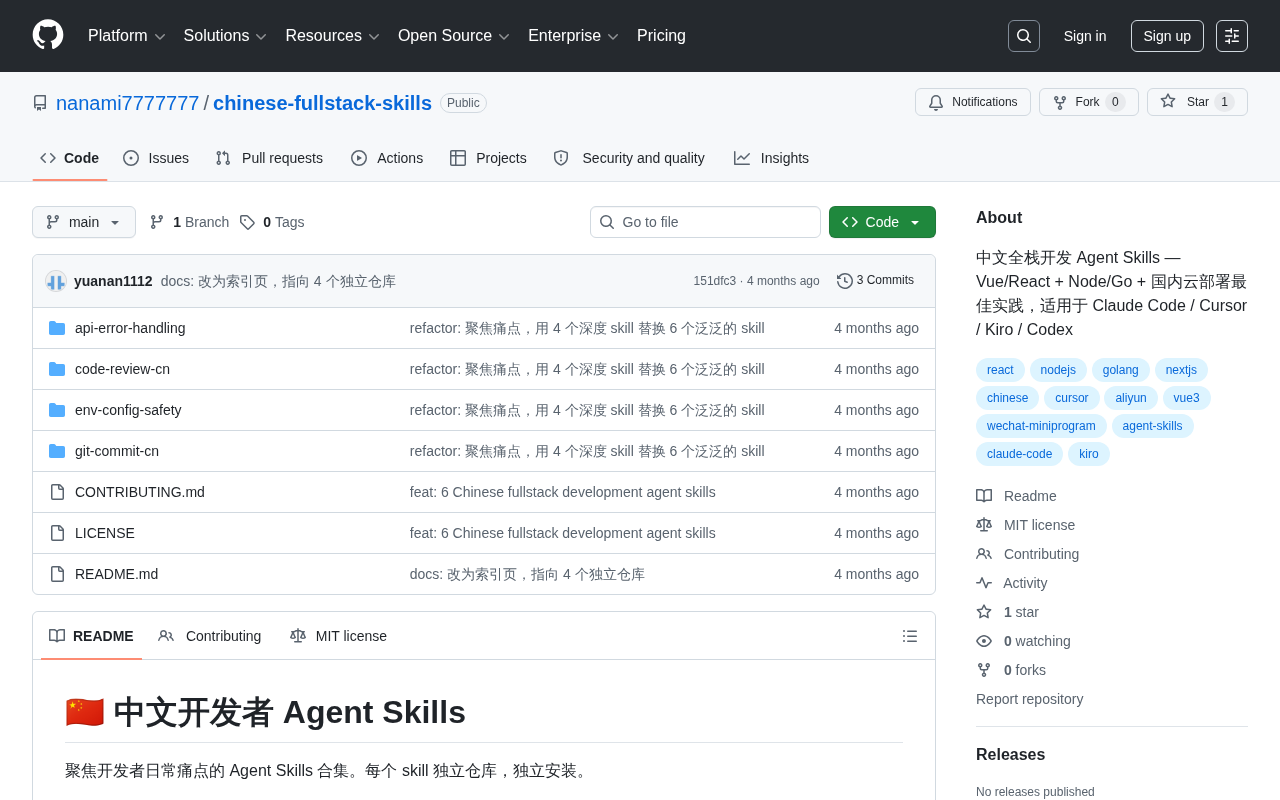
Chinese Full-Stack Agent Skills: A Skill Library Tailored for Domestic AI-Assisted Development
chinese-fullstack-skills is an Agent Skills library for Chinese full-stack development, covering Vue/React, Node/Go, and domestic cloud deployment best practices. Compatible with Claude Code, Cursor, Kiro, and Codex.
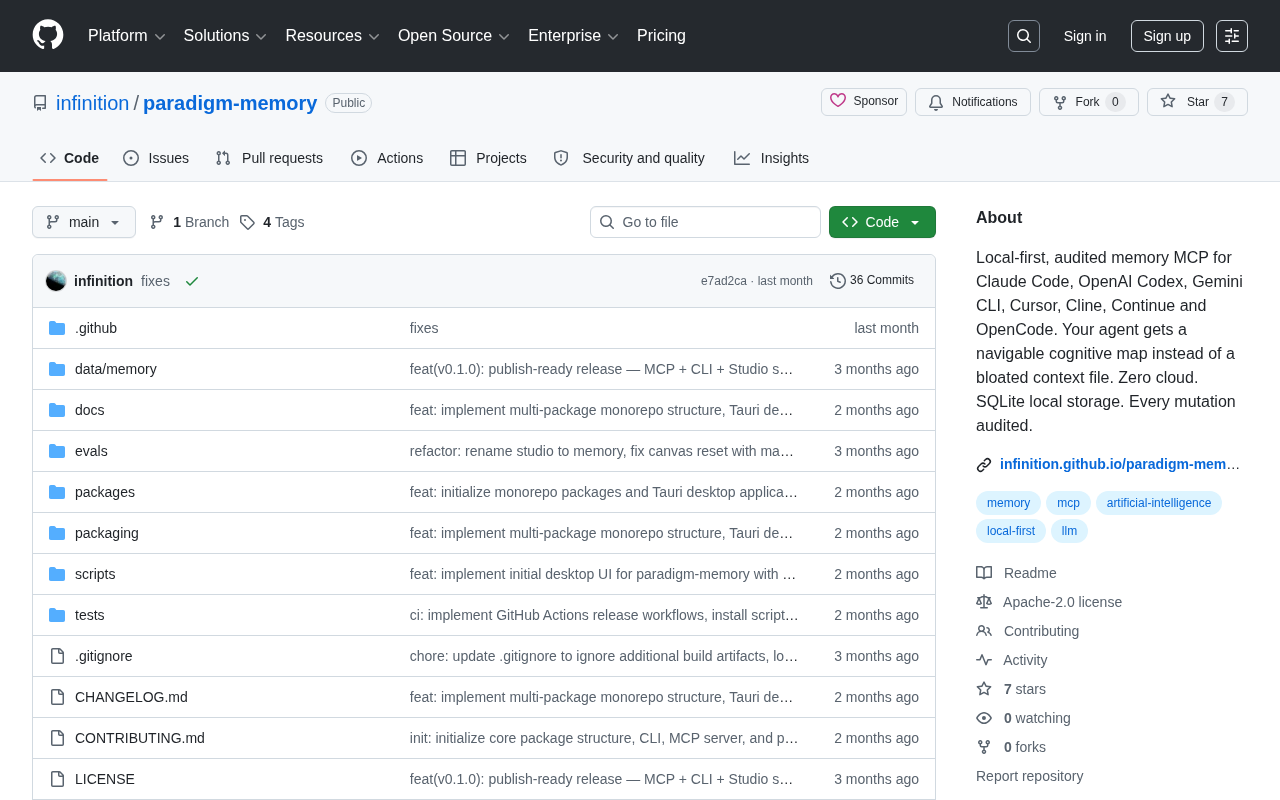
Paradigm Memory: A Local-First Memory System for AI Coding Assistants
paradigm-memory is a local MCP memory tool for Claude Code, Cursor, and Cline. It uses SQLite local storage, zero cloud, full audit trails, and a navigable cognitive map instead of bloated context files.