Build TristanTube in 3 Minutes with Claude Code: A 47K Hardcore Video Aggregation Platform

A developer one-shotted TristanTube, a platform aggregating 47K tech videos, in 3 minutes using Claude Code.
This article covers how a developer used Anthropic's AI coding tool Claude Code to one-shot the video aggregation platform TristanTube in just 3 minutes. The platform aggregates 47K hardcore tech videos and offers a TV mode for an optimized big-screen viewing experience. The article analyzes how Claude Code works, the likely technical approach behind TristanTube (such as the YouTube API, lazy loading, and static site generation), and how AI coding tools are changing the development paradigm—shifting from Copilot-style assisted coding to agentic task delegation. It also notes that rapid development raises questions about code quality and maintainability, and that the future will require balancing speed with quality.
From a Tweet to TristanTube: A Lightning-Fast AI Coding Case Study
Recently, developer Tristan shared a curated list of high-quality YouTube channels on social media, drawing considerable attention. What's even more surprising is that another developer (or possibly the same person) decided almost immediately to turn that list into a video aggregation platform called TristanTube. According to the tweet, the entire project went from idea to implementation in just 3 minutes, and was "one-shotted with Claude Code"—meaning it was generated in a single pass using the AI coding tool Claude Code.
This case spread quickly through the tech community, not only because of its remarkable efficiency but also because it demonstrates how AI coding tools can rapidly transform ideas into working products. TristanTube currently aggregates 47K (47,000) hardcore tech videos and offers a TV mode for more relaxed viewing.
Claude Code: The Tool That Built a Project in 3 Minutes
Claude Code is an AI coding assistant from Anthropic that supports code generation, debugging, and deployment through natural language instructions. The tweet specifically emphasizes "one-shotted," meaning the developer only needed to give a single instruction for Claude Code to produce complete, usable code. This "first-pass success" capability is exactly what today's AI coding tools are striving for.
From a technical perspective, TristanTube is likely a static website or lightweight web application for aggregating and displaying YouTube videos. 47K videos is not a trivial amount of data, but with proper pagination or lazy loading, the frontend can handle it smoothly. The addition of TV mode enhances the viewing experience, especially for browsing on large screens or televisions.
Interestingly, the tweet doesn't provide specific technical stack details, but we can infer that Claude Code likely generated frontend code including HTML, CSS, and JavaScript, and may have integrated the YouTube API or embedded video links directly. This rapid prototyping approach is changing the workflows of independent developers and small teams.
Claude Code is a command-line agentic coding tool launched by Anthropic in 2025. Unlike traditional code completion plugins, it runs in the terminal and can autonomously read project files, execute shell commands, run tests, and iteratively modify code. It is powered by the Claude model family (such as Claude 3.7 Sonnet and later versions), featuring a large context window and tool-calling capabilities, which allows it to understand cross-file code structure. "One-shotted" refers to the model producing runnable results in a single pass without human intervention or multiple rounds of correction—a benchmark often regarded in the AI coding field as an important indicator of a model's code generation ability. A typical way to use Claude Code is to describe requirements in natural language, after which the agent plans the steps, creates files, and verifies results on its own. This distinguishes it from Copilot-style tools that only offer inline suggestions, bringing it closer to "delegated development."
47K Hardcore Videos + TV Mode: The Value of Content Aggregation
The core value of TristanTube lies in its curation and aggregation of quality content. 47K videos is no small number—it likely comes from the channel list Tristan originally compiled, covering hardcore domains such as technology, programming, and AI. For users, this amounts to a carefully curated video library that saves time compared to searching blindly on YouTube.
The addition of TV mode further optimizes the viewing scenario. On televisions or large-screen devices, traditional web layouts may not be friendly enough, whereas TV mode typically means larger fonts, simpler navigation, and autoplay queues. The tweet mentions "laid back watching," suggesting this mode prioritizes comfort and immersion.
This combination of "content curation + experience optimization" is exactly what users need in today's era of information overload. And AI coding tools have dramatically lowered the barrier to making such ideas a reality.
The YouTube Data API is Google's official interface that allows developers to programmatically retrieve channel information, video lists, view counts, and other metadata. For aggregation applications, the usual approach is to first pull video IDs and titles from a channel via the search.list or playlistItems.list endpoints, then embed a player using the IFrame Player API for in-site playback. Note that this API has a daily quota limit (10,000 units by default), so scraping tens of thousands of videos in bulk typically requires paginated requests and local caching; otherwise, you'll easily hit the quota ceiling. Another lightweight approach is to store video IDs directly and embed them via youtube.com/embed/{id}, bypassing most API call overhead. Static sites like TristanTube typically pre-generate scraped results into JSON or static pages to reduce runtime dependencies.
How AI Coding Tools Are Changing the Development Paradigm
The TristanTube case is not an isolated one. With the growing popularity of tools like Claude Code and GitHub Copilot, more and more developers are turning to AI to accelerate the journey from idea to product. This model is particularly well-suited for small tools, personal projects, and prototype validation.
However, building a project in 3 minutes has also sparked some discussion. Some argue that this speed may come at the expense of code quality and maintainability; but supporters point out that for lightweight applications, shipping quickly and gathering feedback matters more. Either way, AI coding tools are driving the "idea-as-product" trend, allowing developers to focus more on creativity and user experience.
From an SEO perspective, a project like TristanTube, if publicly accessible, could attract traffic from people interested in tech video aggregation. Keywords such as "hardcore video aggregation," "Claude Code projects," and "TV mode viewing" have potential search value.
GitHub Copilot is one of the earlier commercially available AI coding assistants, developed through a collaboration between GitHub and OpenAI. It launched in preview in 2021 and primarily provides inline code completion and chat-based Q&A as an IDE plugin. It and Claude Code represent two different product forms: Copilot emphasizes "human-led, AI-assisted" incremental coding, where developers still need to organize architecture and files themselves; whereas agentic tools like Claude Code emphasize a "AI-led, human-reviewed" task delegation model. In addition, editors like Cursor and Windsurf are exploring interaction styles that fall somewhere in between. Understanding this spectrum helps put things in perspective: the so-called "build a project in 3 minutes" applies more to prototype scenarios with clear requirements and small scope; for complex systems, AI tools still require humans to handle architecture design and quality control.
Conclusion and Outlook
The TristanTube story showcases the potential of AI coding tools for lightning-fast development. 3 minutes, 47K videos, TV mode—behind these numbers is a significant boost in development efficiency and a lower barrier to creation. In the future, we may see more similar projects emerge, and how to balance speed and quality will be an ongoing question for developers.
For content creators and developers, keeping up with the latest advances in AI coding tools and trying to apply them to their own work may yield unexpected rewards.
Related articles
 Tech Frontiers
MuJoCo: An Analysis of DeepMind's Open-Source General-Purpose Physics Simulator
An in-depth analysis of Google DeepMind's open-source physics simulator MuJoCo: high-performance C++ kernel, MJCF modeling format, contact solving principles, MJX GPU acceleration, and robot reinforcement learning use cases.
 Tech Frontiers
Claude API Quick Start: The Official Quickstarts Project Collection
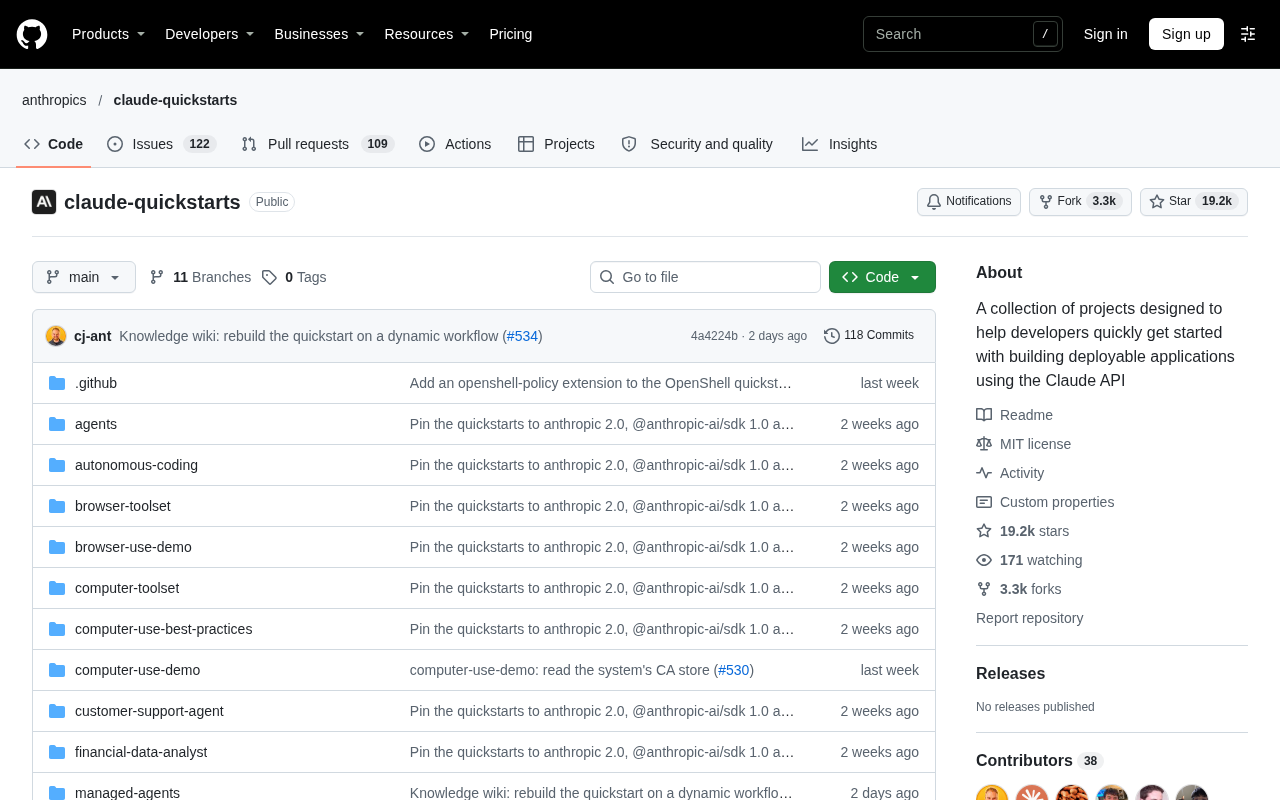
Anthropic's official claude-quickstarts project collection helps developers quickly build deployable apps with the Claude API. Nearly 20k stars, Python-based, great for beginners and prototyping.
 Tech Frontiers
AI Agents Connecting Directly to APIs: Which Calls Can Be Safely Allowed?
AI agents can call any API, but the real challenge is deciding which calls can be safely allowed. This article analyzes allowance decisions from three dimensions—intent matching, least privilege, and controllable impact—and argues that the control layer should sit outside the agent, combined with audit traceability to build a trustworthy API call governance mechanism.