Building a PHP Sales System from Scratch with Cursor AI: A Practical Case Study

A Brazilian developer builds a 3D printing sales system from scratch with Cursor AI and plans to resell it for profit.
The article describes how a Brazilian developer used Cursor AI to build a PHP sales system for a 3D printing business from scratch, bypassing WordPress for greater customization freedom. He kicked off with a 625-line prompt and used an info.json file to prevent the AI from forgetting context or looping. Development followed an iterative "screenshot-and-describe—AI fixes" workflow, gradually adding a product store, payment integration (Mercado Pago, Infinity Pay), and a 3D printing cost calculator before deploying to a hosting server. Cursor costs about 120 BRL per month—far less than hiring a developer.
A Brazilian developer built a complete sales system for his 3D printing business from scratch using Cursor AI—without relying on WordPress at all, generating PHP code directly. The process shows how AI coding tools enable even non-professional developers to quickly build custom systems, and even profit by reselling them.
Getting Started from Zero: Environment and Prompts
At the start of the video, the creator makes his goal clear: build a system for his 3D printing company R3D Print that includes a sales page and an admin panel. He chose PHP over WordPress because a custom system is more flexible and can be developed entirely to his needs.
The critical first step is preparing a carefully written prompt. He mentions using a 625-line prompt and teaches in his course how to write prompts to prevent the AI from "getting stuck, repeating itself, or falling into loops." This hints that clear instructions are the foundation of successful collaboration with AI.
He then creates a project folder (R3D Print) on his desktop and has Cursor AI generate the project structure inside it. The AI automatically creates the required folders and files, including the MySQL database configuration.
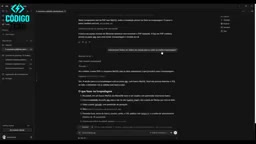
Cursor is an AI coding editor built on top of VS Code, with built-in ability to converse with large models such as GPT-4 and Claude, generating, modifying, and explaining code directly within the editor. Unlike traditional code-completion tools, Cursor supports a "Composer" mode in which you describe an entire feature in natural language and the AI generates code across multiple files at once—exactly the mechanism behind "creating the project structure" described here. Its core strength is understanding the whole project context (open files, directory structure, conversation history), but the context window is limited, and as interaction rounds pile up, earlier information gets pushed out. That's precisely why an external memory file like info.json is needed. Cursor offers a free tier and a monthly Pro subscription; the 120 BRL monthly fee mentioned in the article corresponds to its paid tier.
The Core Trick: Using info.json to Prevent AI "Amnesia"
The creator shares a "golden tip" from a veteran programmer friend: create an info.json file. This file records key project information, and whenever a feature needs to be modified or added, you first have the AI read the file—preventing it from "forgetting" context or falling into loops after multiple interactions.
"tudo que você quiser alterar, modificar, adicionar, remover, você pede pra ele vir nessa pasta antes. Dá uma olhada na pasta info.json e ele vai... Não vai se perder, não vai ficar rodando em looping"
In practice, he has Cursor create info.json, and every subsequent adjustment first references that file. This significantly improves the stability of AI collaboration.

A large language model's "context window" refers to the total number of tokens the model can read at once in a single conversation; beyond that, the earliest content is truncated or compressed—manifesting as "forgetting" prior agreements. info.json is essentially a lightweight project memory carrier: it records the tech stack, directory conventions, database table structures, completed features, and to-dos in structured JSON. Starting each new conversation by having the model read this file is equivalent to "re-injecting" key state into context. This approach aligns with industry conventions like CLAUDE.md, .cursorrules, and README-for-AI—it's a practice of "context engineering." Compared with repeatedly restating things in natural language, a structured file is more stable, saves tokens, and is easier to maintain and version-control manually.
Iterative Development: From Sales Page to Full E-commerce Features
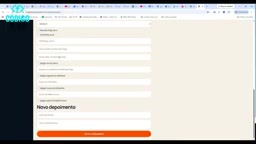
The initial version includes a sales page and an admin panel. The admin panel is feature-rich: dashboard, product management, categories, orders, customers, coupons, financial reports, and settings. The /products page supports adding products (such as a Christmas bundle) and assigning categories (such as "trending now").
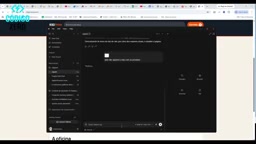
But the creator wants more: a product store below the sales page. He conveys requirements through screenshots and text descriptions, having Cursor modify the code. Problems arise along the way—the store doesn't display, images go missing. He takes another screenshot and describes the issue, and the AI fixes it promptly.
He notes: "E se estiver errado aqui, ele vai arrumar." (If something's wrong here, it will fix it.) This "describe the problem—screenshot—fix" loop is the typical workflow of AI programming.
Deployment and Payment Integration
After development, he packages the project and uploads it to the hosting server. He uploads the ZIP via the file manager and extracts it, overwriting the old files. Although the store initially fails to display, it eventually works after AI adjustments.
The system also integrates payments: Mercado Pago and Infinity Pay, allowing customers to pay directly on the site. Product pages can be configured with a "Buy on the website" button as well as purchase links for Shopee and Mercado Livre. In addition, the system includes a cost calculator tailored to 3D printing, which computes materials, machine hours, platform fees (such as Shopee, Mercado Livre), packaging costs, and more, and suggests a selling price.
Mercado Pago is the largest online payment platform in Latin America (especially Brazil and Argentina), part of the Mercado Livre group. It offers a variety of payment methods including credit cards, Pix instant transfers, and boleto bank slips, and provides two integration forms: Checkout Pro (redirect to a hosted page) and Checkout Bricks (embedded components). Pix is an instant payment system launched by the Central Bank of Brazil, with fast settlement and low fees, and extremely high penetration in local e-commerce—whether you support it directly affects conversion rates. Infinity Pay is a payment gateway aimed at small and medium merchants in Brazil, often used to aggregate multiple channels. For independent developers, such gateways typically provide a PHP SDK or REST API with Webhook callbacks, making it easy to synchronize order status within a self-built system—this is the technical prerequisite that enables the on-site direct payment in the system described here.
Cost and Efficiency: The Economics of AI Programming
The creator does the math: hiring a developer to build a custom system is expensive, while a Cursor subscription costs about 120 BRL per month (Brazilian currency), and "you can build the system in less than a month." If you learn from his course, you can start building your own system "within a week." He himself plans to profit by selling systems, and encourages viewers to do the same.
This model lowers the barrier to software entrepreneurship. Non-technical people can use AI to build systems tailored to specific needs—and even sell them as products.
Conclusion
This practical case demonstrates Cursor AI's potential in real projects: with carefully designed prompts, techniques like info.json, and iterative problem-fixing, even non-professional developers can build fully functional PHP systems. Although the process requires human intervention and debugging, it is far more efficient than traditional development. For small and medium businesses and individual entrepreneurs, AI coding tools are becoming a powerful way to cut costs and boost efficiency.
One-line Summary
A Brazilian developer builds a 3D printing sales system from scratch with Cursor AI and plans to resell it for profit.
Paragraph Summary
The article describes how a Brazilian developer used Cursor AI to build a PHP sales system for a 3D printing business from scratch, bypassing WordPress entirely for greater customization freedom. He kicked off the project with a carefully crafted 625-line prompt and used an info.json file to record key project information, solving the problem of the AI forgetting context and getting stuck in loops after multiple interactions. Development followed an iterative "screenshot-and-describe—AI fixes" workflow, gradually adding a product store, image display, payment integration, and connections to Mercado Pago, Infinity Pay, Shopee, and Mercado Livre purchase links, plus a built-in 3D printing cost calculator. The system was ultimately deployed successfully to a hosting server. The author runs the numbers: Cursor costs about 120 BRL per month, far less than hiring a developer, and you can get up to speed within a week—non-technical people can use it to build and resell custom systems.
Related articles

Prompt Engineering for Beginners: From Writing Prompts to Engineering Thinking
Starting from the essence and four functions of prompts, this article systematically explains the six-step process, four success criteria, learning value, and practical limitations of prompt engineering to help you build a complete understanding.

Anthropic Launches Nasdaq IPO: AI Giant's Listing and Risk Disclosures
Anthropic officially launches its Nasdaq IPO under ticker ANT, with market valuation expected to potentially exceed SpaceX's record. The prospectus devotes nearly 100 pages to AI risks, while first-half revenue grew over 14x but net losses widened sharply, reigniting the AI bubble debate.

Rust cURL Clone Uses 4,832 unsafe Blocks—Is the Memory Safety Myth Broken?
A Rust cURL clone uses 4,832 unsafe keywords, challenging Rust's memory safety narrative. We analyze what unsafe really means, compare Fil-C, and examine rewrite motives.