Building a Voice Assistant with Codex: Turning a Raspberry Pi LED Display into a Smart Panel

Developer uses OpenAI Codex and GPT-Live-1 to turn a Raspberry Pi LED display into a real-time voice assistant.
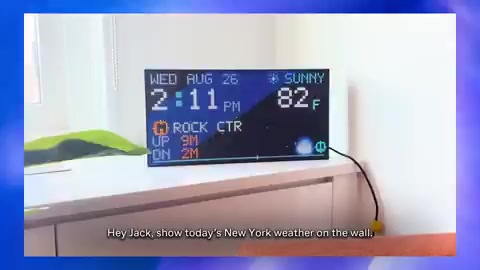
Developer @sidrampally combined a Raspberry Pi, OpenAI's GPT-Live-1 real-time voice model, and Codex coding assistant to transform an ordinary LED dot-matrix display into a voice assistant capable of understanding natural language and showing live weather and subway data. Codex handled everything from wiring logic to voice command debugging, helping a developer without deep embedded experience clear the traditional hurdles of hardware-software integration projects.
From LED Display to Voice Assistant
What can you do with an ordinary LED dot-matrix display? Developer @sidrampally has an answer: turn it into a voice assistant that understands spoken commands and displays real-time weather and subway arrival information. He shared the entire build process, with OpenAI's Codex as the central tool and a Raspberry Pi as the hardware backbone.
What makes this project interesting isn't how impressive the end result is — it's what it demonstrates about how AI coding assistants are lowering the barrier to entry for hardware projects. From sorting out basic wiring to debugging complex voice interactions, AI was there every step of the way.


How Codex Shaped the Entire Workflow
According to the author, Codex played a role at both ends of the project. Early on, it helped untangle the wiring logic between components — the part that frustrates most hardware newcomers. Later, when implementing voice control, it assisted with parsing and debugging natural language commands like "show that on the wall."
This kind of continuous assistance — from the physical layer all the way up to the software layer — is what sets AI coding tools apart from traditional documentation searches. In the past, a Raspberry Pi project would have you bouncing between hardware forums, Python library docs, and error stack traces. Now you can hand the problem directly to Codex and get actionable suggestions grounded in your specific context.
OpenAI Codex is a system built on large language models and optimized specifically for code generation and understanding. It can generate runnable code from natural language descriptions, and when given context like hardware model numbers and pin assignments, it can produce wiring suggestions and driver scripts tailored to specific components. For platforms like Raspberry Pi, details such as GPIO pin multiplexing rules, I²C/SPI bus configuration, and initialization parameters for LED driver libraries (like luma.led_matrix) are easy to get wrong — and these are exactly the kinds of specifics Codex excels at addressing in context. Unlike a search engine returning generic documentation, Codex can suggest incremental changes based on your current code, dramatically reducing the cost of the "read docs → understand → adapt to my project" translation step.
Tech Stack Breakdown
The voice assistant's capabilities are built on a few key components:
- GPT-Live-1: Powers the voice interaction and real-time responses — the core engine that lets the LED display "understand" spoken language.
- Raspberry Pi: Acts as the computational and control hub for the entire system, driving the LED display and connecting to various data sources.
- LED Display: The final output layer, showing practical information like weather and subway arrival times.
Functionally, it already resembles a lightweight smart speaker combined with an information panel. The real-time display of high-frequency daily information like weather and transit times implies it's pulling from external APIs, not just running local data.
GPT-Live-1 is OpenAI's real-time multimodal model API, designed for low-latency voice conversation scenarios. It supports direct audio stream input and output, eliminating the need for separate speech-to-text (STT) and text-to-speech (TTS) steps on the client side. Compared to the traditional pipeline of "record → transcribe → LLM inference → synthesize speech," GPT-Live-1 compresses the entire chain into a single streaming connection, enabling near-real-time responses — which is key to making it suitable for voice-driven hardware devices. The Raspberry Pi, acting as an edge computing node, maintains a persistent connection to GPT-Live-1's WebSocket interface via the Python SDK. Audio frames captured by the microphone are uploaded in real time, and the voice or structured commands returned by the model are parsed by local code on the Pi to refresh the LED matrix display.
Why This Project Is Worth Paying Attention To
For anyone tracking practical AI coding applications, this small project offers a representative example: it's not a purely software demo — it's a complete, finished work that bridges hardware and software.
Hardware projects have always been unfriendly to newcomers. Wiring mistakes, driver incompatibilities, and timing issues can all bring a project to a standstill. With tools like Codex, individual developers can rapidly turn ideas into physical reality without deep embedded systems experience. This shortening of the path from "idea" to "finished object" may be the most concrete value AI coding assistants bring to the maker community.
It's worth noting that the original material comes from the author's brief posts on social media. Specific implementation details, pitfalls encountered, and how they were resolved can be found in the full demo link. This article is based on publicly available information and is intended as a reference for readers with similar hands-on interests.
Summary
Turning an LED display into a voice assistant sounds like a project only a seasoned hardware hacker could pull off — but with AI coding tools in the mix, it becomes something an individual developer can complete independently. GPT-Live-1 provides the conversational intelligence, Raspberry Pi provides the hardware foundation, and Codex bridges the experience gap from wiring to debugging. The significance of projects like this may lie precisely in how they make "just build something" feel genuinely within reach.
Related articles

FastAPI: A High-Performance Python Framework and a Production-Ready API Development Powerhouse
FastAPI is a high-performance web framework based on Python type hints, supporting async and automatic OpenAPI docs. With over 100k GitHub stars, this article analyzes its core strengths, production readiness, and selection advice.

Tesla Optimus Begins Mass Production: Can the Goal of 20,000 Units Per Week Be Achieved?
Tesla Optimus officially begins mass production as Musk sets a target of 20,000 units per week. This article analyzes the supply chain challenges behind mass production, the real gap in capacity ramp-up, and the competitive landscape for humanoid robots.

PCL: A Minecraft Launcher with 8.5k Stars — Why Was It Written in VB.NET?
An in-depth analysis of PCL, the GitHub Minecraft launcher with 8,500+ stars: why it chose VB.NET, its features and China network advantages, and the limits of Windows-only.