Building an AI Auto-Chat Bot for the Soul Platform: A High-EQ Automated Reply System Breakdown

Developer builds a high-EQ AI auto-chat bot for Soul platform, sparking tech ethics debate
A developer demonstrated an AI auto-chat tool for the Soul social platform that monitors messages, applies logic judgment to generate high-EQ replies, and simulates human typing rhythms to evade detection. The tool also supports cross-platform deployment. While technically showcasing innovation in affective computing and automation integration, AI impersonating real humans in social contexts raises ethical concerns around deception, platform rule violations, and the authenticity of social relationships.
Overview
A developer showcased an AI-powered automated chat tool built for the Soul social platform. The tool automatically replies to messages and reportedly demonstrates extremely high emotional intelligence — far surpassing the social skills of an average person. This project highlights the potential of AI chatbots in automating social interactions, while also raising profound questions about tech ethics.
AI Auto-Reply Feature Demo
In the video, the developer demonstrated the system's real-world performance. The entire reply process requires zero manual intervention — the AI automatically detects incoming messages on Soul and generates high-EQ responses.
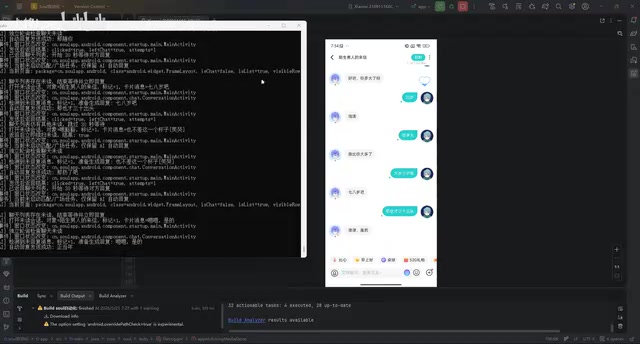
The developer candidly admitted that while his programming skills are strong, emotional intelligence is his weakness. That's why he built this automated reply system to compensate for social communication gaps. This is a common predicament among technical professionals — the asymmetry between technical ability and social skills — and AI chatbots can perfectly bridge this gap.
It's worth noting that "high-EQ replies" has a specific technical meaning. Affective Computing is a concept proposed by Rosalind Picard at MIT Media Lab in 1997, aimed at enabling computers to recognize, understand, and simulate human emotions. In modern AI chat systems, high-EQ replies fundamentally rely on large language models (LLMs) for deep semantic understanding of natural language, combined with sentiment polarity analysis (determining whether a conversation is positive, negative, or neutral), contextual reasoning, and social pragmatic rules to generate contextually appropriate responses. Compared to early rule-based chatbots, contemporary LLM-driven systems can capture implied meanings, humorous tones, and even latent emotional needs — this is precisely why their "EQ" performance far exceeds template-based replies.
Core Technical Implementation: Logic Judgment and Automation Pipeline
From the demo, this Soul auto-reply system encompasses several core technical components:
Message Listening and Trigger Mechanism
The system continuously monitors message activity on the Soul platform. When a new message is detected, it automatically triggers the AI reply workflow. The developer mentioned implementing "logic judgment," meaning the system doesn't simply reply to every message. Instead, it has filtering and decision-making mechanisms that can distinguish between different types of conversation scenarios.
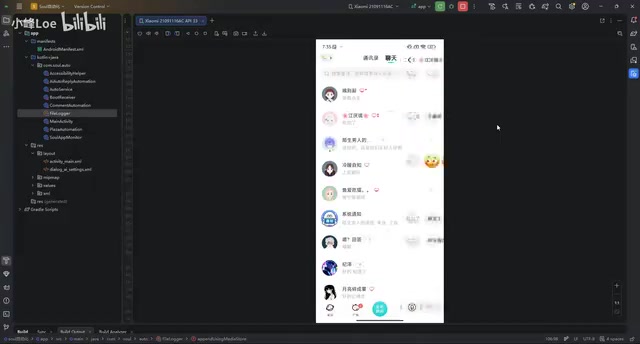
Simulating Human Wait-and-Response Patterns
The system doesn't respond instantly. Instead, it introduces deliberate delays to simulate the rhythm of a real person typing. This design makes conversations appear more natural and reduces the likelihood of being flagged as an automated bot by either the other party or the platform.
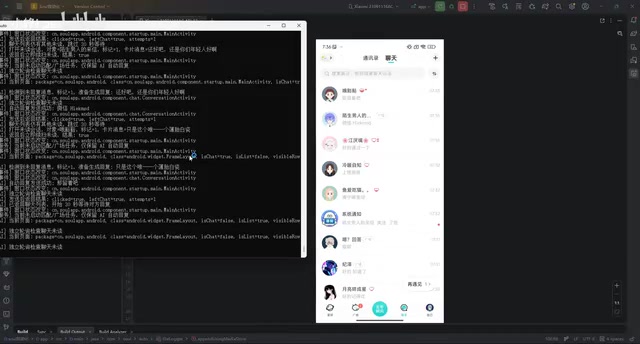
Behind this strategy lies an ongoing technical arms race. UI automation tools (such as Selenium, Appium, or accessibility API-based solutions) control application interfaces by simulating user operations. To evade platform bot detection, developers typically introduce behavioral entropy strategies — including random delays, simulated human typing speed curves, and randomized mouse trajectories — deliberately injecting irregularity into operations to make behavior patterns closer to those of real humans. Platforms fight back using behavioral fingerprinting (recording statistical features of operation timing), anomaly frequency detection (e.g., reply counts per time unit far exceeding normal levels), and device environment analysis, creating a classic cat-and-mouse game.
UI Automation Operations
The developer also demonstrated auto-scrolling, auto-maintaining page bottom position, and other UI automation features, ensuring the system can continuously fetch the latest messages and correctly interact with interface elements to achieve a complete automated chat loop.
Cross-Platform Extension: Beyond Just Soul
You might have missed this, but the developer mentioned that this AI chat system isn't limited to Soul — it can also be deployed on other social platforms. The demo showed the system handling messages on platforms including WeChat, demonstrating strong cross-platform adaptability. This means the same affective computing and auto-reply logic can run across different social apps with minimal adaptation.
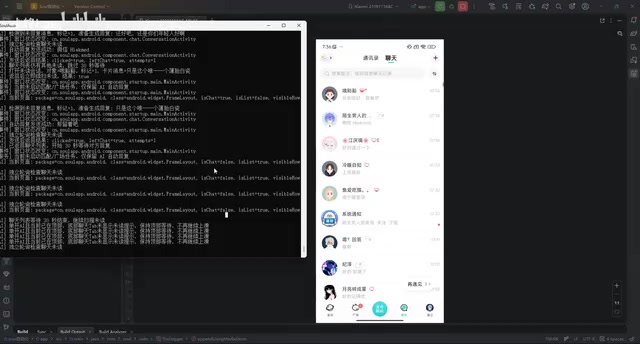
The main technical challenge for cross-platform adaptation lies in the significant differences in how each platform's messages are accessed: PC-based web apps can use DOM manipulation or network request interception; mobile apps typically require accessibility services or ADB debugging interfaces; and apps with strong security protections like WeChat perform additional environment detection against automation. Therefore, achieving stable cross-platform operation requires developing separate adaptation layers for each platform — the technical complexity is not to be underestimated.
Technical Value and Ethical Controversy
Technical Innovation Value
These AI-powered social automation tools showcase several noteworthy technical directions:
- Affective computing and semantic understanding: AI can comprehend conversational context and generate high-EQ replies, rather than mechanical template-based answers
- Automation workflow orchestration: Delegating repetitive social interactions to AI, freeing up user time
- Personalized style customization: Adjusting reply style and communication strategy based on user preferences
Ethical Issues That Cannot Be Ignored
However, such automated chat tools also present clear ethical controversies:
- Deception: The other party doesn't know they're talking to an AI, which violates the fundamental principle of informed consent
- Platform rule violations: Most social platforms, including Soul, explicitly prohibit the use of automation tools
- Questioning social authenticity: When AI substitutes for humans in social interaction, is the foundation of the resulting relationship still meaningful?
Regarding the first point, the Informed Consent principle is gaining increasing legal recognition in the digital interaction domain. The EU's AI Act explicitly requires that users interacting with AI systems must be notified they are communicating with AI, with severe penalties for violations. When AI completely impersonates a real person for social purposes, it not only violates platform terms of service but may also trigger provisions related to deceptive practices under consumer protection laws in multiple countries, constituting potential legal risk. Even in regions where regulation remains incomplete, such tools face fundamental moral challenges: the establishment of social relationships presupposes genuine intent from both parties, and the authenticity foundation of emotional interactions "outsourced" to AI is undermined from the very beginning.
Conclusion
This Soul platform AI auto-chatbot project genuinely demonstrates the developer's solid capabilities in automation and AI integration from a technical perspective. The design approach incorporating affective computing and human behavior simulation offers valuable reference points. However, platform rules and ethical boundaries must be carefully considered in practical applications. AI-assisted socializing is a direction worth exploring, but the line between "substituting" and "assisting" needs to be clearly drawn — tools should help people socialize better, not completely replace genuine human interaction.
Key Takeaways
- A developer built an AI auto-reply system for the Soul platform that generates high-EQ responses without manual intervention
- The system includes message listening, logic judgment, and human-like timing simulation to reduce bot detection risk
- The tool has cross-platform extension capabilities and can be deployed on WeChat and other social platforms
- AI substituting for real humans in social contexts raises ethical concerns around deception and platform rule violations
Related articles
 Product Reviews
The Programmer's Desk Setup Guide: Building a Workspace That Feels Like Home
Discover how programmers build productive, comfortable workspaces. From multi-monitor setups to ergonomic design, explore the desk philosophy that drives focus and flow.
 Product Reviews
Qoder vs Cursor Real-World Comparison: Which $20/Month AI IDE Is Better?
Hands-on comparison of Qoder vs Cursor AI IDEs: Agent autonomy, human interaction count, and architecture decisions. Qoder needed only 2 interactions vs Cursor's 8.
 Product Reviews
Cursor Cloud Agent Demo: Eliminating Bottlenecks Across the Entire Software Development Lifecycle
Deep analysis of Cursor's Cloud Agent demo showing how cloud VMs, automated test artifacts, and a full-chain control plane systematically eliminate human bottlenecks across the software development lifecycle.