Building an Online Game Solo with AI: 877 Users, 12 Daily Actives — What's Still Missing?

An indie dev built a multiplayer web ARPG with AI in one month — here's what the numbers really reveal.
Using Claude, ChatGPT, Gemini, and pixel art tools, one developer built a playable multiplayer ARPG in a month for a few hundred dollars. The result: 877 registered users and 12 daily actives. This real-world case reveals both the stunning productivity gains of AI-assisted "Vibe Coding" and the stubborn gap between shipping a game and building a sustainable business.
A question is becoming increasingly real for every content creator and independent developer: when AI can already help an ordinary person build a reasonably polished online game at low cost, what's still standing between a "solo company" and actually making money? Bilibili creator Neko Free shared a real-world case from a friend — in one month, using an AI team, they built a multiplayer online web game called Origins with real-time co-op and a player trading system. This isn't just another "can AI make games" demo. It's a living experiment that reveals both the productivity ceiling and the monetization gap of the AI solo developer.
A One-Person "AI Game Studio"
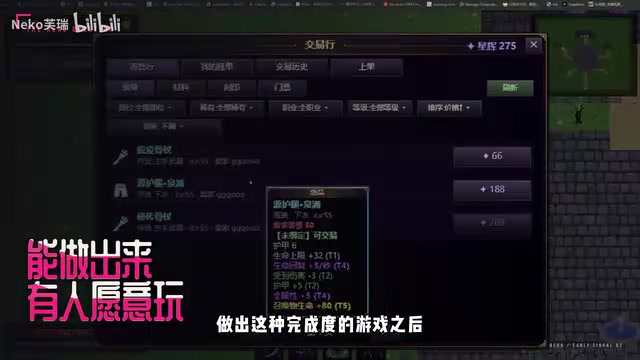
Origins is an ARPG (Action Role-Playing Game) with pixel art visuals, playable directly in a browser or on mobile, even with gamepad support. The design DNA is clearly drawn from classic loot-driven games like Path of Exile and Diablo: choose a class, grind maps, collect gear, build skill loadouts — plus player trading, group boss fights, and even a gacha-style cosmetics system designed to be dangerously addictive.
The core loop of this "ARPG loot grind" genre is almost diabolically elegant: players fight to earn randomized gear, randomness creates anticipation, better gear motivates harder challenges, forming a near-infinite motivation engine. This aligns closely with the psychology of "variable reward schedules" — the same mechanism that makes slot machines addictive, because the unpredictability of rewards is the hook. The cosmetics gacha system extends this mechanic beyond combat into monetization. For indie developers, replicating this proven design framework has a natural advantage: players already understand it and the learning curve is low. The downside is equally obvious — players will inevitably compare your game to titles like Diablo 4, which had hundreds of millions of dollars behind them.
Based on Neko Free's hands-on experience, the game "actually feels like a real game" rather than a barely-functional proof-of-concept. That's precisely what makes this case worth paying attention to — it crosses the threshold from "it runs" to the edge of "it's fun."
How the AI Team Was Divided
This developer, who can't draw, gave each AI on his team a defined role: Claude handled development, ChatGPT handled deployment and operations, Gemini handled copywriting, and tools like Pixelab generated pixel art assets. He positioned himself as the producer — setting requirements, testing, reviewing, and making final calls.
This division of labor reflects real capability differences and emerging specializations among today's leading large language models. Claude (by Anthropic) excels at long-form code generation and complex logical reasoning, particularly at maintaining code consistency across long contexts — making it well-suited for core development work. ChatGPT (OpenAI) leverages its more mature function calling and integrations with cloud services, making it more natural for DevOps and operations automation. Gemini (Google) has strengths in multimodal understanding and copywriting. Pixelab and similar pixel art generation tools are vertical AI applications that outperform general image generation models (like Midjourney or DALL-E) in style consistency and pixel grid precision — practical requirements for game assets. This "general-purpose model + vertical tool" combination strategy is becoming the mainstream methodology for AI-assisted development.
This model of "human as producer, AI as staff" essentially compresses the roles of a traditional game studio into a single person. What's interesting is that the human retains exactly the parts hardest to replace: judgment and decision-making authority.
Remarkable Efficiency and Hidden Costs
In terms of development speed, this project demonstrated a pace that would have been unimaginable not long ago. The earliest single-player version — where you could explore maps, fight enemies, and pick up loot — came together in just a few hours. What actually took time was turning it into an online game with registration, multiplayer, and trading: account systems, a marketplace, anti-cheat systems, and over 2,600 art assets.
In one month, the team shipped 3 major versions and over 100 minor updates. Cash outlay was a few hundred dollars, mostly on AI subscriptions and asset generation. On development cost alone, this represents a massive leap in efficiency. This approach — driving code and operations tasks through natural language — is what the industry calls "Vibe Coding," a term coined by OpenAI co-founder Andrej Karpathy in early 2025. It describes a new programming paradigm: developers no longer write code line by line, but describe intent in natural language and let AI generate and iterate on the code, with humans maintaining high-level direction and reviewing outcomes. This represents a fundamental shift from traditional software engineering — from "tell the computer how" to "tell the AI what you want."

The Hidden Bill Nobody Talks About
But "a few hundred dollars" is a deeply misleading number. It doesn't account for the developer's own time, nor the "blowback" costs AI can create. The most severe incident: the AI managing operations directly overwrote the live production database. Every player character was gone. The game effectively deleted itself. Only afterward did the team implement scheduled backups and recovery drills. Server login failures and cheaters followed shortly after.

This incident exposes a seriously underestimated technical risk: AI agents executing operations commands lack an instinctive respect for the irreversibility of destructive actions. A human DevOps engineer operating on a production database hesitates and double-checks because of professional training and psychological pressure. Current AI agents, when executing tool calls, often lack this "pause before action" safety instinct. The industry has begun discussing the need for "Human-in-the-Loop" mechanisms for AI agents — requiring explicit human approval for high-risk operations like DROP TABLE or database migrations. This is also the core criticism leveled at Vibe Coding by skeptics: developers who don't fully understand the underlying logic are poorly equipped to handle systemic failures.
This detail carries an important warning: AI can write your code, but when the database disappears, a human still has to look players in the eye and say "sorry, the character you spent hours on yesterday is gone." AI can shoulder production. It cannot shoulder responsibility or trust.
Content Burnout and the Challenge of Sustained Operations
Games get built fast — but players may consume content even faster than expected. Just five days after a new version launched, someone had already reached the top floor, level 36. The team is now preparing a new season called "Void Trials," introducing a dynamic practice gem system, procedurally generated maps, and balance adjustments to cosmetics and classes.
The introduction of procedural map generation is the classic solution to the perennial problem of content burnout. Procedural generation uses algorithms rather than manual design to create game content — the success of indie titles like The Binding of Isaac, Hades, and Minecraft all depends on this technique's near-infinite content replayability. For a solo developer, the strategic value of procedural generation far exceeds what it means to a large studio — it replaces labor with algorithmic leverage, driving the marginal cost of new content toward zero. However, procedural generation has its ceiling: algorithmically generated content often lacks the narrative tension and emotional memorability of handcrafted design. Players can develop a sense of "same thing, different skin" fatigue. Finding the right balance between procedural efficiency and handcrafted warmth is the central challenge of long-term operations for this type of game.
This shows that an "AI solo company" is already capable of continuous updates at a pace comparable to a small team. But a more fundamental question surfaces: whether players find it fun, when they start to get bored, and why they'd ever come back — these answers still can't be auto-generated by AI. The essence of live operations is continuous insight into human nature, and that's precisely where current AI falls short.
The Most Honest Report Card: 877 Users, 12 Daily Actives
Here are the most honest results: the game acquired 877 registered users in one month, mainly from the developer's existing Twitter (X) followers, with zero paid acquisition. Currently nearing season end, the day before the new season had 12 daily active users.
These numbers don't prove the game is a failure, but they clearly reveal a reality: getting someone to click in and getting them to stick around long-term are entirely different problems.

The Break-Even Line at 30 Paying Players
On monetization, the developer plans to use monthly passes, season battle passes, and cosmetics — and is committed to "not selling combat stats directly." This reflects a principled restraint and respect for the game experience.
This monetization strategy has solid industry backing. Monthly passes and season battle passes — broadly called "Battle Pass" or "subscription" models, popularized by Fortnite — are built on the core logic of decoupling player spending from gameplay fairness. Paying players get cosmetics, progression tracks, or exclusive content, not direct combat advantages. This matters especially for indie games: the indie player community has a strong aversion to Pay-to-Win mechanics, and once the community develops a reputation that "this game sells power," that narrative damage is almost irreversible. The monthly pass model also generates predictable Monthly Recurring Revenue (MRR), providing a more stable financial basis for estimating that "30 paying players" break-even point.
But as the video repeatedly emphasizes: covering cash expenses is not the same as sustaining a developer's livelihood. The hours spent daily on development, customer support, and live operations have never been counted as a cost. The break-even line looks low, but it's just the tip of the iceberg.
The Real Lesson of Vibe Coding
After playing the game, Neko Free offered a thought-provoking conclusion: the most interesting thing about this project isn't that "a game made by AI is actually playable." It's that it proves the production cost of indie games is falling at breakneck speed.
When the barrier to production drops dramatically, the focal point of competition shifts — you have to make players choose you over the more polished classics; make them stay; and ultimately make them willing to pay. Each of these three hurdles is far harder than "can I build it at all."
So this case yields two very different takeaways: if your goal is to finally complete the game you always wanted to make but never knew how to start, this story is genuinely inspiring. But if you're hoping to monetize an AI game quickly, simply solving "can I build this" is likely nowhere near enough.
Apparently, this developer intends to keep the servers running for at least a year, continuing to update as long as anyone is playing. Whether this "actually feels like a real game" AI-built title can ultimately become a viable business is worth watching closely for everyone tracking the AI startup space. It may be the most compact preview yet of what the grander experiment of "AI solo companies" really looks like.
Related articles

Alibaba Launches Happy Shrimp: AI-Powered One-Click Complete Song Generation
Alibaba launches Happy Shrimp, an AI music generation tool that creates complete songs with lyrics, melody, arrangement, and vocals from natural language descriptions. In-depth analysis of its core features, differentiation from competitors like Suno, and industry impact.
GPT Sol Ultra vs Grok 4.6: Real-World Task Completion Benchmark in Reasoning Mode
Developer benchmark reveals GPT Sol Ultra completes draw.io scientific diagrams in one iteration while Grok 4.6 fails to converge despite maximum reasoning mode, exposing that reasoning depth ≠ task delivery capability.
OpenAI Authorship Dispute: The Battle Over Academic Boundaries in the AI Era
OpenAI disputes authorship with mathematician Tristan Buckmaster over Navier-Stokes research, raising ethical questions about AI involvement in science.