Building LinkedIn Automation with n8n: AI Content Generation and Auto-Publishing

n8n connects AI capabilities such as Gemini to automate LinkedIn content from research to publishing.
This article analyzes the LinkedIn automation workflow demonstrated by the YouTube channel MySideAgent. Built on n8n orchestration, it covers topic research, AI copy and image generation, and automatic publishing to LinkedIn via API. A real run verifies that posts with images, copy, and hashtags can be published without human intervention. The article highlights n8n's open-source and self-hosted advantages, Gemini's role in content generation, and the LinkedIn API's publishing and traceability. It is suitable for personal brands and content teams seeking efficiency, while also noting practical deployment concerns such as error handling, content review, and platform compliance.
In social media operations, consistently producing high-quality content and publishing it on schedule is time-consuming work. If everything from topic research and copywriting to image generation and final publishing could be automated, efficiency would improve dramatically. Based on the MySideAgent LinkedIn automation workflow demonstrated on a YouTube channel, this article breaks down how to use n8n to connect AI capabilities and achieve end-to-end automation of LinkedIn content.
The Full Workflow: A Closed Loop from Research to Publishing
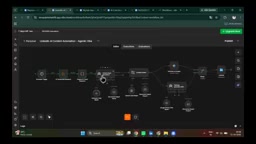
According to the demonstration on the YouTube channel MySideAgent, the entire automation process covers the complete chain of content production: scraping topic material, invoking AI to generate copy and infographics, and then auto-publishing to LinkedIn via API. The video shows the complete workflow orchestration interface:
As seen in the screenshot, the workflow consists of multiple nodes connected in sequence, each handling a specific task. This modular design makes the process clear and maintainable, and also makes it easy to later replace or extend individual steps. For creators hoping to build a similar system, understanding how data flows between nodes is key.
You may not have noticed that this workflow is not simply content reposting—it contains the complete logic of "research—generate—publish." This means it can automatically produce original content based on data from specific sources, rather than mechanically repeating existing information.
Real-World Verification: A Complete Auto-Publish Run
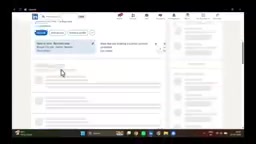
The demonstrator verifies the workflow's reliability through an actual run. First, they check the LinkedIn account's recent publishing history and confirm that the last post was published 12 minutes ago:
Then they return to the n8n interface and click "Execute Workflow," and the workflow begins running. During execution, the demonstrator switches to Gemini to check the AI-generated image and confirm that the image content matches the account's positioning:
Finally, the workflow finishes executing:
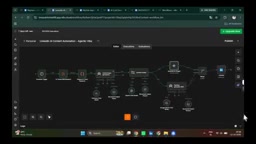
Returning to LinkedIn, the new post has already been published automatically, including the image, body copy, hashtags, and a link to the data source. The entire process, from trigger to publish completion, requires no manual intervention.
LinkedIn API publishing mechanism: LinkedIn provides developers with a RESTful API for creating and sharing posts programmatically. Publishing a post with an image typically requires two steps: first, upload the image binary data through the "register upload" endpoint and obtain an image asset URN (Uniform Resource Name); then call the "create post" endpoint, combining the author identity, text content, hashtags, and image asset URN into the request body. The API uses OAuth 2.0 for authorization, and access tokens have expiration times and permission scopes (such as w_member_social), requiring regular refresh. In addition, LinkedIn imposes rate limits and content policies on automated publishing, and frequent or repetitive machine publishing may trigger risk controls. Therefore, in n8n, token management, error retries, and publishing interval control usually need to be handled as separate nodes or sub-workflows.
Technical Highlights
n8n as the orchestration hub: n8n's open-source nature and rich node ecosystem make it an ideal choice for connecting various AI services with social platform APIs. Compared with commercial tools like Zapier, n8n supports self-hosting, making it friendlier for scenarios sensitive to data privacy.
Gemini handles content generation: In the workflow, Google Gemini is called to complete the generation of copy and images. The video shows that the AI can produce content matching a preset domain direction, which indicates that prompt engineering plays an important role here.
Auto-publishing and traceability: The publishing step is completed through the LinkedIn API, supporting image upload and the submission of copy and hashtags together. The practice of attaching a source link in the post both increases the credibility of the content and provides readers with an entry point for further reading.
How n8n works: n8n is an open-source, node-based workflow automation tool whose core concepts are "Node" and "Connection." Each node represents an independent operation, such as an HTTP request, data transformation, conditional check, or AI service call, and connections between nodes define the direction of data flow. Data is passed between nodes as JSON objects, and the output of an upstream node becomes the input of a downstream node. n8n supports trigger nodes (such as schedules and Webhooks) to start workflows, and also supports control structures such as branching, loops, and error catching. Because it uses a self-hosted model, users can fully control where data is stored and who can access it, and can freely install community nodes, making it more flexible than pure SaaS solutions in scenarios that require access to private APIs or handling sensitive data.
Gemini's multimodal generation capabilities: Google Gemini is a series of natively multimodal large models capable of processing inputs such as text, images, audio, and video simultaneously, and generating text or image outputs as needed. In this workflow, Gemini handles two types of tasks: first, generating the LinkedIn post body copy, hashtags, and source notes based on topic material; second, generating images that match the theme of the copy. It is worth noting that image generation usually relies on dedicated image generation models or Gemini's image output capabilities, and prompt design directly determines the quality of the output and consistency of style. Therefore, workflows often need separate structured prompt templates for copy and images, fixing the domain direction, tone requirements, and formatting standards in place to ensure that results remain stable and controllable across multiple runs.
Use Cases and Limitations
This solution is suitable for personal brand operators, content marketing teams, and professionals who need to stay active on LinkedIn regularly. By automating repetitive work, creators can focus their energy on strategy development and community interaction.
It should be noted that the video demonstration only shows one successful run and does not address issues such as error handling, content quality review, or platform policy compliance. In actual deployment, it is advisable to add a manual review step to avoid the risks brought by inappropriate AI-generated content. In addition, LinkedIn's policy restrictions on automated publishing are also worth confirming in advance.
Conclusion
MySideAgent's demonstration proves that, with tools such as n8n and Gemini, building a LinkedIn pipeline from content generation to auto-publishing is technically feasible. The core value of this solution lies in integrating fragmented AI capabilities into a coherent automated process, offering a new efficiency paradigm for social media operations. For creators with a technical background, it may be worth using this as a reference to build an automation system suited to their own needs.
One-line Summary
n8n connects AI capabilities such as Gemini to achieve end-to-end automation of LinkedIn content from research to publishing.
Paragraph Summary
This article analyzes the LinkedIn automation workflow demonstrated by the YouTube channel MySideAgent. The process is orchestrated with n8n and covers the full chain of topic research, AI copy and image generation, and automatic publishing to LinkedIn via API. The demonstrator verifies through one actual run that the workflow can publish a post with an image, copy, and hashtags without human intervention. The article points out that n8n's open-source and self-hosted characteristics make it suitable for connecting multiple AI services, with Gemini handling content generation and the LinkedIn API completing publishing and traceability. This solution is suitable for personal brands and content teams looking to improve operational efficiency, but the author also reminds readers to pay attention to practical deployment issues such as error handling, content review, and platform compliance.
Related articles

How Big Can Stars Really Get? The Physical Limits of the Largest Stars
Red supergiants are the largest stars by volume, with radii up to 2,000 times the Sun, engulfing the inner solar system. But there is no precise upper limit on stellar size—models predict up to 15,000 solar radii. The most massive blue stars are far smaller than red supergiants—biggest and heaviest are two different things.

Apple HomeView Smart Display Full Feature Breakdown: Wall-Mount or Desktop, $299
Apple launches HomeView, a $299 smart display with wall-mount and desktop options, 12MP camera for facial recognition, smart home control, music playback, and recipe step-by-step cooking. Full breakdown of watch faces, apps, privacy, and cooking integration.

Where Did the Promised New Studio Go? Craft Computing Answers After Five Years
Craft Computing's host responds to viewer questions: the new studio promised five years ago was shelved as construction costs soared from $30,000 to $75,000, and was replaced by a 168-square-foot garage conversion.