Buridan's Ass: How One Word Keeps You Stuck in Place
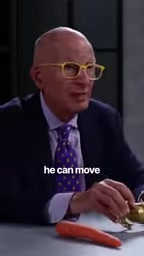
The word "but" welds mutually exclusive desires together, trapping you in Buridan's Ass-style paralysis.
Using the "Buridan's Ass" thought experiment as a springboard, this article reveals how the word "but" connects two mutually exclusive desires and creates complete paralysis. More dangerously, this "but" usually hides in the subconscious. The fix: surface the hidden "but," then replace it with "and" — turning costs like rejection and exhaustion from veto conditions into accepted parts of the plan.
A Donkey's Dilemma
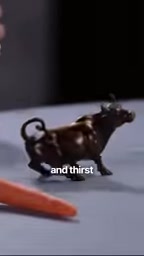
Hundreds of years ago, a philosophical thought experiment told the story of a donkey. This donkey was both hungry and thirsty. It had complete freedom of movement — and at that moment, it was standing exactly halfway between a pile of carrots and a bucket of water.
It sounds like it had plenty of options. In reality, it was completely stuck.
Every time it moved toward the water, it meant moving away from the carrots — unacceptable, because it was hungry. Every time it moved toward the carrots, it meant moving away from the water — also unacceptable, because it was thirsty. In this thought experiment, the donkey ultimately dies of hunger and thirst, paralyzed by indecision.
This experiment is commonly known as "Buridan's Ass." It isn't a absurd story about a dim-witted animal — it's exposing an extremely common psychological trap: when two competing desires contradict each other and neither can be abandoned, a person falls into paralysis and accomplishes nothing.
The name "Buridan's Ass" comes from 14th-century French philosopher Jean Buridan, who raised similar scenarios while discussing free will and rational decision-making — though no clear record of him explicitly documenting this example survives, and the paradox was largely attributed to him by later thinkers. The philosophical core of this thought experiment is the problem of "freedom of the will": if two options are perfectly equal in all objective attributes, what grounds does a rational agent have for choosing one over the other? This connects directly to Aristotle's discussion of "inability to act when no reason exists." Later philosophers, including Spinoza, used this paradox to critique pure rational decision theory — real humans don't rely solely on rational deliberation; desire, intuition, and randomness all drive behavior. This article borrows that image not to explore the philosophical dilemma of "equivalent options," but to extend it to a more common psychological scenario: two desires that are mutually exclusive, where any choice means permanently forgoing the other — and that is the structure that truly leaves people unable to move.
The Word That Traps Us: "But"
The video offers a precise diagnosis — all of us are repeating this donkey's fate, and the entire thing is accomplished by one simple word: but.
"I want this, but I also want that."
It sounds harmless, but that "but" is the invisible rope that pins us in place. It binds two desires that point in opposite directions, making any real movement a betrayal of the other.
The video offers two very typical examples:
- "I want to live a creative life, but I never want to be rejected."
- "I want to run a marathon, but I don't want to feel tired."
Broken apart, the absurdity of these statements becomes obvious. Creative work inevitably comes with the risk of being judged and rejected. You cannot run a marathon without experiencing exhaustion. When you weld two mutually exclusive things together with a "but," you're effectively setting yourself a logically impossible goal — and then blaming yourself for not moving.
Why We Can't See This Trap
The most dangerous part is this: we hide the "but."
The video emphasizes that we don't say this "but" out loud. It hides in our subconscious, buried in the stories we tell ourselves.
So on the surface, the problem seems to be about ability, timing, or luck — "I'm not ready yet," "The timing isn't right," "I'm not talented enough." But the real crux is often that unspoken contradictory condition: you want the result, yet refuse to pay the inevitable price that result demands.
Saying the "but" out loud is the first step to breaking free. When you hear yourself say "I want to create, but I don't want to be rejected," you have the chance to ask: does this premise even hold? Is rejection truly something I can't bear? Or can I move forward while carrying that risk?
The Breakthrough: From "But" to "And"
While the video stops at the diagnosis, following the logic forward makes the direction of the solution quite clear.
The donkey's tragedy isn't that it had no choice — it's that it refused to accept what any movement would require giving up. There are two ways out for a person:
One: Acknowledge the cost and address the most urgent need first. A real donkey wouldn't starve to death — it would eat first or drink first, because it accepts "temporarily moving away from the other thing." The essence of making a choice is accepting that you give something up.
Two: Replace "but" with "and." "I want to create, and I will be rejected" — when exhaustion, rejection, and uncertainty are no longer veto conditions that stop you from acting, but instead become parts of the plan, the contradiction dissolves. You're no longer demanding a path that doesn't exist, one with no cost.
What traps us has never been a lack of freedom — it's the unwillingness to pay the natural price for what we want. Once you see that clearly, the donkey can finally move.
The method of "replacing but with and" has corresponding practical foundations in both Cognitive Behavioral Therapy (CBT) and Acceptance and Commitment Therapy (ACT). ACT in particular emphasizes the technique of "defusion" — transforming internally limiting beliefs from "facts" into "thoughts that can be observed," rather than suppressing them directly. When you say "I want to create, and I will be rejected," you're not pretending rejection doesn't exist — you're downgrading it from a veto condition to a neutral expectation. This is what psychologists call "anticipatory acceptance." This subtle linguistic shift works because it changes the internal structure of the goal: the original goal contained an impossible hidden premise; the reframed version allows action and cost to coexist within the same framework, dramatically reducing the cognitive load of the decision and lowering the threshold for taking action.
Related articles

Claude Code Refuses Native AGENTS.md Support: A Year-Long Developer Controversy
Claude Code refuses native AGENTS.md support, a 6,644-upvote GitHub request was accidentally auto-closed, and Shopify's CEO threatened to ban the tool internally. Here's the full story.

Should Claude Code Read AGENTS.md by Default? A Debate Over Who Owns the Complexity
Shopify mulls banning Claude Code over AGENTS.md default-read behavior. This article unpacks the debate on rule conflicts, reliability promises, and who owns complexity in AI coding tools.

Zhipu ZCode Accused of Uploading Workspace Files — Official Apology Issued, Open-Source Plans Announced
Zhipu ZCode accused of uploading workspace files under OAuth login. Official apology issued, open-source plans announced. Claude Code adds AGENTS.md support, MiniMax open-sources terminal coding Agent.