Burning Through 1 Billion Tokens! A Complete Breakdown of the Open-Source IndexTTS 2.0 Voice Workbench

IndexTTS 2.0's longform script workbench turns script parsing, character management, multi-track editing, and DAW export into one open-source pipeline.
Bilibili creator "登录仓" built a longform script workbench on the IndexTTS 2.0 super-optimized all-in-one package for engineering-grade voice production. It combines script import and character dialogue organization, reference audio batch processing and voice assignment, multi-track editing with emotional control, and project export to DAWs like Reaper into one pipeline, solving the pain of splitting scripts by character and assembling post-production. Installation uses the package directory plus Release scripts, with Longform, Timeline, and Guide entry points. The demo used 1 billion tokens, signaling high compute costs, and systematic evaluation of stability and timbre consistency is still missing.
From ASMR to Engineering-Grade Production: The IndexTTS 2.0 Longform Script Workbench Is Here
If you listen to ASMR often, you may have noticed that open-source tools are increasingly behind some high-quality longform voice works. The longform script workbench built by Bilibili creator "登录仓" using the heavily optimized IndexTTS 2.0 all-in-one package is exactly such an open-source project aimed at engineering-grade voice production. According to the demo, the workbench consumed as many as 1 billion tokens during generation, which speaks to the compute investment required for handling longform, multi-character scripts.
This workbench is not a simple TTS frontend. It strings script parsing, character management, audio editing, multi-track mixing, and project export into a complete pipeline. Below we break down its practical value across three dimensions: features, usage, and ecosystem.
IndexTTS 2.0 is a text-to-speech (TTS) model open-sourced on Bilibili, the second-generation version in the IndexTTS series. Compared with common TTS systems, IndexTTS 2.0 emphasizes zero-shot voice cloning and fine-grained emotional control: users only need to provide a short reference audio clip, and the model can imitate that timbre to read any text, with emotional style adjustable through parameters or reference audio. Its "super-optimized all-in-one package" usually refers to a ready-to-use archive in which the community or a creator has bundled the model, dependency environment, and inference scripts, so users can run it locally after extraction without manually configuring a Python environment. Such packages lower the deployment barrier for open-source models and are also a prerequisite for this workbench's installation process.
Core Features: A Full Chain from Script to Finished Product
Longform Script Import and Character Dialogue Organization
The workbench supports directly importing longform script files, automatically parsing the text and categorizing dialogue by character. Users can select the text type and merge character lines and perform other processing; the processed text is previewed grouped by character, with each character's dialogue organized separately and editable again in the interface. This design addresses the most time-consuming step in longform content production—splitting a script by character—turning manual organization into a batch-operable workflow.
Reference Audio Processing and Voice Assignment
After uploading reference audio, the workbench runs a processing pipeline to extract clean vocals, trim leading and trailing silence, and supports clip cropping. It can also extract vocal audio directly from video and turn it into a voice with one click. Then reference audio can be batch-assigned by character, with one group per character and unified group properties for batch operations.
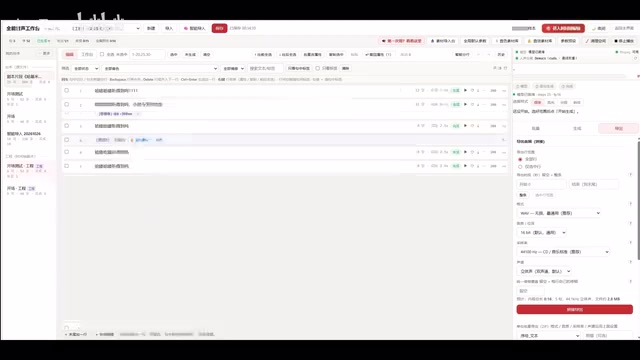
Multi-Track Editing and Emotional Control
Generated audio enters a multi-track editing interface, which the creator says references CapCut's editing features. Besides modifying audio properties, you can use IndexTTS 2.0's emotional control capabilities to adjust emotion and regenerate. The opening spatial audio feature is also mentioned as a highlight. After editing, click Export Mix in the upper right corner to start rendering, and the finished audio is automatically downloaded when done.
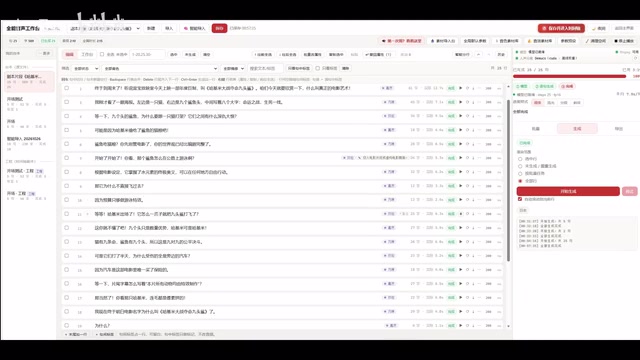
Spatial audio refers to techniques such as panning, reverb, and HRTF that give listeners the immersive sense that sound comes from different directions or spaces. In ASMR and short-drama production, opening spatial audio is often used to create ambient atmosphere or a sense of character position. The workbench's opening spatial audio feature may be implemented through multi-channel rendering or stereo widening, so that generated speech is no longer confined to a single point source but blends into the scene. However, the source article does not elaborate on the specific implementation or effects of this feature; it is advisable to verify it against export settings in actual use.
Project File Export: Connecting to Professional DAWs
The workbench leans toward engineering-grade projects and supports exporting project files that can be imported directly into the professional digital audio workstation Reaper for further editing, and are also easy to share with others for reuse. This means the open-source TTS workflow no longer stops at "generating a clip of audio" but can integrate into professional post-production pipelines.
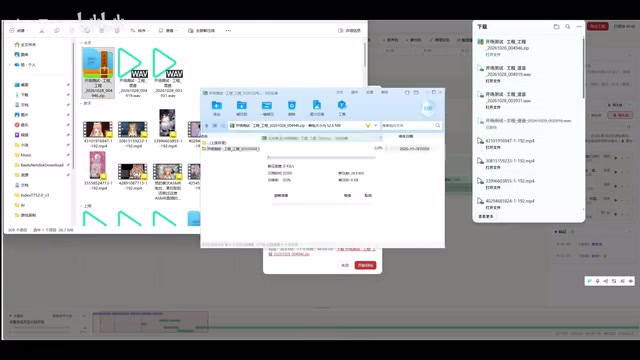
Reaper is a lightweight yet powerful digital audio workstation (DAW) widely used in music production, podcast post-production, and video dubbing. It supports multi-track editing, lossless editing, VST plugins, and a flexible project file format (.rpp). Project files exported by the workbench can be opened directly in Reaper, preserving each character's audio tracks, timing, and basic properties, making it convenient for creators to continue with professional processing such as noise reduction, equalization, compression, and reverb. Compared with exporting a mixed final product directly, project file export means TTS-generated results can seamlessly enter professional post-production pipelines and makes it easier to exchange projects during team collaboration.
Installation and Getting Started: Lightweight Deployment in the All-in-One Package Directory
The installation process revolves around the IndexTTS 2.0 all-in-one package. Open the script workbench's GitHub repository, go to the Releases page to download the archive, place the archive in the all-in-one package directory, open it with extraction software and enter the folder, then drag the files inside directly into the all-in-one package directory. The dragged files include an installation script; double-click to run it, close the window when prompted to finish, then double-click the Start launch script to run the project.
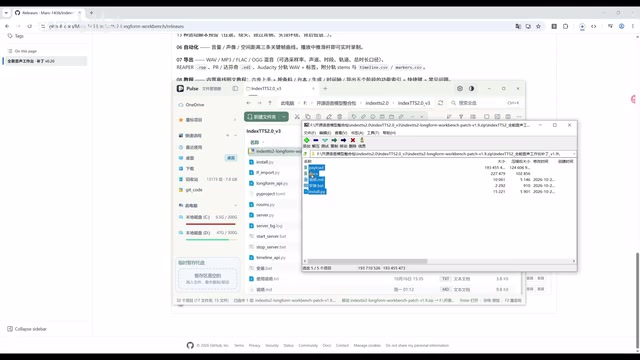
After opening the project page, a "Longform Script" button appears in the top navigation bar; click it to enter the corresponding page (path: Longform) and access the workbench. There is also a timeline editing button in the upper right corner (path: Timeline), plus a usage guide (path: Guide) containing detailed tutorials and FAQs.
The Significance and Limitations of the Open-Source Ecosystem
The value of this workbench lies in pushing IndexTTS 2.0's capabilities from "single-sentence synthesis" toward "longform multi-character production." Script import, character grouping, reference audio batch processing, multi-track editing, and DAW project export—steps that previously required stitching together multiple tools—are now integrated into a single open-source interface. For creators making audio content, ASMR, and short-drama dubbing, the barrier to entry is noticeably lower.
Objectively speaking, the cases demonstrated in the source material lean toward entertaining short dramas, and the workbench's stability with extremely long scripts, consistency of multi-character timbres, and finesse of emotional control still lack systematic evaluation. The consumption of 1 billion tokens also indicates that compute costs are not low, and local deployment has certain hardware requirements. In addition, the installation process relies on the all-in-one package directory and script operations, so users unfamiliar with the command line still face a certain learning curve.
Who It's For
If you are already using the IndexTTS 2.0 all-in-one package and want to upgrade from piecing together scattered audio to a complete workflow with character management, multi-track mixing, and project export, this open-source workbench is worth trying. It is better suited to creators with some local deployment experience who pursue engineering-grade output, rather than casual users who just want to quickly generate single-sentence speech.
According to the creator, the account continues to share personal favorite software, and the project itself is open source; those interested can follow future updates.
One-line Summary
IndexTTS 2.0's longform script workbench integrates script parsing, character management, multi-track editing, and DAW project export into an open-source pipeline.
Paragraph Summary
Bilibili creator "登录仓" developed a longform script workbench for engineering-grade voice production based on the IndexTTS 2.0 super-optimized all-in-one package. The tool strings together script import and character dialogue organization, reference audio batch processing and voice assignment, multi-track editing and emotional control, and project file export to DAWs such as Reaper into a complete pipeline, solving the pain points of splitting scripts by character and post-production assembly in longform multi-character content production. Installation depends on the all-in-one package directory and is deployed via the Release archive and scripts, with entry paths including Longform, Timeline, and Guide. The demo case consumed 1 billion tokens, indicating that compute costs are not low, and systematic evaluation of stability with extremely long scripts and timbre consistency is still lacking.
Related articles

Anthropic IPO Explained: Fuel for the AI Boom or the Spark for a Bubble?
Anthropic files for an IPO under ticker ANT. Breaking down the prospectus: 80% of revenue from usage-based pricing, $72B of an $80.7B net loss being non-cash charges, 900% net revenue retention, and how past IPOs like SpaceX performed on day one and over three years — answering the AI bubble question.

Will AI Kill the Research Paper? Mathematicians Offer a New Answer
Mathematicians on the Lex Fridman podcast discuss whether AI will kill research papers—from journal review pressure to Lean formal verification, GitHub open source fatigue to Mathlib's crowdsourcing model, exploring the evolution of academic contributions and the future of mathematical knowledge verification.

Enterprise LLM Development: From RAG to Multi-Agent in Practice
A course breakdown of enterprise LLM application development: from prompt engineering and RAG to multi-agent engineering practice and FDE project delivery, helping developers understand why Agent technology is a key focus for enterprise deployment and learn systematically to avoid detours.