CadQuery vs. OpenSCAD: Which Is Better for AI Agentic CAD Work?
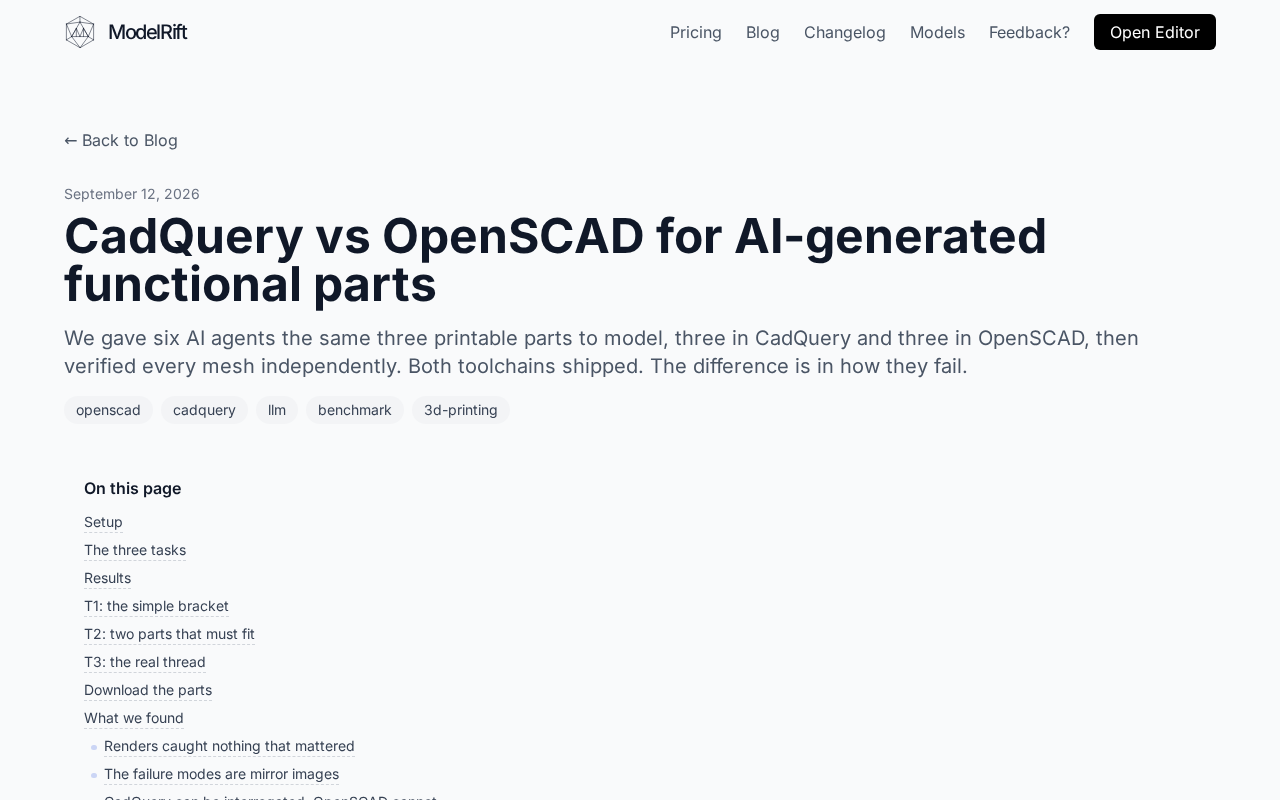
Comparing CadQuery and OpenSCAD for AI-driven CAD work, with Python ecosystem and error feedback as the key differentiators.
This article examines a Hacker News benchmark discussion comparing CadQuery and OpenSCAD for agentic CAD workflows. CadQuery's Python foundation, OpenCASCADE B-rep kernel, and structured error feedback give it clear advantages in AI training data coverage, self-correction, and complex geometry. OpenSCAD's concise CSG syntax and mature community make it better suited for simple, rapid prototyping. The article argues that code-driven CAD tools are a natural fit for LLMs, and that a generate–execute–correct feedback loop is the core mechanism enabling AI to handle modeling tasks — reflecting a broader trend of AI expanding into engineering design and physical manufacturing.
When AI Meets Parametric Modeling
As large language models continue to improve at code generation, a new application area is emerging: letting AI write code directly to generate 3D CAD models. Known as "agentic CAD" workflows, these approaches allow AI to automatically construct mechanical parts, structural components, and other 3D models from natural language descriptions. At the heart of this kind of task are two popular code-driven modeling tools — CadQuery and OpenSCAD.
A benchmark discussion on Hacker News (Benchmark: CadQuery vs. OpenSCAD for agentic CAD work) put these two tools head-to-head in the context of AI-assisted modeling, drawing significant community attention. The key question isn't which tool is more powerful in general — it's which one is easier for AI to "drive."
The Fundamental Difference Between Two Modeling Paradigms
OpenSCAD is a mature open-source scripted CAD tool with its own declarative language. Users define geometry by writing descriptive code and combine basic shapes through boolean operations (union, difference, intersection). Its syntax is relatively simple and intuitive, it has a rich community ecosystem, and it has long been a go-to choice for 3D printing enthusiasts.
CadQuery is a Python-based parametric modeling library built on the powerful OpenCASCADE geometry kernel. It uses a fluent, chainable API that aligns more closely with professional CAD software workflows, supporting workplanes, sketches, extrusions, fillets, and other operations that feel natural to engineers.
Key Considerations from an AI Perspective
For an AI agent, choosing between these tools involves weighing several dimensions:
- Language ecosystem: CadQuery is Python-based, and Python is one of the most heavily represented languages in LLM training data. This means AI models are typically far more fluent in Python syntax than in OpenSCAD's proprietary language, which likely translates to fewer errors.
- Error feedback: Agentic workflows typically rely on a "generate–execute–correct" loop for iteration. As a Python library, CadQuery produces more structured exception messages, making it easier for AI to understand and self-correct.
- Geometric expressiveness: CadQuery's B-rep (boundary representation) kernel has a clear advantage when handling complex surfaces, fillets, and precise engineering constraints. OpenSCAD's CSG (constructive solid geometry) approach can struggle in certain complex scenarios.
- Code conciseness: OpenSCAD often expresses simple shapes more briefly and directly, which can actually reduce the complexity of what AI needs to generate in straightforward cases.
Why Agentic CAD Deserves Attention
What looks like a niche tool comparison actually reflects a much larger trend: AI is expanding from pure text and image domains into engineering design and physical manufacturing. Getting AI to understand and generate manufacturable 3D models is a critical step toward "AI-assisted industrial design" and "automated hardware prototyping."
Code-driven CAD tools are a natural fit for large language models — the model's output is text-based code, not mouse clicks in a graphical interface. This makes tools like CadQuery and OpenSCAD natural entry points for AI into the CAD domain. Whichever tool offers lower AI error rates, better iterative feedback, and stronger geometric expressiveness is most likely to become the foundational infrastructure of the agentic CAD era.
How to Interpret This Kind of Benchmark
One important caveat: the conclusions of comparison tests like this are highly dependent on the specific evaluation methodology, task types, and models used. The original discussion garnered modest engagement on the community (8 upvotes, 11 comments), suggesting this remains an exploratory topic rather than settled science.
For developers looking to experiment with AI-assisted modeling, here are some reasonable guidelines:
- If your workflow is Python-centric and involves complex engineering geometry, CadQuery is likely the more natural choice.
- If you prioritize rapid prototyping, simple structures, and a mature community ecosystem, OpenSCAD remains a solid option.
- Regardless of which tool you choose, building a robust feedback loop — code execution, error capture, and automatic correction — is the real key to making AI effective at CAD work.
As LLM coding capabilities continue to advance, best practices in this space are still evolving rapidly. The CadQuery vs. OpenSCAD comparison is just one early waypoint on the broader journey of agentic CAD exploration.
Related articles
Altman: Taking OpenAI Public This Year Would Be 'Ill-Advised'
OpenAI CEO Sam Altman says going public this year would be 'ill-advised,' even as the company has confidentially filed IPO paperwork. Here's what it means for AI.
An Open Letter to Dario: If AI Safety Is Real, Open the Model Weights
Developer Jacob's open letter to Anthropic CEO Dario Amodei went viral on Hacker News, challenging the contradiction between AI safety rhetoric and closed-source models: if safety truly matters, why not open the weights?
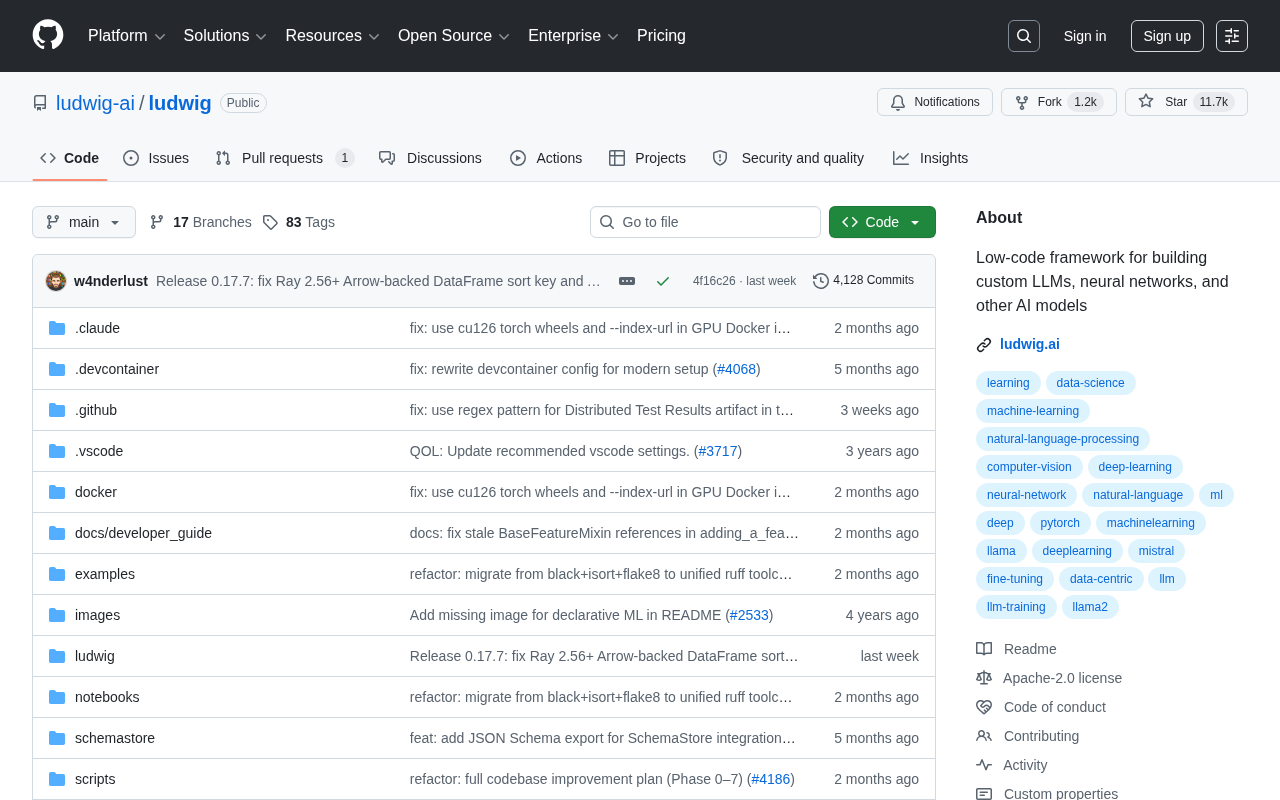
Ludwig: Building Custom LLMs and Neural Networks with Declarative Low-Code Configuration
Ludwig is an open-source low-code ML framework that builds custom LLMs and neural networks via declarative YAML config — no boilerplate training code required.