California Cracks Down: Influencers Who Fail to Disclose Political Ads Face Penalties

California law now penalizes influencers who fail to disclose paid political content partnerships.
California has upgraded influencer political ad disclosure from voluntary guidelines to enforceable law with real penalties. As paid political content disguised as personal opinion increasingly undermines information transparency — and federal oversight leaves significant gaps — the new law requires creators paid to post political content to clearly label it as such. California's approach may serve as a template for other states and federal regulators, signaling that political brand partnerships are entering a more regulated, transparency-focused era.
California Legislation Takes Aim at Influencer Political Ad Disclosure
California has passed new legislation designed to put "teeth" into existing disclosure requirements for online influencers — transforming rules that previously lacked enforcement power into regulations with real legal consequences. The law has a clear target: influencers who accept payment to post politically related content on social platforms without honestly disclosing that paid relationship will now face penalties.
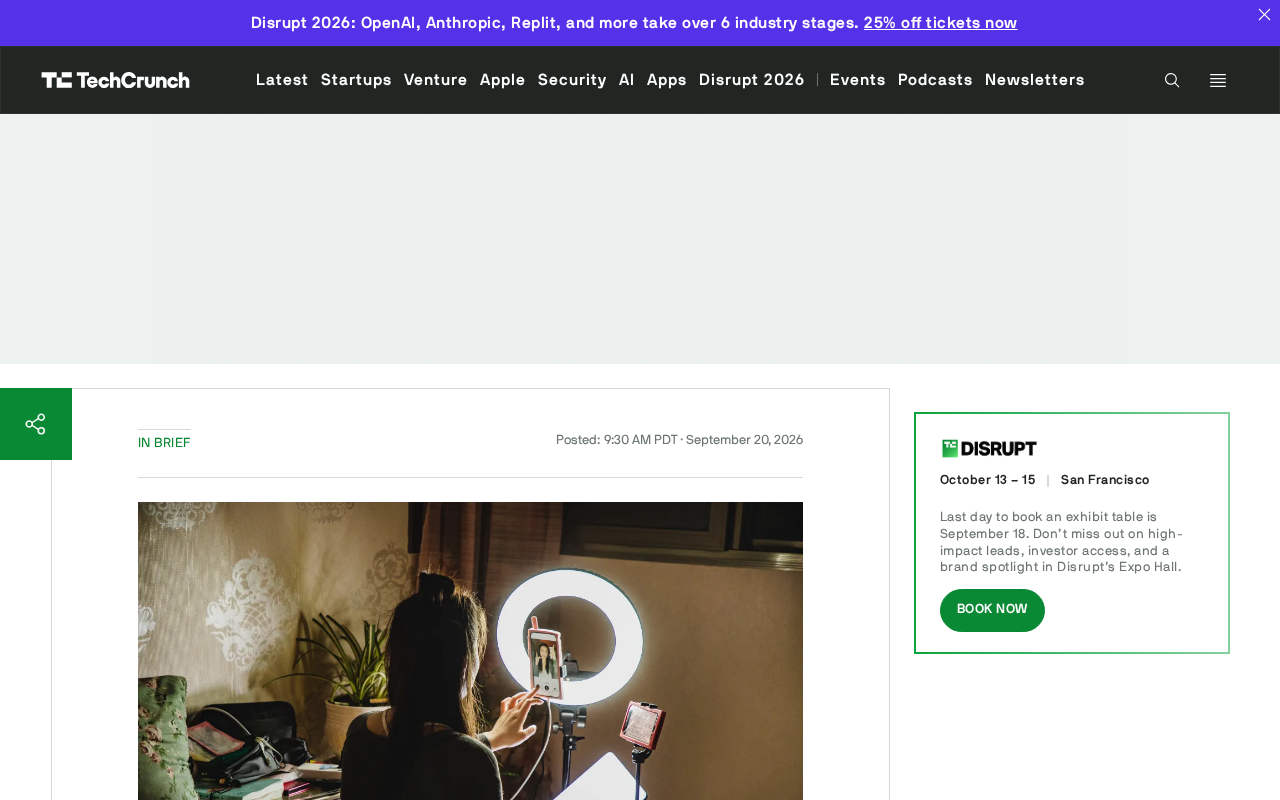
As social media has become the primary battleground for political mobilization and public opinion shaping, a single influencer post or video can reach hundreds of thousands — even millions — of people. When that content is effectively a "paid advertisement" disguised as personal opinion, ordinary users have little way of distinguishing the commercial and political interests at play, posing a serious challenge to information transparency. California's new legislation is a direct response to this gray area.
From "Guidelines" to "Penalties": A Meaningful Upgrade in Disclosure Requirements
Disclosure rules around influencers publishing political content already existed, but they lacked sufficient enforcement power and remained largely aspirational. The key change in the new law is the introduction of a clear penalty mechanism, giving violations real legal consequences.
This shift from soft norms to hard penalties reflects an important evolution in regulatory thinking. Platform self-regulation and industry goodwill alone have repeatedly proven insufficient to curb covert paid political messaging. When violations carry genuine financial or legal costs, influencers and the clients behind them are forced to weigh compliance costs before publishing such content.
For creators who monetize their influence, this means taking on political promotional work requires much greater care. Clearly labeling content as "paid," "ad," or similar disclosures will become an unavoidable obligation.
Why Transparency in Political Advertising Matters
Political advertising is fundamentally different from ordinary commercial promotion. Commercial ads influence consumer choices; political ads can sway voters' electoral decisions, their judgments on public issues, and the broader information ecosystem. When paid political content appears as "genuine personal views," audiences are subjected to hidden influence without their knowledge — a potential threat to the fairness of democratic decision-making.
As the frontier of American tech and media, California's legislative moves often serve as a bellwether. This mandatory disclosure and penalty framework targeting influencer political advertising could well become a template for similar regulation in other states or at the federal level.
For the broader content creation industry, this is also a clear signal: commercial partnerships involving political content are entering a new, more regulated, and more transparency-focused era. Creators, advertisers, and platforms alike need to establish clearer disclosure processes to adapt to a tightening regulatory environment.
The existing U.S. political advertising disclosure framework relies primarily on the Federal Election Campaign Act and oversight by the Federal Election Commission (FEC), traditionally applied to television, radio, and other mass media. With the rise of social media, the problem of "dark money" — politically motivated organizations with opaque funding sources sponsoring influencer content to bypass the "paid for by" disclosures required of traditional campaign ads — has grown increasingly serious. During both the 2016 and 2020 U.S. elections, multiple cases of covert political mobilization through influencer channels came to light, sparking widespread concern about social platforms becoming breeding grounds for political manipulation. It is against this backdrop that mandatory disclosure of paid political content has come to be seen as a foundational measure for protecting the integrity of the electoral information ecosystem — not merely an extension of commercial advertising rules.
Practical Implications for Creators and Platforms
In the short term, these types of laws increase the compliance burden for influencers taking on political promotions and push platforms to improve their labeling tools and review mechanisms. In the long run, greater transparency can help rebuild audience trust in influencer content — when disclosure becomes the norm, audiences can make informed judgments about the value of the information they receive.
It should be noted that this article is based on limited source reporting. Details such as fine amounts, specific scope of application, and effective dates were not covered in the original material; readers should refer to the complete text of California's official legislation.
Overall, California's penalty-backed legislation targeting influencer political advertising marks a pragmatic step forward in regulating political communication in the social media era. Its enforcement outcomes and broader influence are well worth watching.
Background
This legislative backdrop is closely tied to the existing framework established by the Federal Trade Commission (FTC). The FTC issued its Endorsement and Testimonial Guides as far back as 2009, requiring content creators to disclose "material connections" with brands, and further updated them in 2023 to explicitly bring paid social media influencer content under its scope. However, FTC guidelines focus primarily on commercial promotions, and the agency's jurisdiction over political content remains ambiguous; combined with limited federal enforcement resources, the practical constraints on influencer political advertising have consistently been weak. California's new legislation actively fills the gap left by federal regulation, using a state-level penalty mechanism to give disclosure requirements real deterrent force. This two-tier structure — where the federal government sets the framework and states add the teeth — is a common evolutionary pattern in the U.S. regulatory system.
Related articles

Workbuddy for Absolute Beginners: How a Desktop AI Agent Fits Into Real Workflows
A beginner's guide to the Workbuddy desktop AI agent: installation, claiming credits, file management, and building automated workflows—compared with CodeX for fit and cost, helping professionals shift from AI question-askers to AI managers.

OpenAI's New Agent Stack: Computer Use, Decisions API, and Ultra-Fast Workflows
OpenAI Dev Day unveiled a new agent stack: Computer Use outperforms humans, Decisions API delivers ultra-low-latency classification via Luna, Agents API opens the same Computer Use capabilities, and GPT-6.1 Sol costs only one-seventh of Astra. Core updates, benchmark data, and developer insights.

Liang Wenfeng Open-Sources DeepInfo Inference Framework, Takes On U.S. Ban
DeepSeek open-sources its DeepInfo inference framework after its models, featuring GPU/CPU cross-pipelining, small-model prediction with large-model verification, and full Huawei Ascend and NVIDIA chip support—facing the U.S. federal ban head-on. This article analyzes its significance for AI deployment and open-source strategy.