Can a Single Rod Encode an Entire Encyclopedia? The Wondrous World of Arithmetic Coding

The absurd experiment of an alien encoding an encyclopedia on a rod reveals how arithmetic coding compresses text into a high-precision real number.
The article starts from Martin Gardner's alien thought experiment: an alien records an entire encyclopedia using precise marks on a one-meter rod by mapping each character to a number pair and concatenating them into a high-precision real number between 0 and 1. This seemingly absurd idea is in fact the core principle of the modern compression algorithm arithmetic coding. Arithmetic coding repeatedly subdivides the unit interval according to symbol probabilities, associating any arbitrarily long text with a real number in an extremely small interval, so that compression precision approaches information entropy rather than character count multiplied by a fixed bit width. The article further points out that compression efficiency depends on the ability to model data patterns and probability distributions, so there is a deep connection between compression and intelligence—and arithmetic coding is the engineering cornerstone of this theory.
An Absurd Thought Experiment
Martin Gardner once told a story in one of his columns: aliens visit Earth and want to bring back a single item that best represents human knowledge. A professor hands over a complete set of encyclopedias, but the alien shakes his head—his spaceship is extremely sensitive to weight, and even a single nanogram could jeopardize the return trip. Then he pulls out a thin one-meter rod and says that all he needs is to make a precisely positioned mark on it to record the entire contents of the encyclopedia.
The professor is naturally astonished. The alien explains: your encyclopedia contains fewer than a hundred distinct letters and symbols, so assign each symbol a pair of numbers, replace each letter with its corresponding number pair, lay these number pairs out in sequence, and prefix them with "zero point"—and you get an extremely high-precision real number between 0 and 1. All he has to do is carve a mark on the rod at that proportion, and when he returns to his home planet, his companions measure the ratio of the distance from the mark to the starting point versus the rod's length, expand it into all its decimal places, and the entire encyclopedia is restored.
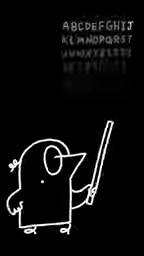
This idea is obviously absurd—by the narrator's estimate, after about five letters the required precision is already finer than the atomic scale. But it is precisely this absurd setup that points to a real and extraordinarily elegant compression technique. (Screenshot from video; keeping the original subtitle style is recommended.)
From Rod to Hard Drive: The Essential Problem of Compression
The real question worth asking is: if we switch to a more realistic scenario—say, the professor hands the alien a hard drive—then what is the most compact way to encode the entire encyclopedia into it? How do we represent it using as few bits as possible?
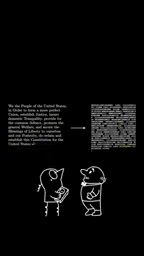
At this point, the alien's approach of "representing everything with a single decimal number" turns out to be closer to the correct answer than intuition suggests. The speaker points out that one of the best compression algorithms we have—Arithmetic Coding—works essentially by associating any arbitrarily long text sequence with a very specific, extremely high-precision real number between 0 and 1.
It sounds a bit strange, but the logic behind it isn't mysterious. You can map each symbol's probability of occurrence to a subinterval of the unit interval; as symbols are read one by one, the interval keeps narrowing, and ultimately any stretch of text corresponds to a real number within an extremely small interval. The narrowing process of the interval is essentially the process of accumulating precision, which also explains why "marks on a rod" and "a compressed bitstream" converge in this thought experiment.
The unit interval is the closed interval from 0 to 1 on the real number line, with length 1. In arithmetic coding, it is treated as the entire probability space: each symbol is assigned a subinterval within this interval according to its probability of occurrence, and the subintervals of all symbols are non-overlapping with lengths summing to 1. At the start of encoding, the current interval is the entire unit interval; each time a symbol is read, the current interval is replaced by that symbol's corresponding subinterval, and the interval length shrinks in proportion to the probability. Because the interval keeps narrowing, any stretch of text ultimately corresponds to an extremely small subinterval, and any real number within it uniquely identifies that text. This "nested intervals" geometric perspective is precisely the key to understanding how arithmetic coding can represent an arbitrarily long sequence with a single decimal number.
Why Arithmetic Coding Matters
To understand the value of arithmetic coding, you first need to set aside the intuition that "each symbol is represented by a fixed number of bits." Traditional fixed-length coding assigns a codeword of the same length to every character, whereas arithmetic coding allocates interval widths according to probability: high-frequency symbols occupy wider intervals, while low-frequency symbols occupy only a narrow stretch. In this way, an entire passage of text is compressed into a single real number whose precision roughly equals the amount of information, rather than the number of characters multiplied by a fixed bit width.
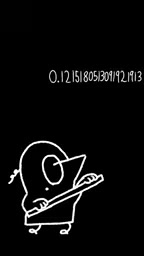
This also explains why the video links arithmetic coding with "intelligence." The upper limit of compression efficiency depends on the ability to model the patterns and probability distributions of the data; the better the model understands the data, the closer it can approach the theoretical information entropy. From this perspective, compression is not just a storage trick—it is also a yardstick for measuring depth of understanding.
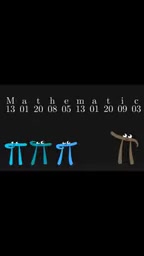
Of course, in engineering practice there are real constraints such as precision limits, finite states, and computational complexity—arithmetic coding is not without cost. Its true lesson is this: a seemingly impossible thought experiment, after reasonable adaptation, can become the theoretical cornerstone of modern data compression. Next time you see a claim like "compress an entire book into a single number," think of that one-meter rod—it may be only a hard drive away from reality.
Information Entropy is a core concept in Shannon's information theory, used to measure the uncertainty of a random variable or data source. For text composed of symbols, entropy gives the minimum average number of bits required per symbol, and it is the theoretical lower bound that any lossless compression algorithm cannot break through. Arithmetic coding is regarded as efficient precisely because it can asymptotically approach this entropy limit: when the symbol probability model matches the true distribution, the average length of the encoded result can come arbitrarily close to the information entropy. Conversely, if the model inaccurately estimates the data distribution, coding efficiency will decline. Therefore, the performance of a compression algorithm depends not only on the coding mechanism itself but also on the accuracy of modeling the statistical properties of the data—which is why modern compression systems often combine arithmetic coding with techniques such as context modeling and mixture models.
Fixed-length coding and variable-length coding are two basic strategies in data compression. Fixed-length coding assigns a codeword of the same length to each symbol—for example, ASCII uses 7 or 8 bits to represent a character. It is simple to implement but cannot exploit differences in symbol occurrence frequencies. Variable-length coding, by contrast, assigns codewords of different lengths according to symbol probabilities: high-frequency symbols use short codes and low-frequency symbols use long codes, thereby reducing the average codeword length. Huffman coding is a typical example. Arithmetic coding is an extreme form of variable-length coding: it no longer assigns integer-bit codewords to individual symbols but instead maps an entire message to a single real number, thereby breaking through the integer-bit limit of "at least 1 bit per symbol" and proving especially efficient when the probability distribution is uneven.
Related articles

GPT-6.2 Astra and Sol Released: Dual-Model Architecture and Community Buzz
OpenAI releases GPT-6.2 with Astra and Sol models. This article summarizes the official announcement and Hacker News discussion, analyzing the potential impact of the dual-model architecture on developers and offering selection advice.

Gmod TTT Egyptian-Themed Map: Space Capitalism vs. the Pharaoh
Explore the fun of a Gmod TTT Egyptian-themed map: players pick roles like pharaoh, teleport to space via a cube, and engage in a humorous capitalism vs. communism showdown with chaotic prop fighting.

GraphRAG: Beyond Search, Toward Global Knowledge Discovery
GraphRAG is a knowledge-graph-enhanced retrieval technology from Microsoft Research that goes beyond local search in traditional RAG to enable global knowledge discovery. This article introduces its core ideas, generational evolution, and healthcare use cases.