GraphRAG: Beyond Search, Toward Global Knowledge Discovery

Microsoft GraphRAG uses knowledge graphs to enable global discovery, overcoming the local retrieval limitations of traditional RAG.
The article introduces GraphRAG, a technology from Microsoft Research. Traditional RAG relies on semantic similarity between questions and document fragments for local retrieval, making it difficult to answer global questions that require synthesizing the entire corpus. GraphRAG instead first extracts entities and relationships to build a knowledge graph, then supports global queries through community detection and hierarchical summaries, capturing deep cross-document associations. A healthcare case shows that, with the same large-scale medical corpus, conventional RAG completely missed a newly FDA-approved treatment regimen, while GraphRAG successfully identified and correctly associated the relevant information. GraphRAG has gone through three generations, moving from proof of concept to productization, with Microsoft Discovery as a deployed outcome. The article notes that GraphRAG represents an important direction for AI moving from "finding knowledge" to "helping understand knowledge."
When the knowledge an organization generates each day far exceeds what any individual can absorb, the real challenge is no longer "finding information" but "understanding how information connects." Microsoft Research's GraphRAG technology was created to meet this challenge. It goes beyond the local search模式 of traditional Retrieval-Augmented Generation (RAG) and can perform holistic discovery across large-scale corpora—even capturing critical information that traditional RAG completely misses.
From "Finding Information" to "Understanding Relationships": The Core Idea of GraphRAG
According to Microsoft researchers in a YouTube video, GraphRAG aims to let AI perform "holistic discovery" across massive document collections. Traditional search or RAG excels at answering questions whose answers clearly exist in a few document fragments, but when a question requires synthesizing correlated information across the entire corpus, conventional methods fall short. GraphRAG builds a knowledge graph to connect scattered information points, thereby supporting "global queries"—questions whose answers do not exist in any single document but lie hidden in the network of cross-document relationships.

The video presents a healthcare example: faced with a brand-new treatment regimen that had just received FDA approval, GraphRAG was able to correctly identify and associate the relevant information, while conventional RAG built on the same corpus completely missed this key finding. This vividly illustrates GraphRAG's unique value in scenarios requiring deep reasoning and cross-document synthesis.
Retrieval-Augmented Generation (RAG) is a technical paradigm that combines information retrieval with the generative capabilities of large language models: the system first retrieves document fragments relevant to the user's question from an external knowledge base, then passes the retrieved results as context to the language model to generate an answer. RAG's value lies in mitigating stale model knowledge and hallucination, making answers grounded in evidence. However, conventional RAG is essentially "local"—it relies on semantic similarity matching between the question and document fragments and only recalls a few of the most relevant fragments, making it difficult to answer questions that require synthesizing the entire corpus and spanning a large number of documents. GraphRAG is an improved approach proposed to address this limitation.
A knowledge graph is a data representation that organizes information in a graph structure, consisting of nodes (entities such as diseases, drugs, organizations, and people) and edges (relationships between entities, such as "treats," "causes," and "belongs to"). Compared with flat text fragments or vectors, a knowledge graph explicitly encodes connections between entities, enabling the system to perform multi-hop reasoning along relationship paths. In GraphRAG, the knowledge graph is automatically constructed by a language model extracting entities and relationships from the raw corpus, and it is the structural foundation that supports global queries and cross-document association discovery.
Generational Evolution: From Proof of Concept to Product Deployment
GraphRAG's development has gone through clear generational iterations. According to the video, the first generation (Gen 1) was a proof of concept that demonstrated the feasibility of the technical path; the second and third generations were devoted to "making it real" and truly integrating it into products. This evolution reflects Microsoft's ability to rapidly translate frontier research into practical productivity.
Microsoft Discovery is a product of this evolution, sitting at the intersection of frontier research and real customer applications. The researchers emphasize that Microsoft Research is an ideal place to incubate such new technologies, tightly integrating academic exploration with industry needs.
How Does GraphRAG Achieve Global Discovery?
GraphRAG's core lies in structured understanding of the corpus. It does not simply chunk documents and perform vector retrieval; instead, it first extracts entities and relationships to build a knowledge graph, then performs community detection and summary generation based on the graph. When users pose global questions, the system can leverage the graph's hierarchical structure to organize answers from the macro level to the micro level.

This architecture makes GraphRAG particularly suitable for scenarios such as: summarizing themes across documents, discovering hidden associations, or answering questions like "what are the most important trends across the entire corpus." The healthcare case in the video is only the tip of the iceberg; GraphRAG also has broad application prospects in financial analysis, legal research, academic literature reviews, and other fields.
Community detection is a class of algorithms in graph analysis used to partition tightly connected nodes in a graph into several "communities" (clusters), so that connections within communities are dense and connections between communities are sparse. In GraphRAG, the system runs community detection on the constructed knowledge graph, aggregates semantically related entities into thematic clusters, and then generates a summary for each community. These community summaries are organized hierarchically, forming a pyramid structure from macro themes to micro details, enabling the system to first grasp the overall thematic distribution and then drill down layer by layer when answering global questions. This is also the key mechanism by which GraphRAG achieves "organizing answers from macro to micro."
Healthcare Case: GraphRAG vs. Conventional RAG
The video highlights a comparative experiment in the healthcare domain. Faced with the same large-scale medical corpus, conventional RAG failed to provide the correct answer when asked about the latest FDA-approved treatment regimen; GraphRAG, however, successfully identified this new therapy and correctly associated it with related diseases, drug mechanisms, and clinical data.
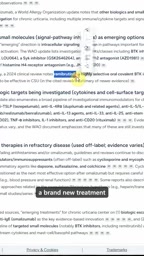
The root of this difference is that conventional RAG relies on semantic similarity between the question and document fragments and tends to overlook information that does not directly match literally but is logically crucial; GraphRAG, by contrast, captures multi-hop relationships between entities through the graph structure, thereby discovering deep associations. For organizations that need a comprehensive and accurate understanding of complex domains, this capability is essential.
Future Outlook: AI Helps Humans Understand Knowledge
The video concludes by pointing out that the future of AI is not just "finding knowledge" but "helping us understand knowledge." GraphRAG represents an important step in this direction. As Gen 3 technology matures and products such as Microsoft Discovery are deployed, organizations can look forward to distilling truly valuable insights from massive amounts of information rather than drowning in a sea of documents.
For developers and researchers, GraphRAG also offers new ideas: when building RAG systems, in addition to optimizing retrievers and generators, one can also consider introducing graph structures to enhance the system's global reasoning capabilities. Implementations of GraphRAG have already appeared in the open-source community and are worth further exploration.
Related articles

GPT-6.2 Astra and Sol Released: Dual-Model Architecture and Community Buzz
OpenAI releases GPT-6.2 with Astra and Sol models. This article summarizes the official announcement and Hacker News discussion, analyzing the potential impact of the dual-model architecture on developers and offering selection advice.

Gmod TTT Egyptian-Themed Map: Space Capitalism vs. the Pharaoh
Explore the fun of a Gmod TTT Egyptian-themed map: players pick roles like pharaoh, teleport to space via a cube, and engage in a humorous capitalism vs. communism showdown with chaotic prop fighting.

Why Chip Manufacturing Is Nearly Impossible: The Truth About ASML and TSMC's Global Collaboration
The Vergecast interviews《The New Yorker》author Gideon Lewis-Kraus on the real logic of chipmaking: Moore's Law as collective pre-commitment, ASML's irreplaceable EUV, TSMC cleanrooms 1,000x cleaner than surgery rooms, and a supply chain spanning dozens of countries.