Can AI Crack Biology? A Deep Dive with Lex Fridman and His Guest

AI still falls short of life's multi-scale complexity, more a discovery tool than a master key.
This article records a Lex Fridman podcast conversation on the boundaries between AI and biology. The guest argues that living systems are many orders of magnitude more complex than anything today's AI can handle and that understanding human biology requires tracing all life's evolution. Connectomes and other large datasets provide data, but data is not understanding. AI's breakthroughs may come from pattern recognition, not holistic understanding, and acknowledging complexity is where the dialogue begins.
When AI Meets Biology: A Conversation About Complexity
In a Lex Fridman podcast episode, a discussion about the boundaries between AI and biology offers much food for thought. The guest raises a core question: Can AI achieve major breakthroughs in the extraordinarily complex field of biology? Rather than stopping at surface-level technological optimism, the conversation digs into the nature of complexity in living systems and reveals the cognitive limits AI currently faces.
The Connectome Project: From Insects to a Broader Map of Life
The discussion begins with the connectome—the grand project of mapping the complete neural wiring diagram of a biological brain. Insect brain connectomes have already been completed, and connectomes for other animals are expected to be mapped gradually. The guest predicts that, like genomes, connectome data will become cheaper and more accessible as technology advances. This means biology is systematically accumulating extremely large datasets in an attempt to understand how complex systems operate. This provides a data foundation for AI's involvement, but data alone does not equal understanding.

Connectome refers to the complete map of all neurons and their synaptic connections within a nervous system, analogous to what the genome is to DNA. Mapping a connectome requires electron microscopy imaging and automated image segmentation: after imaging brain slices, the morphology and connections of neurons are reconstructed. The Drosophila brain contains about 100,000 neurons, and its connectome was fully published in 2024; the connectome of the nematode worm (302 neurons) was completed even earlier. The human brain has about 86 billion neurons, and its connectome project is still in its infancy, facing enormous challenges in data volume (about 1 zettabyte) and computational cost. The core assumption of connectomics is that the function of the nervous system arises from its connection structure, so a complete map is the foundation for understanding the brain's computational principles. However, connectome data itself does not directly reveal information-processing mechanisms; it must be interpreted in combination with functional imaging and computational modeling.
The Scale of Life's Complexity: Far Beyond What AI Can Handle
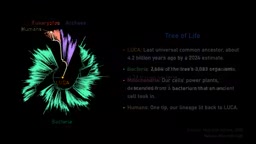
The guest makes a key judgment: to understand how the human biological system works, one must trace the origin and evolution of all life on Earth, because everything is interconnected. The process by which a single cell develops into a complete human involves an intrinsic intelligence mechanism that "may be many orders of magnitude more complex than some of the difficult math problems we discuss." He even suspects that if turbulence is already difficult enough, then the fluids around the brain, the immune system, and all the interconnected parts are "many, many orders of magnitude more complex than any system today's AI can handle."
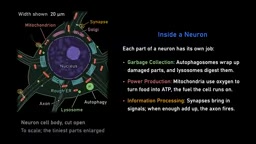
This is not a rejection of AI but an awe-filled acknowledgment of biology's complexity. Lex responds that a single cell is like a complete city with infrastructure; inside a single neuron there are functions such as waste recycling, energy production, and information processing, and each scale exceeds human understanding.
Finding the Right Scale: Where Mathematics and Biology Intersect
Although the complexity is daunting, both agree that this is precisely what makes it fascinating. Lex points out that finding "any promising right scale" and discovering interesting clues from it that can be used to understand the bigger picture is an extremely difficult human endeavor. So far, finding intelligible fragments within complex chaos has always been done by hand. Whether AI can accelerate this process depends on whether it can model at the appropriate level of abstraction.
Multi-scale complexity is a core feature of living systems: from molecules (protein interactions), organelles, cells, tissues, organs, to individuals and ecosystems, each level gives rise to new properties not present at the level below (emergence). This cross-scale coupling means that to understand any phenomenon (such as an immune response), one must simultaneously consider interactions across multiple levels, including gene regulation, cell communication, the tissue microenvironment, and individual behavior. Current AI models (such as large language models or reinforcement learning systems) excel at single-scale, well-defined problems, but when faced with strongly coupled multi-scale systems, their parameter counts and training data are still far from sufficient to capture all interactions. In addition, biological systems are history-dependent (evolutionary paths) and stochastic (molecular noise), further increasing modeling difficulty.
Effective theory is an important concept in physics: at a particular scale, a system can be described by a simplified model without tracking all microscopic details. For example, fluid dynamics describes the flow of water with the Navier-Stokes equations without needing to know the motion of every water molecule. In biology, finding the "right scale" is similar to constructing an effective theory—for example, describing cortical activity with a neuronal firing-rate model while ignoring ion channel details. However, effective theories for biological systems are often hard to determine because coupling across scales is stronger and universal conservation laws are lacking. AI may help identify appropriate levels of abstraction by automatically discovering low-dimensional representations or coarse-grained variables in data, but this remains an open question.
Why the Universe Can Be Described by Mathematics: A Mysterious Miracle
The conversation ends with a philosophical proposition: the fact that the universe can be described by mathematics is itself a miracle. Newton invented calculus to describe how inverse-square propagation leads to elliptical orbits and solved the two-body problem—and there was no a priori reason for any of this. "We have no right to know anything we know." This sentence from Lex is both a reminder of scientific humility and an implication of AI's role in biology: it may help us discover more intelligible fragments, but it is still very far from fully cracking the mechanisms of life.
Implications for AI Practitioners
The value of this conversation lies in how it sets the boundaries of expectations. Breakthroughs for AI in biology may come from pattern recognition in large-scale datasets (such as connectome analysis) rather than from a holistic understanding of life's mechanisms. Practitioners need to distinguish between "computable problems" and "complex systems that require understanding." In the life sciences, AI is more likely to become a tool for human exploration than a master key that replaces human intuition. The multi-scale, strongly correlated nature of living systems means that no single model can capture the full picture. Acknowledging this complexity may be the true beginning of a real dialogue between AI and biology.
Wigner's "unreasonable effectiveness of mathematics" refers to the observation made by physicist Eugene Wigner in 1960: mathematical concepts often apply unexpectedly well in the natural sciences, and there is no a priori reason for this applicability. For example, complex numbers were originally a pure mathematical abstraction and later became foundational to quantum mechanics; Riemannian geometry provided the language for general relativity. This phenomenon gives rise to philosophical debate: Is mathematics discovered or invented? Does the universe inherently possess a mathematical structure? For AI, this means that the mathematical frameworks on which machine learning models rely (such as linear algebra and probability theory) may describe the world only because of the limits of human cognition or evolutionary adaptation, rather than because they reflect the essence of the universe.
One-line Summary
AI still falls short in the face of the multi-scale complexity of living systems and is more likely to serve as a tool for discovery than as a master key.
Paragraph Summary
This article records a conversation on the boundaries between AI and biology from the Lex Fridman podcast. The guest points out that the complexity of living systems is many orders of magnitude beyond any system today's AI can handle, and that understanding human biology requires tracing the evolution of all life on Earth. Large-scale data projects such as connectomes provide a data foundation for AI, but data does not equal understanding. Both agree that finding intelligible fragments within complex chaos has always been done by hand, and whether AI can accelerate this depends on whether it can model at the appropriate level of abstraction. The conversation also touches on the miracle that the universe can be described by mathematics, for which there is no a priori reason. The conclusion is that breakthroughs for AI in biology may come from pattern recognition rather than holistic understanding, and practitioners need to distinguish computable problems from complex systems that require understanding; acknowledging complexity is where the conversation begins.
Related articles
 Tech Frontiers
Coldframe: A Honeypot Disguised as a Supermarket Freezer Controller
Coldframe is a honeypot disguised as Danfoss AK-SM 800A and Dixell XWEB freezer controllers, built as a single Python file that detects CVE-2025-41450 attempts and is identified as real devices on Shodan.
 Tech Frontiers
GRFNet: A Lightweight PyTorch Model Designed for Multichannel Time-Series Classification
GRFNet is a lightweight PyTorch model for multichannel time-series classification, originating from EEG decoding research. With only 3,847 parameters, it is based on the ROCKET architecture, combining random convolution kernels with learnable spatial filters, supports arbitrary input lengths, and will soon be evaluated on the PhysioNet dataset.
 Tech Frontiers
CUDA-Accelerated Rocket League Simulator: A Player-Made Hardcore Experiment
A Reddit post shows a "100% Accurate" Rocket League simulator accelerated with CUDA. We analyze its technical context, CUDA's value in game physics simulation, and the significance and limitations of such community projects.