Can Claude Autonomously Align Other AIs? A 48-Hour Single-GPU Experiment Has Answers
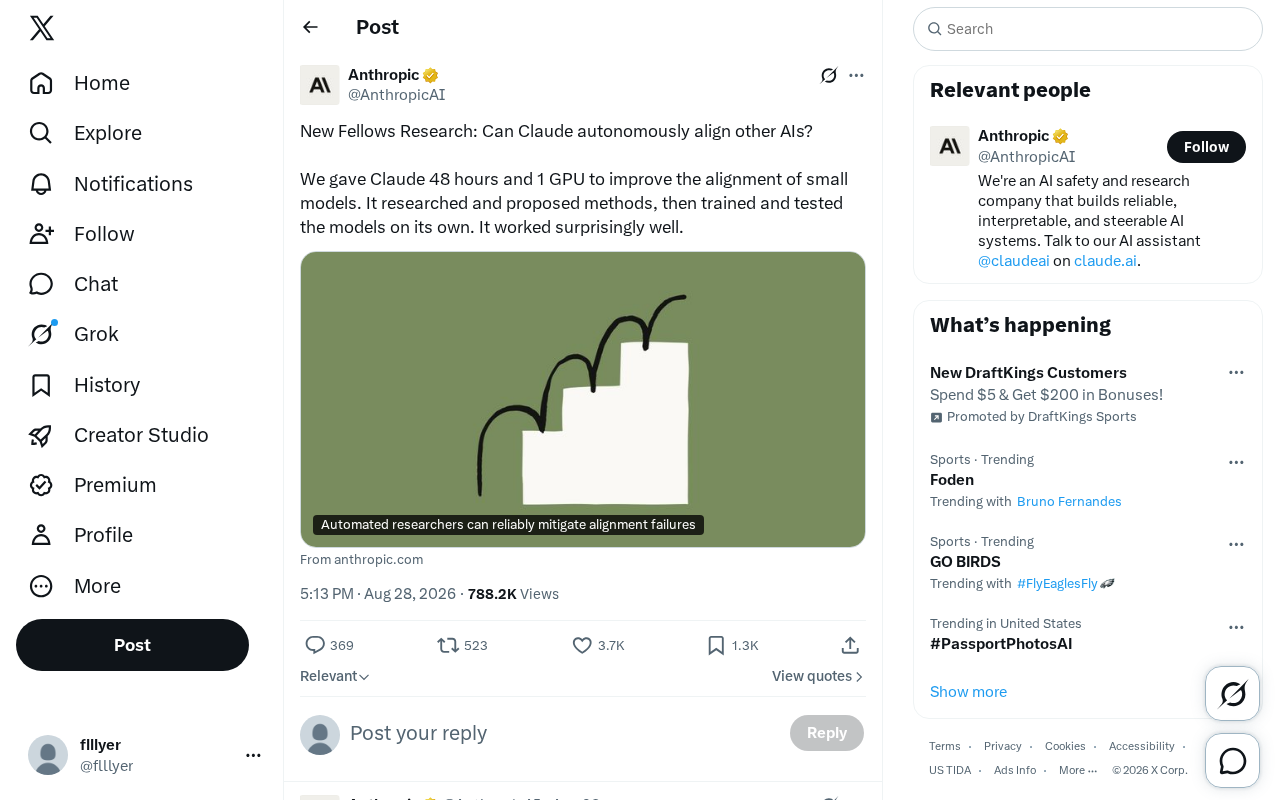
Claude autonomously completed alignment research on a small model within 48 hours on a single GPU, validating the "AI aligning AI" concept.
A Fellows research project gave Claude just 48 hours and one GPU to autonomously run a full alignment research pipeline — from surveying methods and training models to evaluation — with surprisingly strong results. The experiment's real value lies not in the model produced, but in validating a paradigm shift: AI can move from passive alignment subject to active alignment researcher. While this offers a promising path around the scalability bottleneck in alignment work, it also raises a critical concern — when AI is responsible for aligning other AI, the trustworthiness of the executor's own goals becomes the new central problem.
A Bold Experiment: Letting AI Align AI
AI alignment has long been one of the most challenging problems for researchers — how do you get a model to behave in accordance with human intentions and avoid harmful outputs? This work typically demands significant human effort, compute, and iterative debugging. A new Fellows research project poses a counterintuitive question: what if AI could handle the alignment work itself?
The research team gave Claude an extremely constrained environment — 48 hours and a single GPU — and tasked it with improving the alignment of a smaller model. The entire process was almost entirely autonomous: Claude identified and proposed methods on its own, trained the model itself, and ran its own evaluations. According to the researchers, the final results were "surprisingly good."
Why This Experiment Deserves Attention
The significance of this experiment isn't about how powerful a model Claude managed to produce — it's about validating an entirely new mode of work: AI as the executing agent of alignment research, not merely its subject.
In traditional alignment pipelines, human researchers design the methods, prepare the data, tune hyperparameters, and evaluate results, while the AI is purely a passive recipient of training. In this experiment, the roles underwent a fundamental shift — Claude took ownership of the full research loop, from surveying methods to validating results. It needed to understand the goals of alignment, judge which technical approaches were feasible, and make trade-offs under resource constraints.
This notion of "AI-assisted AI safety" is one of the most important directions being explored in the alignment field today. If models can reliably assist with — or even lead — portions of alignment work, the scale and pace of alignment research could finally break free from the bottleneck of human capacity.
Autonomous Research Under Resource Constraints
What makes the experimental setup particularly noteworthy is just how demanding it was. Forty-eight hours and a single GPU is an extremely tight budget for any serious model training. But this constraint was itself part of the experimental design — the test wasn't about brute-forcing compute, but about whether Claude could make sound research decisions under pressure.
Under these conditions, the model had to weigh questions like: which alignment method is most likely to yield results quickly? How do you design a minimal viable pipeline that covers both training and evaluation? How do you determine, within a limited number of iterations, whether an approach is actually working? These are precisely the core competencies of experienced researchers. The results suggest that Claude handled these decisions with more maturity than anticipated.
Opportunities and Concerns
On the optimistic side, if AI can autonomously advance alignment work, this opens up new thinking around the "alignment scalability" problem. As frontier models grow increasingly capable, the cost of human oversight rises in parallel. Having more capable models help align less capable ones may be a viable path forward.
But this kind of research also raises unavoidable concerns. Having AI "align" another AI essentially delegates some portion of safety judgment to the model itself. This surfaces a critical question: how do we ensure that the AI performing the alignment work has trustworthy goals of its own? If a model that hasn't been sufficiently validated takes the lead in an alignment pipeline, could it introduce subtle biases that are difficult to detect? These are questions the field needs to approach with great care.
Conclusion
With a clean, minimal experiment, this Fellows research touches on a profound question at the heart of AI safety. It makes no claim to having found a definitive answer — instead, it delivers a compelling proof of concept: under constrained resources, Claude genuinely demonstrated the capacity to conduct alignment research autonomously.
Given the information currently available, the specific methods, evaluation metrics, and quantitative results remain only partially clear, and a complete research report will be needed to verify reproducibility and robustness. But regardless, the direction of "letting AI help align AI" is steadily moving from an abstract idea toward an actionable research practice.
Related articles
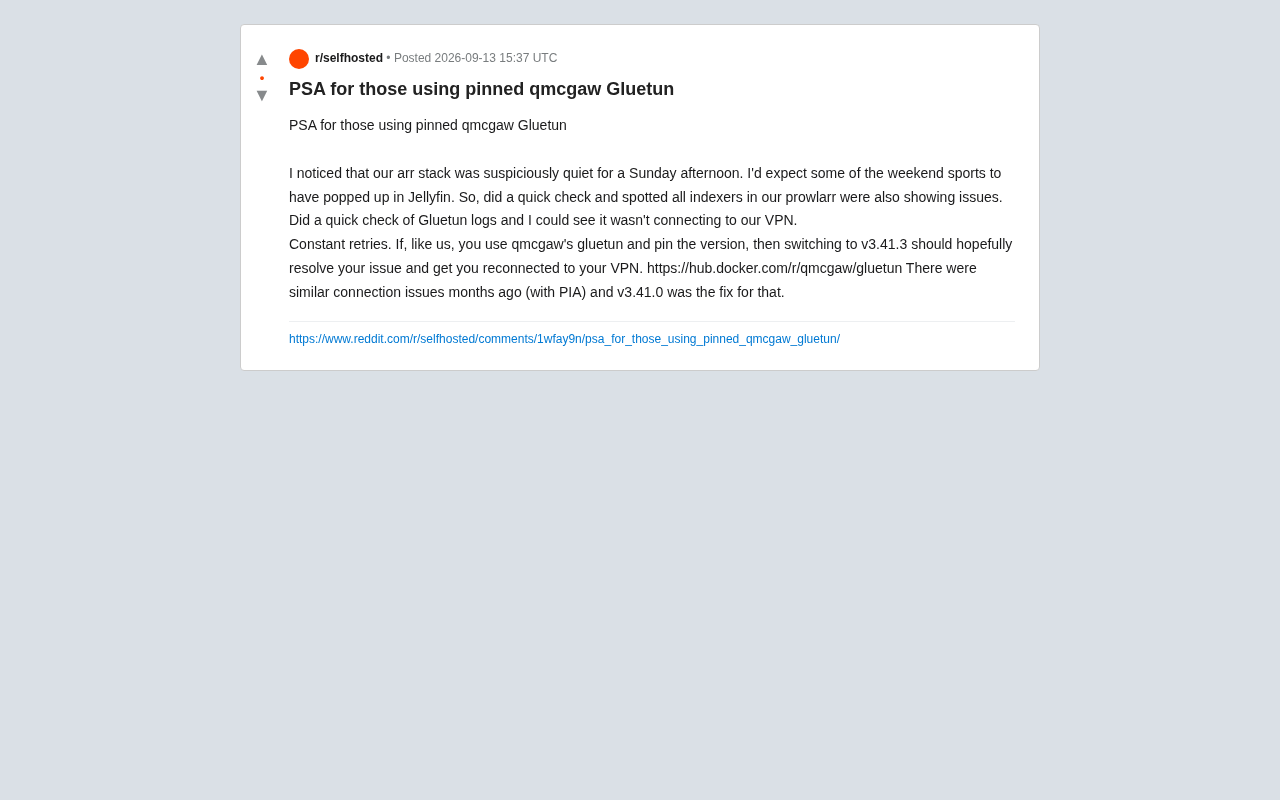
Gluetun VPN Disconnection Troubleshooting: Version-Pinned Users Should Upgrade to v3.41.3
Gluetun version-pinned users may face silent VPN disconnections breaking their arr stack. Learn how upgrading to v3.41.3 fixes the issue and tips to avoid it.
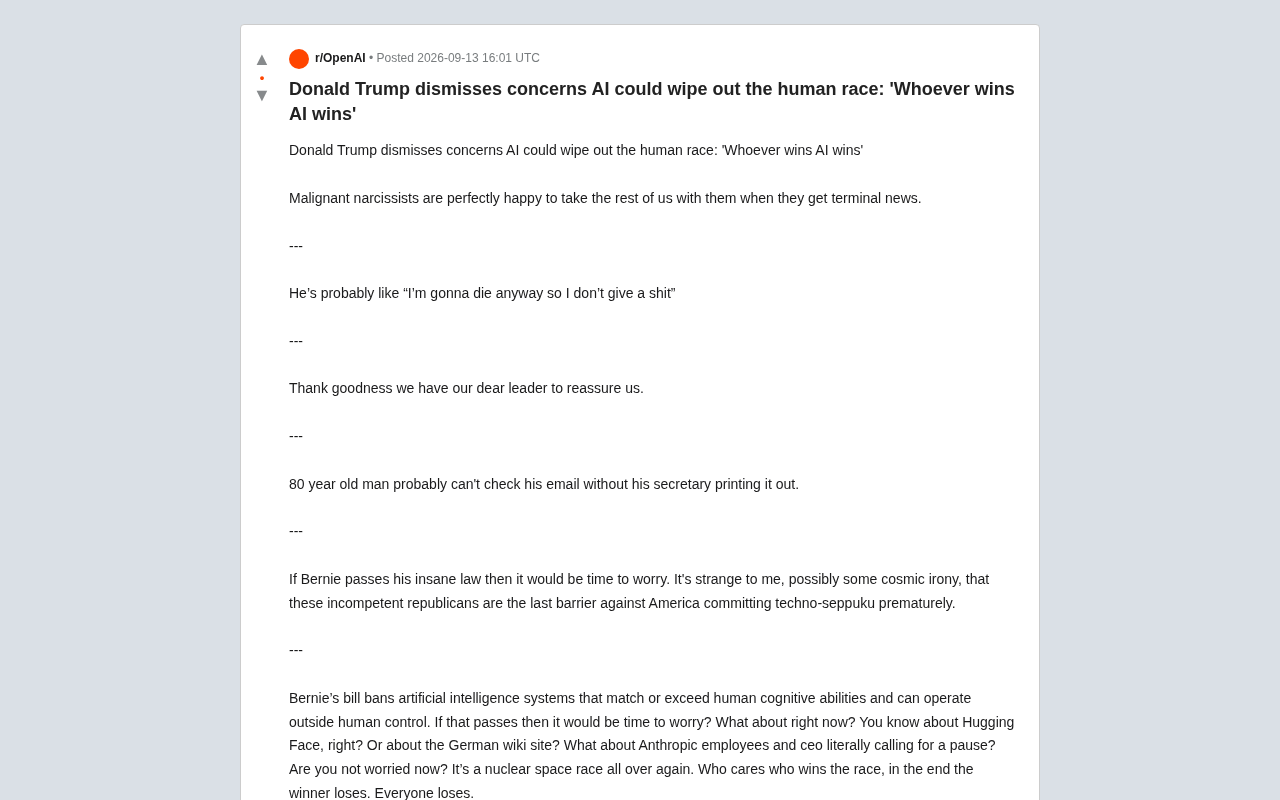
Trump Downplays AI Extinction Risk: 'Whoever Wins AI Wins' Sparks Controversy
Trump downplays AI extinction risks with 'Whoever wins AI wins,' sparking fierce debate over whether AI safety is an urgent reality or a future hypothetical.
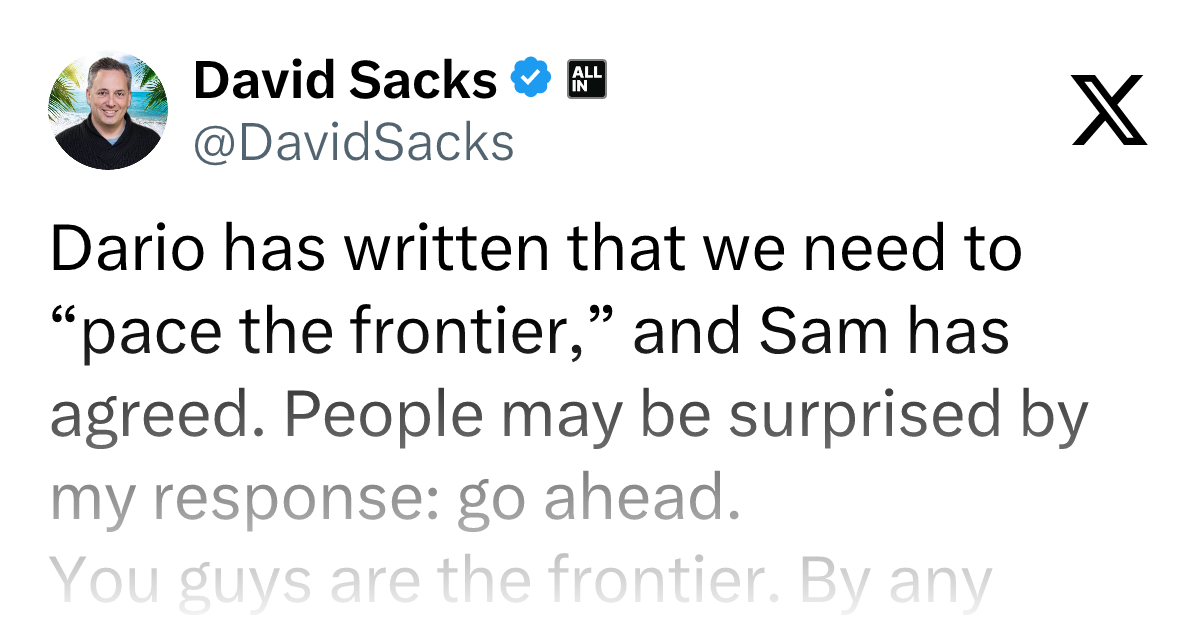
David Sacks on AI Regulation: Frontier Models Don't Need Mandatory Legislative Constraints
David Sacks argues OpenAI and Anthropic can self-regulate frontier model development without external legislation. A look at the logic, controversy, and governance dilemmas involved.