Can Gemma 5 Stay True to Chat-First? Avoiding the Homogenization Trap in Local Models
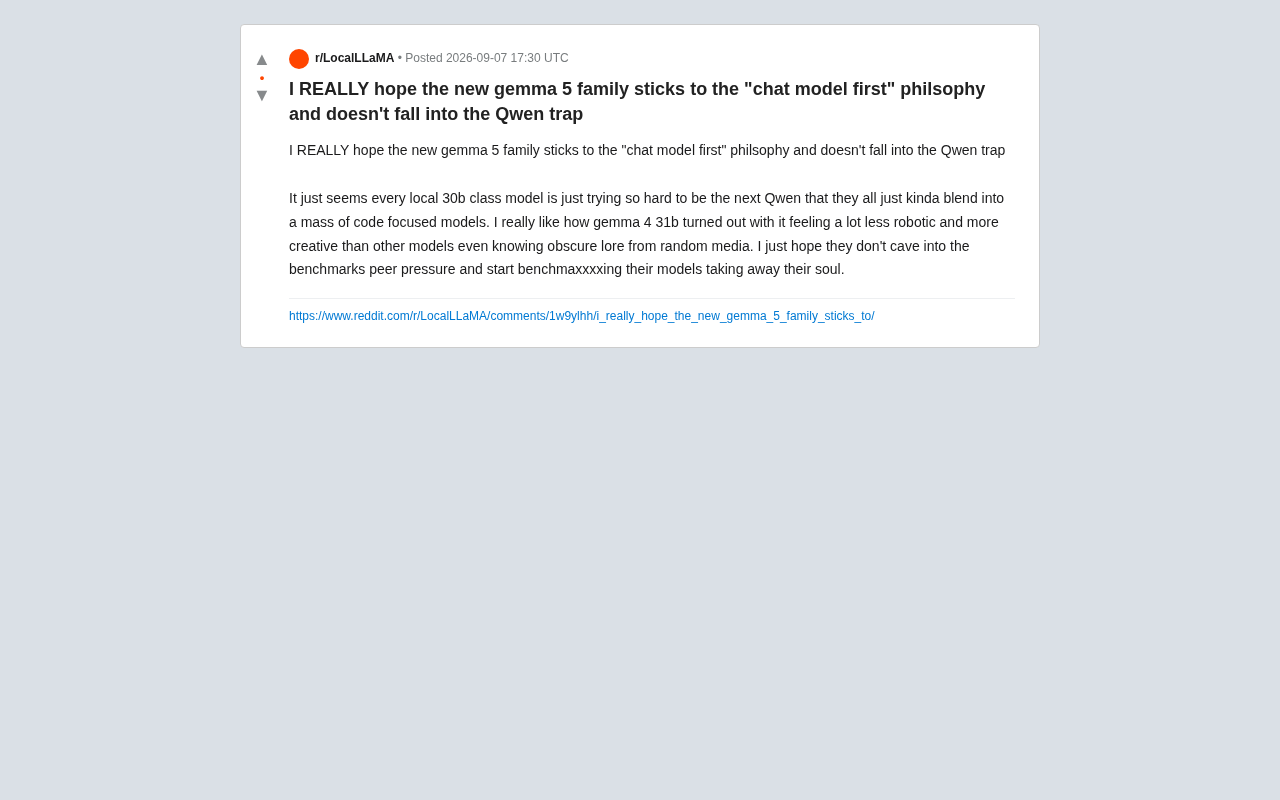
Gemma 5 must resist benchmaxxxing and stay true to its chat-first identity to stand out among local LLMs.
As local LLMs in the 30B range race to become the next Qwen by over-optimizing for code and math benchmarks, Gemma 4 31B stands out with natural conversation, broad knowledge, and a unique personality. This article explores the benchmaxxxing phenomenon eroding model diversity and argues that Gemma 5 should double down on its chat-first philosophy rather than chasing leaderboard rankings.
Local LLMs Are Falling Into a Homogenization Trap
Recently on Reddit, a developer voiced both excitement and concern about the upcoming Gemma 5 series. The core argument was clear: Gemma 5 should continue to uphold its "chat model first" design philosophy rather than falling into what they called the "Qwen Trap."
Gemma is Google's open-source large language model series, launched in 2024 and positioned as a lightweight, efficient solution for local deployment. Unlike Google's flagship product Gemini, Gemma focuses on smaller models that can run on consumer-grade hardware, with parameter counts ranging from 2B to 27B. Gemma 4 represents the fourth generation of this series, with the 31B version attempting to strike a balance between conversational quality and knowledge breadth while maintaining a relatively modest parameter count. As an open-source model, Gemma allows developers to freely deploy and fine-tune it, giving it a unique edge in scenarios where data privacy and local deployment are priorities.
So what exactly is this "trap"? Qwen (Tongyi Qianwen) is a large language model series developed by Alibaba's DAMO Academy, renowned for its formidable code generation and mathematical reasoning capabilities. Qwen models have consistently set new records on programming benchmarks like HumanEval and MBPP, as well as math reasoning tests like GSM8K, establishing themselves as performance benchmarks among open-source models. The so-called "Qwen Trap" refers to other model development teams blindly imitating Qwen's training strategy — heavily using code and math datasets to compete on the same benchmarks — while neglecting other important capability dimensions like conversational naturalness and creative expression.
Local models in the 30B parameter range currently seem to be racing to become the next Qwen, over-indexing on coding ability and benchmark performance, leading to increasing homogenization. The 30B (30 billion) parameter scale occupies a special position in the local LLM landscape. It's large enough to exhibit capability levels approaching GPT-3.5, yet small enough to run on high-end consumer GPUs (like the NVIDIA RTX 4090) or mid-range servers. For enterprises and developers who need local deployment and prioritize data privacy, 30B models represent the optimal balance between performance and cost. However, precisely because of this "sweet spot" characteristic, numerous development teams have made 30B their primary target, making this parameter range the most fiercely competitive — and the most susceptible to homogenization. In the pursuit of benchmark rankings, these models are gradually losing their distinctive features and core strengths.
Gemma 4 31B's Differentiated Advantages
The author particularly praised Gemma 4 31B's performance. Compared to other models, it demonstrates clear differentiated advantages:
More Natural Conversational Experience: Gemma 4 31B feels less mechanical and more creative in conversations. This is especially rare in today's environment obsessed with technical metrics.
Both Breadth and Depth of Knowledge: The model can even identify and discuss obscure knowledge from niche media — a capability that goes far beyond simple code generation or mathematical reasoning.
Maintaining Model Personality: Amid the homogenization trend, Gemma 4 has preserved its unique "character" — exactly the trait that many users value.
The Double-Edged Sword of Benchmark Optimization
The article raises a thought-provoking question: Is benchmark optimization killing diversity in AI models?
Widely used benchmarks in the AI field include HumanEval and MBPP for coding ability, GSM8K and MATH for mathematical reasoning, and MMLU for comprehensive capabilities. These tests provide objective quantitative metrics but have notable limitations. First, they primarily evaluate accuracy on closed-ended questions and cannot measure subjective quality in creative writing or open-ended conversations. Second, training data contamination is a serious issue — many models boost their scores by having "seen" the test questions. Third, benchmarks tend to focus on STEM fields while neglecting humanities, arts, and other knowledge dimensions. More critically, there's a disconnect between high benchmark scores and actual user experience — a model that scores high on every test may come across as rigid and inflexible in everyday conversation.
There's a phenomenon in current AI model development called "benchmaxxxing" — development teams over-optimize for specific benchmarks to climb the leaderboards. "Benchmaxxxing" is a term coined by the AI community, derived from the gaming concept of "min-maxing," referring to the practice of excessively optimizing specific metrics. In LLM development, this manifests as carefully designing training data around known benchmarks, adjusting loss function weights, or even having models memorize test question patterns.
This approach creates several problems:
- Capability Imbalance: Models excel at quantifiable tasks like coding and math but actually regress in areas that are harder to evaluate, such as creative writing and open-ended conversation. The consequence is that code completion might be near-perfect, but writing a natural email feels stilted; math problem accuracy is high, but explaining concepts in plain language falls flat.
- Degraded User Experience: High scores don't equal usability — models can feel rigid and inflexible in actual use.
- Constrained Innovation: When all teams optimize for the same set of metrics, technical approaches converge. The deeper issue is that when everyone fixates on the same benchmarks, the drive for innovation weakens, and the entire industry falls into a rat race, unable to produce truly breakthrough model architectures or training methods.
Where Does the Core Value of Chat Models Lie?
What does the "chat model first" philosophy emphasize? It's about putting the human-AI interaction experience first, rather than purely chasing technical metrics.
An excellent conversational model needs a multi-layered capability system. At the comprehension level, it needs to capture implicit intent in context, recognize topic shifts, and understand metaphors and irony. At the generation level, it should be able to adjust tone and style for different scenarios, maintain consistency across multi-turn conversations, and show creativity and humor when appropriate. Knowledge breadth is equally critical — not just encyclopedic knowledge, but also pop culture, current events, and content from niche interest areas. Additionally, a good conversational model should know when to acknowledge uncertainty rather than generating responses that sound confident but are actually wrong.
An excellent conversational model should possess:
- The ability to understand context and implicit intent
- Flexible expression and creative thinking
- Broad knowledge coverage, not limited to programming
- Natural conversational rhythm, avoiding templated responses
These qualities are difficult to measure through standardized benchmarks, yet they are exactly what users actually need, often requiring comprehensive human evaluation. They determine whether users will continue using the model and are key factors in commercial success. If the Gemma series can stay committed to this direction, it will form a differentiated competitive advantage in the market.
A Deeper Reflection From the AI Community
This post reflects a broader reflection within the tech community about the current direction of AI model development. Not every user needs a "super programmer" model — many use cases call for an AI assistant that can communicate naturally and draw on broad knowledge.
Local LLMs refer to AI models that can run on users' own hardware, in contrast to services that rely on cloud-based APIs. Local deployment offers multiple advantages: data privacy is protected since sensitive information doesn't need to be uploaded to third-party servers; there's no network latency, resulting in faster response times; there are no API call limits or fees, allowing free experimentation; and models can be fine-tuned and customized for specific needs. These characteristics make local models indispensable in privacy-sensitive industries like healthcare, legal, and finance, as well as in development scenarios requiring high-frequency inference.
The choice facing model developers is this: follow the crowd and compete on benchmarks, or focus on building distinctive products with excellent user experiences? Gemma 5's decision will serve as an important reference case for the industry.
Here's hoping Google stays true to its vision with the upcoming Gemma 5, offering the open-source AI community a genuinely different choice — not just another Qwen clone.
Related articles
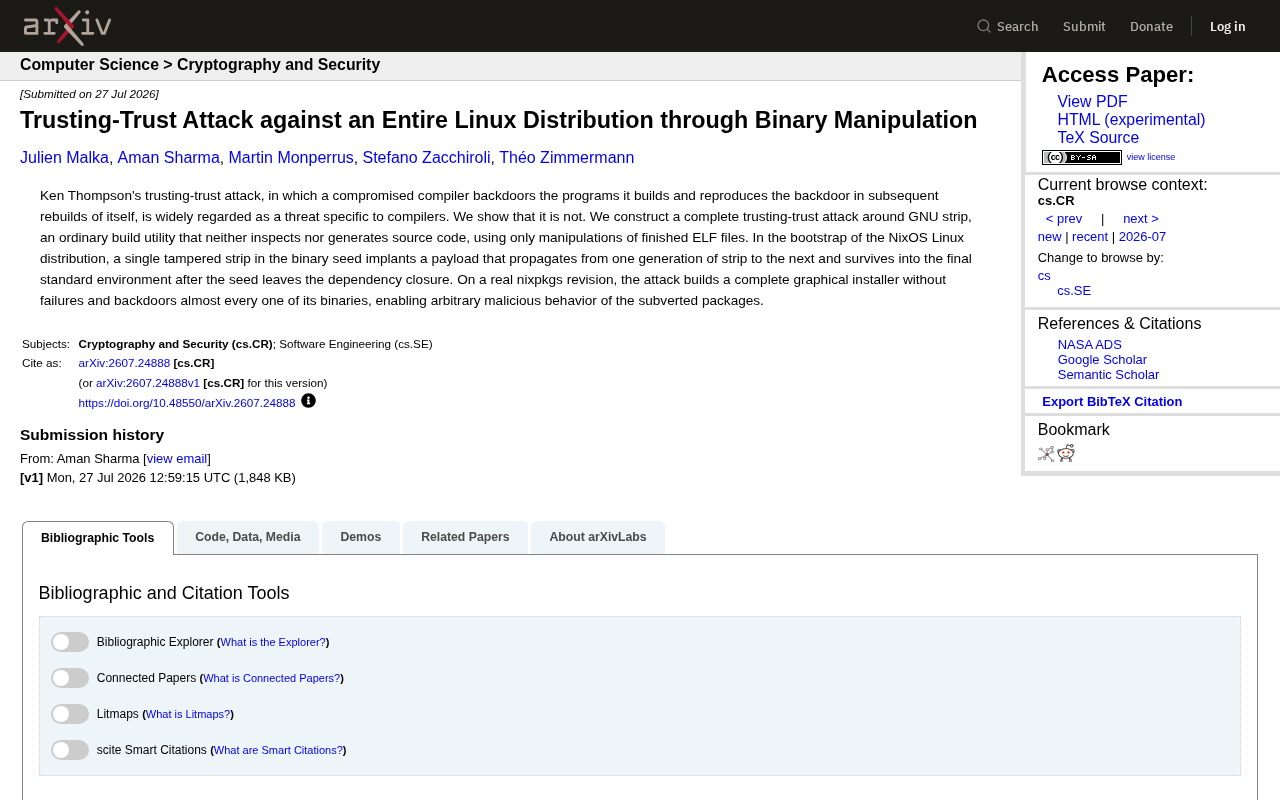
Trusting Trust Attack: How to Poison the Trust Chain of an Entire Linux Distribution
Deep dive into how Ken Thompson's classic Trusting Trust Attack evolves from theory to practice, threatening Linux distribution supply chain security. Explore solutions like reproducible and bootstrappable builds.

216 Million LG Smart TVs Privacy Crisis: Recording Audio Even When Screen Is Off
Security researchers expose severe privacy flaws in LG smart TVs—over 216 million devices worldwide continue recording audio and scanning home network devices even when screens are off. Details on data collection scope, privacy risks, and user protection measures.
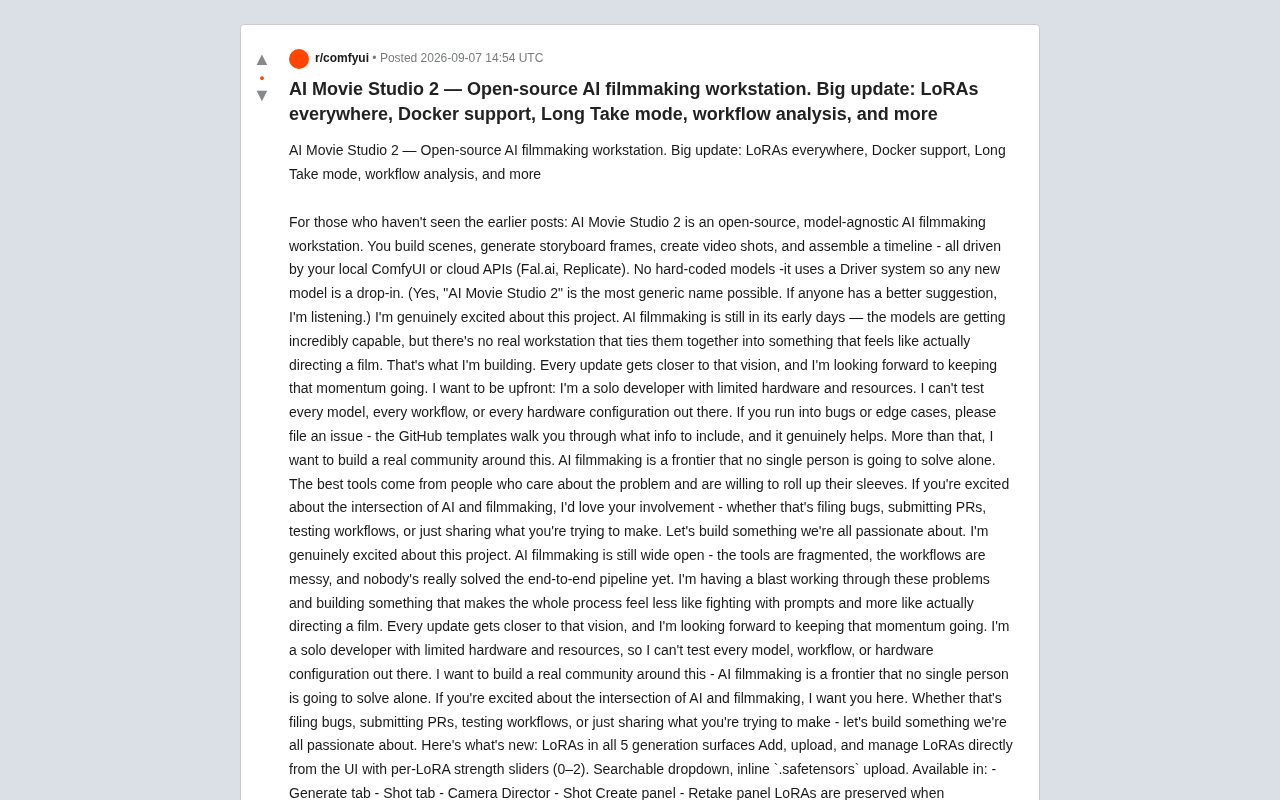
AI Movie Studio 2: In-Depth Analysis of the Open-Source AI Filmmaking Workstation
In-depth analysis of AI Movie Studio 2's five major upgrades: LoRA coverage across all scenarios, Long Take mode, Docker one-click deployment, workflow model analysis, and more. Learn how this model-agnostic AI director tool is transforming the creative workflow.