Can Hypnosis Beat the Chess King? A YouTuber's Challenge Against Carlsen

A content creator hypnotizes Carlsen for a chess match and still loses, revealing in entertaining fashion that elite chess skill is highly automatized.
The article recounts a YouTube entertainment experiment: a creator tries to win a chess game against world champion Magnus Carlsen by hypnotizing him, promising $100,000 to charity if he wins. The hypnotist guides Carlsen to relax, the challenger briefly lands a check, but Carlsen quickly demonstrates overwhelming strength, checkmating in two moves and responding with "True. GG." The article argues that Carlsen's accurate calculation under hypnosis shows elite chess skill is highly automatized, not merely dependent on conscious will. After the failed challenge, Carlsen picks a charity and falls asleep after filming. The farce is highly entertaining and prompts reflection on psychological interference, focus, and competitive performance, while serving as a metaphor for how external interference can't easily close the fundamental capability gap when humans face superintelligence.
An Absurd Challenge: Taking On the World Chess Champion with Hypnosis
A highly entertaining social experiment has surfaced on YouTube: a content creator attempts to beat Magnus Carlsen — widely regarded as the greatest chess player of all time — in a game of chess, and his only "cheat" is having a hypnotist put Carlsen under hypnosis on the spot. If he wins, he'll donate $100,000 to a charity of Carlsen's choosing.
It sounds like a farce destined to fail, but it also raises a fascinating question: in top-level intellectual competition, just how much impact can mental state and external interference have?
The Hypnosis Intervention: From "Relax" to "Check"
In the video, the hypnotist repeatedly guides Carlsen: "Sleep, relax, and let go." The challenger then begins making moves and at one point calls out "Check." Excitedly, he tells the camera: "You just checked a grandmaster — that's like blocking LeBron's shot."

From the footage, Carlsen shows no obvious resistance or discomfort — he cooperatively enters a relaxed state. The hypnotist deepens the suggestion: "And hear the voice as if I'm right next to you. Relax every muscle, every nerve, and every fiber."

The Truth of the Game: Checkmate in Two and "True. GG."
Despite the challenger briefly landing a check, Carlsen quickly demonstrates overwhelming strength. In the video, the challenger admits: "He's two moves away from checkmating me. It's one move away." Ultimately Carlsen wins easily, responding simply: "True. GG."
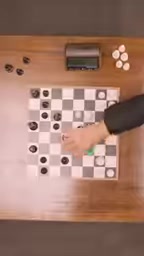
The outcome is hardly surprising. Carlsen can still accurately calculate a mating sequence while under hypnosis, showing that a top player's skill is highly automatized — not merely dependent on conscious willpower in the moment.
A Charitable and Humorous Ending
After the failed challenge, Carlsen selects a charity as the donation recipient — though the video doesn't reveal its name. Amusingly, Carlsen falls asleep right after filming ends, and the challenger jokes: "Wish he did that during my game."
Deeper Analysis: Hypnosis, Focus, and Competitive Performance
This challenge is essentially an entertainment show, but it touches on real issues in sports psychology. Hypnosis is often used to regulate anxiety and enhance focus, but in chess — which demands complex calculation and pattern recognition — excessive relaxation may actually impair alertness. Carlsen's performance precisely illustrates that a true elite player, even in a suboptimal state, retains a underlying skill level far beyond that of ordinary people.
For observers in AI and technology, this video also offers a metaphor: when humans try to use "cheats" or "psychological tactics" against superintelligence, the gap in fundamental capability is often hard to erase through a single point of interference. Just as Carlsen can still calculate a mating sequence under hypnosis, powerful models often maintain core performance even amid noise and disruption.
This $100,000 charity challenge ends with the chess king falling asleep early and a single "GG" — maximum entertainment, and a little more food for thought about "human limits" and the "interference effect."
In chess, "Check" means one side's king is under attack by an opponent's piece, and the checked side must immediately respond by eliminating the threat to the king. "Checkmate" is the ultimate form of check: the king is under attack and cannot escape by moving, capturing, or blocking. The challenger's mention of "mate in two" or "mate in one" refers to Carlsen having already calculated that he can force checkmate within the next one or two moves — a reflection of top players' depth in position evaluation and tactical calculation. Even in a hypnotically relaxed state, this intuitive calculation based on pattern recognition and extensive training continues to run automatically — precisely the "automatization of chess skill" that defines a professional player.
In sports psychology, hypnosis is often used to regulate arousal levels, alleviate anxiety, and enhance focus. It guides individuals through suggestion into a state of deep relaxation and concentrated attention, similar to "flow." However, for tasks like chess that require sustained alertness and complex calculation, excessive relaxation may lower physiological arousal, impairing reaction speed and error monitoring. Research shows that moderate arousal is optimal for cognitive performance, while hypnosis-induced deep relaxation may bias individuals toward low arousal. Carlsen's performance demonstrates that top players develop highly automatized decision-making systems through long-term training; their core calculation ability does not depend entirely on on-the-spot tension or conscious will, so a single point of psychological interference can hardly shake their underlying skill.
Related articles

From 0 to 1: Vibe Coding an AI Knowledge Base — A Practical Retrospective and Tech Stack Breakdown
A retrospective on building the AI knowledge base OilBook from scratch with Vibe Coding: Next.js+Neon stack, Oil Dev Skill workflow, Stripe paywall security, interview-style writing, AI-flavor control, and Vercel deployment.

GLM-5.4 Hands-On: Native Vision Meets a New Vibe Coding Workflow
Hands-on with Zhipu GLM-5.4: native vision tested across a 3D product demo, pure-code video generation, and remote-control Vibe Coding, compared with GPT-6.2 and Gemini Neon.

AI and Humans Claim to Prove the Riemann Hypothesis: Machine-Verified, Yet Nobody Can Understand It
Anthropic mathematician and AI Claude claim to prove the Riemann Hypothesis with 17 million lines of Lean code, machine-verified but unreadable by humans. This article analyzes the event, the zero proportion record from 41.6% to 67.2%, and the gap between machine verification and human understanding.