Can Local Models Replace Cloud AI? Five Key Questions That Determine Success or Failure

A practical guide to when and how to use local AI models versus cloud APIs — including licensing, costs, and routing strategies.
While research suggests 71% of ChatGPT queries can be handled by local models, "going local" involves far more than downloading a model. This article breaks down the three tiers of local models by parameter scale, explains the licensing landmines in the open-weights ecosystem, clarifies how deployment and quantization affect output quality, and makes the economic case for a hybrid routing strategy over a binary local-vs-cloud choice.
71% of Questions Can Be Answered by Local Models?
A recent Stanford study sparked widespread discussion: 71% of questions people ask ChatGPT can be answered by models running locally. This figure was quickly interpreted as meaning that if true, a large portion of enterprise AI workloads could be migrated to local infrastructure—running for free, without paying hefty fees for frontier model API calls.
The general direction is right, but the devil is in the details. First, we need to understand exactly how that 71% was calculated.
In this study, researchers compared two different local models and used the "LLM as a judge" paradigm to evaluate results. Whenever a local model won or tied with a proprietary model, it was counted as a "win." In other words, for the simple day-to-day queries you send to ChatGPT, local models are genuinely good enough.
It's worth noting that "LLM as a judge" is an evaluation paradigm with known biases. Traditional model evaluation relies on human annotation or fixed benchmarks—costly and narrow in coverage. LLM-as-a-Judge reduces evaluation costs by having a strong model (typically GPT-4) adjudicate output quality, but research has shown that judge models tend to favor outputs stylistically similar to themselves and rate longer, more formally worded responses higher—known as "position bias" and "verbosity bias." This means the 71% figure itself may be influenced by the choice of judge model and should be interpreted with caution.
But the real question is: Can you use them for serious work? And what exactly counts as a "local model"?
Why Building on Proprietary Models Is Extremely Risky
Imagine you're a developer building an application on top of hosted large language models. You chose them because you need a higher level of intelligence. But here's the problem—you don't own them.
You can't freeze the model at a specific state. The company behind it can change it at any time: the weights, the pricing, or simply take it offline. This is a massive vulnerability for anyone building products on proprietary models. Even a simple update from the vendor can change model behavior.
A typical example is a model that was forced offline within days of release due to government export controls—and while it later came back online, this exposed a real risk: these companies can voluntarily or involuntarily take models offline or change their behavior. This is not a hypothetical risk. The U.S. Department of Commerce's Bureau of Industry and Security (BIS) has been tightening export controls on advanced AI chips and related technologies since 2022, and in 2024 proposed a licensing regime for cross-border transfers of frontier AI model weights. Combined with data localization regulations in certain countries that prohibit AI-processed data from leaving the jurisdiction, companies relying on a single hosted service provider face real compliance disruption risks.
This is precisely why open models matter. However, "open" doesn't always mean what you think it means.

Five Hidden Traps Behind the Word "Open"
Here's what you need to watch out for: Open Weights does not equal Open Source. The strongest models are often not open at all; even when a model is open, that doesn't mean you're permitted to use it freely; and worse, the same model file can perform dramatically differently under different environments and configurations.
So a casual "just run a local model" quietly decomposes into five distinct questions you must answer:
- What does "local" actually mean?
- What does "open" actually give you?
- How is the model deployed and served?
- Who really controls it?
- Who is paying for it?
These five questions are interconnected. Get any one of them wrong, and "going local" solves nothing for you.
The Three Tiers of Local Models
When discussing local models, it helps to think in three tiers. The key to understanding this hierarchy lies in the mapping between parameter count and hardware requirements: roughly 2GB of VRAM per billion parameters at FP16 precision, compressible to about 0.5GB per billion parameter when quantized to INT4. This physical constraint directly defines the boundary of what's "locally feasible."
Tier 1: Small Models (Up to ~35 Billion Parameters)
These are the models that can genuinely run on local hardware—the tier people picture when they hear "local AI." A 7B parameter model requires roughly 4GB of VRAM after INT4 quantization and can run on consumer GPUs; a 70B model needs about 35GB of VRAM, requiring professional-grade GPUs or multi-GPU parallelism.
Tier 2: Mid-Size Models (Hundreds of Billions of Parameters)
These models don't fit on a laptop or desktop. You need a small cluster of data center GPUs—hardware that almost no one owns. So you're essentially renting access to them.
Tier 3: Giant Models (e.g., 1.6 Trillion Parameter Scale)
Models at this tier typically use a Mixture of Experts (MoE) architecture—each inference activates only a small subset of "expert" sub-networks, making it possible to maintain enormous model capacity while controlling actual compute. Even so, storing all the weights still requires several terabytes of VRAM. You can download the entire model for free right now, but there is still no practical way to actually run it. It requires an entire cluster of A100s or H100s—which explains why the paradox of "downloadable but unrunnable" is very real.
The conclusion is clear: only Tier 1 is truly fully local. Tiers 2 and 3 are essentially enterprise-facing. And costs escalate sharply as you move up the tiers. More critically—even when these are "local models," when you run them through a third party, you still lack control over the data going in and coming out.
Licenses: A Regulatory Wild West
Before using open models, you must understand the licensing situation, because this space is currently the "Wild West"—ranging from "use freely" to "don't even think about it," with every imaginable condition in between.
- Genuinely clean licenses: Models under MIT license can be used commercially—provided you can run them.
- Attribution-required licenses: Allow commercial use but require you to credit the model name or source in your product.
- Licenses shifting from free to complex: Some models have moved from permissive licenses to complex non-commercial terms, requiring a formal agreement with the creator for commercial use.
- Gradually tightening licenses: Some weight labs that started out quite open are increasingly closing their strongest models.

This means choosing a local model is no longer just about capability—it's also about whether the license permits commercial use. This isn't an argument against model creators making money. Training models requires enormous human effort and capital, and if you're generating significant revenue with them, giving back to frontier model developers is sound commercial logic.
Deployment Method Determines Real-World Results
Having the model is only part of the story. What matters most is how you use it. Depending on the provider or inference service you choose, the same model can deliver dramatically different results.
There are technical reasons for this. Quantization is the process of compressing model weights from high-precision floats (FP16) to low-precision integers (INT4, INT8); major formats include GPTQ, AWQ, GGUF, and others. While quantization significantly lowers hardware requirements, it introduces precision loss—INT4 quantization compared to FP16 typically causes noticeable degradation on complex reasoning, math, and coding tasks. Many inference providers use quantized versions, sometimes paired with incorrect prompt templates, which causes these otherwise strong open models to deliver significantly degraded output quality. You must carefully evaluate inference providers and explicitly ask about their quantization level—it affects not only your quality of experience but also your operating costs.
More importantly, when using third-party inference providers, you also lack full control over your data. Without carefully reading the terms of service, this carries the same risks as using a proprietary API endpoint.
This control can be visualized as a "ladder":
- Bottom rung: Closed-source APIs — You have zero control; the entire service can disappear overnight.
- One step up: Open models via third-party APIs — At least the license is on your side, but the service can still disappear or change silently.
- Another step up: Self-deploying on rented GPUs — You can freeze the exact version and keep it indefinitely.
- Top rung: Running on your own hardware — You have absolute control.
The Economic Dilemma of Open Models
This is the most important part to watch out for. The business logic of open models is the complete opposite of proprietary models.
Proprietary model companies spend billions training models, then make money by offering them as a service. Open model companies invest just as much in training, then release the weights publicly. The result is that a large number of inference providers take these open weights and offer them as services—and those providers are the ones making the money.
This has turned open models largely into lead generation tools and enterprise client acquisition vehicles, rather than sustainable business models.
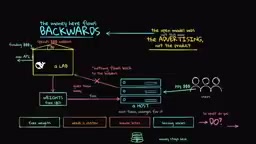
One of the biggest current challenges with open weights is the lack of an ecosystem. Proprietary model creators can build complete ecosystems around their models, while the open model space now has many models of wildly varying quality, and the tooling and community ecosystem truly built around them remains immature.
The Optimal Solution: A Routing Strategy, Not Either/Or
If you rely on someone else's inference service to use open models, it's essentially no different from using proprietary models.
The truly pragmatic approach is to adopt a routing mechanism: use local models for most routine tasks, while sending tasks that genuinely require high intelligence to frontier closed-source models. In engineering terms, routing strategies typically follow two implementation paradigms: rule-based static routing, where predefined task classifiers divert low-complexity tasks to local models; and dynamic confidence-based routing, where a local model attempts the task first and automatically escalates to a stronger model if confidence falls below a threshold (open-source projects like RouteLLM and LLM-Blender are exploring the latter). Based on real-world data, roughly 50–70% of production requests can be handled by local models at acceptable quality, and hybrid routing typically reduces total inference costs by 40–60% while compressing average response latency to less than one-third of a pure-API approach.
Take agentic coding as an example: in long-running tasks, you can use frontier models as orchestrators and planners, while using capable open models or small local models for execution. This division of labor saves money and significantly reduces latency.
Don't Forget: Running Locally Isn't Free
One commonly overlooked reality is that running models on your own servers isn't cheap. Pay-per-token pricing starts with low costs and scales linearly with usage; but self-hosted GPUs incur ongoing hardware and power costs even when idle.
There's a clear break-even line between self-hosting and API calls. Take an H100 (purchase cost ~$30,000, amortized over five years at $16/day) versus calling a mainstream frontier API ($5 per million output tokens): if you're processing more than roughly 50 million tokens per day, self-hosting starts to make economic sense. But for teams processing a few million tokens per day or fewer, the fixed costs actually run higher. The industry's commonly cited "inflection point" typically appears when GPU utilization is consistently above 60–70%.
Self-hosted hardware only truly pays off under high-frequency, stable loads—when the machines are continuously busy. For most teams, we're operating below that break-even line, where per-token API pricing is actually the more economical choice. Owning your own hardware is fundamentally a decision about control, not about reducing service costs.
Conclusion: Be the Person Holding the Switch
Back to the original question: can you rely on local models? Does it really belong to you?
The honest answer is—yes, in most cases, as long as you stop framing it as a binary choice between "local vs. frontier."
The right strategy is: route simple work to local models, reserve the hardest tasks for frontier models, and hold tightly onto the model weights that truly matter. That way, when a model is suddenly taken offline or a service goes dark, the person holding the switch is you.
Key Takeaways
Related articles

The Truth Behind Codex 'Build a Website in 5 Minutes': AI Isn't Creating Sites—It's Helping You Copy Them
Exposing the truth behind viral Codex 5-minute website videos: creators aren't building original sites with AI—they're copying shared prompts or scraping others' work. Learn AI coding tools' real limits.

Getting Started with AI Agent Development: A Complete Guide from Concept to Practice
A comprehensive guide to AI Agent architecture and development, covering automated marketing, intelligent customer service, and investment analysis scenarios with single and multi-agent collaboration.

The Truth Behind Codex 'Build a Website in 5 Minutes': AI Isn't Creating Sites — It's Helping You Copy Them
Exposing the truth behind viral Codex 5-minute website videos: creators aren't building original sites with AI — they're copying shared prompts or scraping others' work.