Can Nuclear Missiles Hit the Road? The Curious Sight on Wyoming's I-80

A Hacker News post reveals that nuclear missiles may be transported via Wyoming's I-80, sparking debate on military logistics and public infrastructure.
Based on a Hacker News post, this article explores the possibility of nuclear missiles appearing on Wyoming's I-80. Wyoming hosts ICBM deployment sites like F.E. Warren Air Force Base, and missile transport may involve non-nuclear components under strict regulations. I-80, as a strategic artery, occasionally serves as a military transport corridor, though public encounters are rare. Transport safety measures are rigorous, including route planning, escorts, and secrecy. The topic reflects public curiosity about the intersection of military secrets and public infrastructure, while reminding us that strategic weapon transport may quietly pass by.
On Wyoming's Interstate 80 (I-80), you might encounter an unusual "oversized" cargo: a nuclear missile. This is no joke, but rather an obscure fact revealed by a post on Hacker News. The post's title states it plainly: "Yes, you can drive a nuclear missile through Wyoming on I-80." Although the original content is brief, the topic quickly sparked curiosity and discussion in the tech community.
Nuclear Missile Transport: Why Would It Appear on Public Roads?
As strategic weapons, nuclear missiles are typically transported by the military, using highly specialized vehicles and strict security measures. However, under certain circumstances, missiles or their components may need to be moved via public roads. Wyoming has vast uninhabited areas and important military facilities, such as F.E. Warren Air Force Base, one of the deployment sites for intercontinental ballistic missiles (ICBMs). Therefore, seeing a missile transport vehicle on I-80 is not entirely impossible.
In the Hacker News discussion, some users pointed out that such transport usually involves missile boosters or non-nuclear components, rather than complete nuclear warheads. The transport process follows strict regulations, including route planning, time windows, and escort requirements. Although the post provides no further details, the topic is enough to evoke various rumors about missile transport during the Cold War.
Intercontinental Ballistic Missile (ICBM) refers to a ballistic missile with a range exceeding 5,500 kilometers, typically carrying nuclear warheads and serving as a core component of a nation's strategic nuclear forces. The U.S. active land-based ICBM is primarily the "Minuteman III," deployed at three Air Force bases in Wyoming, North Dakota, and Montana. F.E. Warren Air Force Base, located near Cheyenne, Wyoming, is home to the U.S. Air Force's 90th Missile Wing, responsible for managing hundreds of missile silos distributed across the state and surrounding areas. Because missile silos are scattered over a vast geographic area, the transport of missiles or their components becomes part of daily logistics, which explains why related transport vehicles might be encountered on Wyoming's roads.
I-80: Where Strategic Arteries Meet Daily Commutes
I-80 is a major east-west highway in the United States, running across Wyoming. This road not only connects multiple cities but also passes near several military bases. As a result, it occasionally serves as a corridor for military transport. The post's mention of "driving a nuclear missile through I-80" likely refers to missile transport convoys traveling on the highway, rather than ordinary drivers being able to "drive" a missile at will. Such transport is usually conducted at night or during low-traffic periods to reduce public attention and risk.
From a technical perspective, transporting nuclear missiles requires specialized trailers and containers to ensure safety and secrecy. These vehicles may look like ordinary heavy trucks, but their internal structures are specially designed to withstand extreme conditions. In the Hacker News comments, someone joked that if you encounter such a convoy, it's best to keep your distance and take a photo—provided, of course, that photography is allowed.
Missile transport containers are equipment specially designed for the safe transport of missile components (such as boosters, warheads, or entire missiles). These containers are typically made of high-strength steel or composite materials and feature impact resistance, fire resistance, bulletproofing, and temperature control to protect sensitive components from environmental factors and potential attacks. During transport, the containers are secured to custom-built trailers equipped with air suspension and multi-axle steering systems to distribute weight and ensure a smooth ride. In addition, transport convoys usually include lead vehicles, escort vehicles, and trailing vehicles, equipped with armed personnel, communication equipment, and emergency response tools to handle various contingencies.
Public Curiosity and the Boundaries of Safety
For the general public, nuclear missile transport is shrouded in mystery. The discussion sparked by the post reflects people's curiosity about the intersection of military secrets and public roads. However, the safety of such transport is paramount. The military takes multiple measures to ensure that no accidents occur during missile transport, including route reconnaissance, traffic control, and armed escort.
Although the post provides no specific cases or data, it is reasonable to assume that such transport in Wyoming is not a daily occurrence but an occasional event. The Hacker News community, composed mainly of tech enthusiasts, showed strong interest in this "hardcore" logistics, while also sparking discussion about nuclear weapons transport safety protocols.
Conclusion: The Strategic Shadow on the Highway
The appearance of nuclear missiles on I-80 is a microcosm of the intersection between military logistics and civilian infrastructure. It reminds us that the transport of strategic weapons is not entirely isolated but may quietly pass by us. Although the post offers limited information, it opens a window into a tip of the iceberg of national security operations. For tech and military enthusiasts, this is undoubtedly a topic worth pondering.
(Note: This article is based on the Hacker News post and public common knowledge, and does not involve specific classified information.)
Related articles
 Tech Frontiers
MuJoCo: An Analysis of DeepMind's Open-Source General-Purpose Physics Simulator
An in-depth analysis of Google DeepMind's open-source physics simulator MuJoCo: high-performance C++ kernel, MJCF modeling format, contact solving principles, MJX GPU acceleration, and robot reinforcement learning use cases.
 Tech Frontiers
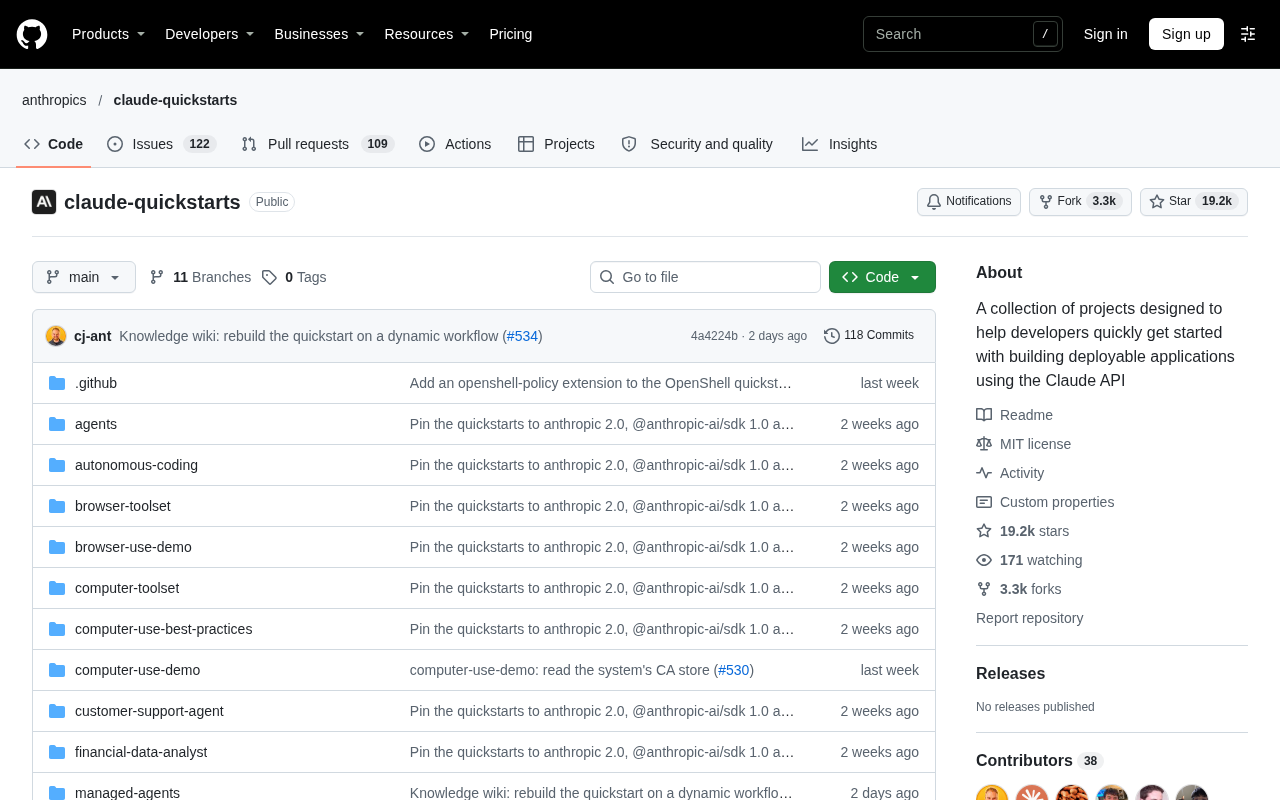
Claude API Quick Start: The Official Quickstarts Project Collection
Anthropic's official claude-quickstarts project collection helps developers quickly build deployable apps with the Claude API. Nearly 20k stars, Python-based, great for beginners and prototyping.
 Tech Frontiers
AI Agents Connecting Directly to APIs: Which Calls Can Be Safely Allowed?
AI agents can call any API, but the real challenge is deciding which calls can be safely allowed. This article analyzes allowance decisions from three dimensions—intent matching, least privilege, and controllable impact—and argues that the control layer should sit outside the agent, combined with audit traceability to build a trustworthy API call governance mechanism.